She Waited Nine Months to Hold Her Baby — But When It Finally Happened, Everything Changed
Holding your baby for the first time is a moment most parents dream about for months. It’s the instant when the world seems to narrow to a single breath, a single heartbeat resting against your own. For nine months, you imagine that first embrace—the warmth, the closeness, the reassurance that your child is finally here, safe in your arms.
For Angela Bakker, that moment did not come the way she had imagined.
When Joy Arrives Wrapped in Fear
It came wrapped in fear, wires, and whispered medical terms. It came weeks too early. And it came with the haunting knowledge that her baby might not survive.
Angela and her husband, Michael, were eagerly awaiting the arrival of their baby girl. Like so many expectant parents, they dreamed of a healthy pregnancy, a full-term delivery, and the joyful chaos of bringing a newborn home. But those dreams shattered when Angela went into labor far too soon.
Their daughter was born fifteen weeks early.
Born at the Edge of Survival
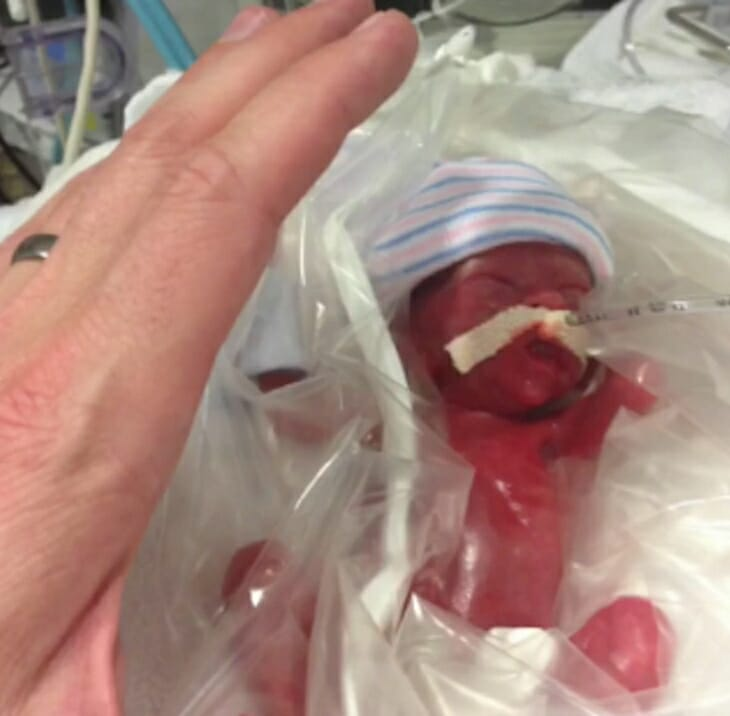
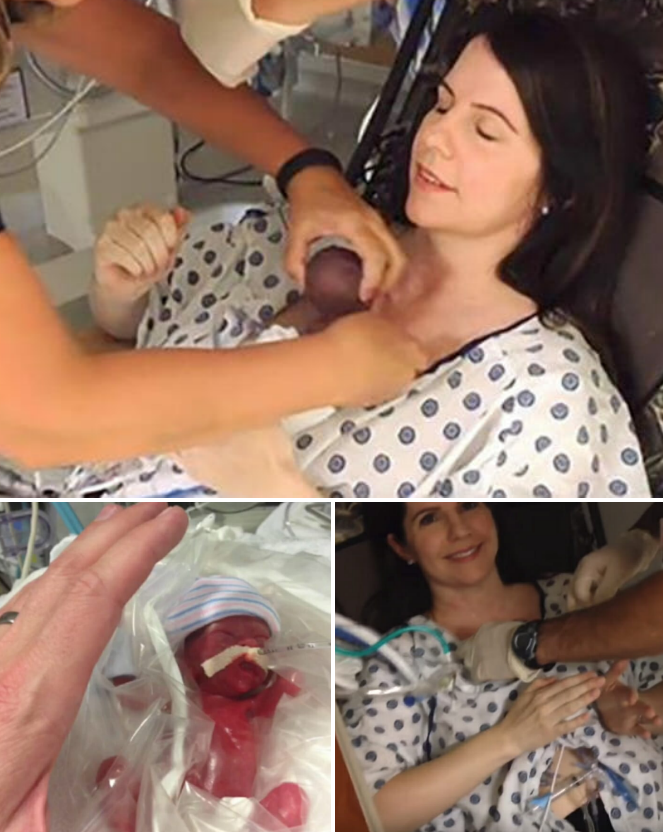
At just 25 weeks gestation, baby Naomi Joy entered the world weighing less than one pound. She was impossibly small—so fragile that even the gentlest touch carried risk. Doctors were honest with Angela and Michael: Naomi’s chances of survival were slim. So slim that hope itself felt dangerous.
Naomi was one of the smallest premature babies ever born in Reno, Nevada. From the moment she arrived, she was rushed into the Neonatal Intensive Care Unit at Renown Regional Medical Center, where teams of nurses and doctors worked tirelessly around the clock to keep her alive.
Life Inside the Bubble
Her world became a plastic bubble.
Inside that bubble, Naomi was protected from infection, sound, and touch. Tubes and monitors surrounded her tiny body. Machines breathed for her, fed her, regulated her temperature. Her parents could see her, talk to her, and sometimes gently place a hand near her—but they could not hold her.
For two long weeks, Angela watched her daughter fight for every breath from behind clear walls.
The Science — and the Risk — of Touch
For most premature babies born this early, isolation is standard. Their bodies are simply too fragile. Skin-to-skin contact—known as kangaroo care—is often delayed for weeks, sometimes months. Yet medical research increasingly shows that this contact is not just comforting, but critical. A mother’s warmth, heartbeat, and scent can stabilize a baby’s breathing, improve oxygen levels, support brain development, and even increase survival rates.
The staff at Renown Regional Medical Center believed this deeply.
A Decision That Defied the Norm
After two weeks of intensive care, Naomi had shown small but encouraging signs of stability. She was still critically fragile, but she was fighting. And the NICU team made a decision that went against the norm for a baby this tiny.
They decided it was time to let Naomi be held.
It was not a simple decision. It was not a quick one. The risk was real. But the potential benefit was something they could no longer ignore.
Breaking Her Out of the Bubble
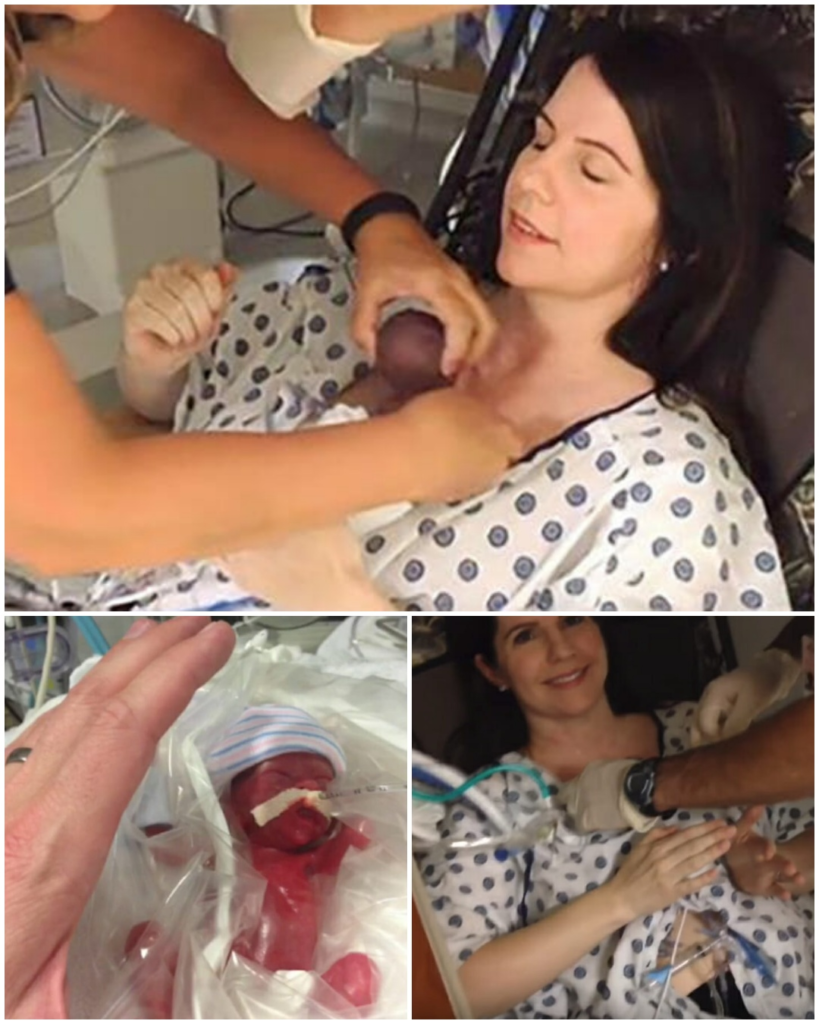
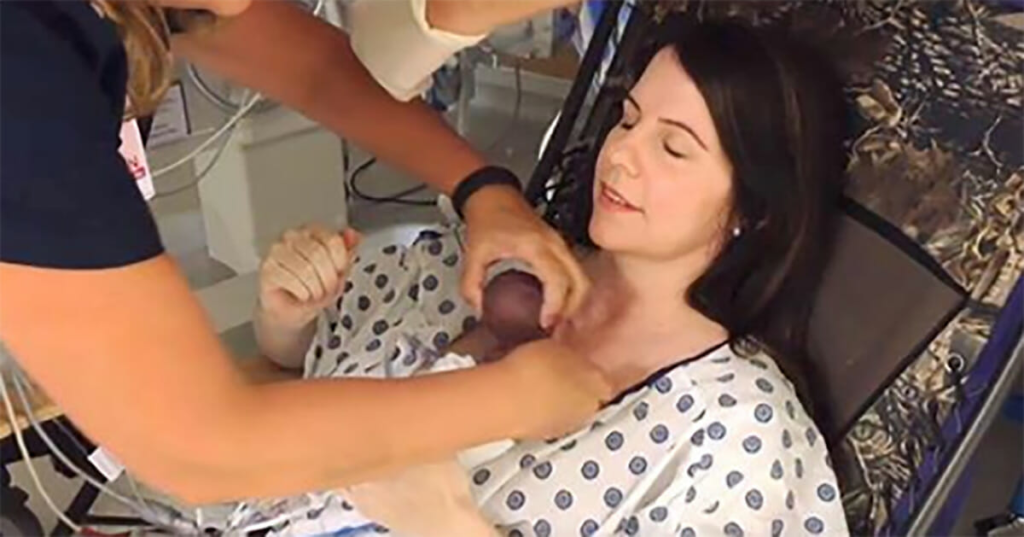
The day they “broke Naomi out of the bubble,” the room filled with quiet focus and reverence. Eight nurses carefully coordinated every movement. Tubes were adjusted. Lines were secured. Every breath was monitored. Naomi’s tiny body—no larger than an adult’s hand—was slowly lifted from her plastic enclosure.
Angela sat waiting, her heart racing, her hands trembling.
The Moment Everything Shifted
When Naomi was finally placed on her chest, something extraordinary happened.
The fear that had lived in Angela’s body for weeks melted away. In its place was awe, love, and a profound sense of connection. You can see it in her face—the moment when a mother recognizes her child not as a patient, but as her baby.
Naomi seemed to recognize it too.
Nestled against her mother’s skin, she settled. Her tiny body relaxed. The steady rhythm of Angela’s heartbeat, the familiar warmth, the scent she had known before birth—it was the closest Naomi could come to returning to the womb she had left far too soon.
For the first time, mother and daughter were together.
When Holding Became Healing
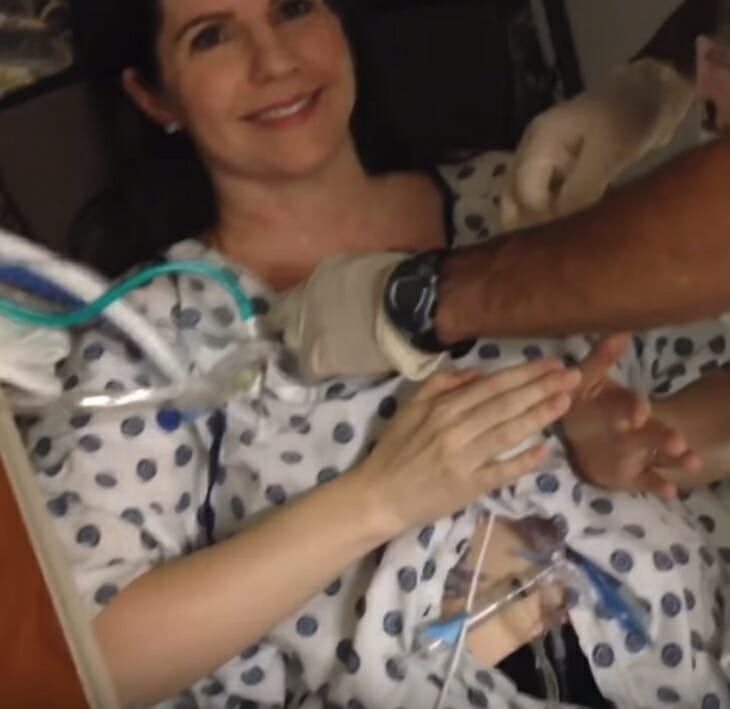
From that day on, the NICU staff allowed Angela and Michael to hold Naomi every day. Carefully. Gently. With constant supervision. And something remarkable continued to happen.
Naomi thrived.
Day by day, she grew stronger. Her vitals stabilized. Her development continued. The daily skin-to-skin contact became a cornerstone of her care, not just an emotional comfort, but a medical intervention that supported her fragile body’s fight to survive.
Small Victories, Quiet Miracles
The miracle was not loud. It did not happen all at once.
It happened in small victories. A stronger heartbeat. Better oxygen levels. A little more weight. A little more resilience.
Weeks turned into months. Naomi remained in the NICU, growing under the watchful eyes of nurses who became like family. Angela and Michael learned how to parent in a world of monitors and alarms, celebrating milestones that most parents never have to think about.
And then, one day, Naomi was no longer the tiniest baby in the room.
Four Years Later
Today, Naomi is nearly four years old.
Looking at her now—laughing, playing, alive—it’s almost impossible to believe she once weighed less than a pound, sealed inside a plastic bubble, fighting for a chance to exist. For Angela and Michael, every ordinary moment is extraordinary, because they know how close they came to losing her.
Naomi’s story is a testament to many things.
To the resilience of premature babies who fight battles no one should have to fight so early in life.
To the power of a mother’s touch, even when science and fear say otherwise.
And to medical professionals who are willing to listen not only to protocols, but to compassion.
More Than Comfort — Medicine
A mother’s arms are not just a place of comfort. They are medicine.
Naomi Joy is living proof of that truth.
And every time Angela holds her now, she knows—more deeply than most—that love can be lifesaving.