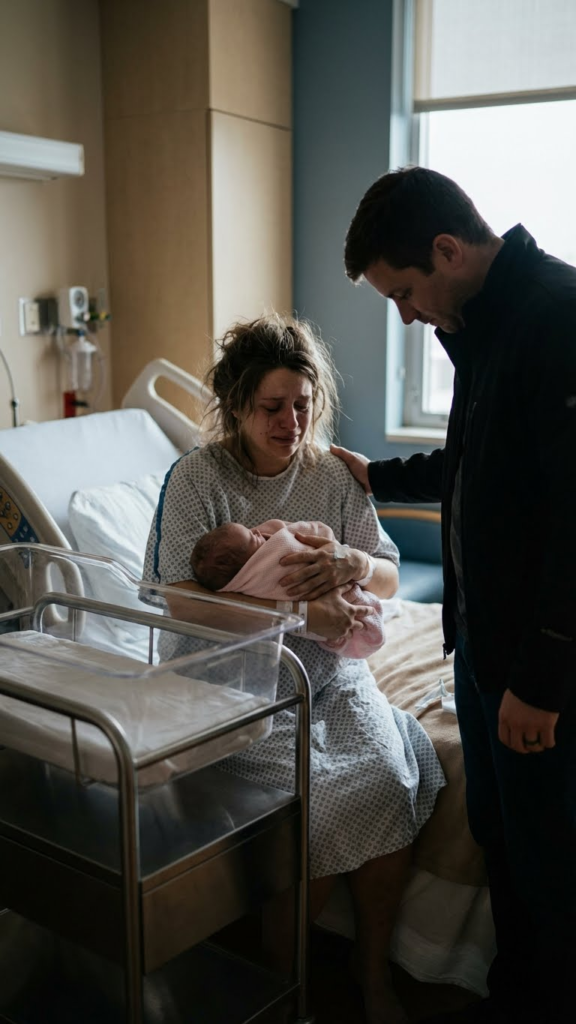
I had waited nine months to hear her cry.
Every ultrasound, every kick, every sleepless night had been leading to that sound — the one that tells you your child has arrived in the world, alive, loud, demanding space. I imagined it so clearly that I could almost hear it in my dreams.
Instead, the first thing I heard when they handed me my daughter was silence.
The Pregnancy Everyone Said Was “Normal”
My pregnancy was textbook until it wasn’t.
No complications. No red flags. The kind of experience people tell you to be grateful for. I ate the kale, took the vitamins, downloaded the apps that told me what size fruit my baby was every week.
My husband, Aaron, painted the nursery a pale yellow because he said he didn’t want her “boxed into a stereotype before she was even born.” We argued about names for months before landing on Emily, because it was simple and soft and didn’t belong to anyone else in our families.
At my 38-week appointment, the nurse smiled and said, “You could go any day now.”
I went the next night.
The Labor That Didn’t Feel Right
Labor is supposed to hurt. I knew that.
What I didn’t know was how much fear can fit into a delivery room.
I remember the nurse struggling to find Emily’s heartbeat on the monitor. She moved the wand around my stomach longer than she should have. She said, “Sometimes babies just like to hide,” but her smile was thinner than before.
They found the heartbeat eventually — faint, uneven. The doctor decided to induce right away “just to be safe.”
Everything sped up after that. IVs, paperwork, people introducing themselves and forgetting my name five minutes later. My contractions came hard and fast, like my body was trying to outrun something invisible.
At some point I asked, “Is she okay?”
The nurse said, “We’re watching her closely.”
That was the last time anyone answered me directly.
The Room Went Quiet
I pushed for nearly two hours. The pain was so big it stopped feeling like pain — it became the whole universe.
Then suddenly everyone was moving too fast.
There were whispers between nurses, someone pressed an oxygen mask against my face, the doctor said something I couldn’t hear over the pounding in my ears.
I screamed, “Why isn’t she crying?”
No one answered.
They lifted her over the curtain just long enough for me to see a tiny purple body before rushing her away. I heard the door swing open. Then closed.
The quiet that followed was heavier than anything I had ever felt.
The Wait
Time broke after that.
Minutes felt like hours, hours like whole lifetimes. Aaron kept saying, “She’s fine, they just need to check her,” but his voice was shaking in a way I had never heard before.
A nurse came in to clean me up. She wouldn’t look me in the eyes.
I said, “Please tell me what’s happening.”
She said, “The doctor will be in soon.”
Soon is a cruel word when you are waiting to meet your child.
When They Finally Told Me
The doctor came in with two nurses behind him. I knew before he opened his mouth. People don’t bring backup for good news.
He said, “I’m so sorry,” and my brain stopped working after that.
He explained there had been a cord issue. That Emily’s heart had slowed during labor. That they tried resuscitation.
All I could think was: I haven’t even held her yet.
I said that out loud, because sometimes your heart speaks before your mouth can catch up.
“I haven’t even held her.”
The nurse nodded. “Would you like to now?”
That was how they phrased it. Like it was still a choice.
Meeting My Daughter
They wrapped her in a pink blanket with white clouds on it.
She was perfect.
Ten fingers. Ten toes. A small button nose exactly like Aaron’s. She smelled like new skin and something metallic underneath.
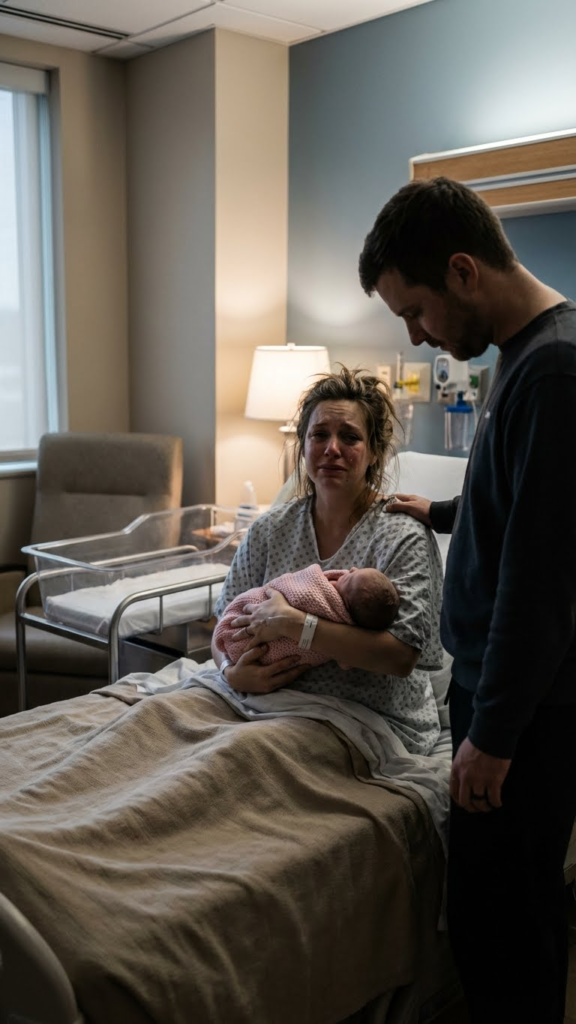
They placed her in my arms and said, “She’s already gone.”
The words landed in the room but didn’t land in me. I waited for her chest to rise. I waited for the reflex cry that babies have when you move them.
Nothing happened.
I kissed her forehead and said, “Hi, Emily,” because it felt wrong not to introduce myself.
Aaron stood on the other side of the bed, one hand on my shoulder, the other shaking uncontrollably.
I don’t remember how long we sat like that. I remember thinking that my arms were doing the job my body had failed to do — holding her in the world for just a little longer.
The Things No One Warns You About
They don’t tell you what comes next.
How the hospital still makes you fill out paperwork for a baby who never gets to exist outside that room. How someone brings you a memory box with a lock of hair and footprints like consolation prizes for a life you don’t get to keep.
They don’t tell you that your milk will come in anyway.
They don’t tell you that you will wake up at 3 a.m. with your arms empty and your heart screaming for something that has no place to go.
They don’t tell you how silent a car ride home is when the car seat behind you is empty.
We named her. We buried her. We told our families.
And every night since then, I replay the moment they handed her to me and said she was already gone.
Because that was the beginning of a kind of grief I didn’t know existed — the kind that doesn’t start when someone leaves you, but when you finally get to hold them.
Part 2 is where I talk about what came after we left the hospital — and how nothing in our lives fit anymore.