I didn’t notice when the messages stopped coming.
That sounds impossible, I know. You’d think the end of something so familiar would announce itself with fireworks or alarms or a door slamming. But grief is quieter than that. It’s more like waking up one morning and realizing the house has been humming all night, and only now do you hear that it has gone still.
My dad used to leave voicemails for everything.
He left them when he forgot to tell me something important, like when the neighbor’s dog got loose and chased the mail carrier down our street. He left them when he didn’t have anything important at all, like when he passed a gas station that still sold root beer in glass bottles and it reminded him of his childhood. He left them when he knew I was busy and wouldn’t answer, which was most of the time, because I was busy pretending to be an adult with a job and deadlines and a calendar that looked impressive but mostly existed to hide how tired I always was.
Sometimes he’d start with, “You don’t need to call me back,” which of course made me feel like I absolutely had to. Other times he’d say my name twice in a row, the way he had since I was little, as if he were testing the echo of it in the room.
I never saved the messages back then. I assumed there would always be more.
That’s the lie we live on: that the things we love operate on an endless subscription model.
It wasn’t until months later, when I was cleaning up my phone storage because I kept getting those warnings about being full, that I found the folder. Thirty-six unheard voicemails, all from the same number. All from him.
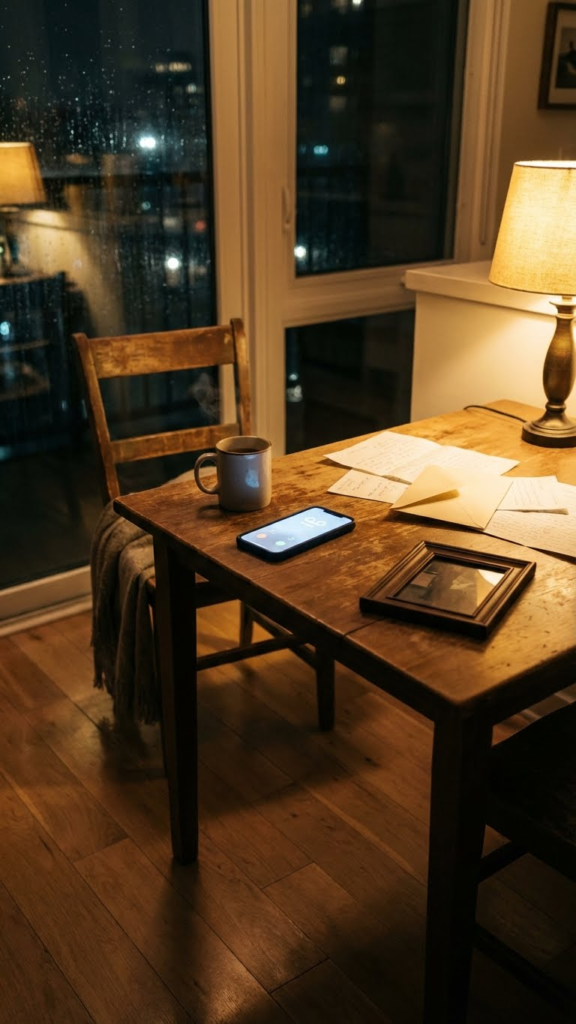
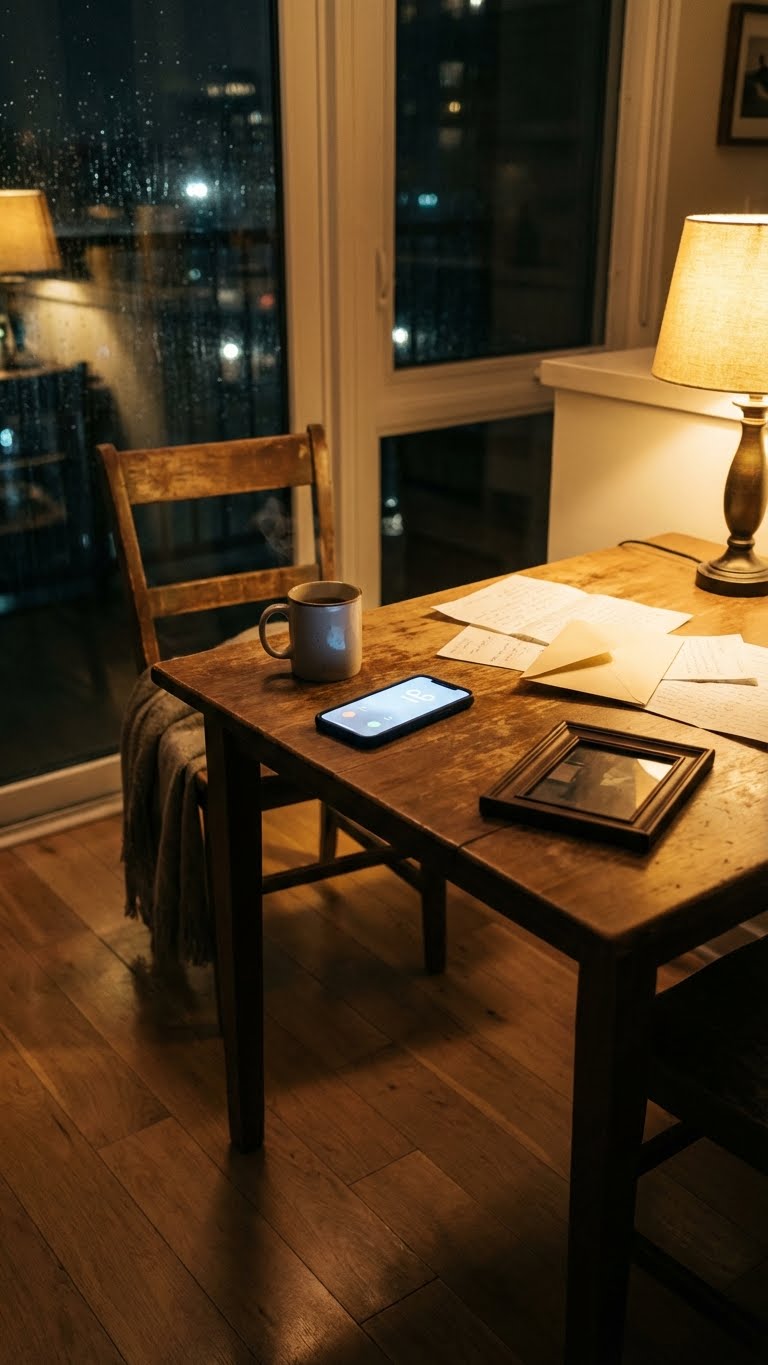
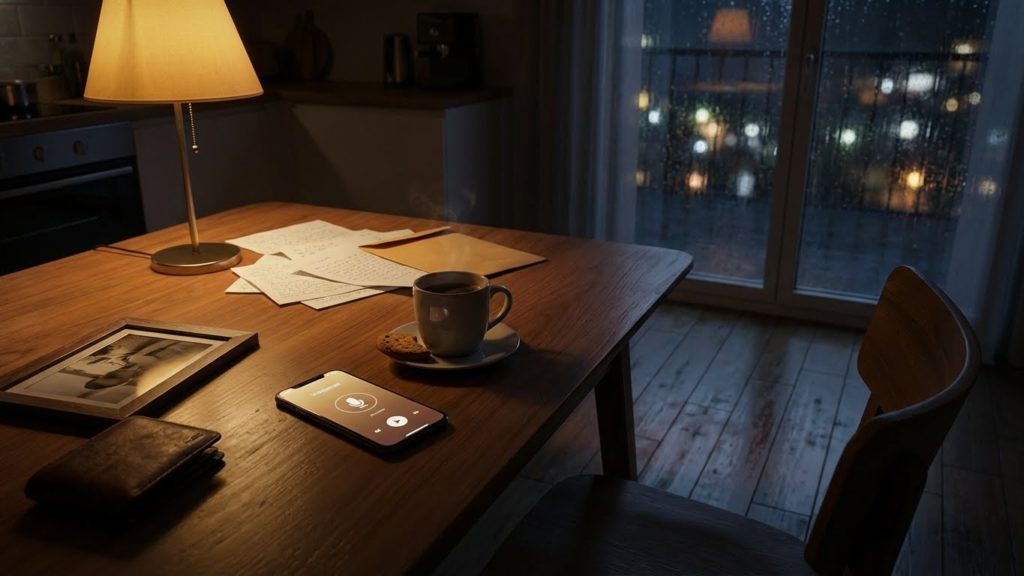
I sat on the floor of my apartment, back against the kitchen cabinet, and pressed play.
The first one was cheerful. He had gone to the hardware store and accidentally bought screws that were too long for the shelf he was fixing. He laughed at himself in that quiet, breathy way, like he was always surprised by his own mistakes.
“Anyway,” he said, “just thought you’d get a kick out of that. Talk to you later.”
There was no later. Not for us.
After that I started listening to one voicemail every night. Not because I wanted to cry—although sometimes I did—but because I was afraid of forgetting the shape of his voice. Not the words, but the rhythm: the half-second pause before he laughed, the way he cleared his throat when he got sentimental, the slight rise in pitch whenever he talked about something he loved.
I thought I was preserving sound.
What I was really preserving was silence.
Because after each message ended, there was a blank space before my phone returned to the home screen. A breath where nothing existed. And it was in that space that I heard him the most clearly.
My friends told me to stop. They said I was torturing myself, that there was no honor in reopening a wound. But grief doesn’t feel like a wound. It feels like a room you didn’t know you were still standing in, long after everyone else has left the building.
I didn’t tell them that the voicemails weren’t about pain anymore. They were about memory. About training my ears to recognize absence.
When my dad was alive, silence annoyed him. He’d fill it with commentary about traffic, or the weather, or a bird he’d seen that morning that looked “unnecessarily fancy.” Now silence was all I had, and I was learning to listen to it the way he once listened to the world.
It surprised me how many sounds vanished with him.
No more early-morning cough from the other end of the phone when he forgot the time difference. No more background noise of his television tuned permanently to whatever channel was showing old westerns. No more accidental pocket voicemails where all I heard was footsteps and the clink of keys, like a tiny documentary about a life I could no longer witness.
The city outside my apartment didn’t care. It kept roaring, horns blaring, neighbors arguing through thin walls. But inside, everything was quieter. Not peaceful—just hollow.
I started paying attention to the way everyday things sounded, as if my ears were trying to compensate.
The refrigerator’s low hum.
The elevator’s tired chime.
My own footsteps pacing the living room at midnight because sleep didn’t know where to find me anymore.
I wondered if this was how my dad had felt when his own parents passed. I had been too young then to understand what he was losing. All I knew was that he called me more after that, like he was trying to stretch his voice across generations so it wouldn’t vanish completely.
There’s a voicemail from him that I’ve never been able to finish.
In it, he says, “I was thinking about you today,” and then there’s a pause. A real one. Not the kind you leave when you forget what you were about to say, but the kind where your breathing changes. Where the room around you suddenly feels bigger than your words.
I always stop the message there.
Not because I’m afraid of what comes next, but because I don’t want to interrupt that pause. That small piece of recorded silence feels like the closest thing I have to standing in the same room with him again.
People talk about closure as if it’s a door you can shut when you’re done. But the truth is, some doors are load-bearing. You close them and the whole structure shifts.
So I leave this one open.
Every night, one voicemail. I listen. I wait. I let the silence ring.
And slowly, in the spaces between sound, I’m learning something I never understood when my dad was alive:
That love doesn’t echo in the noise.
It echoes in what’s missing.
To be continued in Part 2
Moral Reflection
Sometimes we don’t lose people all at once — we lose them in fragments of sound, habit, and expectation. This story isn’t just about grief; it’s about attention. About noticing what the world is saying when it stops speaking in familiar voices. And maybe the quiet work of love is not in holding onto everything, but in learning how to listen to what remains.