I used to believe there were two kinds of days in the world: the kind you plan for, and the kind you survive. I didn’t know there was a third kind — the kind that splits your life cleanly in half, into a before you’ll ache for and an after you’ll never recognize.
My son was thirty-three days old when everything we owned, everything we were, and everything we thought our future would be, changed forever.
His name was Eli.
I still say it out loud sometimes, just to hear it bounce off the walls of places that are no longer ours.
The Month That Felt Like a Lifetime
When Eli came home from the hospital, our little house finally felt like it had earned the right to exist. We’d lived there for five years — a two-bedroom starter place with creaky floors and a water heater that sang at 2 a.m. But until that moment, it had only ever been a house.
Now it was a home.
We had waited so long for him. Years of appointments. Charts taped to the fridge. Conversations whispered so they wouldn’t become hopes we’d have to bury. When the nurse placed him in my arms, I remember thinking, This is what people mean when they say everything changes.
He was small but fierce, with a cry that demanded to be heard and a habit of curling his fingers into my wife’s shirt whenever she held him. We were exhausted, sure, but it was the kind of tiredness that made you laugh at yourself. We argued over nothing — who changed more diapers, who got more sleep — and then we’d stop and stare at him, amazed we were even allowed to keep him.
The nursery was my pride. I’d spent weekends sanding the old dresser my father had given me, painting it a soft gray that matched the little stars on the wall. My wife picked the curtains, pale yellow, so the room would glow when the sun came in. Friends dropped off gifts in waves: blankets, stuffed animals, books we promised we’d read even when we couldn’t keep our eyes open.
My mother came over almost every day.
“I just want to rock him while I still can,” she’d say, settling into the chair by the window. She took photos constantly, like she was afraid memory itself might leak out of her if she didn’t trap it.
For one whole month, we lived in a bubble of feedings, tiny socks, and the strange quiet that comes from loving something so new you don’t yet know how to be afraid.
The Errand
That morning started like any other. Eli had been fussy through the night, and by sunrise we were both moving in that fog that only new parents understand. My wife was in the living room, pacing gently, humming the same tune she always did when he wouldn’t settle.
We were low on diapers — of course we were. Somehow no matter how many boxes you buy, they vanish.
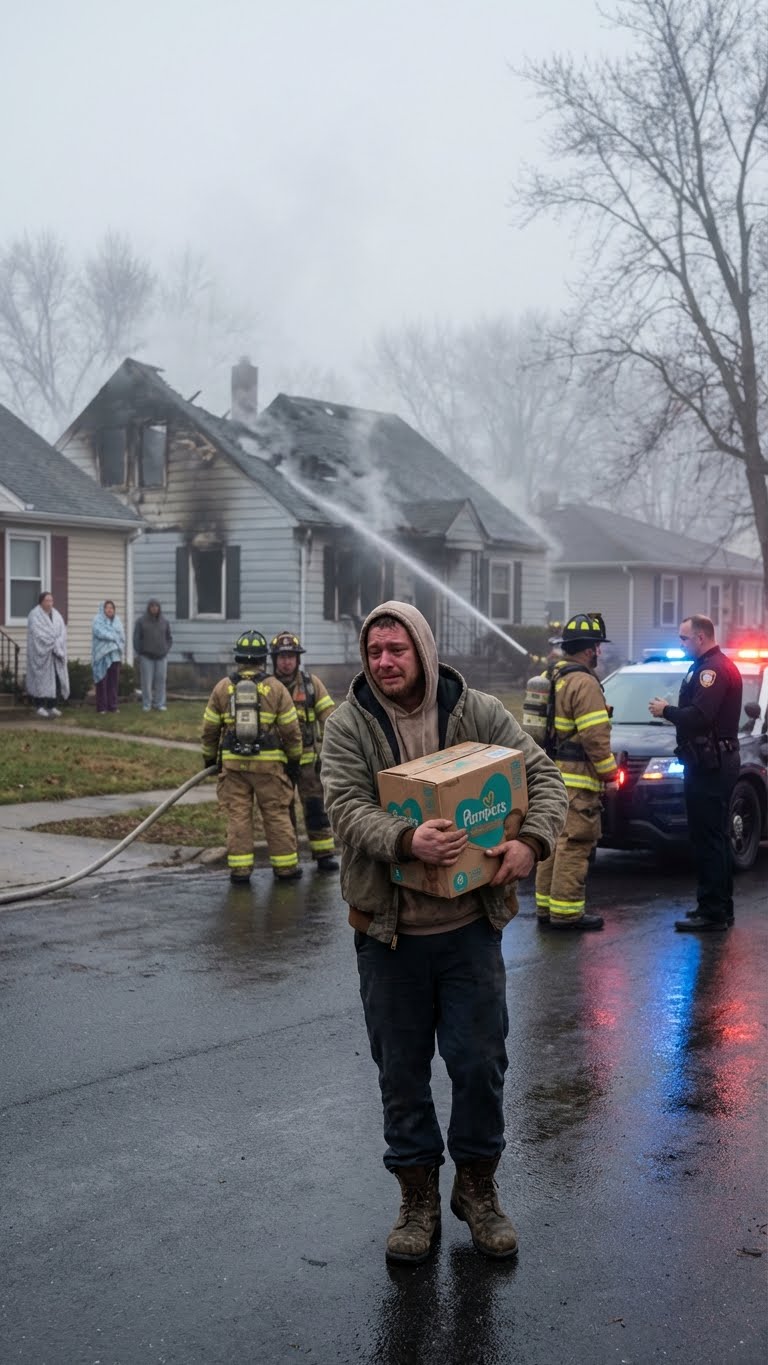
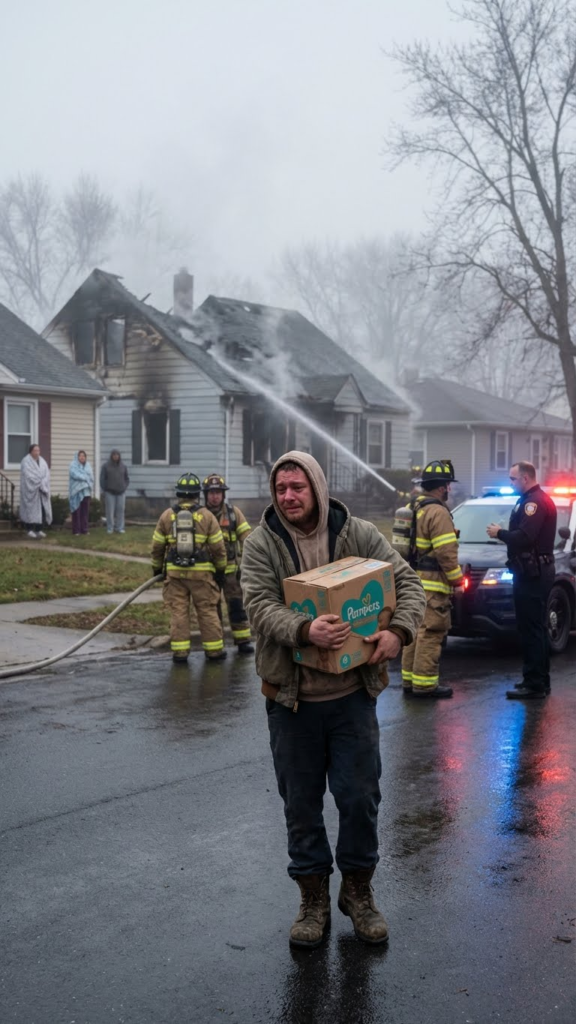
“I’ll run out and grab some,” I said, grabbing my keys. The store was ten minutes away. I’d be back before the next feeding.
My wife smiled at me, tired but grateful. “Get the sensitive ones. The blue box.”
“I know,” I laughed. “I’ve got this.”
I leaned down and kissed Eli’s head. He smelled like clean cotton and that soft, sweet scent babies seem to come with. He blinked at me, serious as always, like he was already judging whether I was ready for the responsibility of leaving the house.
“See you in a few,” I told him.
I had no idea that was goodbye.
The Call I Didn’t Understand
The drive was uneventful. Red lights, a radio commercial I half-heard, a mental list of things I still needed to do around the house. I was in line at the checkout when my phone buzzed.
It was my neighbor, Tom.
“Hey man,” I said, juggling my wallet and the diaper box. “What’s up?”
There was shouting on his end. Sirens, distant but rising.
“You need to come back,” he said. His voice didn’t sound like his own. “There’s something wrong with your place.”
“What do you mean, something wrong?”
“Just come back. Now.”
The line behind me was getting restless, someone clearing their throat. “Tom, slow down. What’s happening?”
He hung up.
For a moment I just stood there, staring at the screen like it might explain itself. I abandoned my cart and walked out without the diapers, keys shaking in my hand.
The ten-minute drive back took two.
The Street That Wasn’t Ours Anymore
Our street was blocked when I turned the corner. Red and blue lights splashed against houses I recognized like they belonged to a different world. People were outside in pajamas, on phones, holding each other’s arms. The air had a sharp smell that didn’t belong in a neighborhood full of lilacs and mailboxes shaped like birds.
I didn’t park. I left the car half in the road and ran.
Someone grabbed me — a uniform, a firm hand on my shoulder.
“You can’t go in there,” they said.
“My wife is inside,” I yelled. “My baby is inside.”
They kept me back, saying things I couldn’t hear over the sound in my ears. I could see our roof from where I stood, or what was left of it. Windows dark. The front door open in a way it had never been open before.
I searched the crowd for my wife like she was a misplaced object I’d find if I looked hard enough.
Then I saw her.
She was sitting on the curb with my mother’s arms around her, both of them rocking back and forth, back and forth, like the motion alone might change what had already happened.
I didn’t remember crossing the street.
What No One Teaches You to Hear
I won’t describe the next part in detail. Not because I can’t remember — I remember everything — but because there are moments that don’t belong to the internet. They belong to the part of the soul you never show anyone.
What I can say is this: there is a sound a human being makes when the future they were holding collapses. It doesn’t resemble grief the way movies show it. It’s not elegant. It isn’t quiet. It doesn’t stop when people expect it to.
I made that sound.
So did my wife.
So did my mother, who kept whispering his name over and over, like it was a spell that might still work.
The House Without Him
We weren’t allowed back inside that day. We watched strangers carry pieces of our life out into the open air. Our sofa. The dresser I’d sanded. The tiny socks my wife had folded with such care.
Everything looked smaller out there.
We went to my sister’s place that night. She tried to be brave for us, tried to make soup no one touched, tried to act like she could patch a hole this big with words.
I lay on her guest bed and stared at the ceiling, waiting for the cry that never came. My arms ached the way they had when Eli slept too long and my body forgot it didn’t need to hold him at that exact moment.
I kept thinking about the diapers.
How I’d left to buy something so ordinary, something I’d bought a hundred times already, and come back to a life I didn’t recognize.
The Things People Say
In the days that followed, people said things. They always do.
“At least you’re both here.”
“He knew he was loved.”
“You’re young, you can try again.”
They meant well. I know they did. But every sentence felt like a door closing, like the world was already rearranging itself without Eli in it and inviting us to catch up.
The truth is, we didn’t want a different future. We wanted our future. The one with yellow curtains and a nursery that smelled like baby lotion. The one with my mother in the rocking chair and my wife humming off-key lullabies.
There is no replacement for a person you were just beginning to know.
What I’m Learning, Slowly
I don’t know yet how this story ends. This is only Part 1 because right now, we’re still in the middle. Still waking up expecting to hear him. Still reaching for bottles that aren’t there. Still standing in rooms that don’t exist anymore.
But I’m starting to understand something important, something I wish I had known when my life was whole:
We spend so much time thinking we’re in control. That if we love hard enough, plan carefully enough, run the right errands at the right time, everything will work out.
Sometimes it doesn’t.
And when it doesn’t, the only thing that carries you through is the way you treated people before the day that split your life in half.
So here is the quiet moral I’m holding onto as tightly as I once held my son:
- Say the gentle thing, even when you’re tired.
- Don’t postpone the call, the visit, the hug.
- Notice the ordinary days — they are the real miracle.
- Love people like tomorrow isn’t guaranteed, because it isn’t.
I left to buy diapers and came back to a house without my son.
But I’m still here. My wife is still here. And somehow, piece by fragile piece, we are learning how to live in the “after.”
This is not the end of our story.
It’s just the part where everything changes.