The stranger leaned toward me in the church aisle and whispered, “You deserve to know what he did to you,” right as the pastor asked everyone to stand.
For a second I thought I’d misheard him. My father’s coffin was six feet away. People were crying. My aunt was gripping my arm so hard her nails were digging into my skin. And this man, someone I had never seen in my life, chose that moment to say that my dad had done something to me.
I didn’t respond. I didn’t even turn my head. I stared at the floor tiles and waited for the service to end.
I was 34 years old, and until that morning, my story had always been simple: my dad raised me alone after my mom left when I was a baby. He worked too much, drank too much, but he loved me. That was it.
Now I couldn’t stop hearing the stranger’s voice.
Immediate Fallout
After the service, people lined up to hug me. I barely noticed them. I kept scanning the room, looking for the man who spoke to me, but he was gone.
I asked my aunt quietly, “Did you see a guy sitting behind us? Brown jacket, gray hair?”
She shook her head. “I didn’t see anyone like that.”
The reception was in the church basement. My dad’s old coworkers were there, some neighbors, people I hadn’t seen since high school. They all said the same things. Your dad was a good man. He tried so hard. He talked about you all the time.
I nodded and smiled when I was supposed to. My hands were shaking so badly I couldn’t hold the paper plate with the ham sandwiches on it.
That night, back in my childhood house, I stood in my bedroom for over an hour without turning on the light. Nothing had changed physically. Same beige carpet, same dresser my dad bought when I was in middle school. But it felt like I was trespassing in a place that didn’t belong to me anymore.
I replayed the sentence again and again. You deserve to know what he did to you.
Not what he did. What he did to you.
Confusion Sets In
The next morning I went through my dad’s paperwork because I needed to find the insurance information. It was all normal. Utility bills, bank statements, a manila folder labeled “Taxes 2012–2018.” Nothing that looked like a secret.
I told myself the stranger had been drunk or confused. Funerals make people say weird things. Maybe he meant something that had nothing to do with me.
But then I remembered how deliberate his voice had been. Not slurred. Not emotional. Calm. Like he had rehearsed it.
I called my childhood friend Rachel and asked her if she remembered anyone from our neighborhood with gray hair and a brown jacket. She laughed and said, “That’s half the guys who ever lived there.”
I didn’t tell her what he said.
I couldn’t say it out loud yet.
Emotional and Social Consequences
Over the next few weeks, I started noticing things about my dad that I had never questioned before.
People stopped by the house to drop off food or cards. One woman I didn’t recognize stood on the porch and stared at me for a long time before saying, “You look just like her.”
“Like who?” I asked.
She blinked. “Your mother.”
I told her I didn’t remember my mom. She said, “Oh,” and then changed the subject to the weather.
Another man, one of my dad’s old work buddies, told me a story about how my dad “went through hell in the early nineties.” I asked him what he meant, and he shrugged. “Just stuff he never really talked about.”
Everyone seemed to know pieces of something. No one was saying it.
At night I started having trouble sleeping. I’d wake up at three or four in the morning with my heart racing, convinced I’d heard someone in the hallway. I told myself it was just stress.
I started going through my childhood memories in my head, trying to find anything that didn’t fit. There were blank spots, but everyone has those, right? I remembered elementary school, my dad yelling at me for not finishing homework, the way he used to fall asleep in front of the TV with a beer in his hand.
Nothing that explained that sentence.
Time Passing
Three months after the funeral, I finally found the stranger again.
I was at the grocery store buying frozen dinners because I still hadn’t figured out how to cook for one. I turned down the cereal aisle and saw the same gray hair, the same brown jacket.
My stomach dropped so hard I had to grab the shelf.
I followed him to the checkout line. When he put his items on the belt, I stepped closer and said quietly, “You talked to me at my dad’s funeral.”
He didn’t pretend not to know what I meant.
He paid for his groceries, then nodded toward the exit. “We shouldn’t talk here.”
Outside, it was cold and windy. He leaned against the side of his car like he’d been waiting for this conversation for a long time.
“I don’t want details,” I said before he could speak. “Just tell me what you meant.”
He looked at me for a long moment, then said, “You were too young to remember, but other people didn’t forget. Your dad made a choice that changed a lot of lives. Yours included.”
My hands were numb. “What choice?”
He shook his head. “Not here. Not like this.”
I told him my name. He already knew it.
“Give me your number,” he said. “I’ll call when I figure out how to say it.”
He never called.
Pain and Endurance
I went back to my job at the insurance office like nothing was wrong. I processed claims all day, sat in meetings about customer retention, answered emails about policy updates. From the outside, I was fine.
Inside, everything felt fragile.
I stopped visiting the house on weekends. I told my aunt I was busy. I didn’t tell her I couldn’t stand being in those rooms anymore.
I tried therapy. The therapist asked me what brought me in, and I said, “Someone told me something about my dad that I don’t understand.”
She waited for me to continue. I didn’t.
After a few sessions, she said, “You seem to be carrying a question you’re afraid to ask.”
I didn’t respond.
Truth Hinted, Not Revealed
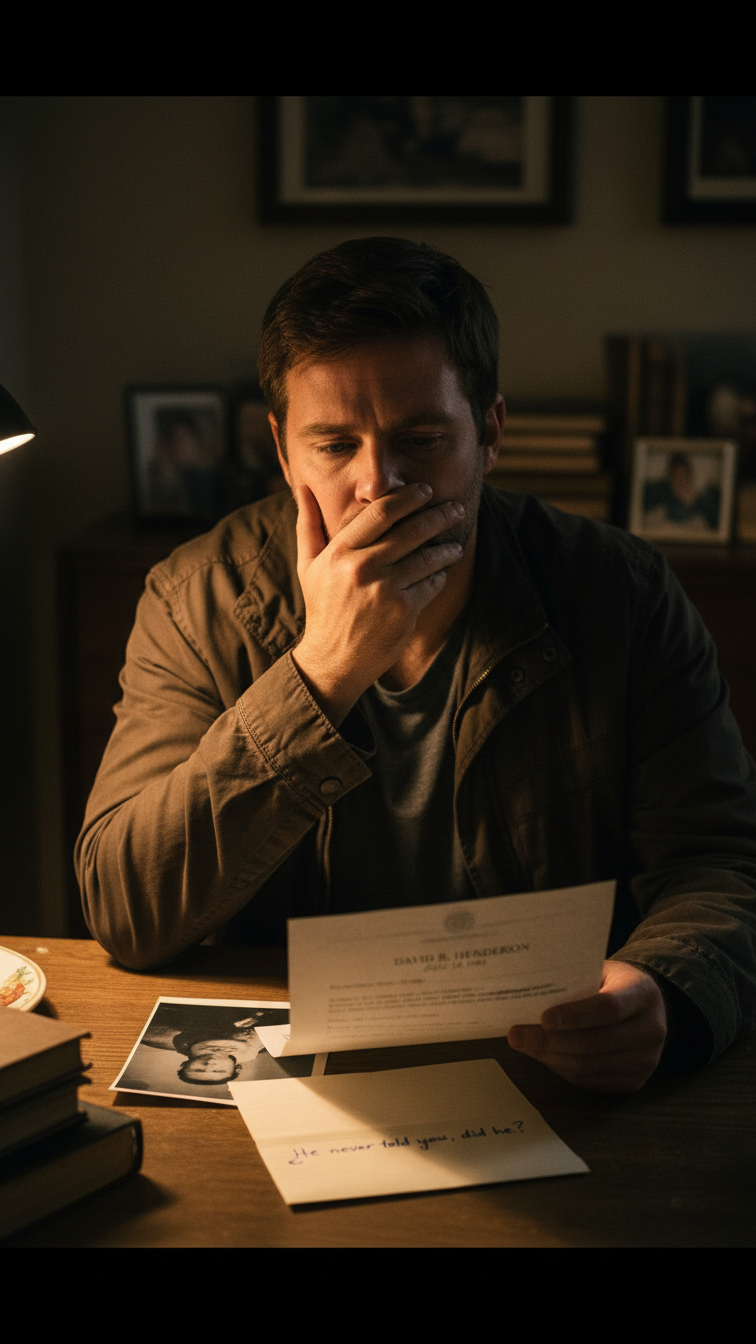
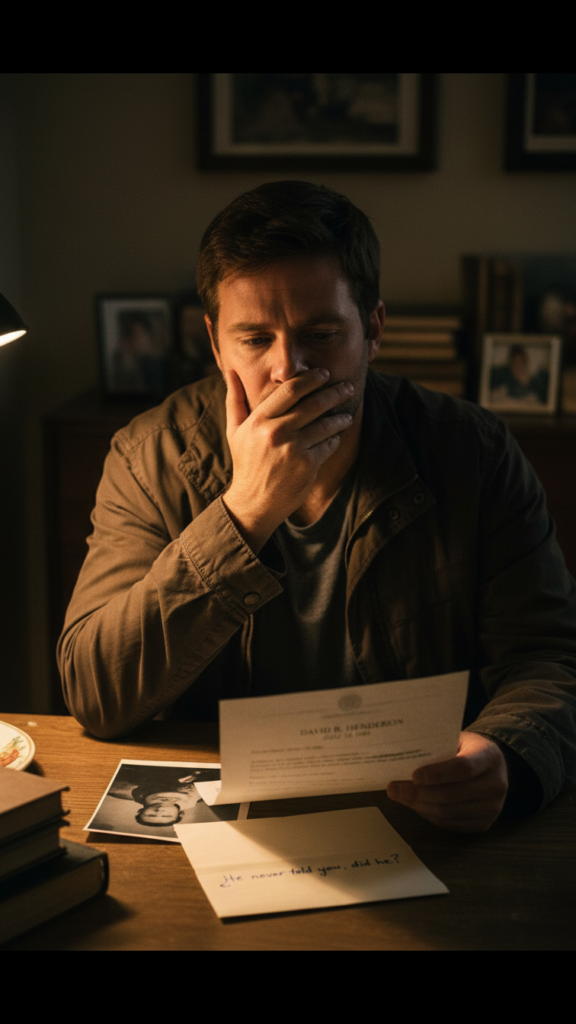
About six months after the funeral, a letter arrived addressed to me in handwriting I didn’t recognize. There was no return address.
Inside was a photocopy of a document. It was old, from the early nineties, and my dad’s name was typed in the middle of the page. I didn’t understand what it meant, but I recognized the format. It was from a court.
At the bottom, someone had written in pen: He never told you, did he?
I folded the paper and put it back in the envelope. I didn’t tell anyone about it.
That night, I dreamed I was standing in my childhood bedroom, and someone was calling my name from the hallway, but when I opened the door there was no one there.
I woke up knowing that whatever my dad had done, it wasn’t over just because he was gone.
And I still don’t know why that stranger waited until my father’s funeral to say it.
End of Part 1 — The truth is closer than I think, but I’m not sure I’m ready to hear it.