The Envelopes That Changed Everything
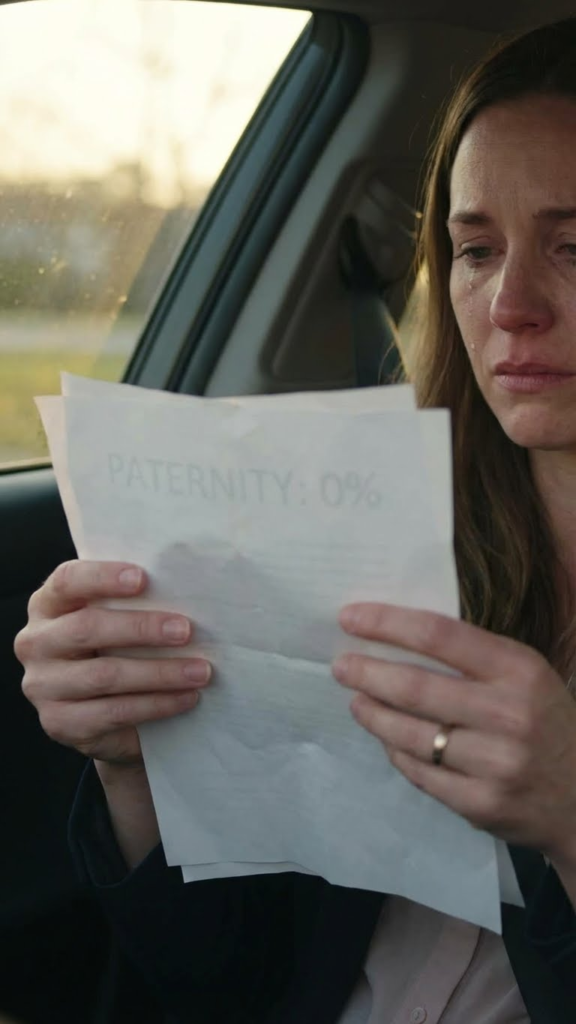
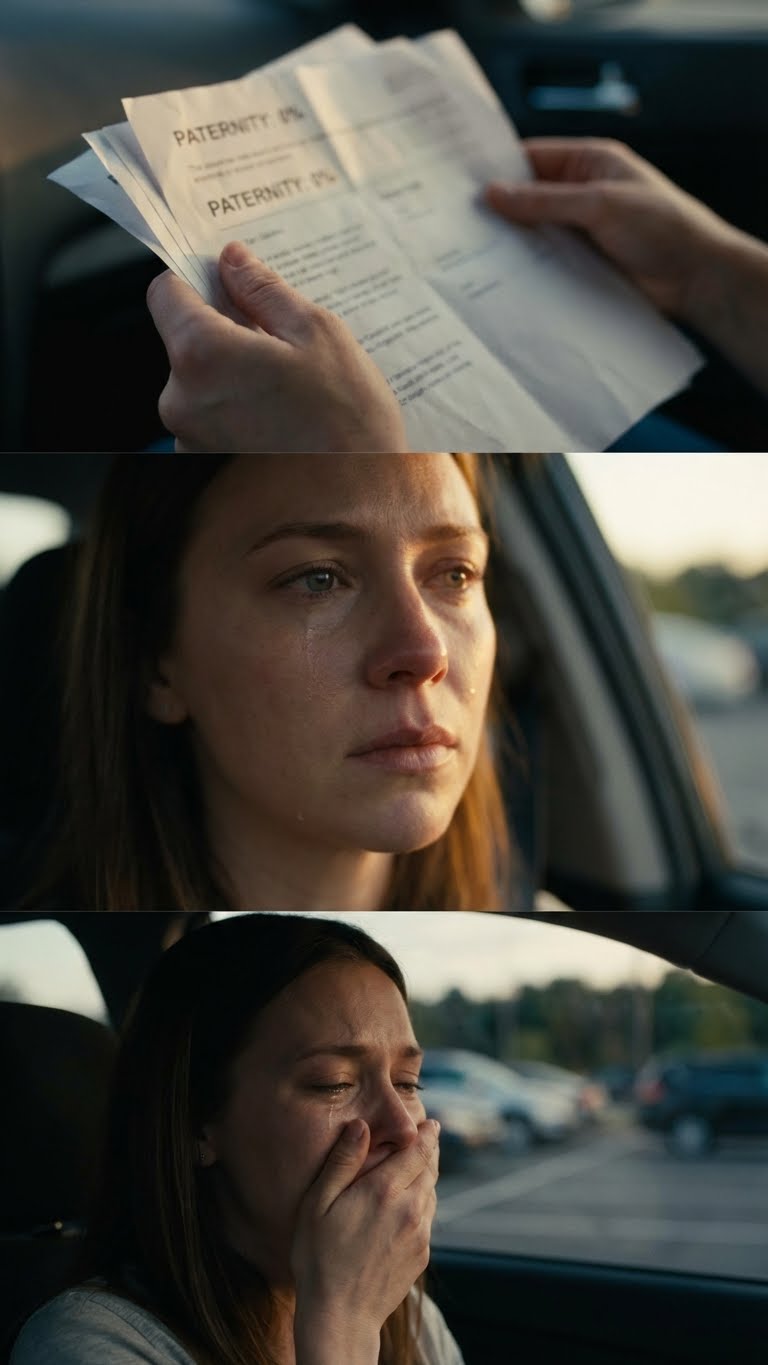
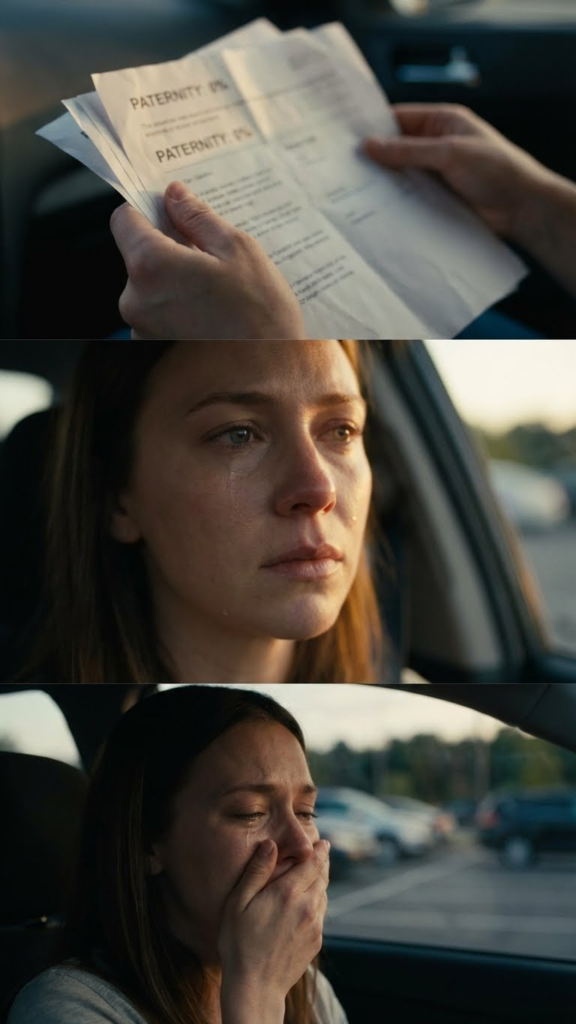
I was sitting in my car outside the genetics lab, staring at two envelopes that were about to destroy my entire life.
The leather steering wheel was cold under my white-knuckled grip. The parking lot was nearly empty—just a few other cars scattered across the faded lines, their occupants probably inside getting blood drawn or waiting for results that would change their lives too.
But not like this. No one’s results were like this.
I opened the envelopes again, even though I’d already read them five times. Maybe I’d misunderstood. Maybe there was a mistake.
Twin A – Lily Hayes: Biological Father – Michael Hayes (Patient’s Husband)
Probability of Paternity: 99.97%
Twin B – Owen Hayes: Biological Father – Unknown Male
Probability of Paternity: 0% (Michael Hayes excluded as biological father)
My hands wouldn’t stop shaking. The words blurred as tears filled my eyes. This wasn’t possible. This couldn’t be real.
My three-year-old twins were in daycare right now, probably in the middle of afternoon circle time. Lily would be sitting perfectly still, absorbing every word the teacher said. Owen would be fidgeting, playing with his shoelaces, looking at Lily for reassurance. They did everything together. Held hands when they were scared. Shared their snacks. Slept in the same room even though we had a spare bedroom.
They were twins. Born six minutes apart. Identical in every way that mattered—same bright blue eyes, same infectious laugh, same stubborn streak they definitely got from me.
Except they weren’t identical. Not genetically. Not biologically.
Because somehow, impossibly, my twins had different fathers.
The Medical Impossibility That Wasn’t
I’d read about this phenomenon once, late at night when I was pregnant and couldn’t sleep. Heteropaternal superfecundation. It sounded like science fiction.
It happens when a woman releases multiple eggs during ovulation—not uncommon with twins—and those eggs are fertilized by sperm from different men within a short window of time. Usually 24-48 hours. The cases were so rare they made medical journals. One in a million. Maybe less.
I’d found it fascinating back then. A medical curiosity. Nature’s weird exception to the rules.
I never imagined I’d be living it.
My phone buzzed, making me jump. A text from Michael: “Hey babe, picking up dinner on the way home. Thinking pizza? The kids love that new place. Love you ❤️”
Love you. Those words felt like broken glass scraping down my throat.
Because if Owen was Michael’s biological son but Lily wasn’t, that meant I’d slept with someone else during my fertile window. During the exact same 48-hour period when Michael and I were trying to conceive.
And I had absolutely no memory of it.
The Missing Night
I pressed my palms against my eyes, forcing myself to think back. Three years and nine months ago. The week I got pregnant.
Michael had been traveling for work—a conference in Chicago. He’d left on Monday, came home Thursday night. We’d been trying for a baby for eight months at that point, and I was obsessive about tracking everything. Ovulation strips. Basal temperature. Apps that predicted my fertile window down to the hour.
That week, I was ovulating. Peak fertility. And Michael was gone.
He’d rushed home Thursday evening, exhausted but determined. We’d been together that night. Again Friday morning. The timing was tight but possible. Two weeks later, the pregnancy test was positive.
Twins. The ultrasound tech had been so excited. “Fraternal twins! You’re very lucky.”
Lucky. Right.
But there was a gap in my memory. Wednesday. Wednesday night, Michael’s last night away, my best friend Jenna had dragged me out for her 28th birthday.
“Come on,” she’d begged. “You’ve been so stressed about baby stuff. One night out won’t hurt. We’ll have a few drinks, decompress, and you’ll be home by midnight.”
I’d agreed. We’d gone to that trendy wine bar downtown—Velvet Room or something like that. I remembered getting ready, putting on jeans and a nice top. I remembered the first round of drinks, laughing with Jenna and her coworkers. I remembered a second round.
And then… nothing.
I’d woken up the next morning in my own bed, fully clothed, with the worst hangover of my life. My phone was dead. My purse was on the floor. There was a text from Jenna sent at 11:47 PM: “Hope you got home safe! You were PRETTY gone lol. Call me tomorrow.”
I’d assumed I’d just overdone it. Too much wine on an empty stomach. Jenna had made sure I got an Uber home. I was embarrassed but fine.
For three years, I’d carried a vague discomfort about that night. A nagging sense that something was wrong, that I was missing something important. But I’d buried it. Chalked it up to mom guilt and exhaustion and the chaos of raising twins.
Now, staring at these DNA results, the truth was unavoidable.
Something happened that night. Something I couldn’t remember.
And I got pregnant with twins from two different fathers.
The Phone Call
My hands were shaking so badly I could barely dial. Jenna answered on the second ring, her voice bright and cheerful.
“Hey, Sarah! What’s up? I was just thinking about you—”
“Jenna.” My voice came out strangled. “I need you to tell me everything about your birthday. Three years ago. The night at Velvet Room.”
Silence. Heavy, suffocating silence.
“Sarah, what’s going on?”
“Just tell me. Please. Everything you remember.”
Another pause. When she spoke again, her voice was different. Careful. Scared.
“You… you don’t remember that night?”
The way she said it made my blood run cold. “Remember what?”
“Oh my God.” She sounded like she might cry. “Sarah, I thought—I thought you just didn’t want to talk about it. You never brought it up, so I figured—”
“Jenna, what happened?”
“There was a guy. At the bar. He bought you a drink while I was in the bathroom. When I came back, you were talking to him. You seemed fine at first, but then you started getting really out of it. Like, way more than you should have been after three glasses of wine.”
My heart was pounding so hard I thought I might pass out.
“I tried to get you to leave,” Jenna continued, her words rushing out now. “But you insisted you were fine. The guy said he’d make sure you got home safe. He seemed nice. Professional. Said he was a lawyer or something. I shouldn’t have—God, Sarah, I shouldn’t have trusted him. But you kept saying you were fine, and I was drunk too, and—”
“Did I leave with him?” I could barely breathe.
“I don’t know. I got separated from you for maybe twenty minutes. When I found you again, you were outside getting into an Uber. Alone. I texted you to make sure you got home. You texted back ‘yes’ around midnight, so I thought everything was okay.”
“Jenna, I didn’t text you back. My phone was dead when I woke up.”
Silence.
“Someone else sent that text,” I said. “Someone who had my phone.”
The Pieces Fall Into Place
I sat in that parking lot for two hours, making calls. First to the wine bar—closed down a year ago, no records available. Then to the Uber I’d supposedly taken home—the trip existed, but the pickup location was listed as an address three blocks from the bar, and the dropoff time was 1:47 AM, not midnight.
Nearly three hours unaccounted for.
I called the police non-emergency line. The officer I spoke with was sympathetic but pessimistic.
“Without a clear memory of assault, without physical evidence from that night, without even a name or description of the alleged perpetrator, there’s not much we can pursue. It’s been three years. The bar is closed. If there was any drugging involved, that would be long out of your system. And if sexual assault occurred, you’d need evidence of non-consent.”
“I couldn’t consent if I was drugged,” I said flatly.
“I understand. I’m just telling you what the legal reality is. You can file a report. We can document it. But without more information, there’s unlikely to be an investigation.”
I thanked her and hung up.
Then I drove home, those two envelopes burning in my purse like evidence at a crime scene. Because that’s what they were. Evidence that someone had assaulted me, stolen my ability to consent, and altered my entire life.
And I’d raised his child for three years without knowing.
The Confrontation With Michael
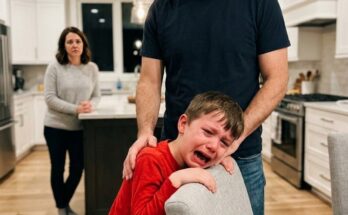
Michael was in the kitchen when I got home, pulling plates out of the cabinet. The pizza boxes were already on the counter—one pepperoni, one cheese. The kids’ favorites.
He looked up and smiled. “Hey! You’re later than usual. Everything okay?”
I set my purse down carefully. “Can we talk? Before the kids get home?”
His smile faded. “What’s wrong?”
I handed him the envelopes.
He looked confused as he opened them, started reading. Then his face went white. He read them again. Then a third time.
“I don’t understand,” he whispered.
“Neither did I.” My voice was surprisingly steady. “Until I started remembering. Or trying to remember.”
I told him everything. The wine bar. The missing hours. The Uber records. Jenna’s confession. The conclusion I couldn’t escape.
When I finished, Michael was sitting at the kitchen table with his head in his hands. For a long time, he didn’t speak.
“Someone drugged you,” he finally said.
“Yes.”
“And assaulted you.”
“Yes.”
“And we’ve been raising his—” His voice broke. He looked up at me with tears streaming down his face. “Lily. Oh my God, Lily.”
“She’s still our daughter,” I said fiercely. “She’s still your daughter in every way that matters.”
“I know. I know.” He was sobbing now. “But someone hurt you. Someone did this to you and we didn’t know. For three years we didn’t know.”
I sat down next to him. We held each other and cried.
The Decision
Over the next week, we talked endlessly. Stayed up until 3 AM some nights, drinking coffee and trying to figure out what this meant for our family.
The legal options were grim. Without more information, there was no case to pursue. The biological father—Lily’s biological father—was unknown. Could be anyone. Finding him would require resources we didn’t have and might not even be possible.
But morally, ethically, we had to decide: did we tell the kids?
Lily and Owen were three. Too young to understand genetics or paternity or any of it. But one day they’d be older. One day they might want to know their genetic history for medical reasons. One day they might do their own DNA tests out of curiosity.
“We tell them,” Michael said finally. “Not now. But when they’re old enough to understand. We tell them the truth.”
“What truth?” I asked. “That Lily’s biological father is a rapist?”
He flinched. “That Lily’s biological father is unknown. That there were circumstances beyond our control. That family isn’t about biology—it’s about love and choice and showing up every single day.”
I nodded. He was right.
We also decided to document everything. Keep the DNA results. Keep the police report I’d filed. Keep records of all my research, all the dead ends, all the evidence I’d gathered.
Just in case. Just in case someday Lily wanted to search. Or in case medical history became important. Or in case, by some miracle, the man who did this was caught for something else and DNA databases matched him.
It was the best we could do.
Three Years Later
My twins are six now. First graders. They still hold hands when they’re scared. They still share snacks and finish each other’s sentences.
Lily looks more like me every year—same auburn hair, same freckles. Owen looks like Michael’s baby photos. Their differences are becoming more obvious, but no one questions it. Fraternal twins often look nothing alike.
Michael is their father. He coaches Owen’s soccer team and helps Lily with her reading homework. He’s never treated them differently, never wavered in his commitment to both of them.
We told our families the truth. My parents were devastated for me. Michael’s parents struggled with it more—his mother especially had trouble understanding why we weren’t pursuing legal action more aggressively. But eventually, they accepted that there was nothing more to be done.
Jenna and I are still friends, though the dynamic changed. She carries guilt for that night that I don’t think she’ll ever fully release. I’ve forgiven her. She was drunk too. She was a victim of deception just like I was.
As for me? I’m in therapy. Working through the trauma of knowing I was assaulted but not remembering it. Grieving the choice that was stolen from me. Learning to separate what happened to me from my love for my daughter.
Because I do love Lily. Fiercely. Completely. She’s my miracle baby, even if her origins are rooted in violence.
Some people have asked if I resent her. If I look at her and see my rapist.
The answer is no. Never. I look at her and see a six-year-old who loves unicorns and hates broccoli and gives the best hugs in the world. I see my daughter.
What happened to me was not her fault. She is not defined by how she was conceived any more than I am defined by what was done to me.
The Unexpected Gift
Here’s the strange thing no one talks about: that DNA test, as devastating as it was, gave me answers.
For three years I’d carried this nagging discomfort. This sense that something was wrong, that I was forgetting something important. I’d had nightmares about that missing night. Anxiety attacks when I couldn’t account for my time.
Now I know. The not-knowing was almost worse than the knowing.
And knowing meant I could heal. I could name what happened. I could stop blaming myself for being “careless” or “irresponsible.” I could recognize that I was a victim and start processing that trauma properly.
The DNA test also revealed something else: the limits of biology.
Michael is not Lily’s biological father. But he is her father in every way that matters. He changes her bedsheets when she has nightmares. He makes her breakfast and braids her hair and tells her she can be anything she wants to be.
Biology didn’t make him her father. Choice did. Love did. Showing up every single day did.
And that’s a kind of parenthood that’s actually more powerful than genetics.
To Anyone Living This
If you’re reading this and relating—if you’ve discovered something about your children’s paternity that doesn’t make sense, if you have missing memories and unexplained pregnancies, if you’re grappling with the reality of assault—please know this:
It wasn’t your fault. You didn’t do anything wrong. Someone took advantage of your vulnerability, and that’s on them, not you.
Your children are still yours. Biology doesn’t determine family. Love does. Commitment does. The daily choice to show up and be present does.
Get help. Go to therapy. File police reports even if they don’t lead anywhere. Document everything. Tell people you trust. Don’t carry this alone.
And know that healing is possible. Not easy. Not quick. But possible.
I still have bad days. Days when I’m angry at the universe for what happened. Days when I grieve the violation of my body and my autonomy. Days when I wonder who Lily’s biological father is and whether he ever thinks about that night.
But I also have good days. Days when Lily and Owen are playing in the backyard and Michael is grilling dinner and everything feels simple and right. Days when I remember that I survived. That my family survived.
That we’re more than what happened to us.
The paternity test revealed that my twins have different fathers. But more importantly, it revealed that fatherhood—real fatherhood—has nothing to do with DNA.
And that’s the truth I’ll carry forward.