I didn’t order the DNA test to catch a cheater.
I ordered it because there was a Black Friday deal and a cute ad showing families discovering they were 12% Scandinavian and third cousins with someone who baked very good bread. It was supposed to be a joke between me and my husband, Adam. A quirky little “let’s see who’s more Irish” competition we could laugh about later.
Instead, it became the detonator placed under the foundation of my life.
The Setup: When the Results Arrived
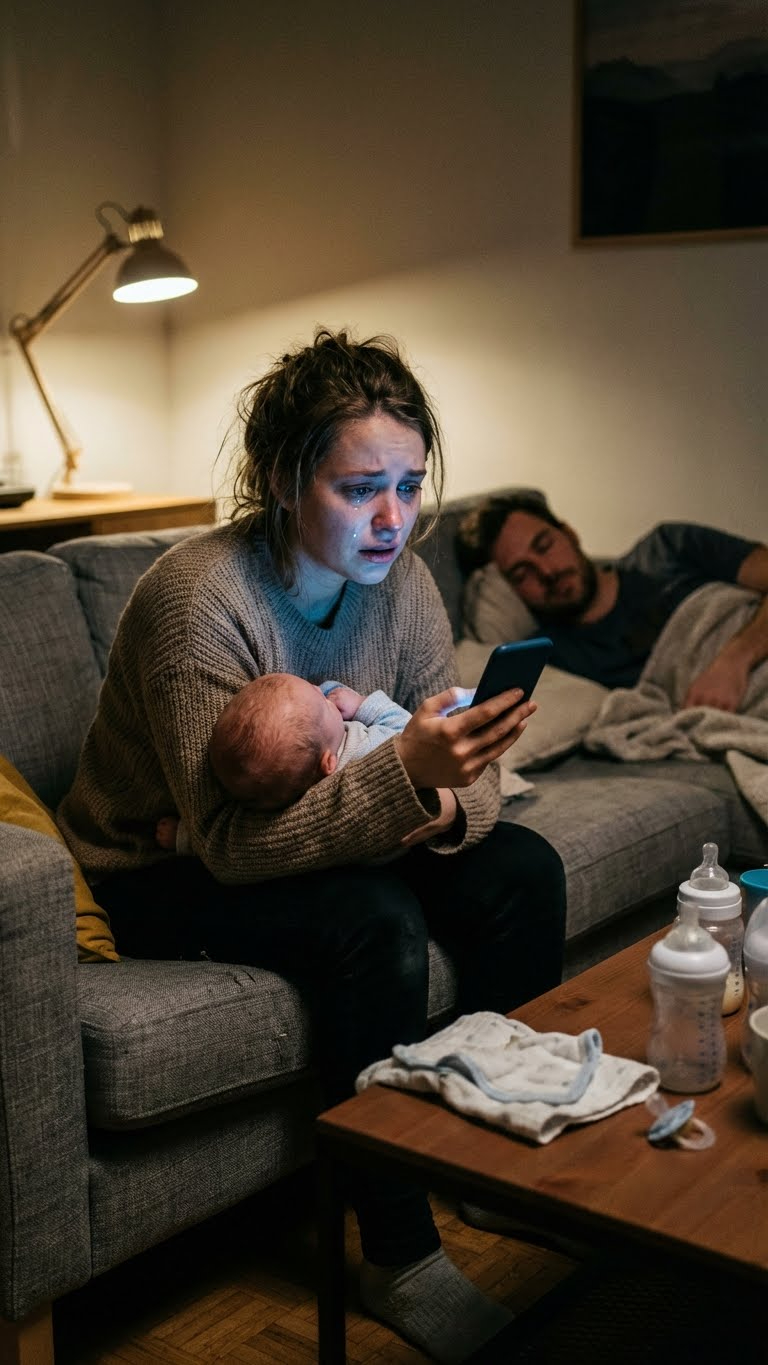
The notification came on a Tuesday afternoon. It was one of those gray, wet London days that make everything feel a little heavier. I was on maternity leave from my marketing job, wearing the same leggings I’d slept in, nursing our three-month-old son, Noah, when my phone buzzed.
“Your DNA results are ready.”
I clicked the app without thinking. Adam was asleep on the couch, sprawled out, one arm over his face. Noah’s tiny hand was gripping my finger, his eyes fluttering closed. It was one of those mundane, ordinary moments that later become a before-and-after line in your memory.
I expected to see the cute little map. Instead, I saw a red warning banner.
“Potential Parent/Child Mismatch Detected. Please review.”
I frowned, tapped it, and the page loaded with two profiles: mine and Noah’s. Underneath, in green, it said:
“Biological Mother: MATCH.”
Then I scrolled to Adam’s connected profile.
“Biological Father: NO MATCH with Adam Carter.”
For a second, the words didn’t make sense. They just floated on my screen like random letters. Then my eyes found the sentence beneath it.
“No genetic relationship detected between alleged father and child.”
Alleged father.
It felt like someone had reached into my chest and squeezed my lungs closed. My first irrational thought was that the app had confused “husband” with “alleged” and I actually looked for a customer service button, something to report an error.
But the more I scrolled, the worse it got. Graphs. Probabilities. Cold, clinical language pointing to one conclusion: the man sleeping ten feet away from me was not biologically related to the baby in my arms.
My baby. Our baby. The one I’d watched him cry over when he first saw the positive pregnancy test.
I looked at Noah’s face. His little nose, the exact same tilt as Adam’s. His dimples when he yawned. My brain refused to accept it. I felt like the phone was lying, like reality had broken.
Behind the shock, something even uglier surfaced—fear.
Not of Adam. Of everyone else.
His mother. His family. The people who had never really accepted me.
They would see this as proof. Proof that I was the stereotype they’d always warned him about: the working-class girl from Manchester who trapped him, the doctor, with a baby.
And if Adam believed it, I could lose everything.
Standing on that knife edge of panic, another name whispered up from the darkest part of my memory: Daniel.
The man I’d almost ruined my life with once before.
Adam stirred on the couch and blinked at me. “Everything okay?”
I flipped the phone face-down so fast it made a soft sound.
“Yeah,” I lied. “Just spam.”
But inside, everything had already begun to fall apart.
The Backstory: How the Perfect Life Got Built on Cracks
Before the test, if you’d asked anyone who knew us, they would have said Adam and I were the perfect couple.
We met in university. He was the quiet, clever medical student; I was the loud, sarcastic literature major who couldn’t tell a stethoscope from a blood pressure cuff. We started out as friends who stayed up until 3 a.m. arguing about movies and TV shows. Somewhere between exams and cheap takeaway, we fell in love.
Adam came from a middle-class, tidy family—a teacher mother, accountant father, semi-detached house in Surrey. I came from chaos: divorced parents, an alcoholic dad, a mum who worked two jobs and still sometimes chose cigarettes over dinner.
His mother, Caroline, hated me from the start.
“She’s not… our sort,” I overheard her say once, when she thought I was out of earshot. “And she doesn’t even have a proper career path. Marketing? Influencers and hashtags? Is that even a job?”
Adam always defended me, but never to her face. That was our first crack.
The second came four years later, when I got promoted at my agency and started making more money than him.
He laughed it off at first. “Guess I’m the trophy husband now,” he’d joke, flexing his very non-gym-going arms.
But when my boss started asking me to stay late, to travel, to attend client dinners with polished lawyers and smooth-talking executives, something shifted. He became quieter. A little sharper with his comments.
Then there was Daniel.
Daniel was a senior creative at the agency. Charismatic, reckless, the kind of man who didn’t own an iron and somehow made wrinkled shirts look intentional. He flirted with everyone, but with me it became something else—private jokes, late-night brainstorming sessions that turned into confessions about marriages and disappointments.
I was stupid enough to enjoy the attention. Stupid enough to think I could handle the line.
One night, after too many drinks at a client celebration, I let him kiss me.
It happened outside a bar in Shoreditch. It was raining lightly, we were both laughing at something that wasn’t even that funny, and suddenly his face was close and then his lips were on mine.
I kissed him back. For five seconds. Ten. Long enough to know that if I didn’t stop, I would cross a line I couldn’t come back from.
I shoved him away. “No. I’m married.”
He held up his hands, drunk and apologetic. “Right. Right. Sorry. Forget it, yeah?”
I went home and scrubbed my mouth until my lips hurt. I told Adam I was tired and fell asleep pretending the evening had been normal.
I never told him about the kiss.
Two weeks later, I found out I was pregnant.
The Doubt: When the Past Comes Back
When those DNA results popped up on my phone months later, the memory of that rain-slicked pavement and Daniel’s mouth hit me like a freight train.
It had been over a year before Noah was born. But the shame didn’t follow logic. It didn’t care about dates. It screamed one thing: This is your fault.
I spent the next 24 hours in a fog.
I didn’t tell Adam. I didn’t tell anyone. I barely slept. While he snored beside me, I lay awake calculating dates, scrolling back through photos, tracking my cycle using old period app entries.
The kiss with Daniel had happened almost five months before I conceived. Biologically impossible. I knew that. But fear is louder than math.
The next day, when Adam went to the supermarket, I opened my laptop and dug deeper into the DNA site. There was a FAQ section about “alleged father mismatches.” It listed possible reasons: wrong sample used, sample contamination, lab error… hospital mix-ups.
I’d had a complicated labor. Emergency c-section. Noah had been taken to NICU for observation for six hours while I drifted in and out of anesthesia. There had been so many babies, so many bracelets and tags and nurses and hurried signatures.
A wild thought slowly took shape: What if Noah isn’t… Noah?
What if the baby I’d taken home wasn’t biologically Adam’s—or mine?
My hands went numb.
I ordered a second test kit, this time a direct legal paternity test, not one of the “fun” services. I swabbed Noah’s cheek while he slept, my hands shaking. I told Adam it was a newborn screening follow-up. He didn’t question it.
For the “father,” I sent Adam’s sample. He thought it was another ancestry test; I told him the company had messed up his results the first time and sent a replacement. He rolled his eyes and spit in the tube.
Then, in a moment of madness, I ordered a third kit.
This one I didn’t send to Adam.
I sent it to Daniel.
The Confrontation: Three Letters, Three Men
Getting Daniel’s sample was easier than it should have been.
We’d kept things strictly professional after that one stupid kiss. Different teams, different floors. We only saw each other in big meetings now and exchanged the kind of polite, distant smiles that say, “We will never talk about that again.”
I asked him to meet me for a coffee near the office “to talk about a freelance opportunity.” He showed up in his usual half-tucked shirt, smelling of expensive aftershave and regret.
When I explained, his face went from amused to horrified.
“You think that kid might be mine?” he whispered.
“I don’t,” I said quickly. “I know the timeline. I know it doesn’t make sense. But the test said Adam isn’t the father. I just… I have to rule it out. For my own sanity. You’re the only other man I’ve ever—” I stopped, unable to finish.
He was quiet for a long time.
Finally, he nodded. “Okay. I’ll do it. But if that kid is mine, we’re both screwed.”
He swabbed his cheek in the cafe bathroom. I posted the kit from the nearest mailbox and walked home feeling like someone else was controlling my body.
The results arrived two weeks later. Three emails. Three subject lines that felt like loaded guns.
I opened Adam’s first.
“Result: NO genetic relationship detected between alleged father and child.”
I swallowed. No surprise there. It matched the first test. Two separate companies, same conclusion.
I opened Daniel’s.
“Result: NO genetic relationship detected between alleged father and child.”
My vision blurred. I had to read it three times. No match. Not even a maybe. No.
The room spun. There was only one test left: the maternity confirmation. Mine.
“Result: 0% probability of maternity with tested child.”
The phone slipped from my hand and hit the floor.
I stared at it, unable to breathe.
Noah was in his bouncer, kicking his legs happily, gurgling at a stuffed giraffe. My son. My baby. The child I’d felt kick inside me, whose heartbeat I’d heard, whose tiny body I’d watched on ultrasound screens.
And the paper said he wasn’t mine.
The world went very, very quiet.
Then I screamed.
The Hospital: Trading Babies
Adam burst into the room from the kitchen, panic in his eyes. “What happened? What’s wrong?”
I couldn’t speak. I pointed to the phone. He picked it up, read the emails, and went pale.
There are moments that divide a relationship into before and after. This was ours.
“What is this?” His voice was hoarse. “What did you do?”
“I didn’t do anything,” I sobbed. “They’re saying he’s not yours. He’s not mine. Adam, that’s impossible. I was there. I had a c-section. I saw them take him out of me. I saw—”
“You lied to me,” he snapped, the hurt in his eyes sharpening into something uglier. “I knew you were hiding something. You’ve been weird since those stupid ancestry results came. Did you cheat on me?”
“I didn’t cheat,” I said, but the words sounded weak even to me. “I kissed someone. Once. Before I was pregnant. I swear that’s all. But it doesn’t matter because the dates don’t—”
“Who?” he demanded.
“It doesn’t matter. He’s not the father either. Don’t you see? The tests are saying neither of us—”
He backed away like I’d hit him. “You lied. You lied to me for a year. You let me love a child who might not be mine.”
“He is yours!” I screamed. “He’s ours. I don’t care what the test says. He’s our son.”
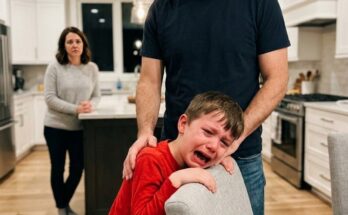
Adam stared at Noah, then at me. His jaw clenched. “We’re going to the hospital. Now.”
The maternity ward looked different when you weren’t arriving with flowers and balloons. Everything felt sharper, colder. The receptionist’s smile faded when she saw Adam’s face.
“We need to speak to whoever was on duty when my wife gave birth,” he said, voice shaking. “It was three months ago. Emergency c-section. There’s been… a mistake.”
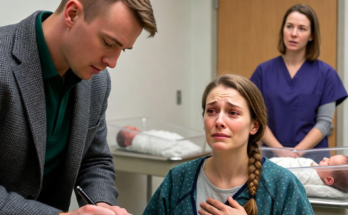
They made us sit in a private room. A senior midwife came in, then the head of obstetrics, then someone from administration. We showed them the tests. We explained. They looked skeptical, then concerned, then something close to scared.
“We’ll need to review the records,” the obstetrician said. “And the wristband numbers, the operating notes, the NICU logs. This is… highly unusual.”
“How unusual?” Adam asked.
“Incredibly rare,” she said. “But not impossible.”
Those hours in that room were the longest of my life. Noah slept in his car seat, oblivious. Adam stood by the window, hands in his hair, pacing like a caged animal.
At one point, he turned to me and said quietly, “If he’s not ours… what happens to him?”
I had no answer. My brain shut down at the thought of handing my baby to strangers. Of some other woman holding my child, one I’d never met.
After four hours, they came back.
The obstetrician’s face told me everything before she spoke.
“There was an error,” she said.
A young nurse stepped in behind her, eyes red from crying.
“We’ve checked the logs,” the doctor continued. “On the night you delivered, two emergency c-sections were performed within thirty minutes of each other. Both babies were male. Both were taken to NICU. Their wristband numbers were recorded correctly in the system, but… the physical bands were switched.”
I grabbed the edge of the table. “What are you saying?”
The nurse burst into tears. The doctor took a breath.
“I’m saying that it is highly likely that the baby you’ve been raising is biologically the child of another couple… and somewhere in this city, another family has been raising your biological son.”
Everything in me broke.
The Other Family: Mirror Lives
They didn’t give us names that day. Confidentiality, protocols, legal advice. But they did say the other couple had also done a DNA test recently.
Their results had triggered an internal review too.
“We were already in the process of contacting them,” the administrator said. “We just… didn’t expect to be having this conversation twice.”
It took a week for lawyers and ethics boards and child protection services to get involved. A week where Adam slept in the guest room and avoided my eyes. A week where I held Noah even tighter, terrified someone would show up and simply take him.
Finally, we were told the other couple had agreed to meet us. In a neutral location, with social workers and lawyers present.
They walked into the conference room like ghosts of our own fear.
Her name was Rachel. His name was Mark. They were from East London, both teachers. Their son—my son, apparently—was named Theo.
He had my eyes.
I knew it the moment I saw the photo they placed on the table.
“Both DNA tests confirm it,” the social worker said gently. “Theo is biologically related to you and your husband. Noah is biologically related to them.”
Rachel was crying silently. Mark’s hand was white around hers.
“We love him,” she said suddenly, voice breaking. “Theo. We love him. He’s our son.”
“I love Noah,” I whispered. “He’s my son.”
The room filled with a kind of grief that had no language.
The law, as it turned out, wasn’t built for this. There were guidelines, yes, but no one could force an immediate swap. Judges prioritized stability, attachment, the welfare of the children.
What they proposed instead felt both merciful and cruel: joint custody, at least temporarily. Gradual introductions. Therapy. A long, careful process of unwinding a mistake that never should have happened.
Adam finally spoke.
“I want my son,” he said quietly. “Both of them, if I could. But I won’t rip a child away from the only parents he’s ever known.”
Rachel nodded, tears falling onto the table. “Same.”
That’s how we ended up with a schedule that looked more like a business acquisition than a family plan.
We met at parks, in play centers, in supervised rooms with too-bright walls. We watched each other’s children crawl, then toddle, then speak. We watched our hearts split in two and then somehow stretch to fit two boys instead of one.
Everyone expects me to say I forgave the hospital. I didn’t.
Instead, I sued them.
The Revenge: Making the Hospital Pay
It wasn’t about money. Except it absolutely was.
The hospital wasn’t some underfunded rural clinic. It was a major London teaching hospital, the kind that puts out glossy brochures and has donor walls in the lobby. They had protocols. They had procedures. And they had failed all of them.
Our lawyer built a case around negligence, emotional distress, and long-term psychological harm to both families and both children. The hospital tried to settle quietly at first, offering an amount that felt insultingly low considering they’d rearranged the entire universe for four people without their consent.
We refused.
During the legal discovery process, something ugly crawled out. The nurse who’d been on duty that night had been working a double shift. She’d swapped two wristbands when she was beyond exhausted and never reported the error she suspected later because she was terrified of losing her job.
The hospital had known about complaints regarding staffing levels. They’d ignored them.
We took it to court.
The media got hold of the story. “Baby Swap Horror,” the headlines screamed. We gave one carefully controlled interview—not for fame, but to put pressure on the hospital to change its practices. To make sure this never happened again.
The settlement, when it came, was huge. Enough to ensure both boys would have therapy, education, and futures without financial anxiety. Enough to force systemic changes in the maternity ward.
But that wasn’t the real revenge.
The real revenge was this: every time a pregnant woman walks into that hospital now, she sees new protocols, new checks, new staff on duty. There are scanners, double-tagging, mandatory cross-checks with parents, independent audits.
They will never forget what happened to us.
The Resolution: Two Sons, One Family
It’s been four years.
We never did a “swap.” There was no dramatic day where we traded babies like items on a checklist. Life doesn’t work like that. Instead, our families wove around each other like vines.
Noah calls me “Mum” and Adam “Dad.” He calls Rachel “Auntie Rach.” He spends alternate weekends at their house, where he shares a bunk bed with Theo.
Theo calls Rachel and Mark “Mum” and “Dad,” but he knows us as “Mama Claire” and “Uncle Adam.” He spends school holidays with us in Manchester, running around the garden with his brother.
Biologically, the lines are clear. Emotionally, they’re a mess—in the best possible way.
Adam and I almost didn’t make it. The resentment over the kiss with Daniel, the secrecy, the way he defaulted to suspicion when the first test came… it all sat between us like an uninvited guest.
We went to couples therapy. We fought. We cried. We nearly signed divorce papers once, in a solicitor’s office that smelled like stale carpet and lost dreams.
But somewhere between court dates and custody schedules and speech therapy appointments and bedtime stories with two little boys who both had his crooked smile, Adam looked at me one night and said, “I don’t want to lose you too.”
So we rebuilt.
Brick by brutal brick.
I told him everything about Daniel. He told me everything about how his mother’s voice lived in his head, always whispering that women like me couldn’t be trusted. We dragged all the ugliness into the light and made it answer for itself.
We’re not the same couple we were before. We’re not “perfect.” We’re scarred, complicated, and very, very real.
Caroline, his mother, tried to weaponize the whole situation at first. She called me names. Accused me of cheating, even after courts and DNA tests confirmed the truth.
Adam told her, calmly and firmly, that if she wanted a relationship with her grandsons, she would treat me with respect or she wouldn’t see them at all.
She chose them.
These days, she sits on our sofa and reads books to both boys, one on each side, like her heart eventually learned how to stretch, too.
Sometimes I still take out the first DNA report—the one that started it all. I keep it in a box with ultrasound photos, hospital bracelets, and court documents.
I look at that red banner—“Potential Parent/Child Mismatch Detected”—and I feel a strange, fierce gratitude.
That test didn’t just reveal a mistake.
It gave my real son back to me.
It gave another woman’s real son back to her.
And it revealed who Adam and I truly were when everything comfortable was stripped away.
I ordered a DNA test for fun.
What I got instead was the most brutal, beautiful, transformative catastrophe of my life.
And somehow, out of all that chaos, we built something stronger than anything I’d ever imagined:
Two boys.
Two families.
One truth we all live by now:
Blood matters. But choice matters more.