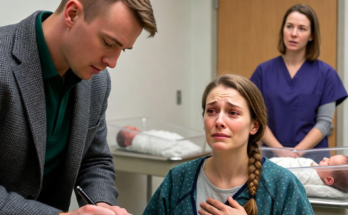
“I’ve got maybe twelve months left. Marry me, give me a son—and your family will never worry about money again,” the wealthy landowner said.
In the wind-scoured plains of eastern Montana, where winters bury roads and summers bake the earth, people don’t believe in miracles. They believe in weather forecasts, hard work, and the fact that anything too good usually hides a hook.
Ava Monroe, twenty-one, already carried the permanent scent of hay and livestock. She rose before dawn, pulled on mud-stiff boots, and worked the barn by flashlight. The Monroe farm had once been modest but steady—until drought, debt, and foreclosure notices arrived. Her father, Jacob, signed loans he barely understood to keep the land. When payments failed, he was convicted of loan fraud and sent to prison, leaving Ava and her frail mother, Clara, in a creaking clapboard house.
Clara’s chronic illness worsened. Pills, heat, food—everything cost too much. Ava stretched every dollar, worked extra shifts at neighboring ranches, but the money evaporated.
Late one night, staring down the empty gravel road, Ava felt only emptiness.
That was when Victor Langford arrived.
His silver SUV looked absurd on the rutted drive. Mid-forties, tall, impeccably dressed, shoes untouched by mud. He studied Ava like an asset.
“You’re Ava Monroe,” he said.
She nodded.
“I need to speak with you and your mother.”
Inside, Victor wasted no time.
“I’ll secure your husband’s early release, clear your debts, cover all medical costs. Your family will be set for life.”
He paused.
“On one condition. Marry me. Bear me a son. Doctors give me roughly one year.”
Clara gasped. “What?”
“Terminal illness,” Victor said calmly. “I want an heir before I go.”
Ava’s mind raced: fury, shame, then grim calculation. Her father behind bars. Her mother fading. Hunger that made her dizzy.
He’ll be dead soon anyway.
“What if I say no?” she asked.
“I’ll find someone else.”
Clara protested weakly, but Ava silenced her with a raised hand. Romance wasn’t an option. Survival was.
“What’s wrong with you?” she asked.
“Heart condition. Twelve months, give or take.”
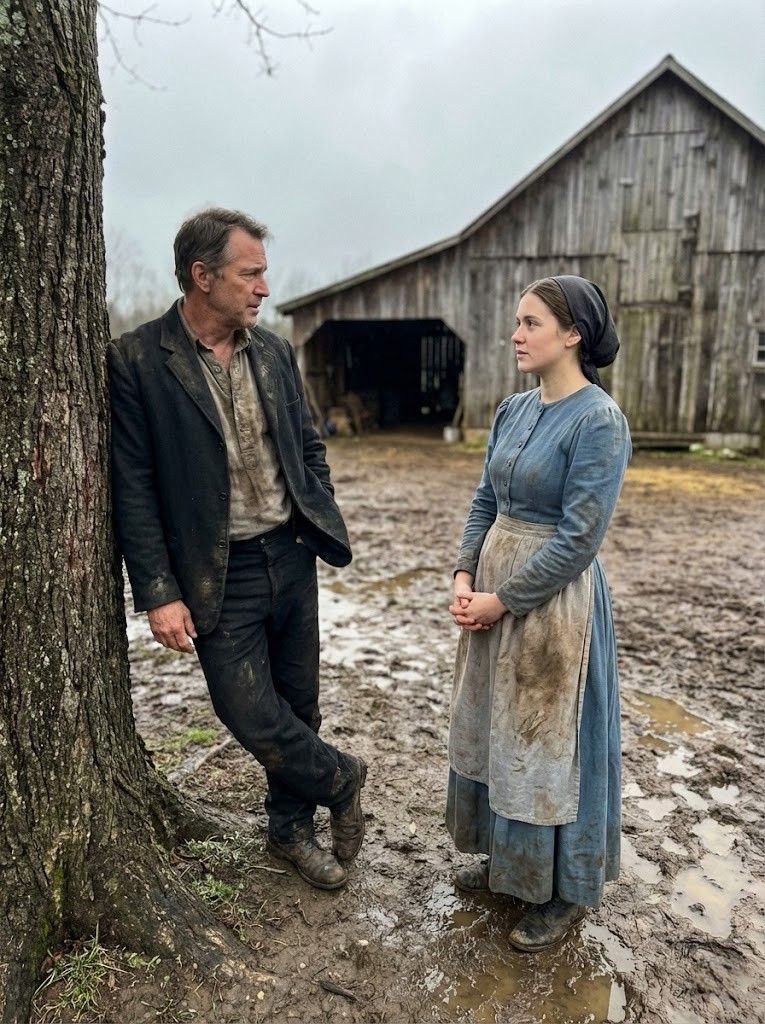
The civil ceremony happened in eleven days. No flowers, no vows of love—just signatures.
Victor moved her to his sprawling ranch outside Bozeman: polished floors, silent staff, echoing rooms. He was polite, distant, never affectionate. On their wedding night he was efficient, detached. Afterward, he slept instantly. Ava lay awake, cold.
Past midnight, unable to rest, she wandered the hall. Light spilled from his office door.
She stepped inside.
Medical report: stable condition, favorable prognosis, no terminal illness.
Trust documents: inheritance from a deceased uncle, conditioned on fathering a legitimate child within twelve months.
Marriage contract: full asset transfer only upon birth; otherwise, annulment and no claims for the spouse.
Ava’s stomach lurched. He wasn’t dying. He was racing a deadline. She was the means to an end.
Before dawn she packed her duffel and left barefoot, the gate closing behind her with a soft mechanical sigh.
She called Clara from a gas-station payphone.
“He lied, Mom. I’m coming home.”
At the farmhouse, Ava collapsed into her mother’s arms and told her everything. The tears came—furious, cleansing.
Victor’s texts followed: Return. This is inappropriate.
Ava replied once: I saw the medical report. The contract. Do not contact me.
His response: You invaded my privacy.
Then the pressure began. Payments to Clara’s clinic “paused.” A lawyer visited Jacob in prison, dangling early release if Ava “fulfilled her obligations.”
Victor was using her family as leverage.
Ava refused to break. She contacted legal aid. A paralegal named Naomi listened, then moved fast.
They gathered evidence: Victor’s early text (“I’m dying”), the chilling voicemail (“unpleasant for everyone… especially your mother”), court filings accusing Ava of abandonment.
Naomi filed for annulment on grounds of fraud and secured a temporary no-contact order.
Victor escalated. Process servers. Threats veiled as offers. But Ava held firm.
Then a high-school acquaintance, Hannah, texted: He’s telling people at a fundraiser he’s terminal. Asking about young women.
Ava’s blood ran cold. He was repeating the lie.
Hannah identified the new target: Lily Sanderson, nineteen, sick mother, absent father. Victor was already courting her.
Ava couldn’t stay silent. She sent a factual statement to the fundraiser organizers: her experience, attached messages, the no-contact order. They quietly removed him from the program.
With Naomi’s help, Ava pushed for expedited discovery. A judge granted supervised access to Victor’s office.
They arrived with a deputy. Victor opened the door, composure cracking at the edges.
Naomi photographed the medical report (healthy), the trust clause (child within twelve months), the annulment provision.
The truth was now on record.
The annulment was granted. The court barred retaliation, ordered continued medical support for Clara, and blocked third-party pressure.
Victor’s local reputation cooled. Invitations stopped. His timeline kept ticking.
Months later, Jacob called from prison, voice lighter: “They say he’s fighting the estate clause in court. Calling it unfair.”
Ava almost smiled. “Unfair.”
Her father’s voice cracked. “I’m proud of you, Ava. You didn’t let him own you.”
On a crisp fall day, Ava and Clara sat by Lake Mendota, watching water glitter under weak sun.
“Do you regret saying yes?” Clara asked.
Ava stared across the lake. “I regret believing I had to trade myself. But I don’t regret leaving. Or fighting.”
Clara squeezed her hand. “That’s my girl.”
Ava breathed in the cold air. No contracts. No lies. Just choices, hard-won and honest.
Somewhere, Victor’s year was running out.
But it no longer belonged to her.
Not even a second.