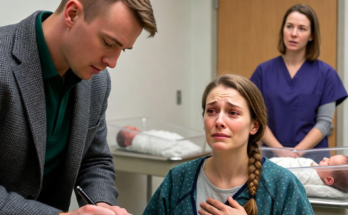
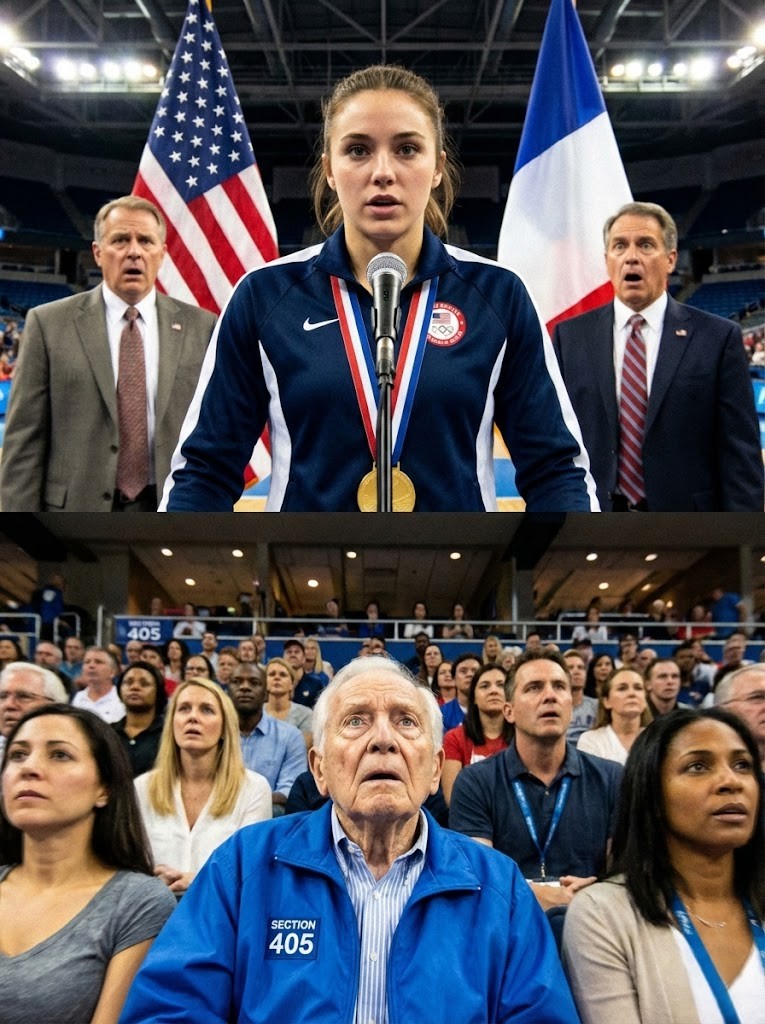
The broadcast cut out. No warning, no explanation. Why? Because the gold medalist had just grabbed the microphone and issued a command. I am not leaving this podium until security brings me the man in section 405. 15,000 people turned to look. They saw an old man in a blue jacket trying to escape. He thought he was a nobody. He didn’t know he was the only reason she was standing there. 10 years earlier, a man named Earl Whitmore was locking up the Greyfield Community Recreation Center for what he thought was the last time.
The budget cuts had finally caught up. 26 years of teaching gymnastics in a town that barely knew the sport existed. And now the program was finished. Earl was 62, tired in ways that had nothing to do with age, and ready to accept that some dreams just don’t work out the way you planned. He stood in the empty gymnasium, lights flickering overhead, and let himself remember Olympic trials, 22 years old, with more belief than sense. He’d been good, really good, the kind of good that made coaches whisper about metal potential.
He’d trained for 6 years with a single-minded focus that cost him friendships, relationships, everything that wasn’t gymnastics. He missed the team by two spots. Two spots that might as well have been 2,000 mi. The difference between history and anonymity, between becoming someone and becoming no one. An ankle injury 6 months later ended any hope of trying again. The doctors said he’d never compete at the elite level. They were right. Earl spent the next four decades watching others chase what he’d lost.
Coaching high school teams that never produced anyone special, teaching recreational classes to kids whose parents just wanted them tired enough to sleep through the night. Pouring everything he had into a sport that kept taking without giving back. His wife Linda understood. She’d been a dancer before they met. Had her own collection of almost and what if. A knee injury at 23 ended her dreams of professional ballet. She’d spent a year not dancing at all. then slowly found her way back through teaching.
“We’re the same, you and me,” she told him on their third date. “We know what it feels like to lose something before you ever really had it.” They’d been married 38 years now. Linda was the one who convinced him to keep coaching even when the school cut his program, even when the funding disappeared, even when it seemed like nobody cared. “You’re not doing it for the trophies,” she told him once. “You’re doing it because somewhere out there is a kid who needs what you have.
You just haven’t found her yet. Earl wanted to believe that. But at 62, locking up a community center that would be turned into storage space by next month, belief was getting harder to hold on to. That’s when he saw her. A girl, maybe 9 or 10 years old, doing cartwheels in the parking lot. Not the sloppy kind that kids do at birthday parties. These were clean, controlled, the kind of cartwheels that showed natural body awareness most coaches spent years trying to develop.
Earl watched her for a full minute before approaching. The late afternoon sun cast long shadows across the asphalt, and the girl moved through them like she was dancing with the light itself. 20 ft away, a beatup sedan sat with the windows cracked. A woman in a waitress uniform was asleep in the driver’s seat, head tilted back, clearly exhausted. The girl kept glancing at the car between cartwheels, staying close, but giving her mother space to rest. Where’d you learn to do that?
The girl stopped, suddenly shy. Dark hair pulled back in a messy ponytail. Clothes that had seen better days. Sneakers with holes near the toes. Eyes that looked older than her years. Nowhere. I just do it. She pointed at the sedan. My mom’s resting between shifts. I practice while she sleeps. You just do it. I watch videos online at the library. They have computers you can use for free. Earl felt something stir in his chest. something he’d thought was dead.
He’d seen thousands of kids over the years, had developed an eye for talent that went beyond technique. There was something about the way certain children moved, a natural grace that couldn’t be taught. Most coaches could spot it. Few ever actually encountered it. This girl had it. What’s your name? Maya. Maya Porter. You ever had any real training, Maya? She shook her head. My mom works a lot. We can’t afford classes. Earl looked at this girl, saw himself at that age, before the trials, before the injury, before life taught him that wanting something badly enough doesn’t mean you get to have it.
What if I told you I could teach you for free every weekend? Maya’s eyes went wide. Why would you do that? Earl didn’t have a good answer. Or maybe he had the only answer that mattered. Because someone should have done it for me. Maya’s mother was named Grace. Single parent, two jobs, the kind of exhaustion that settles into your bones and never quite leaves. She worked mornings at a diner and evenings cleaning office buildings, slept in fragments, ate standing up, had given up on her own dreams so long ago, she couldn’t remember what they’d been.
She was suspicious when Earl explained his offer. What’s the catch? No catch. I’ve been coaching for 26 years. Your daughter has more natural talent than anyone I’ve ever seen. I’d like the chance to develop it. We can’t pay you. I’m not asking you to. Grace studied him for a long moment. They were standing in the doorway of her apartment, a small two-bedroom in a building that had seen better decades. The hallway smelled like cooking grease and cigarette smoke.
Somewhere, a baby was crying. Earl understood her hesitation. A stranger offering to spend time with your daughter. No strings attached. It sounded too good to be true because it usually was. I was an Olympic trials gymnast in 1976. Earl said, “Missed the team by two spots. Spent my whole career looking for someone who could go further than I did. I think your daughter might be that person.” Something shifted in Grace’s expression. Not trust exactly, but the beginning of it.
Why her? There must be other kids with talent. There are. But talent isn’t rare. What’s rare is talent combined with something else. A hunger, a willingness to work. I watched your daughter for 5 minutes and I saw a kid who taught herself gymnastics from library videos because she wanted it badly enough to find a way. Earl paused. That’s the part you can’t teach. That’s the part that matters. Grace was quiet for a long time. Earl could see her calculating risks, weighing possibilities, trying to figure out what she might be missing.
Saturdays and Sundays. I’ll pick her up, drive her to the facility, make sure she gets home safe. Why? Earl thought about all the years of almost, all the kids who’d passed through his programs without ever becoming anything special. All the times he’d wondered if he was wasting what was left of his life. because I need to believe that what I do still matters. Grace nodded slowly. Okay, we’ll try it. But if anything seems wrong, if Maya ever feels uncomfortable, you pull her out.
No questions asked. They shook on it. A handshake that would change both their lives in ways neither could imagine. Earl’s son Dany was 32 and wanted nothing to do with his father. The resentment had been building for decades, laid down in layers like sediment. each missed moment adding weight to the next until the whole thing became too heavy to move. Dany was eight when he first understood that gymnastics mattered more to his father than he did. It was a Saturday afternoon little league championship game and Dany was playing shortstop for the first time.
He kept looking at the bleachers waiting for his dad to appear. Earl was at a regional competition with a girl named Stephanie who had a shot at making state. Danny’s team won. He got the game-winning hit. His mother was there cheering so loud she lost her voice. His father heard about it 3 days later and said, “That’s great, buddy. I’m proud of you.” But he hadn’t seen it. Hadn’t been there. And Danny learned something that day that he’d never forget.
His father’s pride meant nothing if he wasn’t there to show it. There were other moments. The school play where Dany had a lead role. The science fair where he won second place. the college acceptance letter he wanted to show his dad in person. Each time Earl was somewhere else at a competition, at a training session, at a meeting about funding or equipment or schedules. Linda tried to make up for it. Showed up to everything, took pictures, told Dany his father loved him, that coaching was just who he was, that it didn’t mean Dany was less important.
Dany knew she was trying. He also knew she was wrong. The breaking point came when Dany was 27. He’d just gotten engaged to a woman named Clare and he wanted his father to meet her. Invited him to dinner. Specifically asked him to keep the evening free. Earl missed the dinner because a promising young gymnast had qualified for junior nationals and he needed to be there. The fight that followed was the worst they’d ever had. Years of hurt pouring out in a torrent Dany couldn’t control.
You loved that gym more than you ever loved me. Earl had tried to explain, tried to say it wasn’t about love, that coaching was just who he was, that he didn’t know how to be anyone else. That’s the problem, Dad. You never tried to be anyone else. You never tried to be my father. Danny, that’s not fair. Fair? Danny laughed, but there was no humor in it. You want to talk about fair? I spent my entire childhood waiting for you to show up, waiting for you to choose me.
just once over whatever kid you were training that week and you never did. Not once. I was trying to build something, trying to give these kids opportunities. You gave them everything. You gave me excuses. Earl didn’t have an answer for that because somewhere deep down in the place where he kept the truths, he didn’t want to face. He knew Dany was right. They hadn’t really talked since. 5 years of Christmas cards and awkward phone calls. Five years of Linda trying to bridge a gap that kept getting wider.
Dany lived four states away now. Had a job, a wife, a life that didn’t include his father. And Earl had let him go the same way he’d let him go every Saturday morning when he drove to the gym instead of the baseball field. Some wounds, Earl was learning, don’t heal just because time passes. Some wounds need the person who caused them to do the healing. He kept telling himself he’d make it right someday when he retired. When he had more time.
When the right moment presented itself. The right moment never seemed to come. Maya was a revelation. Within 6 months, she was doing skills that took most gymnasts years to learn. Within a year, she was winning local competitions against girls who’d been training since they could walk. Within 2 years, she was on the state radar. Earl had never seen anything like it. The combination of natural talent, work ethic, and fearlessness that separated good from great. Maya wasn’t just learning gymnastics.
She was absorbing it, making it part of who she was. She reminded him of himself at that age. The same hunger, the same willingness to do whatever it took. But she had something Earl never had. A coach who understood what she was going through, who could guide her around the mistakes he’d made. He found himself investing more than just time. Competition fees he paid out of his own pocket. Leotards he told Grace were donated. Equipment he bought secondhand and repaired himself.
Lyndon knew what he was doing. Knew they couldn’t really afford it on Earl’s retirement savings and her part-time work at the library. “You’re spending our vacation fund on that girl’s leotards,” she said one evening, not angry, just observing. “She needed them. Her old ones were falling apart.” “I know.” Linda smiled, that soft smile that had made Earl fall in love with her 40 years ago. I’m not complaining, just making sure you know what you’re doing. I’m not sure I do.
You’re giving her what you wish someone had given you. That’s what you’re doing. Earl looked at his wife. 38 years of marriage, and she still understood him better than he understood himself. She’s better than I ever was, Linda. She could go all the way. I know. That’s why this matters so much. Linda took his hand. She’s your second chance. Don’t waste it. I won’t. And Earl, maybe try to give Dany a chance, too. Second chances shouldn’t only be for strangers.
Earl didn’t respond. Some truths were too heavy to carry in conversation. Then, Linda got sick. The diagnosis came like a punch to the chest. Pancreatic cancer, stage three, treatable, but not curable. months instead of years. Earl wanted to stop everything. Stop coaching. Stop driving Maya to practice. Stop pretending that gymnastics mattered when his wife was dying. Linda wouldn’t let him. You finish what you started with that girl. That’s not negotiable. I should be here with you. You’ll be here with me, but you’ll also be at that gym because that’s where you need to be.
And when I’m gone, you’ll have something to hold on to instead of just grief. Don’t talk like that. Like what? Like I’m dying? Linda reached up and touched his face, her hand thinner than it used to be. I am dying, Earl. That’s just the truth of it. And I need to know you’re going to be okay. I need to know you’ll have something to live for. Earl couldn’t speak. Could only hold her hand and try not to fall apart.
Maya needs you, Linda continued. She’s almost there. Another year or two and she’ll have her shot. You have to see it through. What about Danny? I’ve wasted so much time. You have? But that’s not a door that’s closed forever. It’s just closed right now. Linda’s eyes were wet. I’m writing him a letter. One he won’t want to read right away, but maybe someday he’ll be ready. A letter? Things that need to be said. Things you won’t be able to say yourself.
And a task. Something he needs to do when the time comes. What task? Linda smiled, but there was sadness in it. You’ll find out when you’re supposed to. The door opened 3 months before Linda died. A scout from the National Training Center watched Maya compete at regionals. Approached Earl afterward with a business card and a question. Who trained this girl? I did. Where? What program? Greyfield Community Recreation Center. Population 12,000. Budget of about nothing. The scout laughed.
You’re telling me she’s never had elite coaching? I’m telling you she’s never had any coaching except mine. The scout shook his head in disbelief. She needs to be at a real training center. Full scholarship. We’ll cover everything. Housing, education, training, competition fees, everything. Earl felt his heart cracked down the middle. This was what he’d been working toward for 4 years. What Mia deserved. What would give her the shot? He never got. It was also the end of everything he had with her.
I’ll talk to her mother. The goodbye was harder than Earl expected. Harder than anything except watching Linda fade. Maya didn’t want to leave. Earl was the only coach she’d ever known. The only adult outside her mother who’d ever believed she was worth investing in. I can’t do this without you. Yes, you can. You’ve always been the one doing it. I just pointed you in the right direction. That’s not true. You taught me everything. You drove me to every competition.
You paid for things we couldn’t afford. Maya’s voice broke. You believed in me when I was just a kid doing cartwheels in a parking lot. And now you’re going to be an Olympic champion. That’s what happens when you believe in someone. Earl put his hands on her shoulders, looked her in the eye. Maya, this is your shot. The one I never got. Don’t waste it worrying about an old man. Will you come watch me compete? Every chance I get.
Promise. Earl looked at this girl who had become so much more than a student. Who had given him purpose when he thought he’d lost it. Who was about to become something he could never be. I promise. And you’ll call. We can talk every week. Every week. Maya hugged him then. the kind of fierce, desperate hug that children give when they’re afraid of losing something precious. “Thank you,” she whispered. “For everything.” “Go be great, Maya. That’s all the thanks I need.” She left for the training center 2 weeks later.