With Only Two and a Half Months Left in 2025, I Opened My Ex-Husband’s “Prophecy Notebook” And Realized 2026 Wasn’t Just Coming for the World. It Was Coming for Him.
With only two and a half months left in 2025, astrology enthusiasts and prophecy followers were already turning their eyes to the future, eager to uncover what 2026 might hold.
I was one of the people rolling my eyes at them.
At least, that’s what I told everyone.
I’m Mia. Thirty-two. Data analyst for a logistics company in London. I live in a one-bedroom flat where the loudest thing most nights is my neighbor’s kettle. I believe in spreadsheets, not stars.
Or I used to.
Then I found my ex-husband’s notebook.
And realized that all those videos of people quoting Baba Vanga and shrieking about 2026 might not just be clickbait.
They might be connected to the ugliest secret of my marriage.
And the revenge I never planned to take.
1. The Setup: The Notebook and the Line That Changed Everything
The night it started, London rain was in one of its moods—half mist, half needle. I’d come home late from work, kicked off my shoes, made tea, and opened Instagram.
My feed was flooded.
“2026 will be the year everything changes.”
“Baba Vanga’s dark prophecy for the coming year…”
“Tarot readers agree: Massive collapse incoming.”
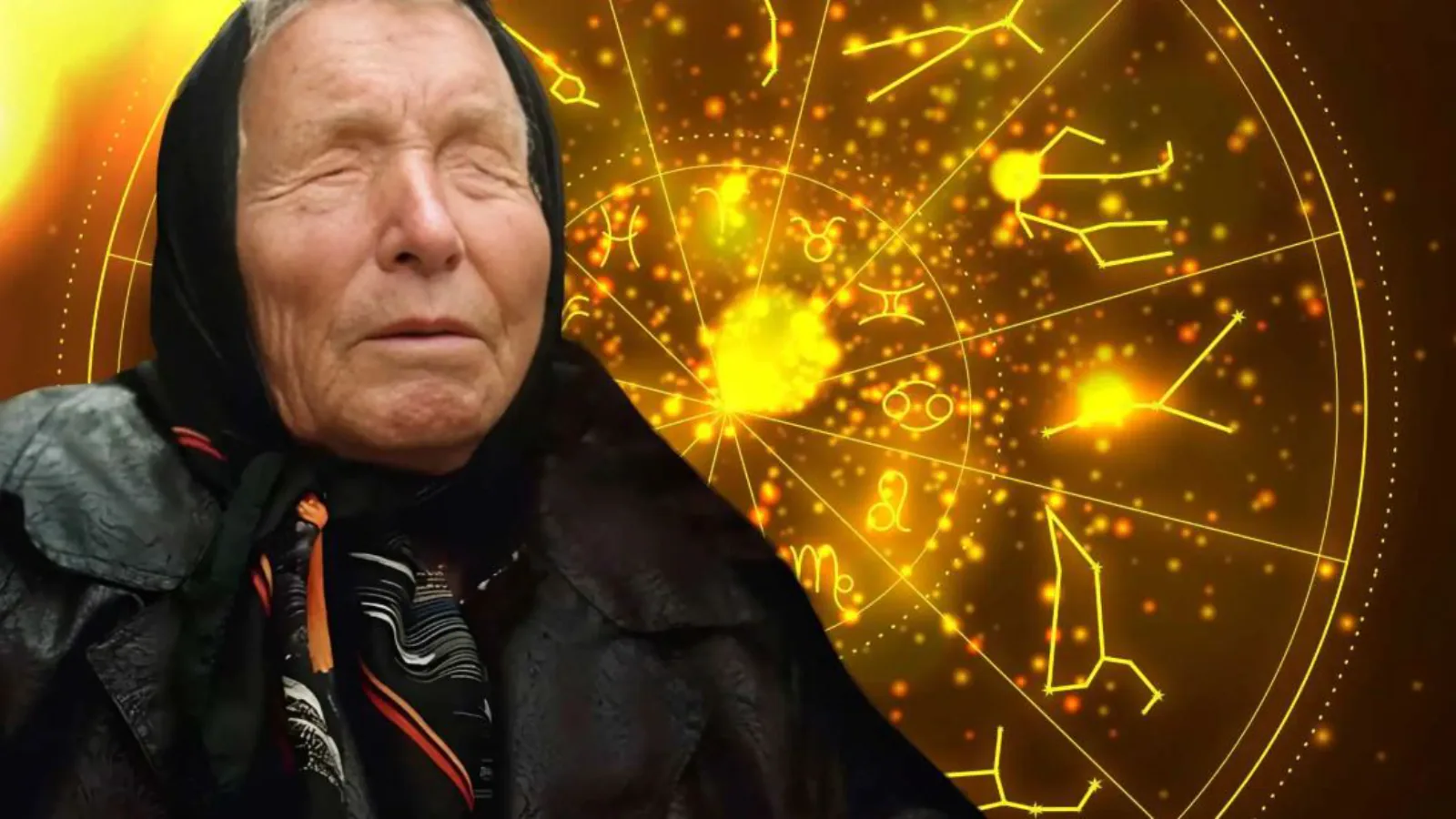
Creators sat under LED lights, flipping cards, pointing at transit charts, overlaying Baba Vanga quotes in glitchy fonts. A Bulgarian mystic who’d died before I was born, now trending like a pop star.
I snorted and scrolled.
Then a notification popped up—an email from an address I hadn’t seen in almost a year.
daniel.private.archive@…
My ex-husband’s backup email.
My heartbeat stuttered. We hadn’t spoken since the divorce was finalized six months earlier. No shared accounts, no shared friends, no reason for him to contact me.
I tapped it open.
No subject.
No message.
Just one attachment:

I hesitated.
Then I opened it.
The scan showed a yellowed notebook page, the edges frayed, the handwriting looping and old-fashioned. The original text was Cyrillic; next to each line, someone had scribbled translations in English.
One phrase was underlined three times.
“2026 – year of fire for the man who built his house on stolen futures. His fall comes through the woman born on the day of shadowed twins.”
Next to it, in familiar neat block letters, my ex-husband had written:
Mia – 14 June. If she finds this before 2026, it’s over for me.
My mouth went dry.
Shadowed twins.
Gemini.
14 June—my birthday.
It was stupid. Coincidence. Confirmation bias. I knew all the psychological tricks.
But why had he written that?
Why send it to me now, of all times?
I stared at the screen until my tea went cold.
Outside, the rain intensified, drumming on the glass like someone knocking.
My phone lit up with a push notification from a news app: “Climate experts warn of unprecedented heatwaves expected in 2026.”
Fire.
I shook my head, forced a laugh, and closed the news.
Then I reopened the image.
Because the one thing about data analysts is this: once something doesn’t fit the pattern, we can’t stop pulling the thread.
2. The Backstory: A Marriage Built on Stars, Secrets, and Stolen Futures
I met Daniel Carter five years ago at a rooftop bar in Shoreditch, the kind of place where you could smell ambition more than alcohol.
He was everything I wasn’t.
Confident. Loud. Expensive.
He worked in “strategic investments,” which I later learned was code for “gambling with other people’s money while wearing a nice watch.” His laugh carried. His stories sparkled. When he talked to you, he made you feel like the only person in a room full of shiny distractions.
We collided at the bar—literally—when he jostled my elbow and almost sent my drink flying.
“Mercury must be in retrograde,” he joked.
I rolled my eyes. “That’s not how physics works.”
He grinned. “You believe in physics. I believe in fate. Maybe they’re on a coffee break together.”
I hated how charming it sounded.
We started talking. He asked my birthday. When I said June 14th, his eyes lit up.
“Gemini,” he said. “My grandmother would have loved you.”
His grandmother, he explained, was Bulgarian. Not related to Baba Vanga, but obsessed with her. She’d filled his childhood with warnings and visions, cassette tapes of sessions at cramped village houses where people waited for hours to hear one cryptic sentence.
“She used to say the world runs on two engines,” he said. “Numbers and beliefs. You can’t ignore either if you want to get ahead.”
That line hooked me more than the astrology.
He texted that night. Called the next. Within months, we were inseparable.
He took me to fancy restaurants; I showed him the cheap curry place near my flat. He bought me horoscopes drawn by “real Bulgarian astrologers”; I fact-checked their predictions with probability theory and laughed when things vaguely came true.
But I couldn’t ignore that he had this eerie knack for timing.
He’d pull money out of a stock a week before it tanked.
He’d sign a contract days before the market swung in his favor.
He’d cancel a trip to New York because he had a “bad feeling,” only for a snowstorm to ground flights.
“You’re just remembering the hits,” I told myself. “You’re forgetting the misses.”
Still, on the night he proposed, down on one knee in front of the Thames, he pressed a ring into my hand and whispered, “Gran would approve. She always said my wife would be born under the shadowed twins.”

It was cute then.
Looking back, it was something else.
The first crack appeared a year into our marriage.
I found an old shoebox in the back of our shared wardrobe, buried under winter coats. Inside were notebooks—dozens of them. Filled with copied-out Baba Vanga prophecies, newspaper clippings, hand-drawn charts.
And one slim book that wasn’t like the others.
It was older. The pages fragile. On the inside cover, an inscription in Bulgarian.
“Grandmother’s,” Daniel said, appearing in the doorway, his voice sharp. “You shouldn’t go through my things.”
“I was looking for my scarf,” I said. “What is all this?”
He took the book from me, almost reverently.
“Her notebook,” he said. “She wrote down the things Baba Vanga said to her. Some of it’s about the world. Some… about us.”
“Us?” I laughed. “Sorry, did a blind mystic in rural Bulgaria predict me from the grave?”
He smiled thinly. “Maybe.”
I expected him to show me. To share.
Instead, he locked the notebook in his home office drawer.
“You wouldn’t understand,” he said. “This is… family stuff.”
I told myself I was being silly when unease rippled through me.
Everyone has private things. Journals. Letters.
It wasn’t until much later that I realized what he was really protecting.
Not mysticism.
Leverage.
The marriage started souring in slow motion.
There were the usual things—arguments about chores, about how much time he spent at work, about the way he’d smile at his phone and flip it over when I walked into the room.
But there were other, stranger things.
He’d tell me not to sign a contract or accept a promotion because “the timing is bad.”
When I got an offer from a different company—a significant pay bump, a leadership track—he stared at the email and said, “You can’t take this. Gran warned me. If you move this year, everything breaks.”
I laughed. “Gran is dead, Daniel.”
His jaw tightened. “So? You think time matters from where she is?”
I took the job anyway.
Three months later, the new company announced an acquisition. Restructuring. Half the team laid off.
Including me.
Daniel didn’t say “I told you so.”
He didn’t have to.
He just folded me into a hug and murmured, “Some things you can see in a spreadsheet. Some you can’t.”
After that, it was harder to argue when he said we should delay trying for a baby because “Saturn is badly placed.” Or when he picked our house based on numerology. Or when he insisted we put almost everything—house, savings, investments—in his name because “my chart is better for money, Mia, it’s safer this way.”
I told my friends it was quirky.
I told myself we were a good team: my data, his gut.
I didn’t realize yet that his “gut” had help.
3. The Climax: Unmasking the Prophecy – and the Fraud
By late 2024, the marriage was mostly cold war.
We fought politely. We slept on separate sides of the bed, backs turned. He stayed out later, coming home smelling like perfume that wasn’t mine.
I started having dreams.
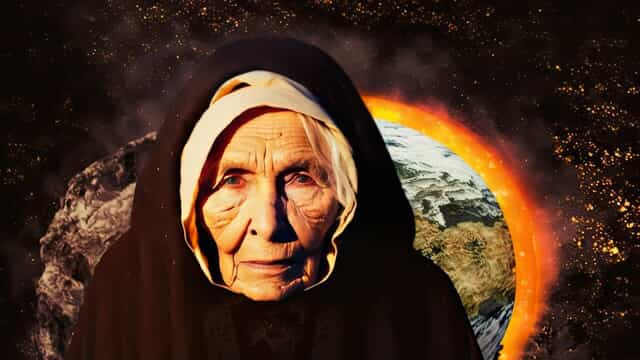
In them, a woman with cloudy eyes sat on a stool in a dim room, hands folded, head tilted like she was listening to something I couldn’t hear. Every time I tried to speak, she raised a finger to her lips.
When I woke, my heart hammered with a single word: leave.
I ignored it.
Until the day the police came to our door.
It was a Tuesday. I was working from home. Two officers, rain-slicked jackets, polite but firm.
“Is Mr. Daniel Carter home?”
“He’s at work,” I said, throat dry. “What is this about?”
They exchanged a look.
“We’d like to speak to him regarding an ongoing investigation into insider trading and fraudulent advisory services,” one said. “We also need to ask you some questions, Ms. Carter.”
Fraud.
Insider trading.
My stomach dropped.
They asked about his business. His clients. Whether I’d ever seen documents a “normal investor” wouldn’t have access to.
I stammered, shaking. “No, he just… he reads the markets well.”
They left a card.
I sat on the sofa afterward, numb, the rain outside suddenly too loud.
When Daniel came home, face pale, tie askew, he didn’t deny it.
“They’re overreacting,” he snapped. “Some clients lost money and now they want a scapegoat. They don’t understand how I knew to get out early. They think it’s illegal.”
“How did you know?” I asked quietly. “Tell me it wasn’t… real insider information.”
He stared at me for a long time.
“It wasn’t insider trading,” he said finally. “It was something better.”
He walked to his office, unlocked the bottom drawer, and pulled out the notebook.
The notebook.
Grandmother’s.
He placed it on the table between us, like an offering.
“These are dates,” he said. “Gran wrote them down after sessions with Baba Vanga. Points in time when it would be dangerous to be too exposed in certain sectors. Times for ‘great collapse’ and ‘hidden fire.’ I built an algorithm around them. Matched them to market cycles. It’s not illegal to be smarter, Mia.”
My skin crawled.
“You built a trading model from a dead woman’s prophecies?” I asked.
He shrugged. “You use historical data. I use historical visions. What’s the difference?”
“The difference,” I said slowly, “is that data describes what’s happened. She claimed to describe what will happen. You’re betting people’s futures on a notebook.”
“And it worked,” he shot back. “We made millions. We avoided crashes. My clients were safe.”
“Until they weren’t,” I said. “Until the predictions stopped lining up.”
His jaw clenched. “She didn’t see everything. Some things shift. But 2026—she saw 2026 clear as day.”
There it was again.
“What does it say?” I asked, nodding at the notebook. “About the world. About you. About me.”
His eyes flicked to the page near the back—the one I’d see months later via email scan.
He closed the book.
“Nothing you need to worry about,” he said. “I’ll fix this. Just… don’t talk to the police. Don’t show them anything. We’re a team, remember?”
We weren’t.
Not anymore.
He went to bed.
I waited until his breathing turned heavy, then crept back to the living room, heart pounding.
The notebook was gone.
He’d taken it with him.
The investigation escalated. Clients came forward. Some had lost fortunes after following his “intuition” into risky plays. Regulators dug into his trades and found a pattern too precise to be coincidence.
He hadn’t just used the notebook to protect clients.
He’d used it to front-run them.
Pulling his own money out quietly right before advising them to stay in. Shorting while telling them to hold.
Building his house on stolen futures.
The phrase from the notebook that I hadn’t yet read.
One night, after yet another screaming match about legal fees and auditors, he hissed, “If you’re not with me, you’re against me.”
“Maybe I am,” I said.
He laughed, cold. “You think you can win against me, Mia? Gran didn’t see you as the victor.”
I went still.
“What did she see?” I whispered.
His eyes glittered.
“That you’d be my fire,” he said. “One way or another.”
The divorce started a week later.
The Hook Scene, Revisited: November 2025
The settlement was brutal.
He kept the house. Most of the investments. His lawyer argued that I’d “benefited from his unique skills” and shouldn’t “punish success.”
I walked away with a modest flat, my salary, and a knot of unresolved anger.
We went no contact.
The scanned notebook page.
My name. The translation. His note: If she finds this before 2026, it’s over for me.
I stared at it, heart thundering.
Why send it?
Guilt? Gloating? A warning?
I printed it. Taped it to the wall above my desk. Turned my analyst brain on.
The prophecy lines weren’t vague “something bad might happen someday” fluff. They were specific.
“2026 – year of fire for the man who built his house on stolen futures. His fall comes through the woman born on the day of shadowed twins, when she learns to see with more than her eyes.”
It gave timing.
It gave method.
It gave me.
For years, I’d let Daniel define reality with words like “fate” and “destiny.”
Suddenly, I saw something else.
Not fate.
A blueprint.
And I could flip it.
4. The Climax: Turning Prophecy into a Weapon
I started small.
First, I dug through digital records. Old emails. Photos. Snippets of conversations I’d backed up without thinking.
I found pictures of pages of the notebook he’d sent to himself as a “backup.” In one, Baba Vanga’s words about “water shortages in great cities in the twenties” were underlined. Next to them, Daniel’s annotations about shorting certain utilities and investing in desalination tech.
My stomach twisted.
He’d ridden droughts like they were waves.
I organized everything into a timeline: prophecy line, his trades, global events. Patterns emerged. Ugly ones.
Then I did what I do best.
I built a model.
Not to predict the future.
To prove, mathematically, that his “success” was statistically impossible without non-public information.
I plugged it into an open-source fraud detection framework. Ran simulations. Documented everything.
Next, I went back to the investigators.
At our last meeting months earlier, the lead officer, a woman named Patel, had looked tired and unconvinced. “We suspect misconduct,” she’d said. “But his lawyers argue he’s just unusually talented. We need more.”
Now, I slid a neatly organized folder across her desk.
“Here’s more,” I said.
She raised an eyebrow. “This better be something special, Ms. Carter.”
“It is,” I said. “You asked how he knew when to move. I can’t tell you that. But I can tell you that his timing matches a pattern no human could achieve on intuition alone. And I can show you exactly when he deliberately disadvantaged his own clients.”
She leafed through the pages. I watched her expression shift from skepticism to interest to something sharp.
“Where did you get these notes?” she asked, tapping a printout of one of the scanned notebook pages.
“My ex-husband emailed them to me,” I said. “Knowingly. With a message that essentially admits he’s terrified of what happens if I understand them before 2026.”
“Why would he do that?” she asked.
Because arrogance is a kind of superstition, I thought. He believed the prophecy so deeply he thought he could control it.
Aloud, I said, “Maybe he wanted to scare me into silence. Or maybe he wanted to brag that he was untouchable.”
Patel nodded slowly.
“Either way,” she said, “you may have just given us what we needed.”
We worked in secret after that.
I provided context and translations for the Bulgarian lines when needed, though we were careful not to make the case about prophecy. No court was going to convict a man for listening to a dead mystic.
They would, however, convict him for fraud, manipulation, and breach of fiduciary duty.
Patel’s team cross-referenced my model with client statements. They interviewed victims with new, targeted questions.
One older woman, voice shaking, described how Daniel had reassured her to “hold steady” because “the stars favored patience” right before her portfolio tanked while his quietly exited.
“He quoted some Bulgarian prophetess,” she said bitterly. “Said she warned him about 2026, not this year. I guess his prophet forgot to tell him about my retirement.”
Piece by piece, the image of him as a gifted maverick crumbled.
He was just a man with stolen notes and no conscience.
5. The Breaking Point: 2026 Comes Early
The new charges landed in December 2025, not 2026.
I found out when Patel called me.
“We’re moving forward,” she said. “Arrest warrant. Expanded charges. Your analysis was crucial.”
I sat at my kitchen table, staring at the taped-up notebook page.
“Does he know?” I asked.
“He will,” she said.
A part of me wanted to show up at his house, hold the notebook page in front of his face, and say, “Your grandmother was right. Your fire came from me.”
Instead, I did something quieter.
I sent him one message.
No text.
No explanation.
Just a photo of that page.
This time, with my own handwriting added beneath his:
You were wrong about one thing.
It’s not over for you if I find this before 2026.
It was over the moment you decided my future was worth less than your fortune.
He didn’t reply.
He didn’t need to.
The next morning, the news broke: “Finance ‘visionary’ Daniel Carter arrested on expanded fraud charges; ex-wife’s evidence key to case.”
The media loved the prophecy angle, of course. They twisted it into headlines about “Baba Vanga’s curse hitting a London trader.”
I stayed quiet publicly.
Privately, I watched the hearing.
Saw him in a cheap suit, eyes darting, jaw clenched.
For the first time since I’d known him, he looked small.
Not because of fate.
Because of choices.
His.
And mine.
6. The Resolution: When the Future Is Yours Again
In early 2026, a heatwave rolled across Europe, shattering records. Astrologers called it “the fire Baba Vanga foretold.” News anchors rattled off warnings and rolled footage of cracked earth.
People argued online about whether she’d been right.
I sat on my balcony, sweating in the London summer, and watched Isabella—my upstairs neighbor’s daughter—chalk little suns on the pavement.
“What do you think 2026 will be like?” my friend Zoe texted.
“Hot,” I replied.
Then: “Ours.”
Because somewhere in a prison cell, my ex was discovering that no notebook could shield him from consequences.
The regulators seized assets. His clients got partial justice, at least. Some money back. An apology from the agencies that had turned a blind eye.
As for me?
I built a different kind of model.
I started a side project—an app that helped ordinary people visualize risk in plain language. Not predictions. Not promises. Just probabilities.
I called it Firebreak.
“Isn’t that a bit… apocalyptic?” Zoe asked when she saw the name.
“Fire doesn’t just destroy,” I said. “Sometimes it clears what’s dead so new things can grow.”
The app took off slowly, then faster. People were tired of being told “leave it to the experts.” They wanted tools, not tarot.
I kept the notebook page in a folder now, not on the wall.
Occasionally, I’d take it out and read the last line again:
“…when she learns to see with more than her eyes.”
For years, I’d thought that meant visions. Dreams. Psychic flashes.
Now I understood.
It meant seeing patterns in behavior, not just markets.
Trusting my own discomfort.
Refusing to let someone wrap manipulation in mysticism and call it destiny.
With only two and a half months left in 2025, the internet had been obsessed with what Baba Vanga might have said about 2026.
War. Disasters. Leaders falling.
Some of it might still come true.
Most of it will probably morph into stories that fit whatever happens, because humans hate randomness.
But in my little corner of the world, 2026 wasn’t defined by a blind mystic in Bulgaria or by a man who thought he could weaponize her words.
It was defined by a decision I made on a rainy November night in 2025.
To stop being afraid of what he might do if I spoke.
To stop treating his notebook like scripture.
To start treating my own life like something I could write.
People still send me Baba Vanga videos sometimes. “Look, Mia, she predicted this!” they say.
I smile.
Maybe she did.
Maybe she didn’t.
But there is one prediction I am willing to make without a single chart, card, or vision:
In 2026, more women will realize that the scariest prophecies aren’t about the world ending.
They’re about what happens if we keep handing our futures to men who think they’re gods because someone once told them the stars were on their side.
And more of us will decide, quietly, firmly, that we’re done doing that.
We’ll see with more than our eyes.
We’ll build firebreaks.
We’ll walk out of rooms that insist our fate is already sealed.
Not because a prophet said so.
But because we finally did.