From the moment she entered the world, little Lauren Kavanaugh was meant to be loved, protected, and guided into the kind of childhood filled with bright mornings and warm laughter.
But life had a different, darker script for her — one that began unfolding quietly, silently, behind a closed door that no one bothered to open for far too long.
From the age of just two years old, Lauren’s world shrank to the size of a closet.
A dark, filthy, suffocating space where the air was stale, the floor was cold, and the only sounds were her own small breaths echoing off the wooden walls that had become both her prison and the only home she was allowed to know.
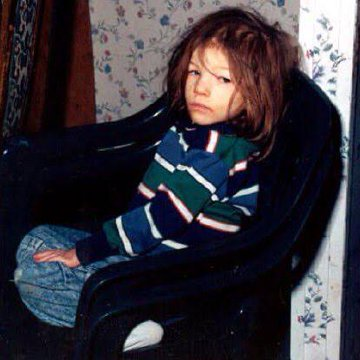
For six long years, she lived there.
Six years without sunlight touching her skin.
Six years without hearing someone speak her name with kindness.
Six years without the simple human comfort of being held, fed, or seen.
The closet in Hutchins, Texas, was not just a place of confinement — it was the place where her childhood was slowly starved out of her, piece by fragile piece.
Her mother and stepfather kept her isolated, hidden away from the world as if she were something to be erased rather than a child to be cherished.
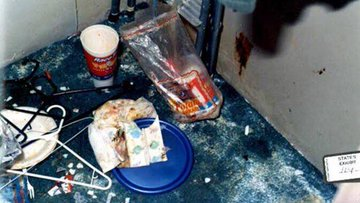
They gave her scraps instead of meals.
Punishments instead of affection.
Silence instead of love.
And while the outside world continued as normal — neighbors going to work, children playing in yards, families settling in for cozy evenings — just steps away, a little girl was fading, shrinking, becoming almost invisible.
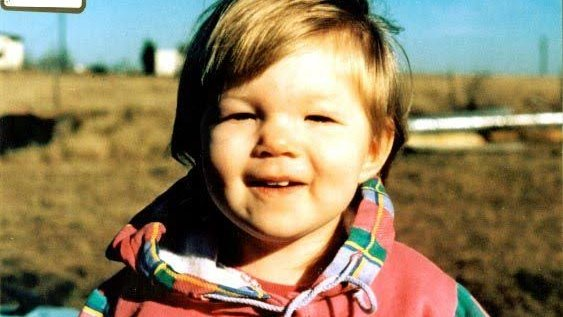
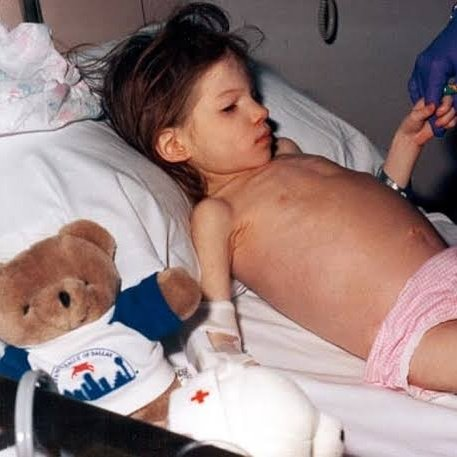
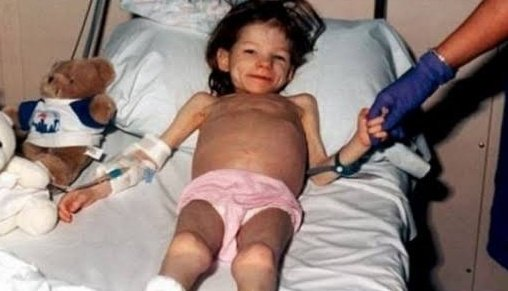
By the time authorities discovered her in 2001, Lauren was eight years old but weighed no more than a toddler.
Her arms were thin enough for fingers to encircle.
Her skin had the pale, fragile look of someone who has not seen the sun in years.
And her voice — quiet, hesitant, barely above a whisper — carried the weight of a lifetime of survival in conditions that no adult, let alone a child, should ever have to endure.
Doctors were stunned.
Many had witnessed malnutrition.
But what they saw in Lauren required starvation recovery methods normally reserved for Holocaust survivors — a haunting reminder of just how severe and prolonged her suffering had been.
Her stomach could no longer tolerate normal food.
Her body had begun feeding on itself.
Her childhood had been reduced to the basic, desperate instinct to stay alive in a place where no one was supposed to live.
The investigation that followed unraveled a story so horrifying that even hardened detectives struggled to process it.
How could this happen in a quiet suburban neighborhood?
How could a child vanish behind a closet door without anyone noticing, without anyone asking questions, without anyone insisting on answers?
Courtrooms filled with people who cried as they listened to testimony.
Jurors sat pale and shaken as photos and evidence were presented.
The judge, normally composed, looked visibly affected as the details were recited — the confinement, the starvation, the years of silence and darkness.
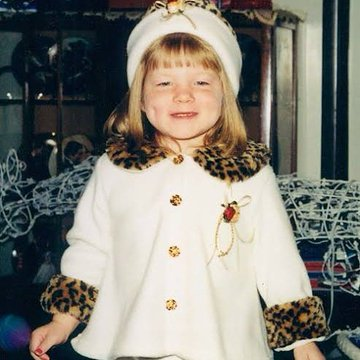
Lauren’s mother and stepfather were convicted and sentenced to life in prison for felony injury to a child.
But even life sentences felt too small, too light, too fragile when compared to the magnitude of the suffering they had inflicted on a little girl who should have been loved.
And yet, somehow, Lauren survived.
Not just physically — though that in itself was a miracle — but emotionally, spiritually, in all the quiet ways that only the strongest children manage.
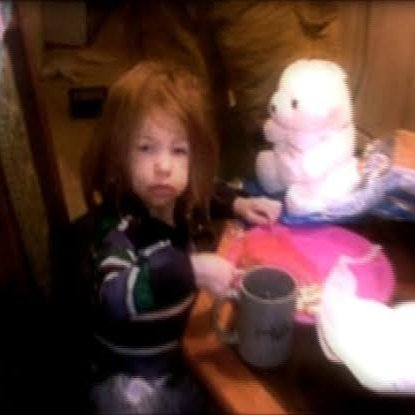
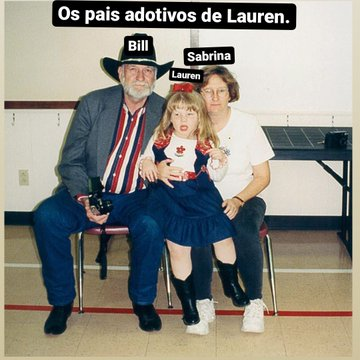
When she was placed with a loving foster family after her rescue, she blossomed slowly, like a flower learning what sunlight feels like for the first time.
She learned to laugh.
She learned to trust.
She learned that food would come regularly, that hugs were gentle, that doors could be opened, not locked.
But trauma has a long shadow.
Even as she grew older, even as she worked to rebuild her life, the memories of the closet remained — sharp, heavy, impossible to fully set down.
There were days when she seemed to rise above it, sharing her story publicly in hopes of helping others, inspiring countless people with her resilience.

And there were days when the darkness returned, pulling at her, reminding her of the years she spent alone in a space too small to hold a child’s dreams.
Lauren later faced struggles in adulthood — the kind of battles that survivors often wage quietly, privately, beneath the surface.
She continued to fight, continued to speak, continued to hope that her past might prevent another child from falling through the cracks of a system that should have protected her long before anyone opened that closet door.
Her story shook America.
Not because it was a story of abuse — though it was that, painfully so — but because it was a story about what can happen when silence replaces accountability, when neighbors look away, when communities trust too easily, when warnings go unspoken or unheard.
It was a reminder that real horrors do not always wear masks or walk through shadows.
Sometimes they live inside the same homes we drive past every day.
Sometimes they sit behind walls only a few feet thick.
Sometimes evil hides in plain sight, protected by nothing more than a closed door and the assumption that everything is fine.

Lauren’s survival — miraculous, heartbreaking, extraordinary — teaches us something vital:
That children can endure more than we think possible.
That monsters do not always look like monsters.
That silence is dangerous.
That vigilance is necessary.
And that every child deserves someone who asks the simplest, most powerful question:
“Are you okay?”

Today, Lauren’s story continues to echo across the world — in classrooms, in courtrooms, in social services offices, in homes where people are finally learning to look closer, listen harder, and intervene sooner.
Her life is proof that even in the smallest, darkest places, hope can survive.
That courage can be found in a child who had every reason to give up but didn’t.
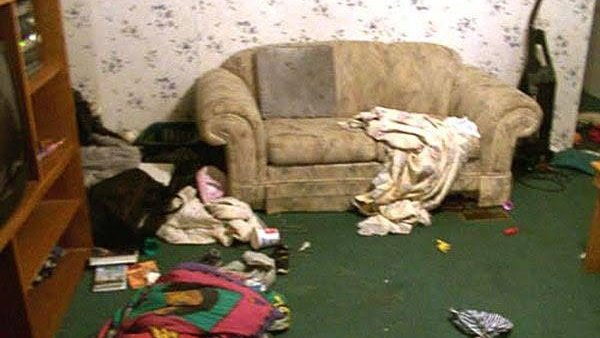
And that sometimes, the strongest people are the ones who spent their earliest years locked away, waiting for the moment when the door would finally open and the world would finally see them.
Lauren Kavanaugh was hidden for six years.
But her story will never be hidden again.