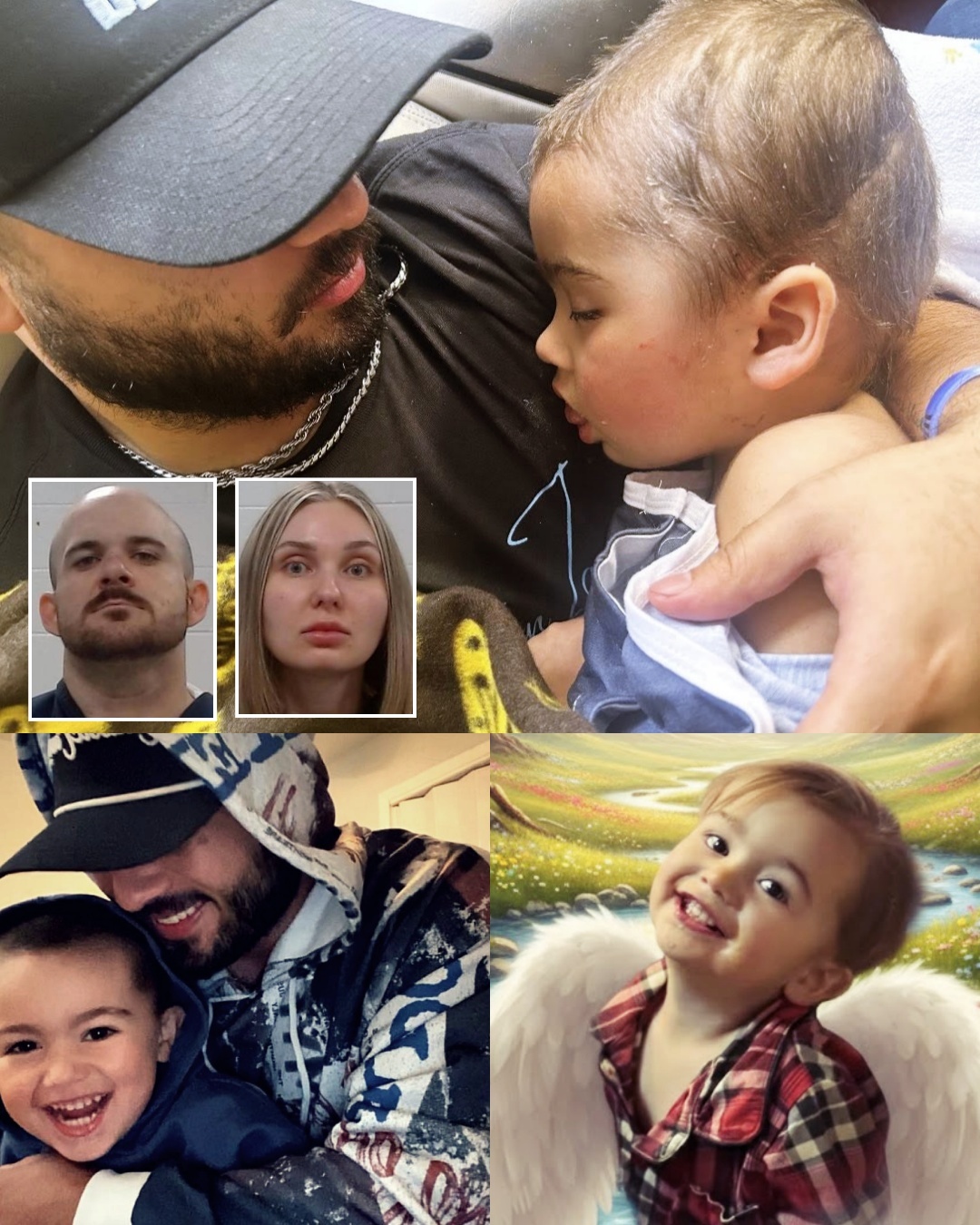
Dawson Zamora was only three years old, a name far too small to carry the weight of a tragedy so vast, and the silence he left behind has shaken everyone who has come to know his story.
On December 7, 2025, Dawson passed away, nearly two months after he was rushed to the hospital with life-threatening injuries that no child should ever endure.
His death was not sudden, not the result of a single unforeseeable moment, but the devastating conclusion of a long and painful ordeal marked by suffering, fear, and unanswered cries.
When the news broke, the shock rippled far beyond those who knew him personally, leaving a community struggling to understand how a toddler’s life could end this way.

At the center of the case are Dawson’s mother, Chelsea Rene Berg, and her boyfriend, Christopher Thomas Alexander, both 30 years old, now charged with capital murder and held without bond.
Those charges are more than legal terminology; they represent a series of choices and failures that prosecutors say ultimately cost a child his life.
Dawson’s parents shared custody, and at the time his injuries were discovered, he was visiting his father and his father’s girlfriend, in what should have been a routine and safe arrangement.
Instead, that visit became the beginning of the final chapter in Dawson’s short life.

In October, Christopher Thomas Alexander brought Dawson to a medical center unresponsive, setting off alarms almost immediately.
Alexander told doctors he had heard a “thud” and then found the child injured, a simple explanation that quickly unraveled under medical scrutiny.
Physicians treating Dawson said his injuries were completely inconsistent with an accidental fall or a single impact.
What they saw told a far darker story, one that pointed not to chance, but to repeated violence.

Doctors reported that Dawson suffered severe brain trauma, internal injuries, and extensive bruising in various stages of healing.
Those findings suggested prolonged abuse, not a one-time incident, but a pattern of harm inflicted over time.
Each bruise represented a moment of pain Dawson could not explain, each internal injury a reminder of how vulnerable he truly was.
Chelsea Rene Berg was initially arrested on a charge of injury to a child, later released, and then rearrested after Dawson died.

That sequence reflects how the gravity of the situation escalated as the full extent of Dawson’s suffering became clear.
According to an affidavit, Berg knew that Dawson was being repeatedly injured while in Alexander’s care.
Despite this knowledge, authorities say she continued leaving her son with him.
In text messages cited by investigators, Berg even warned Alexander that he was “dangerous,” a single word that now echoes with haunting clarity.

Knowing that danger existed, yet still exposing a child to it, has become one of the most disturbing aspects of the case.
Police also stated that Berg and Alexander failed to seek timely medical care for Dawson because they feared involvement from Child Protective Services.
That fear, investigators say, outweighed concern for the child’s safety.
In that choice, prosecutors argue, Dawson’s life was placed second to self-preservation.

For nearly two months, Dawson remained hospitalized, his small body fighting injuries that were already far too severe.
Doctors worked tirelessly, trying to save a child whose trauma went far beyond what medicine alone could fix.
Every day in the hospital revealed more about what Dawson had endured before he ever arrived there.
Despite all efforts, his injuries proved insurmountable, and on December 7, he died.

Dawson was three years old, an age meant for play, laughter, and learning, not hospital beds and life support machines.
Instead of bedtime stories and comforting routines, his final weeks were defined by pain and medical intervention.
As details emerged, public reaction shifted from shock to heartbreak, then to anger.
Many asked how such injuries could occur without intervention, and whether there were missed opportunities to protect him.
Investigators emphasized that bruises in different stages of healing indicated repeated harm over an extended period.

That reality suggests Dawson lived not with a single moment of terror, but with recurring pain and fear.
The weight of that truth has been difficult for many to bear.
Chelsea Rene Berg and Christopher Thomas Alexander now face the most serious charges available under the law.
Their futures will be decided in courtrooms, through evidence, testimony, and legal arguments.
But no verdict, no sentence, can undo what happened to Dawson.

His name now appears in court documents, news headlines, and conversations among strangers moved by his story.
He has become a symbol of children who cannot speak for themselves, who rely entirely on adults for protection.
Dawson’s case forces an uncomfortable reckoning with how abuse can persist behind closed doors.

It underscores how fear, denial, and silence can combine into something deadly.
Every detail in the affidavit paints a picture of a child failed by those responsible for his care.
As the community mourns, many have expressed hope that Dawson’s story will not be forgotten.
They hope it will prompt greater vigilance, faster intervention, and deeper accountability.
They hope it will remind people that warning signs must never be ignored.

Dawson Zamora lived only three years, but the impact of his story will endure far longer.
His death stands as a painful reminder of what happens when protection fails and silence prevails.
And as the legal process unfolds, one truth remains unchanging and unbearably clear.
A little boy should still be alive.