For most of my adult life, I believed there were only two kinds of days: profitable ones and wasted ones.
My calendar was a battlefield of meetings, deadlines, earnings calls, and flights. I ran a financial analytics company that had grown far faster than I ever imagined. The kind of growth that makes strangers recognize your face in airports and ask for advice while you’re still trying to find the gate.
People thought I had it all figured out.
In reality, I was just very good at pretending nothing could touch me.
How I Learned to Stop Feeling
I didn’t come from money. My father fixed heating units. My mother worked late shifts at a diner. They taught me discipline, but they also taught me fear — fear of losing everything, fear of slipping back to where we started.
So when my company finally took off, I didn’t celebrate. I fortified.
I tracked every expense, every metric, every outcome. I measured my days in percentages and forecasts, not in conversations or laughter. The only time I slowed down was when my doctor insisted.
“You’re carrying too much stress,” he told me after a routine exam I had almost canceled. “Your body isn’t a spreadsheet.”
I smiled politely and told him I’d cut back.
I didn’t.
The Morning That Wasn’t Supposed to Matter
It was a clear fall morning when I met him — the kid who didn’t know my net worth, my job title, or my place on any list.
I had just stepped out of a downtown hotel after a late night reviewing projections. I was tired but wired, already replaying conversations in my head, planning how to steer the next board meeting.
I crossed the street without looking up.
That’s when my world tilted.
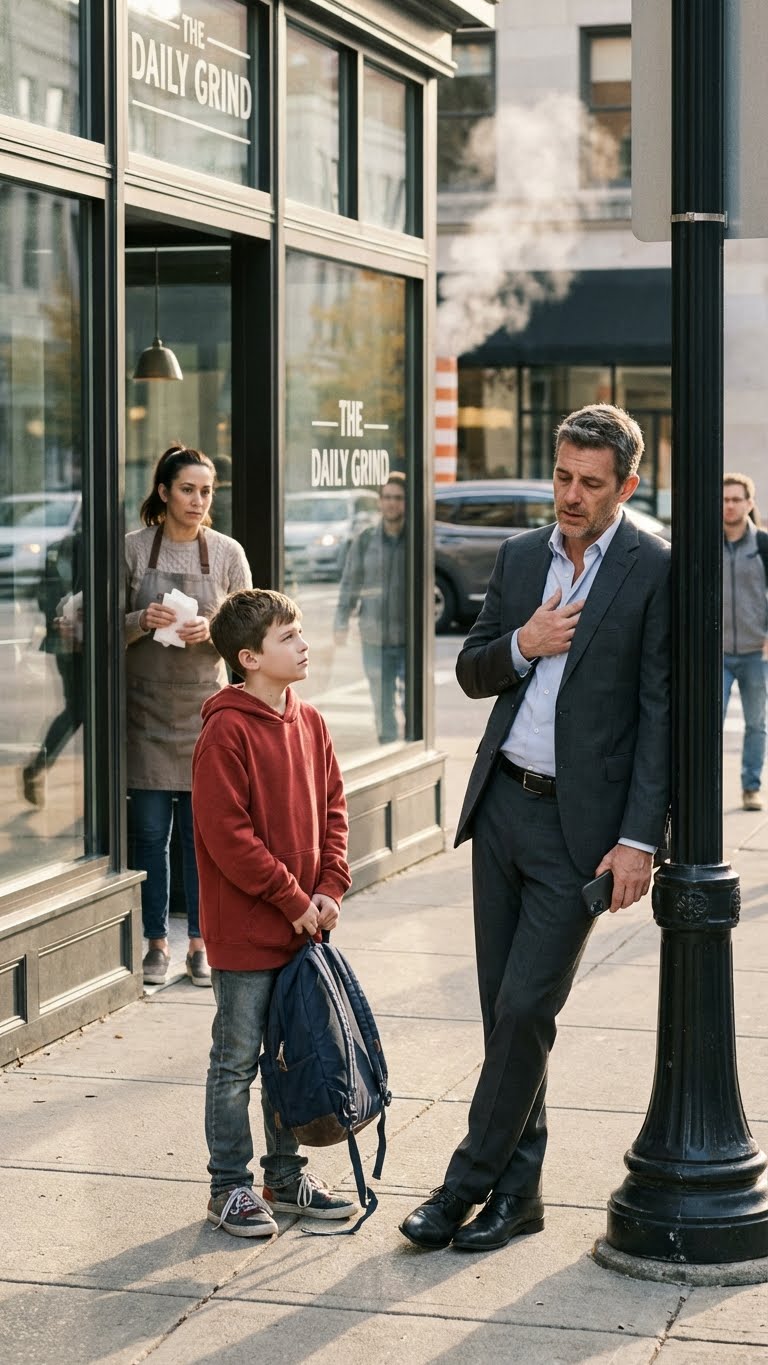
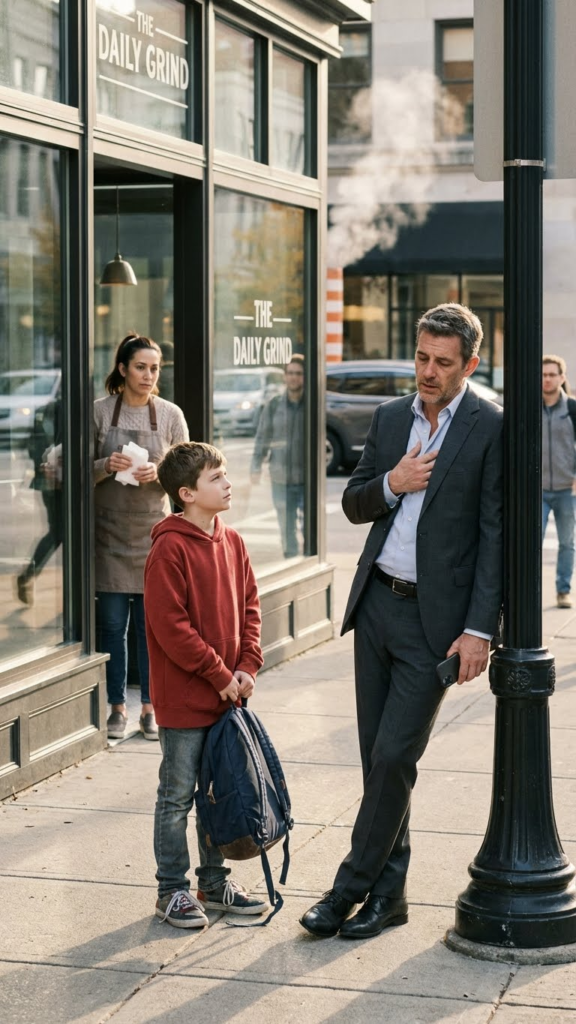
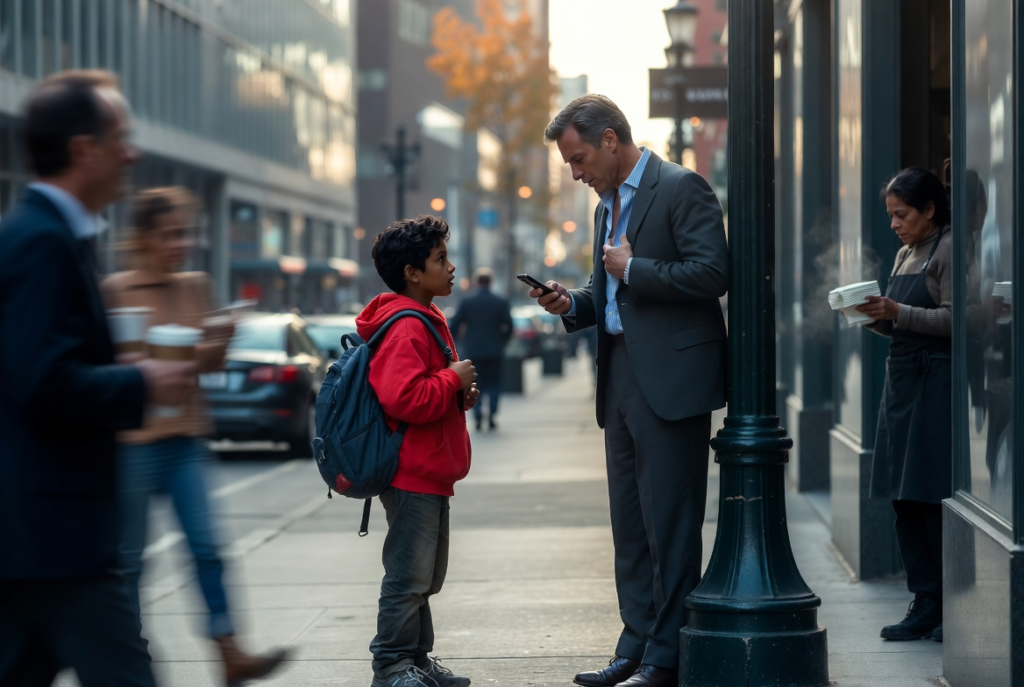
Not dramatically. Not like in the movies. Just a sudden wave of dizziness that made the sidewalk feel like it had lost its edges. I grabbed the nearest lamppost, more annoyed than afraid.
I remember thinking, This is inconvenient.
The city kept moving around me. People passed. Cars honked. No one stopped.
Except him.
The Kid Who Wouldn’t Walk Away
“Sir? Are you okay?”
His voice was small but steady. I looked down to see a boy standing a few feet away, maybe ten or eleven, wearing a bright red hoodie and sneakers that had seen better days. He was holding a backpack with one strap broken, the bag resting awkwardly against his hip.
“I’m fine,” I said automatically. That reflex had been trained into me — never show weakness, never slow down.
But my knees felt wrong. Like they weren’t listening anymore.
The boy didn’t move.
“My mom says when people look like that, they’re not fine,” he said.
I wanted to laugh, to wave him off, to get back to my day. Instead, I found myself leaning harder against the lamppost, breath shallow, heart pounding like it was trying to renegotiate its contract with my chest.
“Do you want me to call someone?” he asked.
“No,” I said too quickly. “I just need a minute.”
He glanced around at the crowd flowing past us, then back at me.
“You’re not supposed to be alone when you feel like that,” he said.
There was no judgment in his voice. Just fact.
The Call I Didn’t Want to Make
I don’t know how long we stood there. Thirty seconds? Two minutes? Time had lost its neat divisions.
My phone buzzed in my pocket — my assistant, probably, asking why I wasn’t already on my way to the airport. I ignored it.
The boy shifted his backpack from one shoulder to the other.
“I can call my mom,” he offered. “She’s inside the coffee shop.”
I looked past him and saw a small café across the street. I hadn’t noticed it before.
“I don’t want to cause trouble,” I said.
He frowned at me like I’d said something ridiculous.
“Staying like this is trouble,” he replied.
So I nodded.
He sprinted across the street with a speed that didn’t match the weight of his backpack. I watched him go, vaguely embarrassed that my entire empire had shrunk down to leaning on a pole and waiting for a child to come back.
The Woman With the Paper Napkins
He returned with a woman who looked like she had already lived three days before breakfast. She had kind eyes, tired eyes, and she was holding a fistful of paper napkins.
“Sir, can you sit down?” she asked, already guiding me toward the café entrance.
I let her. That was new.
Inside, she sat me at a small table near the window and slid a cup of water toward me. The boy hovered nearby, watching me like he was afraid I might vanish if he blinked.
“Did you eat today?” she asked.
I tried to answer, but the truth was I couldn’t remember.
She didn’t scold me. She just handed me half of the sandwich she’d been carrying and said, “Start with this.”
The World I Had Been Missing
As my breathing steadied, the room came back into focus.
I noticed the mismatched chairs. The chalkboard menu written in uneven handwriting. The boy sitting across from me, swinging his legs under the table.
“My name’s Leo,” he said. “I was going to school when I saw you.”
“Thank you, Leo,” I replied. The words felt inadequate.
He shrugged. “It’s just what you do.”
What you do.
Not what you’re paid to do. Not what you’re praised for. Just what you do when you see someone who needs help.
His mother returned from the counter and asked how I was feeling. Better, I said. Much better.
My phone buzzed again. This time, I silenced it.
The Question That Undid Me
A few minutes later, when my hands had stopped trembling, Leo leaned forward.
“What do you do?” he asked.
I opened my mouth, ready to deliver my polished elevator pitch.
Then I stopped.
For the first time in years, I couldn’t remember why it mattered.
“I work a lot,” I said instead.
He nodded like he understood far more than I’d expected.
“My mom works a lot too,” he said. “She says sometimes that makes people forget stuff.”
“Forget what?” I asked.
He thought about it.
“Like how to notice when someone needs help.”
I didn’t have a response.
Because in that moment, I realized the most profitable years of my life had also been the emptiest.
And I had no idea how to fix that yet.
Part 1 ends here.
Part 2 will continue with what happened after I tried to thank them — and the promise I made that changed everything.