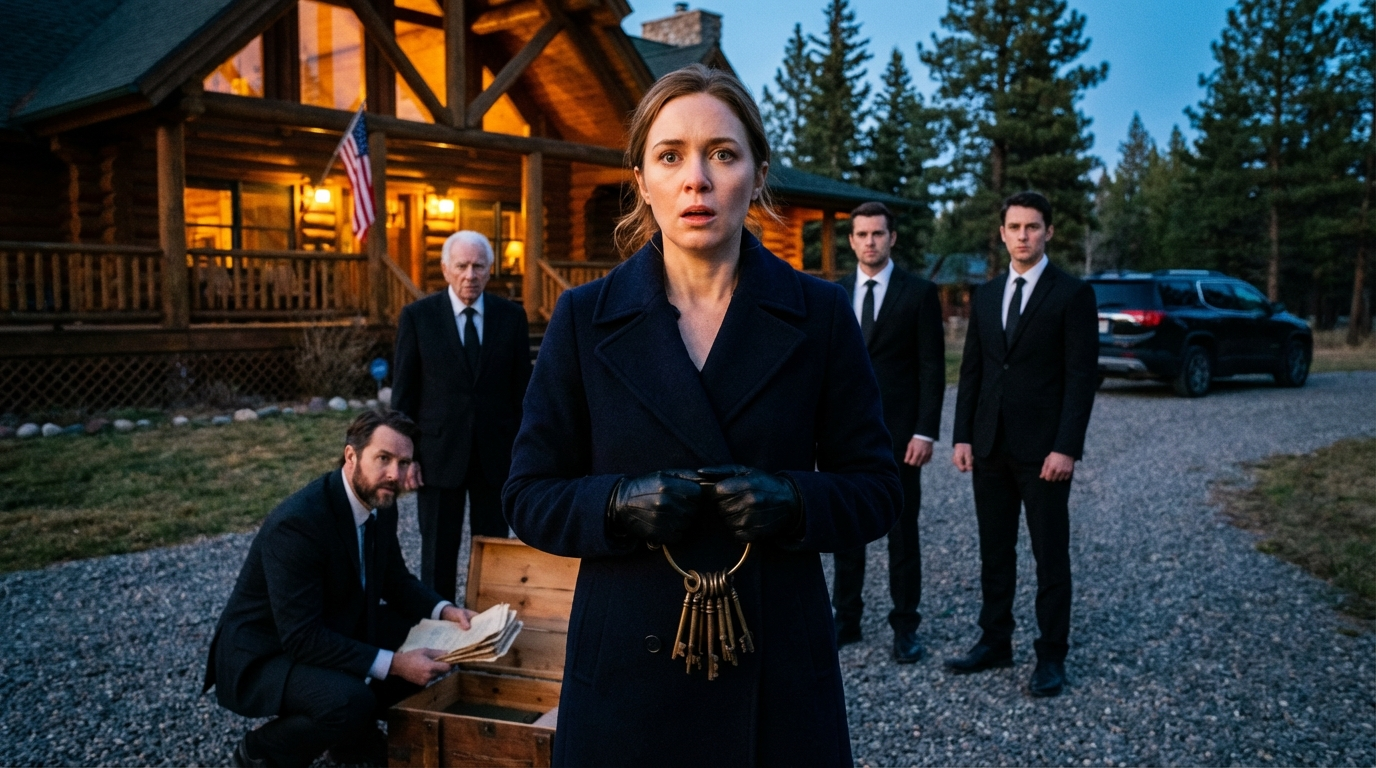
I was standing in front of my grandmother’s estate at dusk, holding three golden keys that were worth more than I’d earn in ten lifetimes, when her lawyer told me the truth that shattered everything.
“Before you accept the inheritance,” he said, his voice quiet and grave, “there’s something you need to know about where this money came from.”
My hands were trembling. The keys felt heavy—so heavy I could barely hold them. Behind me stood my uncle Robert and his two sons, all in expensive suits, all watching me with cold, calculating eyes. They’d been fighting for this inheritance for months. They’d hired lawyers, contested the will, told me I didn’t deserve any of it.
And now, standing on the gravel driveway of the massive log cabin my grandmother had owned for forty years, I was about to find out they might have been right.
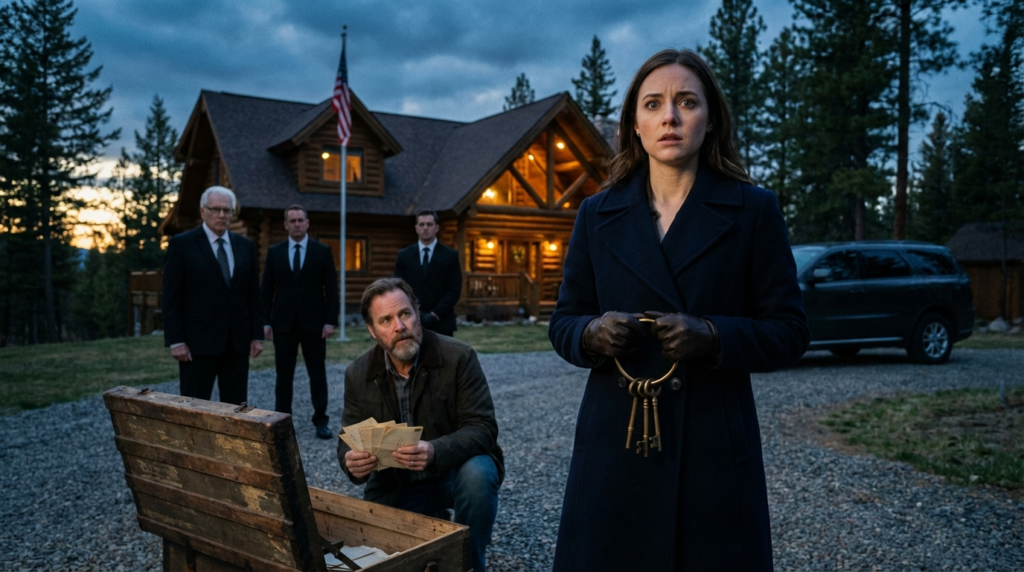
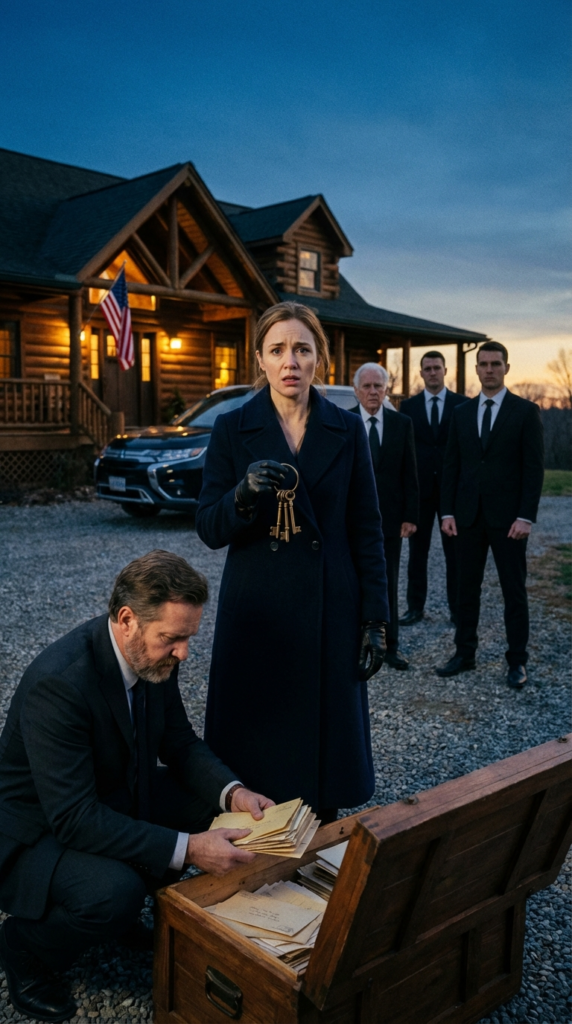
The lawyer—Mr. Patterson, her attorney for thirty years—knelt down and opened the wooden chest at my feet. Inside wasn’t money or jewelry or stock certificates.
It was letters. Hundreds of them. All addressed to my grandmother.
“Your grandmother,” he said slowly, “spent the last thirty years of her life quietly paying the medical bills, rent, and living expenses of sixty-three families. Families your grandfather destroyed.”
My stomach dropped.
“What do you mean, destroyed?”
He pulled out a letter. The handwriting was shaky, desperate. “Dear Mrs. Richardson, I don’t know how to thank you for what you’ve done. Because of you, my daughter got her cancer treatment. Because of you, she’s alive.”
Another letter. “You gave us back our home after your husband took everything. You saved our family.”
“Your grandfather,” Mr. Patterson continued, “was a ruthless businessman. He bankrupted families, foreclosed on homes, ruined lives to build his fortune. And your grandmother spent decades trying to make it right.”
I looked at the three keys in my hand. They unlocked properties worth eight million dollars.
“She left you everything,” he said. “But she left you these letters first. Because she wanted you to decide what to do with money built on other people’s suffering.”
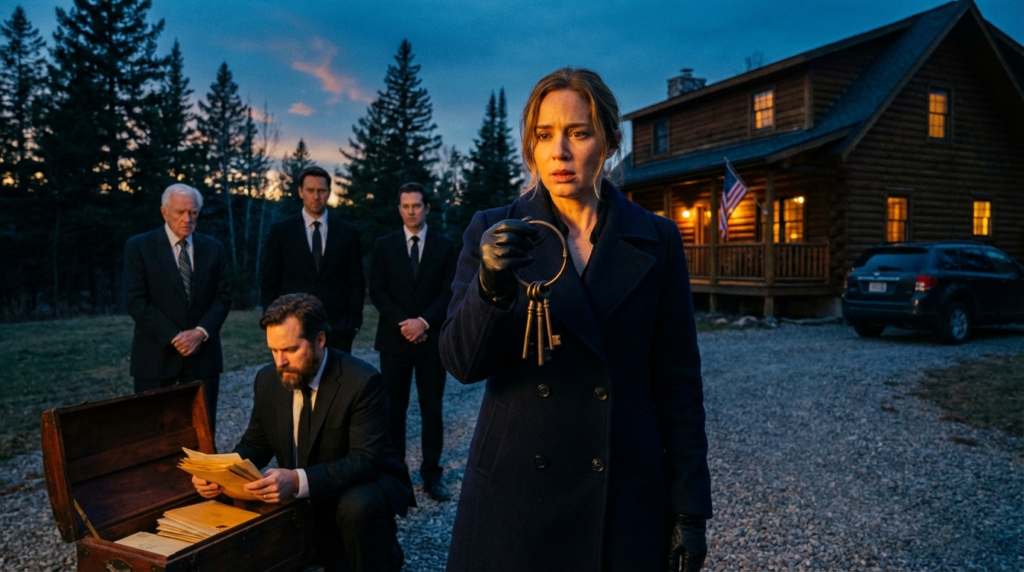
My name is Claire Thompson, and I was twenty-eight years old when my grandmother Margaret Richardson died.
I thought I knew her. I thought I understood her life.
She was the elegant woman who lived in the massive log cabin in the mountains. The one who wore pearls and hosted charity galas. The one who’d been married to Samuel Richardson, the real estate mogul who’d built an empire in the 1970s and 80s.
My grandfather died when I was five. I barely remembered him—just a tall man with cold eyes who smelled like cigars.
But Grandma Margaret? She was warmth and kindness personified. She baked cookies. She remembered every birthday. She sent handwritten letters every month asking about my life, my dreams, my struggles.
When I was broke and working three jobs to pay off student loans, she’d send me checks with notes that said, “For something nice.” When my car broke down, she bought me a new one. When I got sick and couldn’t afford the medical bills, she paid them without me asking.
She never talked about money. Never flaunted her wealth. She just… helped people.
I didn’t know she was helping sixty-three other families the same way.
And I definitely didn’t know why.
Grandma Margaret died suddenly. A stroke. She was seventy-four.
At her funeral, the church was packed. I expected family and friends, but there were hundreds of people I’d never seen before. All of them crying. All of them with stories about how Margaret Richardson had changed their lives.
“She paid for my son’s surgery,” one woman told me.
“She saved our farm,” said an older man.
“She gave my daughter a scholarship to college,” said another.
I was confused. Grandma had been generous, but this was different. This was systematic. Intentional.
After the funeral, her lawyer called me into his office.
“Your grandmother left a will,” Mr. Patterson said. “And it’s… unusual.”
He read it aloud. Grandma had left her entire estate—the cabin, three rental properties, stocks, savings, everything—to me. Not my uncle Robert, her only son. Not his children. Me, her granddaughter.
The total value: eight million dollars.
I couldn’t breathe.
“Why me?” I whispered.
“She said you were the only one who would understand.” Mr. Patterson handed me an envelope. “But before you accept, she wanted you to visit the estate and open a chest in the driveway. She said you’d know what to do after that.”
My uncle Robert was livid.
He showed up at my apartment the next day with his lawyers, demanding I contest the will, insisting Grandma had been senile or manipulated.
“She cut me out completely,” he seethed. “Her own son! For what? So you could have everything?”
“I don’t understand why she did this either—”
“She did it because she was a foolish old woman who wasted our family’s money on strangers!” He slammed his fist on my table. “Do you know how much she gave away over the years? Millions! Money my father earned! Money that should have been mine!”
His sons stood behind him, equally angry. They’d been counting on that inheritance. They’d already planned how to spend it.
“We’re contesting the will,” Robert said coldly. “And we’ll win. You don’t deserve a penny of that money.”
After they left, I sat in the dark wondering if he was right.
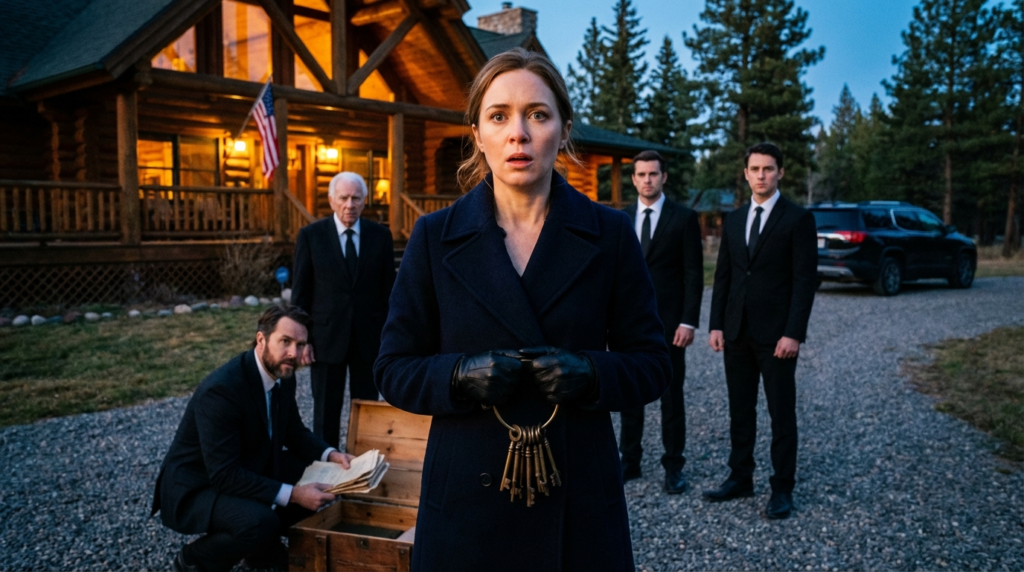
A week later, Mr. Patterson drove me to the estate. It was October, and the mountains were covered in gold and red leaves.
The cabin was massive—two stories of gorgeous logs, wrap-around porch, American flag flying near the entrance. I’d only been there a handful of times as a child. Grandma usually visited us.
Uncle Robert and his sons were already there, waiting. They’d insisted on being present for the “opening of the estate.”
Mr. Patterson parked in the gravel driveway. As the sun began to set, casting everything in that golden dusk light, he walked to the porch and carried out a large wooden chest.
“Your grandmother’s instructions were very specific,” he said, placing it at my feet. “Before you accept the inheritance, you must open this chest and read what’s inside. Alone.”
“Alone?” Robert scoffed. “This is ridiculous. We have a right—”
“You have no rights here,” Mr. Patterson cut him off coldly. “Margaret made her wishes clear.”
He handed me three golden keys on an antique ring. They were beautiful—old brass, ornate, heavy.
“These open the chest, the cabin, and a safety deposit box at First National Bank,” he explained. “But start with the chest.”
I knelt down, inserted the first key, and opened the lid.
That’s when everything changed.
The chest was full of letters. Hundreds of them. Organized by family name in manila folders.
Mr. Patterson began pulling them out, reading them to me. To all of us.
Letter after letter after letter. All saying the same thing:
“Thank you, Mrs. Richardson, for saving my family.”
“Thank you for paying my mother’s medical bills when we had nowhere else to turn.”
“Thank you for giving us another chance when your husband took everything.”
Your husband took everything.
That phrase kept appearing. Over and over.
“What does that mean?” I asked. “What did my grandfather do?”
Mr. Patterson’s face was grave. “Your grandfather, Samuel Richardson, was one of the most ruthless real estate developers in the state. He made his fortune by buying properties at rock-bottom prices during economic downturns, then evicting families who couldn’t pay. He foreclosed on farms, took people’s homes, destroyed businesses.”
I felt sick.
“He was brilliant at finding legal loopholes. Everything he did was technically legal, but morally…” Patterson shook his head. “He destroyed lives. Families lost everything because of him.”
“And Grandma knew?”
“She didn’t know the extent of it until after he died. When she went through his records, she found lists. Names of families he’d bankrupted. Properties he’d seized. People whose lives he’d ruined.”
Patterson handed me another letter. This one was in my grandmother’s handwriting.
“Dear Claire,” I read aloud, my voice shaking. “If you’re reading this, I’m gone. And you now face a choice I spent thirty years trying to make right. Your grandfather built his fortune on other people’s suffering. I didn’t know—I swear I didn’t know—until after he died. When I discovered the truth, I was horrified. I spent the rest of my life tracking down the families he’d hurt and trying to help them. I gave away millions. I paid medical bills, mortgages, college tuitions. I tried to heal what he broke. But I couldn’t fix everything. This money—the money I’m leaving you—it’s built on pain. I’m giving you the choice I wish I’d had earlier: What will you do with wealth that came from destroying others?”
Tears were streaming down my face.
“I’m also leaving you the list,” Grandma’s letter continued. “The families I found. The families I helped. And the families I couldn’t reach in time. If you choose to keep the money, I’ll understand. But if you choose kindness, you’ll know what to do.”
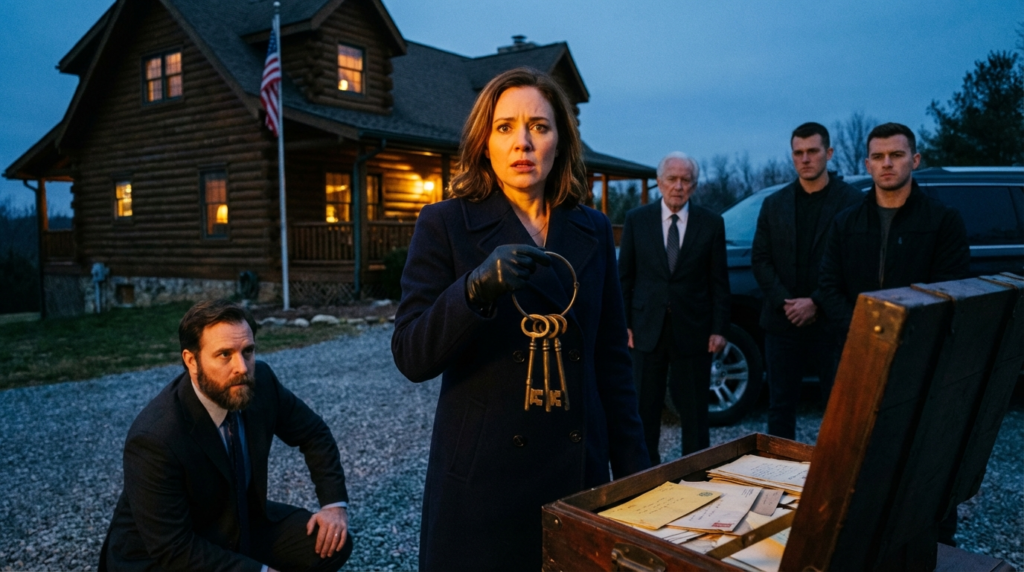
Uncle Robert snatched the letter from my hands.
“This is manipulation!” he shouted. “She’s trying to guilt you into giving away our family’s money!”
“It’s not your money,” Mr. Patterson said quietly. “It was never yours. It belonged to the people Samuel stole it from.”
“He didn’t steal anything! He was a businessman!”
“He was a monster,” one of the men in suits behind me said.
I turned around. I’d barely noticed the three men standing quietly at the edge of the driveway during all of this.
The man who spoke was in his sixties, tears streaming down his face. “Samuel Richardson foreclosed on my family’s farm in 1987. My father killed himself two weeks later. We lost everything.”
The second man, younger, stepped forward. “He evicted my pregnant mother when I was seven. We lived in our car for six months.”
The third man’s voice was shaking. “He bought my father’s business for pennies during the recession and fired everyone. Destroyed thirty families in one move.”
“Then why are you here?” I asked.
“Because Margaret found us,” the first man said. “Years later. She tracked us down and gave us money. Helped us rebuild. She couldn’t bring my father back, but she saved what was left of our family. When we heard she’d passed, we had to come. To pay our respects.”
Robert’s face was red. “This is insane! Dad earned that money—”
“No,” I said, my voice quiet but firm. “He stole it. And Grandma spent her whole life trying to make it right.”
I looked down at the three golden keys in my hand.
Eight million dollars.
Or sixty-three families who deserved justice.
“Mr. Patterson,” I said, my voice steady now. “I need you to set up a foundation.”
“Claire, wait—” Robert started.
“The Richardson Family Restoration Fund,” I continued. “Every penny of this inheritance will go into it. We’ll track down the families Grandpa destroyed—the ones Grandma helped and the ones she couldn’t reach. We’ll give them what they’re owed.”
“You can’t do this!” Robert was screaming now. “That’s my father’s legacy! That’s MY money!”
“It was never your money,” I said, looking him in the eye. “And your father’s legacy is exactly why this needs to happen. He took everything from people. Now we’re giving it back.”
Mr. Patterson was smiling—actually smiling. “Your grandmother hoped you’d say that. She prepared documents for exactly this scenario.” He pulled out papers from his briefcase. “Sign here, and I’ll execute her wishes.”
I signed without hesitation.
Robert and his sons stormed off, threatening lawsuits, screaming about betrayal.
But the three men who’d been standing behind me came forward. One by one, they shook my hand.
“Thank you,” the older man said, tears in his eyes. “You have no idea what this means.”
“Margaret would be so proud,” another added.
As they left, Mr. Patterson put his hand on my shoulder. “You just gave away eight million dollars.”
“No,” I said, watching the sun set over the mountains. “I just gave back what was never ours in the first place.”
The foundation became my full-time job.
With Mr. Patterson’s help, we tracked down forty-seven of the families Samuel Richardson had destroyed. Some had rebuilt their lives. Others were still struggling.
We paid off medical debt. Gave scholarships. Helped people buy homes. Funded small businesses.
Every check came with a letter explaining what Samuel had done and what Margaret had tried to do. And every letter ended with an apology.
Some people cried when they received the money. Others were angry it took so long. A few refused at first, saying they didn’t want “blood money.”
I understood. But I told them the same thing Grandma had written in her letter to me: “This money came from pain. Let’s turn it into healing.”
One woman—Mrs. Chen, whose family restaurant Samuel had destroyed in 1992—used her portion to open a new restaurant. She named it “Margaret’s Kitchen” and hung a photo of my grandmother at the entrance.
“She gave us back our dream,” Mrs. Chen told me at the grand opening. “Now I’m going to help other families who are struggling. That’s the real legacy.”
That’s when I understood what Grandma had been trying to teach me.
Kindness isn’t just giving. It’s making things right. It’s choosing to heal rather than hoard. It’s understanding that wealth built on suffering can never bring happiness—only more suffering.
I kept one thing from the estate: the log cabin.
But I didn’t live there. I turned it into a retreat center for families going through hardship. Free of charge. A place where people could heal, rest, and rebuild.
On the mantel above the fireplace, I hung a photo of Grandma Margaret. Underneath, I placed a plaque with the words she’d written to me:
“Choose kindness. Always.”
Uncle Robert never spoke to me again. His sons tried to sue, but the will was airtight. Eventually, they gave up.
I didn’t care. I’d rather lose family who valued money over morality than lose my soul trying to please them.
Last week, I received a letter. It was from a young woman named Emma—the granddaughter of one of the families Samuel had destroyed.
“Dear Claire,” she wrote. “Because of what you did, my grandmother got the surgery she needed. Because of what you did, my mom could afford to go back to school. Because of what you did, my family has hope again. Thank you for choosing kindness when you could have chosen wealth. You’re proof that one person can change everything.”
I cried reading that letter. The good kind of crying.
Because I realized something: Grandma Margaret didn’t leave me eight million dollars.
She left me a choice.
And by choosing kindness, I inherited something worth far more than money—I inherited purpose. Peace. The knowledge that I’d done the right thing, even when it was hard.
My grandmother spent thirty years trying to heal what my grandfather broke. She couldn’t fix everything, but she fixed what she could.
Now I’m doing the same.
The Richardson family name used to mean greed, ruthlessness, destruction.
Now it means restoration. Kindness. Hope.
That’s the legacy I want to leave.
And if I’ve learned anything from Grandma Margaret’s three golden keys, it’s this:
True wealth isn’t what you accumulate.
It’s what you give away.