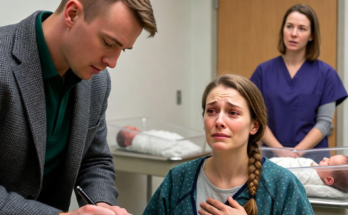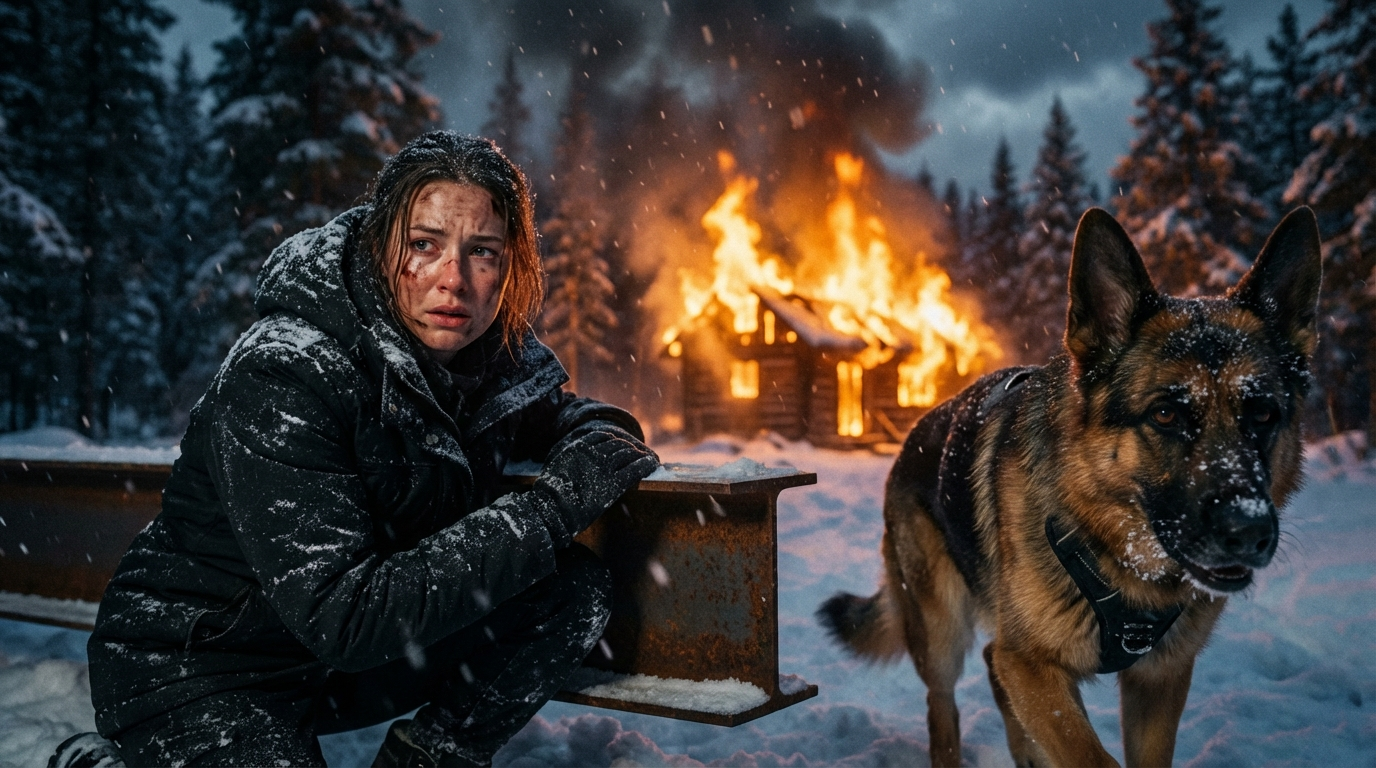
I was running through knee-deep snow, my lungs burning, when I heard the crash behind me.
The cabin—our cabin—was completely engulfed. Orange flames licked through the broken windows, and thick black smoke poured into the winter sky. I kept running. I didn’t look back.
Three years. Three years of being Marcus Hale’s perfect trophy wife. Three years of suffocating in a penthouse prison while he built his empire and forgot I existed. Three years of watching him choose boardrooms over me, strangers over us, everything over our marriage.
Tonight was supposed to be different. A “romantic getaway” to fix what was broken. But when I found the texts on his phone—messages to his assistant, photos I couldn’t unsee—something inside me snapped.
We fought. God, we screamed at each other. Things I’d held inside for years came pouring out. He just stood there, cold as ice, telling me I was “overreacting” and that I “wouldn’t survive without his money.”
So when the gas leak happened and the cabin caught fire, I made a choice.
I ran.
He could save himself. He had everything—money, power, people who worshipped him. He didn’t need me.
But then I heard the barking.
Atlas. His German Shepherd. The only living thing Marcus ever seemed to truly love.
I was two hundred yards into the forest when Atlas appeared, covered in snow, running circles around me. Barking frantically. He grabbed my jacket sleeve with his teeth and pulled.
“No,” I sobbed. “I can’t go back. I can’t—”
Atlas didn’t stop. He barked louder, more desperate. Then he did something I’ll never forget.
He looked directly into my eyes… and whimpered.
Not a bark. A plea.
Let me back up six hours.
We’d arrived at the cabin around noon. Marcus had barely spoken during the three-hour drive from the city. He’d been on his phone the entire time—emails, calls, trading screens flashing. I watched the snowy landscape blur past my window and wondered when I’d become so invisible to him.
The cabin belonged to his family. Nestled deep in the Colorado Rockies, it was supposed to be “our place”—somewhere away from the noise, the pressure, the constant demands of being Marcus Hale. When we first got married, we’d come here every winter. He’d make hot chocolate. We’d sit by the fire. He’d hold me and promise me the world.
That was before Hale Industries went public. Before he became a billionaire by 35. Before I became just another asset to manage.
“We’re here,” Marcus said flatly, killing the engine.
I looked at the rustic cabin, smoke already curling from the chimney—he’d hired someone to prepare it for us. Of course he had. Marcus never did anything himself anymore.
“Should we talk about it?” I asked quietly.
“About what?”
“About us. About why we’re really here.”
He sighed, that patronizing sound I’d grown to hate. “Elena, I cleared my entire weekend for this. Can we just… try to have a nice time?”
A nice time. As if we were strangers on a first date, not two people whose marriage was crumbling.
We unpacked in silence. Atlas bounded through the snow, the only one of us actually happy to be here. I watched him play, thinking about how much Marcus had changed. The man I married was ambitious but kind. Driven but present. This man—this cold, distant billionaire—was someone I didn’t recognize anymore.
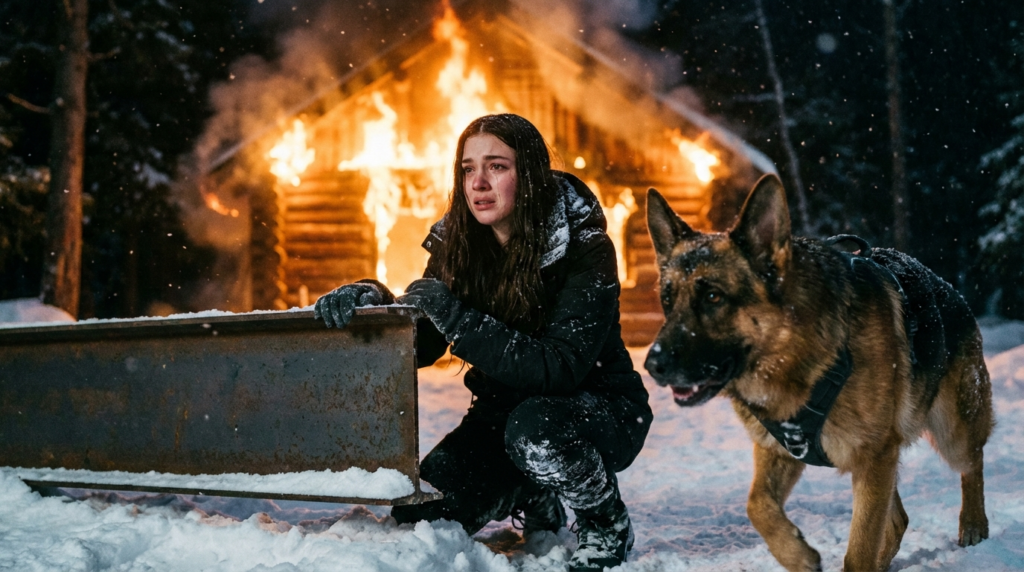
It happened while Marcus was in the shower.
His phone buzzed on the kitchen counter. I wasn’t trying to snoop—I swear I wasn’t. But the screen lit up, and I saw it.
“Can’t wait for Monday. Last night was incredible. -S”
My hands went numb.
Last night. Monday. While I’d been home alone, he’d been…
I picked up the phone. My fingers moved on autopilot, entering his passcode—our anniversary date, which felt like a sick joke now. The messages loaded.
Months. Months of texts with Simone, his assistant. Photos. Plans. Late-night meetings that were anything but professional.
“I’m in love with her,” one message read. “But I can’t leave Elena yet. Not until after the merger. Bad optics.”
Bad optics.
I wasn’t his wife. I was a public relations problem.
The phone fell from my hands and clattered on the tile floor.
“What the hell are you doing?” Marcus’s voice cut through my shock.
He stood in the doorway, towel around his waist, water still dripping from his hair. But it wasn’t concern I saw in his eyes. It was anger. Anger that I’d invaded his privacy.
“How long?” My voice sounded distant, like it belonged to someone else.
“Elena—”
“HOW LONG?”
He had the audacity to look annoyed. “It’s complicated.”
“Complicated,” I repeated, laughing bitterly. “You’re sleeping with your assistant. You’re in love with her. You’re planning to leave me after some merger so it won’t affect your precious stock prices. Which part is complicated?”
“You don’t understand the pressure I’m under—”
“The PRESSURE?” I was screaming now. “I’ve stood by you through everything! I gave up my career, my friends, my entire life to support you! And this is what I get?”
“You wouldn’t have any of this without me!” His voice turned cold, calculated. “This cabin, your clothes, your credit cards—all of it is mine. You’re living my life, Elena. Don’t forget that.”
Something broke inside me then. Not my heart—that had been breaking slowly for three years. This was different. This was my dignity, my self-worth, finally fighting back.
“I want a divorce.”
Marcus laughed. Actually laughed. “With what lawyer? What money? I have the best legal team in the country. You’ll get nothing.”
“I don’t care about your money.”
“Everyone cares about money. You’ll come crawling back within a month, just like you always do when you throw your little tantrums.”
I walked toward the door, grabbing my coat.
“Where are you going?”
“Away from you.”
That’s when I smelled it. Gas. Faint but distinct.
“Marcus… do you smell—”
The explosion wasn’t large, but it was enough. The old propane heater in the corner erupted in flames. Marcus stumbled backward. I screamed.
Within seconds, the dry wooden walls caught fire. Smoke filled the cabin.
“Get out!” Marcus yelled, already moving toward the back door.
I grabbed my phone and ran for the front exit. Atlas barked frantically, confused by the chaos.
“Atlas! Come!” I called.
But the dog ran toward Marcus, loyal as always.
The last thing I saw before I plunged into the snowy forest was Marcus disappearing into smoke, Atlas at his heels.
And I kept running.
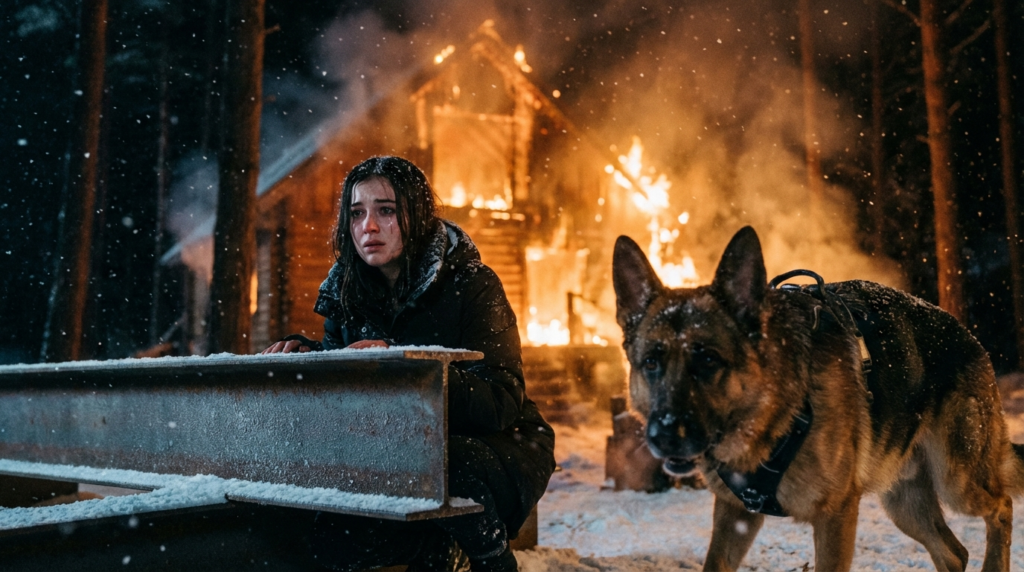
I ran until my legs gave out, collapsing against a snow-covered pine tree. Behind me, the cabin blazed like a funeral pyre.
My phone had no signal this deep in the mountains. No way to call for help. No way to know if Marcus had made it out.
Good, I thought viciously. Let him figure it out himself for once.
But even as I thought it, guilt twisted in my stomach. No matter how much he’d hurt me, no matter how much I hated him in that moment… did he deserve to die?
I was still wrestling with that question when Atlas found me.
The German Shepherd was covered in snow and ash, panting hard. He barked once, sharp and commanding, then grabbed my sleeve.
“Atlas, no—”
He pulled harder, his dark eyes locked on mine. Then he whimpered—that heartbreaking sound that dogs make when they’re desperate and confused.
“He’s fine,” I told the dog, told myself. “He got out. He always finds a way—”
But Atlas wouldn’t leave. He circled me, barked, came back and pulled my jacket again.
Then I understood.
Marcus hadn’t made it out.
I don’t remember making the decision. One moment I was sitting in the snow, the next I was running back toward the inferno.
“Where is he?” I shouted to Atlas.
The dog led me around the east side of the cabin, to a section that hadn’t fully collapsed yet. Through a broken window, I could see Marcus on the floor, unconscious. A beam had fallen across his legs.
“Marcus!” I screamed.
No response.
The heat was unbearable, but I smashed the remaining glass with a rock and climbed through. Smoke choked my lungs immediately. I pulled my scarf over my mouth and crawled toward him.
“Marcus, wake up!”
His eyes fluttered open, unfocused. “Elena…?”
“We have to move. Now!”
I tried lifting the beam, but it was too heavy. Panic clawed at my throat. The ceiling groaned above us.
Atlas suddenly appeared beside me, having jumped through the same window. He grabbed Marcus’s jacket collar in his teeth and pulled.
The dog’s action jolted Marcus into consciousness enough to push against the beam with his arms. Together, the three of us managed to shift it just enough for him to drag himself free.
“Can you walk?”
“I think so—” His words cut off as part of the ceiling caved in behind us.
I grabbed his arm, Atlas led the way, and somehow—somehow—we stumbled back through the window and into the snow thirty seconds before the rest of the cabin collapsed.
We crawled to safety, coughing and gasping. The snow had never felt so good against my burned skin.
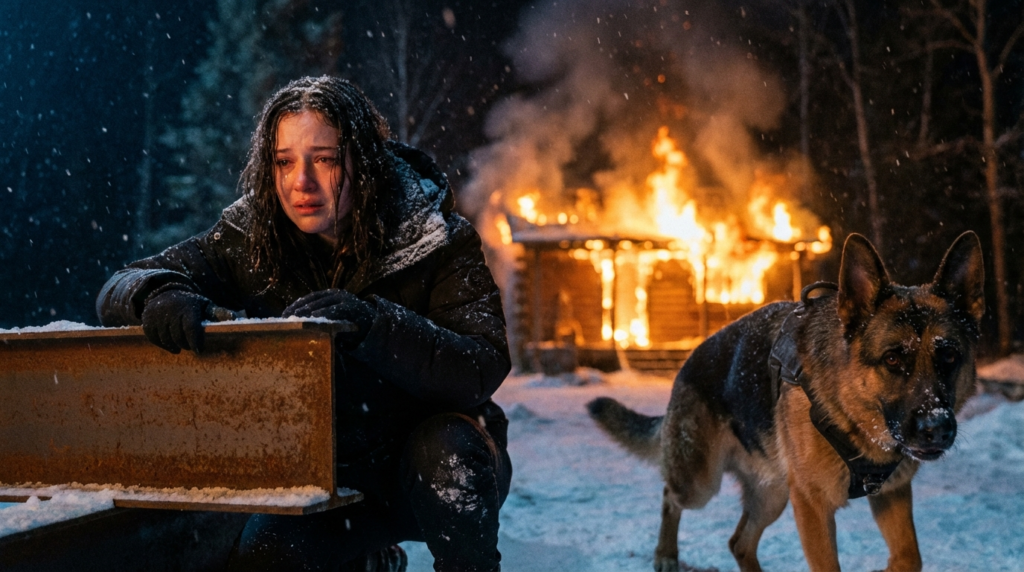
We didn’t speak for a long time. We just lay there in the snow, watching everything burn.
Finally, Marcus turned his head toward me. His face was covered in soot, his eyes red from smoke. “You came back.”
“Your dog wouldn’t let me leave.”
“No. You came back. You could have left me.”
I wanted to say something cruel. Something about how he deserved it. But I was too tired, and the words wouldn’t come.
“Why?” he whispered.
“I don’t know,” I answered honestly. “Maybe I’m an idiot.”
“No.” His voice broke. “You’re… you’re better than me. Better than I ever deserved.”
I turned away. “Don’t.”
“I’m sorry, Elena. For all of it. For Simone, for the way I treated you, for forgetting who you are. Who we were.”
“Sorry doesn’t fix three years.”
“I know.” He struggled to sit up, wincing. “But I want to try. Not because of the merger or the optics or any of that bullsh—” He coughed. “Because you saved my life when you had every reason to let me die. That has to mean something.”
“It means I’m not a murderer. That’s all.”
“It means you’re kind. Even when I didn’t deserve kindness.”
Atlas nestled between us, placing his head on Marcus’s lap but keeping one paw touching my leg. The dog looked back and forth between us, as if trying to hold his broken family together.
I’m writing this from our—my—apartment in the city. Marcus is in a hotel downtown. We’re separated, working with a therapist and a marriage counselor.
I won’t pretend it’s been easy. Trust doesn’t rebuild overnight, and there are days I want to walk away completely. But here’s what I’ve learned:
Kindness isn’t weakness. Kindness is the hardest, bravest thing you can choose when someone has hurt you. It doesn’t mean accepting abuse or staying in toxicity. It means acknowledging someone’s humanity even when they’ve forgotten yours.
Marcus ended things with Simone the day after the fire. He resigned as CEO, put someone else in charge, and started actually dealing with the demons that drove him to sabotage his own life. He’s in therapy three times a week. He’s different—not the old Marcus, but someone new. Someone trying.
We have dinner twice a week. Atlas comes to both places, our shared custody arrangement that forces us to communicate. Last week, Marcus asked if I’d come back to the cabin with him—the new one he’s building on the same property.
I said maybe. Someday.
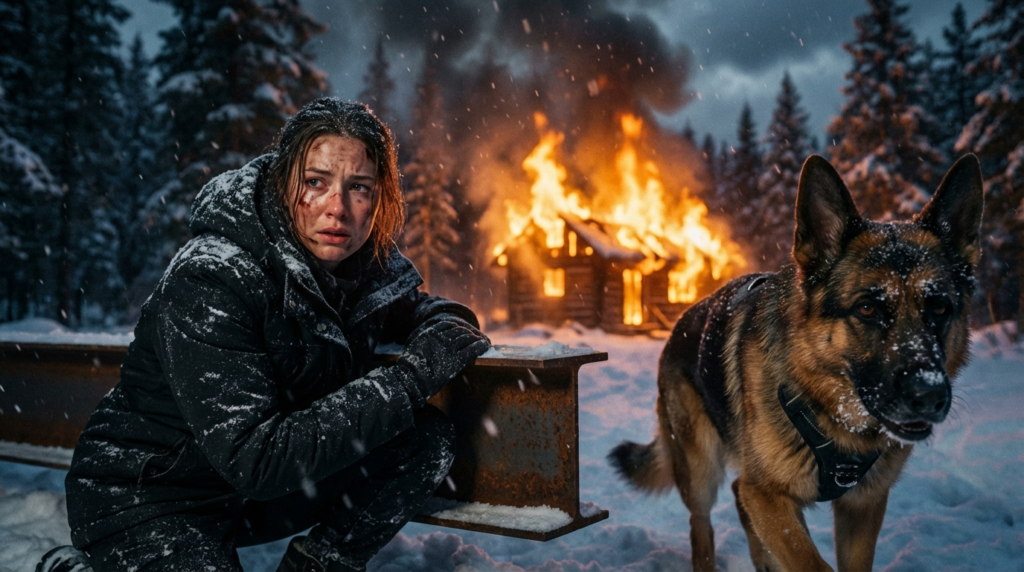
Because here’s the thing nobody tells you about kindness: it’s not about them. It’s about you. About who you want to be when the world is burning down around you.
That night in the snow, I had a choice. Let him die and be free, or save him and face the complications of mercy.
I chose mercy. Not because he deserved it, but because I deserved to be someone who could still show compassion even in my darkest moment.
And honestly? That’s what saved us both.
Atlas is lying at my feet right now, his favorite ball nearby. Sometimes I think about what would have happened if he hadn’t found me in those woods. If he hadn’t pulled me back with those desperate eyes.
But he did. Because even when humans fail, dogs never forget what love looks like.
Maybe we could all learn something from that.