I didn’t hear my baby cry.
That’s the first thing that still feels wrong when I replay the moment in my head at 3 a.m., lying awake with my phone glowing over my face while the rest of the world sleeps. Everyone says you never forget the sound of your child’s first cry. But there was no cry. There was only a silence so thick it felt like it swallowed the room.
I had just pushed for almost four hours. My body was shaking so hard my teeth were chattering. I remember thinking I was dying, because that’s what labor does to your brain — it convinces you that nothing has ever hurt like this and nothing ever will again.
The nurse placed something warm and heavy on my chest. My son. His skin was purplish, mottled like a bruise, his little mouth opening and closing without a sound. His eyes were sealed shut, lashes still clumped together with whatever miracle keeps babies alive inside us.
“Is he okay?” I asked.
Nobody answered.
Then the doctor leaned toward another nurse, not realizing I was still completely lucid, and whispered the words that have been echoing in my skull ever since:
“We made a mistake.”
The Pregnancy Everyone Said Was “Perfect”
This was supposed to be the easy part of my life.
I’m 28. No chronic health issues. Never even broke a bone. My husband, Matt, and I had been married for three years and decided to start trying because, frankly, all our friends were doing it and it seemed like the next step you’re supposed to take.
I got pregnant almost immediately. My OB joked that I was “fertile Myrtle” and told me how lucky I was. No morning sickness, no blood pressure issues, no gestational diabetes. I waddled into every appointment feeling smug, like I was somehow winning at pregnancy.
At my 20-week anatomy scan, the ultrasound tech kept smiling and saying things like “Look at those long legs!” and “He’s already stubborn.” I asked if everything looked normal, and she said yes in that cheerful, professional way that makes you believe her without question.
So I walked into labor believing I was walking into the happiest moment of my life.
The Delivery That Didn’t Feel Right
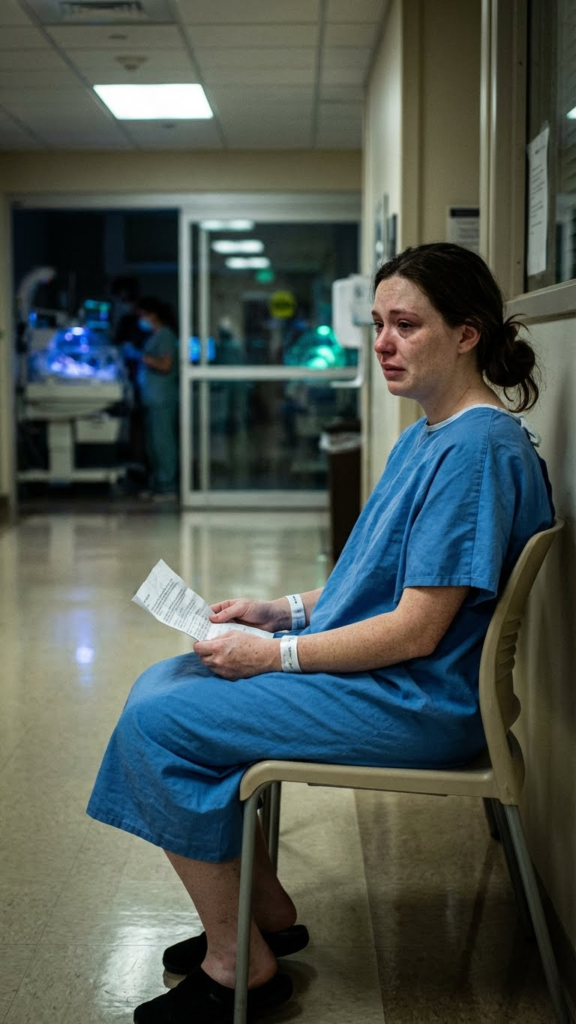
The labor itself was brutal but uncomplicated — or so I was told. Baby’s heart rate was “a little decelerated” at times, but nothing alarming. They kept adjusting my position, adding oxygen, monitoring me more closely.
After he finally came out, they didn’t do the usual routine. No congratulations. No “Here’s your baby, Mom.” They put him on me for barely ten seconds before whisking him away.
I remember reaching out and grabbing the nurse’s sleeve.
“Please,” I said. “What’s wrong?”
She avoided my eyes.
That’s when I heard the whisper.
“We Made a Mistake.”
I don’t know how long I lay there afterward. It might’ve been thirty seconds or five minutes or an hour. Time warped into something stretchy and meaningless.
Another doctor appeared — older, sterner, someone I hadn’t seen before. He explained in calm, rehearsed tones that my son was having difficulty breathing and they needed to take him to the NICU for monitoring.
“What mistake?” I asked. “You said you made a mistake.”
The two doctors exchanged a look that said more than any words ever could.
“We’ll explain everything once he’s stable,” the older one said.
They wheeled him out before I could even see his face clearly.
The NICU Is Not Where Dreams Go to Live
Two hours later, I was in a wheelchair being rolled through the hospital like a ghost. My legs were numb, my uterus felt like it had been hollowed out with a spoon, and my arms were empty.
The NICU doors hissed open and I was hit with the smell of antiseptic and warm plastic. Machines beeped everywhere — steady, relentless, like a soundtrack to fear.
They led me to an incubator in the far corner. My son lay inside, covered in wires, a tiny mask taped over his nose. His chest fluttered instead of rising and falling.
“This is Liam,” the nurse said gently.
I stared at him. He didn’t look like the baby I had imagined during those nine months. He looked fragile. Temporary. Like something the world could easily erase.
A neonatologist finally sat down with us.
“Your son has a congenital diaphragmatic hernia,” she said.
I blinked. “What does that mean?”
“It means there’s a hole in his diaphragm. Some of his abdominal organs have moved into his chest cavity, crowding his lungs. That’s why he can’t breathe properly.”
“But… you would’ve seen that,” I said. “On the ultrasounds.”
She hesitated.
“That’s part of what we’re investigating.”
The Word “Mistake” Gets Louder
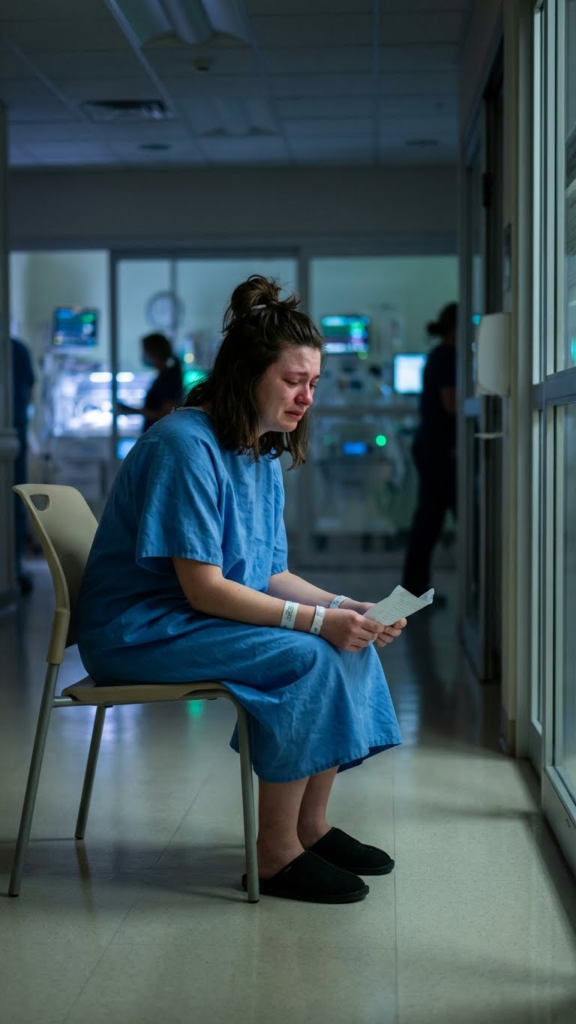
Later that night, another doctor came in — not the neonatologist, but someone from risk management. He spoke carefully, as if every syllable was stepping on broken glass.
“There may have been a misinterpretation of your prenatal imaging,” he said.
“Meaning?” Matt asked.
“Meaning the diaphragmatic hernia might have been present but not diagnosed.”
I felt something inside me fracture.
“So you missed it,” I said. “That’s the mistake.”
“We are reviewing the scans,” he replied. “At this point our focus is on your son’s treatment.”
“What would’ve been different if you’d caught it?” I demanded.
They exchanged another look.
“We would’ve arranged for you to deliver at a specialty center,” he said. “With immediate surgical intervention available.”
“And now?” I whispered.
“Now we’re stabilizing him and discussing transfer.”
The Transfer That Might Come Too Late
They needed to move him to a hospital two hours away — one of only a handful in the state equipped to operate on babies like him within hours of birth.
But he was too unstable to transport.
Every minute mattered. Every beep from his monitor felt like a countdown.
I sat in a rocking chair that night, pumping breast milk for a baby I couldn’t even touch, staring at a wall covered in inspirational quotes that felt like cruel jokes.
Stay strong.
You’ve got this, Mama.
Miracles happen here.
All I could think was: Not fast enough.
The Guilt That Eats You Alive
Around 4 a.m., when Matt finally fell asleep in the chair beside me, I googled “congenital diaphragmatic hernia missed on ultrasound.”
Page after page of medical articles loaded. Stories from other parents. Lawsuits. Settlements.
I learned that in many cases, doctors catch this condition at the 20-week scan. That parents are given options. That delivery is planned. That surgical teams stand ready.
I learned that babies like mine don’t do well without immediate specialized care.
And I learned that maybe — just maybe — if someone had noticed earlier, my son wouldn’t be fighting for every shallow, mechanical breath right now.
The guilt hit me harder than the pain of childbirth ever had.
Why didn’t I ask more questions?
Why did I trust them so blindly?
Why did I assume “everything looks good” meant everything actually was?
The Moment I Finally Held Him
The next afternoon, after twenty-seven hours of waiting, a nurse told me I could hold him — just for a minute, before they adjusted his ventilator.
They placed him in my arms like he was made of glass.
He weighed six pounds, seven ounces. Perfectly ordinary. His tiny fingers curled around my pinky with surprising strength.
I leaned down and whispered, “I’m so sorry.”
I don’t even know what I was apologizing for — trusting doctors, bringing him into this broken system, failing to protect him from mistakes I didn’t even know were happening.
That’s when the nurse leaned close and said quietly, “I shouldn’t tell you this, but… I’ve seen your scans. They should’ve caught it.”
And Then Everything Changed
Two hours later, Liam’s oxygen levels crashed.
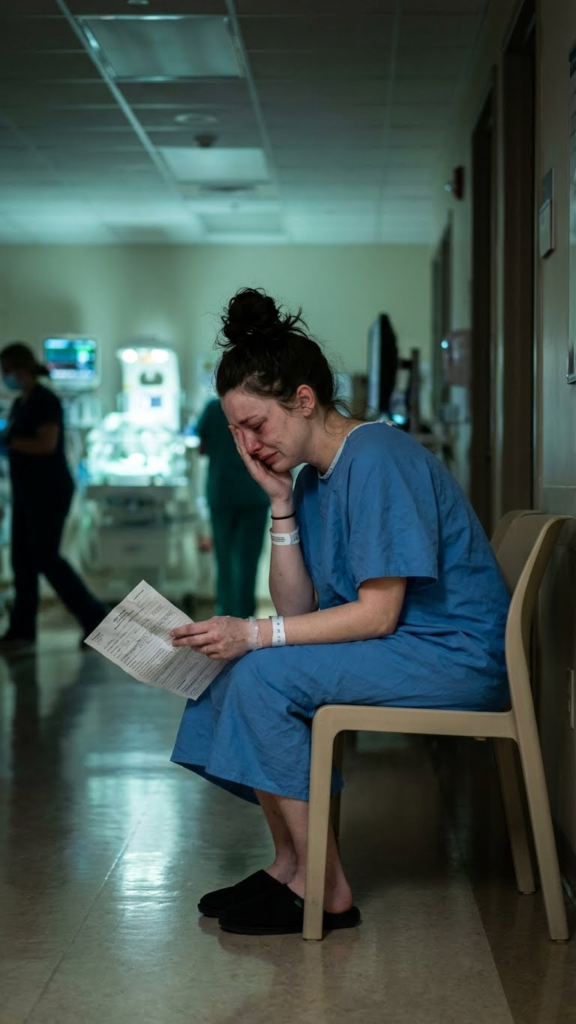
The room filled with people. Alarms screamed. Someone pushed me out into the hallway while they worked on my son behind closed doors.
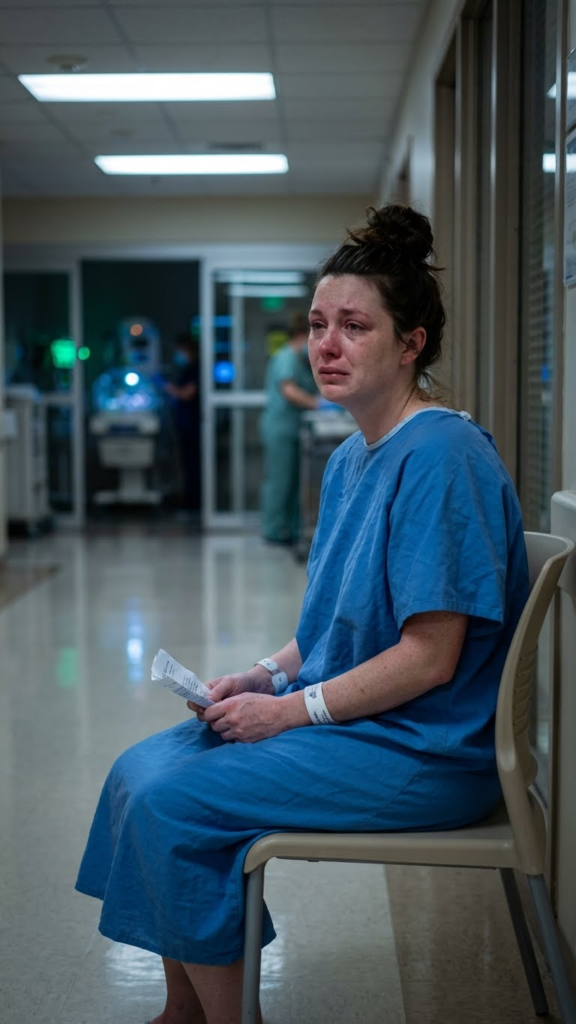
I slid down the wall and sobbed into my hospital gown, the word mistake pounding through my head like a drumbeat.
Because this wasn’t just a medical error.
It was a moment that might cost my son his life.
And no one — not the doctors, not the hospital, not the smiling ultrasound tech — could undo it now.
Part 2 will reveal what the hospital finally admitted, and the decision that would tear our family apart.