The Golden Handcuffs
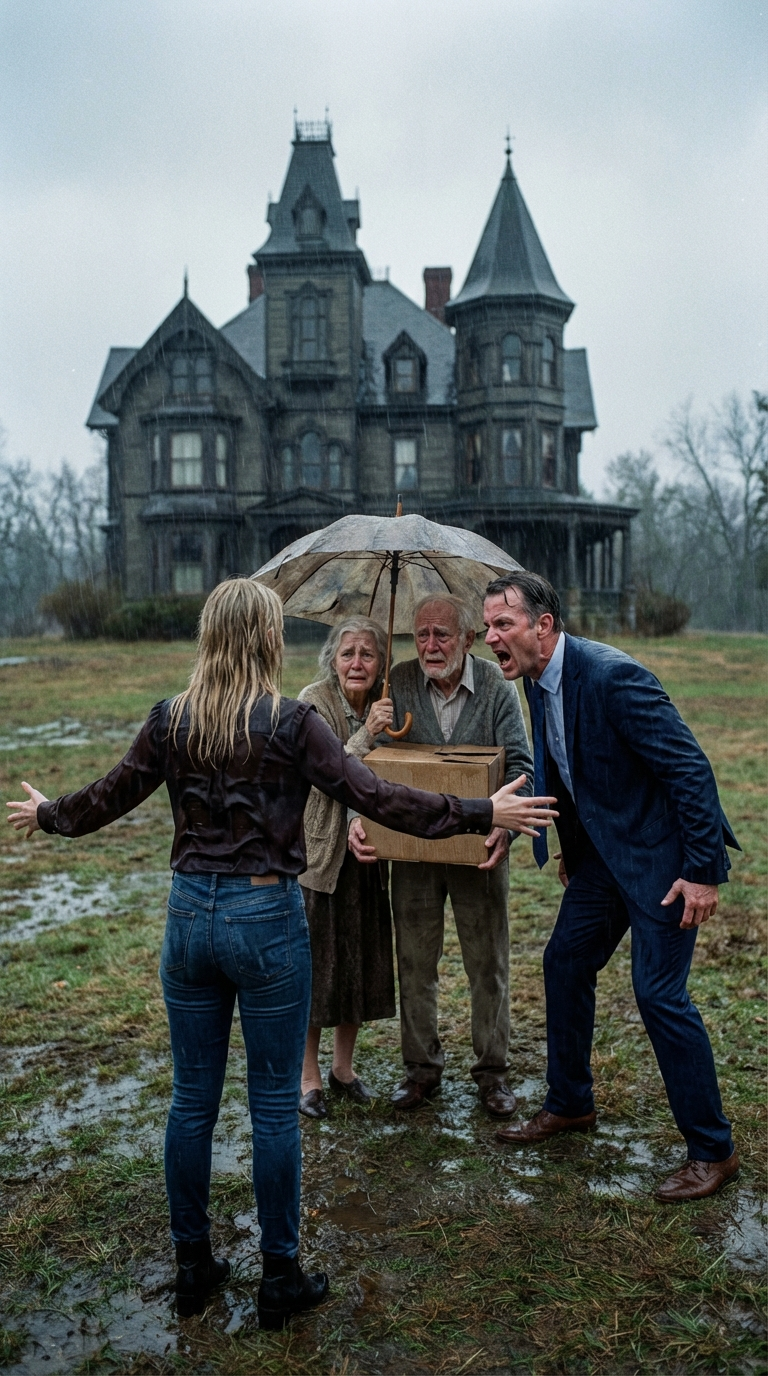
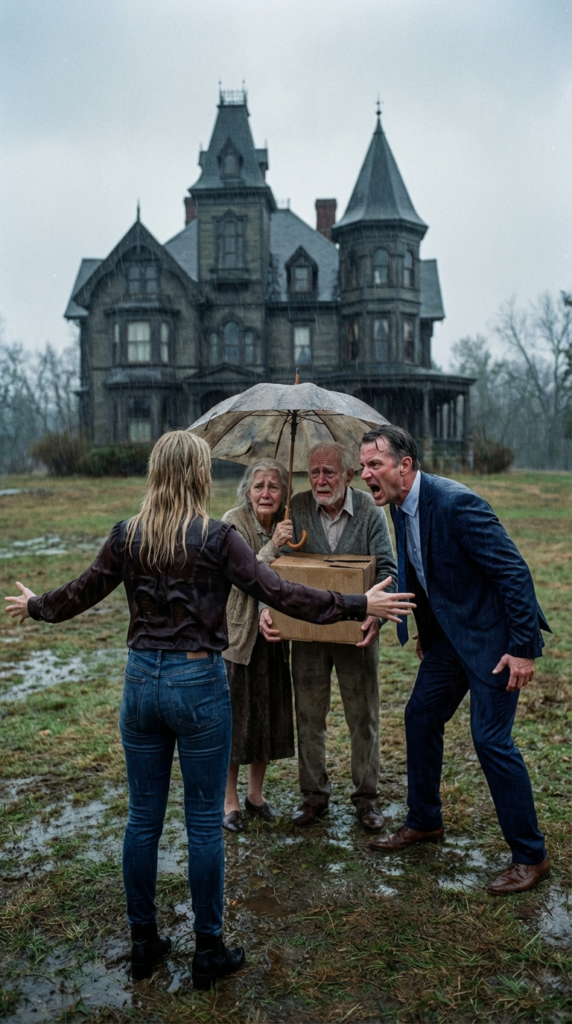
The rain was ruining my $600 blowout, but I didn’t care. I couldn’t feel the cold. I could only feel the nausea rising in my throat as I watched the man I was supposed to marry in three weeks scream at an 82-year-old woman.
That moment in the rain wasn’t the beginning, though. It was the end. To understand why I did what I did, you have to understand who Julian was. And more importantly, who I had become to fit into his world.
I met Julian three years ago. I was a junior graphic designer; he was the heir to a logistics empire. It was a Cinderella story, or so everyone told me. He swept me out of my studio apartment and into a world of galas, private jets, and silence.
That’s the thing about extreme wealth they don’t tell you: it’s quiet. You don’t have neighbors. You have “perimeter security.” You don’t have dinner parties; you have “catered events.”
Julian was perfect on paper. Ivy League, handsome, ambitious. But there were cracks I chose to ignore. The way he snapped his fingers at waiters. The way he referred to his employees as “overhead.” The way he’d laugh at my dad’s cheap sedan. I brushed it all off. I told myself he was just stressed. He was a leader.
Then, we bought “The Oakhaven.”
The Carriage House
The Oakhaven was a sprawling Victorian estate in upstate New York. It was meant to be our marital home. It was breathtaking—ten acres of manicured gardens, a main house that looked like a castle, and tucked away in the back, a small, vine-covered carriage house.
That’s where the Millers lived.
Martha and George Miller had been the caretakers of the estate for the previous owner for forty years. Part of their agreement with the old owner was a lifetime lease on the carriage house for a nominal rent.
When Julian bought the property, he assured me, “Don’t worry, babe. I’m a businessman. I’ll handle the tenants.”
I assumed “handle” meant checking the lease. I didn’t know “handle” meant “destroy.”
I met Martha the day we moved in. She brought us a loaf of homemade banana bread. She was tiny, with hair like spun silver and hands twisted by arthritis. George, her husband, was a retired carpenter who had actually built the bookshelves in the main house library.
“We’re so happy to have young life here again,” Martha had said, her eyes twinkling. “If you need anything—anything at all—we’re just across the garden.”
I fell in love with them instantly. They were the grandparents I had lost. I’d sneak over there for tea when Julian was on conference calls. George would tell me stories about the house’s history, and Martha would teach me how to knit. For the first time in years, I felt grounded. I felt like Sarah, not “Julian’s Fiancée.”
The Lap Pool
Two weeks before the wedding, Julian came home with blueprints.
“Great news,” he said, slamming the roll of paper on the marble island. “The architect found a way to fit the Olympic-sized lap pool and the clay tennis court.”
I looked at the plans. A red line was drawn right through the garden. And right through the carriage house.
“Julian,” I said, pointing at the red X. “That’s Martha and George’s house.”
He didn’t even look up from his phone. “Yeah. It’s gotta go. The grading is perfect there. Plus, having tenants is a liability. I want total privacy.”
“But… they have a lifetime lease.”
Julian laughed. A cold, dry sound. “Sarah, sweetie. There’s no such thing as a lifetime lease if you have good enough lawyers. We found a loophole regarding the foundation stability. We’re condemning the structure. They’re out by Friday.”
My stomach dropped. “Friday? That’s in three days. They’re in their eighties, Julian! Where will they go?”
“Not my problem,” he said, pouring himself a scotch. “I offered them five grand to leave quietly. They refused. Now they get nothing.”
The Escalation
The next three days were a nightmare. I tried to reason with him. I begged. I pleaded.
“We have ten acres!” I argued. “Put the pool somewhere else!”
“It ruins the aesthetic,” he countered. “Stop being so emotional. This is business. This is asset management.”
I went to warn the Millers, but Julian had already sent his ‘team.’ Men in dark suits were banging on their door at 7 AM, serving papers. I watched from the window as George tried to read the tiny print, his hands shaking.
I felt like a coward. I was planning a $300,000 wedding while my future husband was making two elderly people homeless.
Then came the rainy Tuesday.
The Breaking Point
The movers Julian hired—more like bouncers—arrived to “assist” with the eviction. It was pouring rain.
I ran outside. Julian was already there, shouting, the scene from the beginning of this story.
“I don’t care where you go, Martha, but you can’t stay here,” he screamed.
I watched George try to lift a heavy box of books, stumbling in the mud. He fell.
Julian didn’t move to help. He just checked his watch.
Something inside me snapped. It wasn’t a slow break; it was a violent fracture of the person I had been pretending to be.
“Babe, tell them,” Julian said to me. “Tell them to pack their trash.”
I looked at the diamond on my finger. The symbol of my ‘perfect’ life.
“No,” I whispered.
“What?” Julian snapped, his head whipping around.
“I said NO!” I screamed, the sound tearing through the rain.
I walked over to George and helped him up. I took the box from his hands. Then I walked over to Martha, who was sobbing into her apron, and I hugged her. I felt her frail bones shaking against me.
“You are not going anywhere,” I told her.
Julian’s face turned purple. “Sarah, what the hell are you doing? Get away from them. You’re ruining your dress.”
“I’m ruining a lot more than that, Julian,” I said.
I pulled the ring off my finger. It was wet with rain.
“Sarah, don’t you dare,” he hissed. “You walk away now, you walk away with nothing. No prenup payout. No apartment. Nothing.”
I looked at him, and for the first time in three years, I wasn’t afraid of him. I felt free.
“I don’t want your money, Julian. I want my soul back.”
I threw the ring. I didn’t throw it at him. I threw it as hard as I could into the muddy, overgrown grass of the field he wanted to pave over.
“Go fetch,” I said.
The Fallout
Julian exploded. He screamed that I was crazy, that I was making the biggest mistake of my life. He told the movers to get us all off the property.
“Actually,” I said, my voice shaking but clear. “You can’t.”
I pulled my phone out.
“I called my sister. She’s a housing attorney. She just filed an emergency injunction against this eviction based on elder abuse and illegal constructive eviction practices. If these men touch one more box, they go to jail. And you? You get sued for harassment.”
The movers stopped. They looked at Julian. They looked at the phone. They walked away.
Julian stood there, alone in the rain, soaking wet in his Italian suit. He looked at me with pure hatred. “We’re done, Sarah.”
“I know,” I said. “And Julian? The wedding is off. I’ll let the caterers know to donate the food to the shelter downtown.”
The New Beginning
I didn’t have anywhere to go. I had given up my apartment years ago. My parents were in another state.
“You stay here,” Martha said, gripping my hand. “We don’t have much room, but we have a pull-out sofa.”
So, I moved into the carriage house.
The next month was a war. Julian tried everything. He cut the power (illegal—we got it back on). He sent threats. He tried to sue me for the cost of the wedding.
But the story got out. I posted a picture of the eviction notice on Facebook. It went viral. The local community rallied. A pro-bono law firm took the Millers’ case.
It turned out Julian’s “loophole” was fraud. He had forged an engineering report stating the foundation was crumbling. When the real inspectors came, they found the carriage house was sturdy as a rock—built by craftsmen, not corner-cutting developers.
Because of the fraud, the sale of the entire estate came under scrutiny. Julian was tied up in so much litigation he had to step down from his CEO position for “personal reasons.”
A Different Kind of Rich
It’s been six months.
I live in the carriage house now. I pay rent—real rent—to the Millers, who were confirmed by a judge to have an ironclad lease.
I didn’t walk away with nothing. I walked away with everything that mattered.
Every morning, I wake up to the smell of Martha’s coffee. I help George in the garden (we’re planting tomatoes where the pool was supposed to go). I got a job at a local bakery, and I’m freelancing as a designer again.
I’m not wearing Chanel anymore. I’m wearing thrift store jeans and mud-caked boots. I don’t have a private jet.
But last night, as we sat on the porch listening to the crickets, eating a stew George made, I looked around. The house was warm. The laughter was real.
I realized I had narrowly escaped a life of poverty disguised as wealth. I found my family. And I learned that the most expensive thing you can own isn’t a house or a diamond. It’s a clean conscience.