The monitor blinked, a faint green pulse against the cold white light.
My son’s heart was beating.
Thunder — our tiny, impossible miracle — was alive.
But in that sterile room, surrounded by silence and policy, life wasn’t enough.
Not here. Not under their rules.
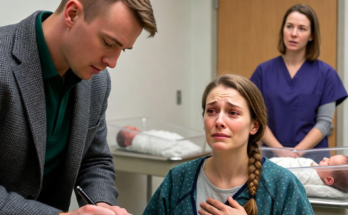
The nurse stood by the incubator like a statue carved from hesitation. My husband’s hand gripped mine so tightly it hurt, but I didn’t pull away. It was the only thing anchoring me.
“Twenty-one weeks,” the doctor whispered, like it was a curse. “He’s too early.”
Too early for help. Too early for hope. Too early to matter.
Except… his chest was rising. His fingers twitched when I said his name. How could that be too early?
“He’s trying,” I whispered. “Please, he’s trying.”
A nurse stepped closer, then stopped mid-motion as the doctor’s voice sliced the air:
“Stop. He’s below the limit.”
That phrase— below the limit— burned into my memory.
Below the limit of care. Below the limit of compassion. Below the limit of humanity.
We had waited seven years for a heartbeat.
Seven years of fertility treatments, miscarriages, whispered prayers, and nights spent Googling baby names that would never be used. When the pregnancy finally held, we treated every ultrasound like a religious event.
Thunder and his twin, Cloud. Two little sparks we thought would finally light our dark world.
Every week I counted — 18 weeks, 19, 20. Each milestone felt like crossing a bridge suspended over water so deep you couldn’t see the bottom.
At 20 weeks and five days, I felt the pain. At first I thought it was just another false alarm, but then came the warmth, the wetness. Blood.
We rushed to the nearest hospital. I remember begging, “Please, just help me get to 22 weeks.”
The doctor nodded, polite but detached. “We’ll try,” she said.
They didn’t.
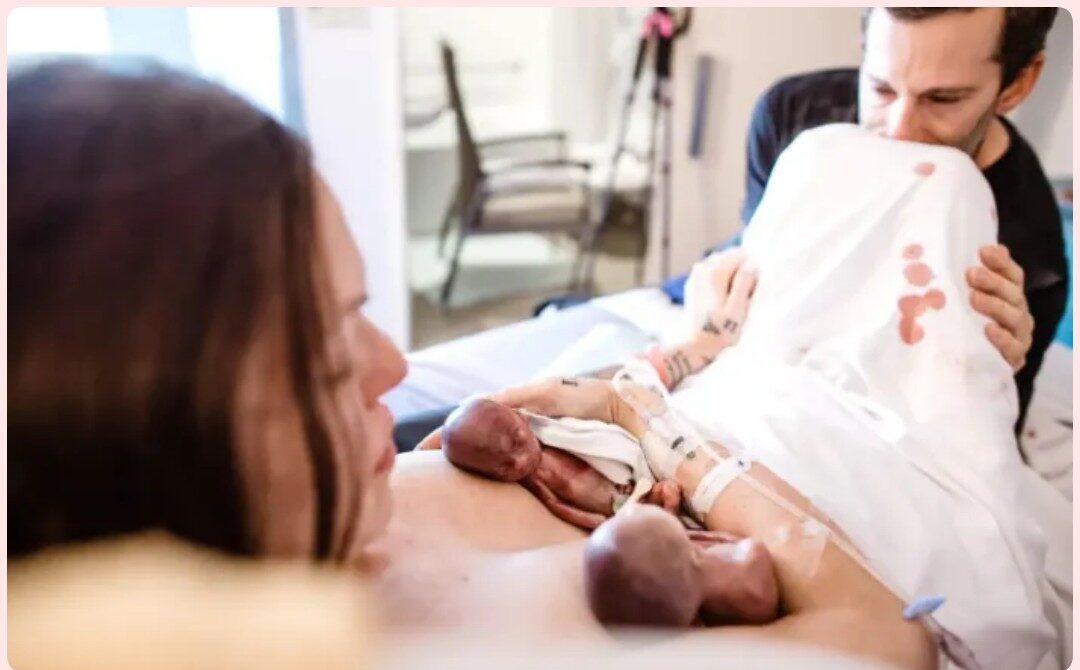
Labor came fast, brutal, unstoppable. Thunder was born first — silent but breathing. Cloud followed just minutes later, smaller, weaker, but still moving.
When I asked for intervention, the nurse’s face flickered. “I’ll call the doctor,” she said, and disappeared.
She came back alone. “Protocol says 22 weeks minimum for resuscitation.”
“But that’s in two days!” I screamed. “He’s breathing now!”
“We’re sorry,” she said again.
Sorry was easy.
Trying wasn’t.
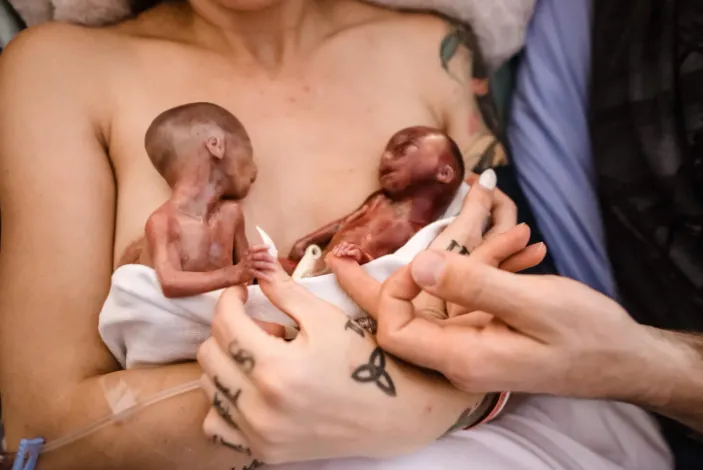
I held Thunder’s body in my hands, careful not to hurt him. His skin was fragile, nearly see-through, a map of veins and light. But he was warm. Alive.
“Don’t go,” I whispered. “Please, don’t go.”
The doctors charted notes. The room buzzed with quiet — clinical quiet, distant quiet, the kind of quiet that doesn’t fit with human pain.
Then the monitor beeped.
The nurse turned sharply. “That’s a strong pulse,” she said, half under her breath.
For a heartbeat, I thought maybe—maybe—they’d act. Maybe the rules would bend, just once.
But the doctor shook his head. “We can’t intervene. The risk of impairment is too high.”
Impairment. As if the possibility of a less-than-perfect life erased the worth of living altogether.
Something inside me snapped.
“You call this care?” I spat. “You took an oath to save lives, not count weeks!”
No one replied.
So I did the only thing I could — I took my phone and hit record.
They didn’t stop me. Maybe they thought I was too broken to matter. But later, that video — the one showing a living baby being denied help — would break something bigger. A system.
That night, both Thunder and Cloud passed away. Not slowly — mercifully fast, as if they couldn’t bear to breathe the air of a world that wouldn’t fight for them.
But I promised them something as I held them both: This won’t end here.
The video went viral within 48 hours.
Fifty million views. Hashtags. Outrage. Parents from around the world shared their stories — others whose babies had been born “too early” for help, even though hospitals across the country had proven survivors at the same gestational age.
Reporters called. Lawmakers wrote open letters. A petition titled “Thunder and Cloud’s Law” gained a million signatures in a week.
The hospital issued a statement: “We followed standard medical guidelines.”
Translation: We let them die because that’s what the paper said to do.
But then, quietly, data surfaced — from hospitals in Michigan, London, Oslo — showing 21-week survivors who’d grown into healthy toddlers.
The lie had cracked.
A senator reached out. “We’re reviewing the threshold policy,” he said.
I didn’t cry. Not yet. I’d already cried everything out of me.
It took a full year, but eventually, a new policy draft went to vote: every hospital was to evaluate vital signs, not weeks, before deciding care.
That was Thunder and Cloud’s legacy.
At the memorial, I placed two tiny silver stars in the grass. Someone asked, “Does it help, knowing things might change now?”
I looked at the sky, at the two clouds that seemed to part just for a moment.
“Yes,” I said softly. “Because they were born alive. And the world finally saw it.”