🌟 The Hidden Reason Behind Those Tiny White Bumps on Your Skin
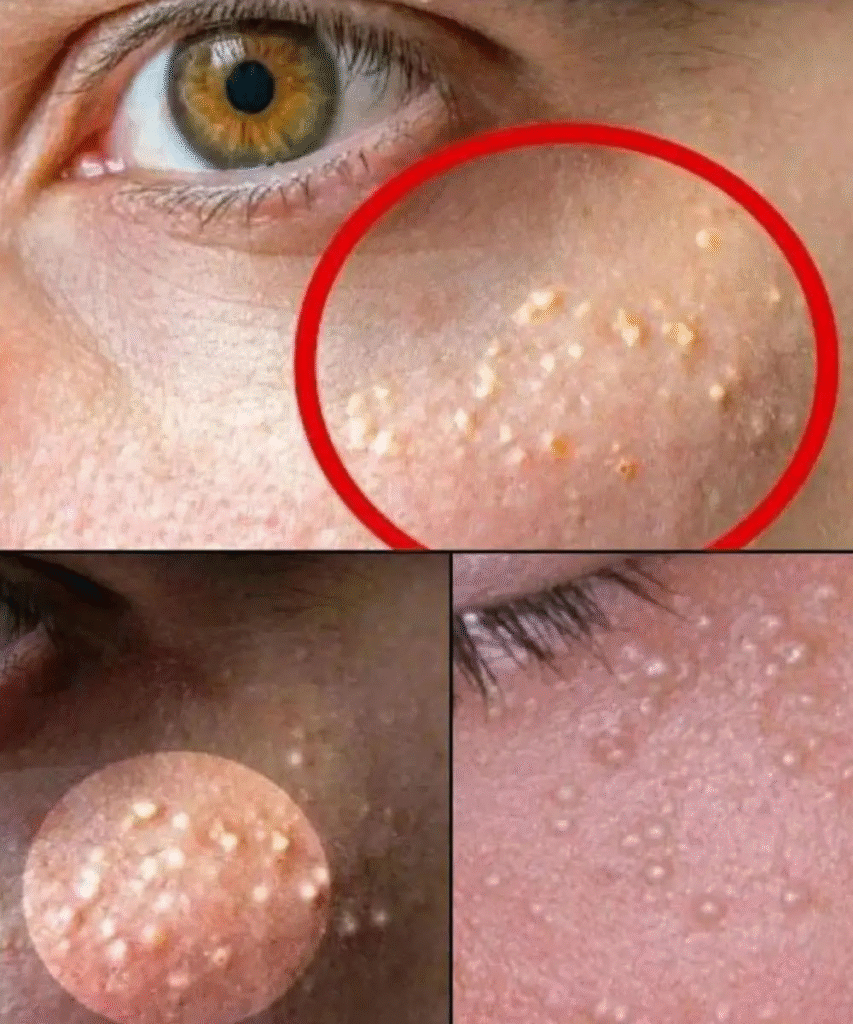
A Skin Mystery Most People Misunderstand
You touch your face one morning and feel it — a tiny, firm bump under the skin. It’s not a pimple. It’s not itchy. It’s not painful. So what is it?
Many people shrug these bumps off… until they multiply. That’s when curiosity turns into frustration. And that’s exactly where this story begins.
❄️ What’s Really Happening Under the Surface?
Instead of shedding dead skin cells naturally, your skin traps them in tiny pockets. Over time, these harden into firm little cysts just beneath the surface.
These bumps aren’t painful or dangerous, and they’re not acne. But they can make the skin appear rough or uneven, and for many people, they’re a cosmetic concern—especially when they show up on the face.
This is the quiet, often misunderstood world of milia.
🔍 Common Causes of Milia
Before we dive deeper, here’s where the puzzle gets interesting. Milia can appear out of nowhere — and understanding why helps you understand how to deal with them.
Milia can affect people of all ages, but older adults may be more prone to them due to slower cell turnover and long-term skin damage. Here’s what might cause or worsen these tiny cysts:
- Dead skin cells that fail to shed properly
- Sun damage — long-term exposure can thicken the skin and increase buildup
- Skin trauma or injury (e.g., burns, abrasions, or rashes)
- Use of heavy or oil-based creams, especially around the eyes
- Long-term use of steroid creams
- A side effect of certain autoimmune or genetic conditions
It’s also worth noting that milia can appear in adults even without obvious cause. Sometimes, it simply reflects how the skin is aging and regenerating over time.
The more you learn about them, the clearer it becomes: milia are tiny, stubborn, and surprisingly common.
📍 Where Do Milia Show Up?
These cysts have a favorite set of locations — and once you know them, they’re hard to miss.
Milia can appear anywhere on the body, but they are most commonly found on:
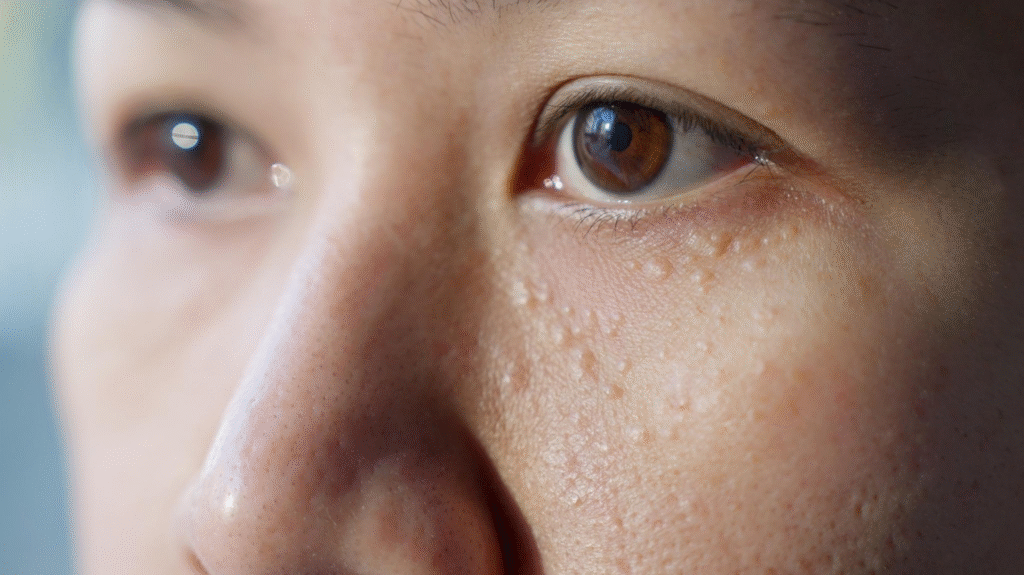
- Under the eyes
- Upper cheeks
- Forehead and temples
- Nose
- Chin
- Chest or upper torso
- Arms and legs
- Occasionally, in the mouth or on intimate areas
For older adults, milia around the eyes and cheeks are especially common, as the skin in those areas is thinner and more delicate.
⚠️ Should You Be Concerned?
Here’s where many people start to worry — but the truth is more reassuring.
In most cases, milia are completely harmless. They don’t itch. They don’t hurt. And they’re not contagious.
However, they can be mistaken for other skin issues, so if you’re unsure whether the bumps are milia, have them evaluated by a healthcare provider—especially if they change in size, color, or become inflamed.