I used to think grief was loud.
I imagined it as sobbing on the floor, screaming into pillows, breaking plates in the sink. I thought pain demanded drama. I had no idea that the deepest kind of grief doesn’t shout at all. It sits quietly in your chest, heavy and patient, waiting for the moments when you are alone enough to hear it breathing.
The night I lost my family, grief didn’t scream.
It went silent.
Before Everything Fell Apart
My husband, Daniel, wasn’t perfect. He left wet towels on the bed and laughed too loudly in movie theaters. But he was the safest place I had ever known.
We had been trying to have children for years. Doctors’ visits, endless tests, whispered hopes that felt too fragile to say out loud. When I finally became pregnant with twins, Daniel cried harder than I did. He kept saying, “Two miracles. We got two.”
Every night he talked to my stomach. Told them about baseball and road trips and how he was going to teach them to make pancakes on Sundays.
The day before everything happened, he built the cribs himself. He refused to let anyone help. I sat in the doorway watching him tighten the last screw, already picturing the tiny blankets and the sleepy mornings.
We were so close to the life we had dreamed about.
The Night That Changed Everything
Labor started early. The doctors weren’t alarmed at first, but they didn’t like how quickly things moved. By midnight, the room was full of nurses, wires, and hushed conversations that made my chest feel tight.
Daniel tried to make jokes. He always did when he was nervous. I remember him squeezing my hand and saying, “Our kids are just excited to meet us.”
The lights went bright. The beeping grew faster.
Then everything blurred.
I remember reaching for him and not feeling his hand anymore. I remember someone guiding my bed down a hallway. I remember trying to ask where Daniel was and not hearing my own voice.
When I woke up, I knew before anyone spoke.
Hospitals have a certain kind of quiet when there is no good news coming.
They told me gently. They always do. As if softness can change reality.
Daniel had collapsed outside the operating room. The doctors tried everything. The twins were born, but their tiny bodies were not ready for the world they arrived in.
I became a widow and a mother to no living children before the sun came up.
Losing Faith
People say grief comes in waves.
For me, it came like gravity. I couldn’t escape it no matter where I went.
At first I waited for God to make a mistake. To fix it. To wake me up from whatever this was. But days passed. Then weeks. And nothing changed.
I stopped praying.
I stopped opening the curtains.
I stopped believing there was any meaning left in anything.
Friends brought casseroles I couldn’t eat. They said words like “strong” and “purpose” and “plan.” Each word felt like a stone added to my chest.
I didn’t hate God.
I just stopped looking for Him.
The Old Woman on the Bench
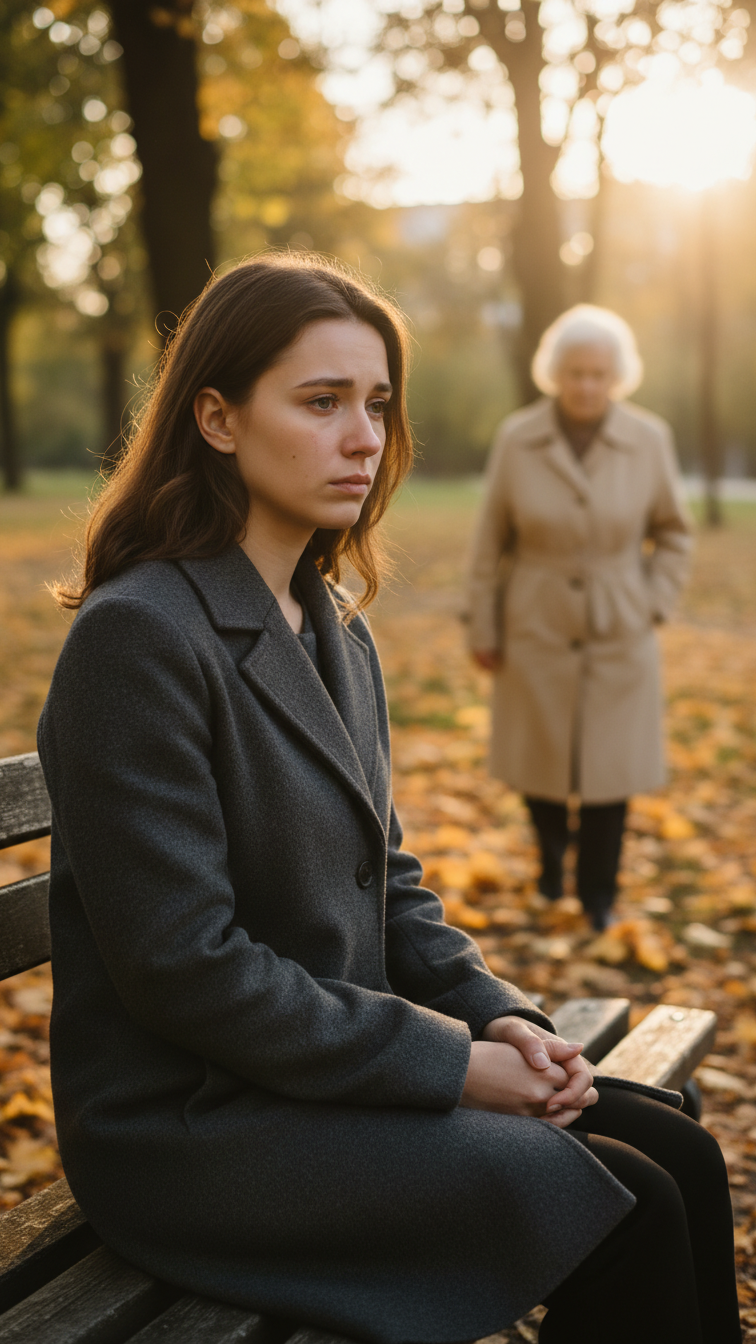
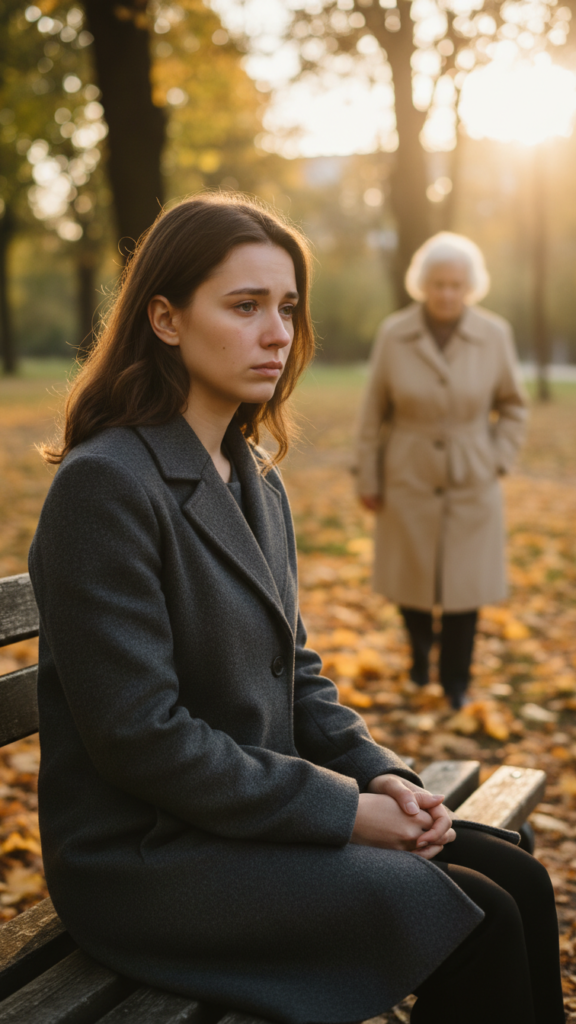
Months later, I found myself walking in a park near my apartment. I hadn’t planned to go there. My body just kept moving until I was sitting on a cold metal bench, staring at trees that were preparing for winter.
That’s when she sat down beside me.
She looked about eighty. Wore a faded blue coat and shoes that had walked many roads. She didn’t ask permission. She just smiled like we already knew each other.
“You look like someone who’s tired of being brave,” she said.
I don’t know why I told her everything.
About Daniel. About the twins. About how the world felt empty and unfair and silent.
She listened without interrupting. No advice. No rushed comfort.
When I finished, she didn’t offer explanations.
She said, “When my son passed away, I spent twenty years blaming myself for breathing when he couldn’t.”
I looked at her for the first time.
“I thought if I could just find the right reason, the right meaning, it wouldn’t hurt anymore,” she continued. “But the truth is, pain doesn’t leave when you understand it. It leaves when you forgive yourself for surviving it.”
Her words didn’t fix me.
But they cracked something open.
Learning to Let Go of Blame
I had been carrying an invisible list of everything I thought I had done wrong.
I blamed myself for not noticing Daniel’s stress.
For not feeling the labor coming sooner.
For sleeping through the alarms.
For breathing when they couldn’t.
That night, after meeting the old woman, I cried differently.
Not from anger.
From release.
I began to understand that love doesn’t guarantee protection. And loss doesn’t mean punishment.
Somewhere between my grief and her quiet wisdom, I felt the smallest return of something I had lost.
Not faith yet.
But willingness.
Finding a New Way to Believe
I didn’t go back to church. I didn’t suddenly feel hopeful.
What I did was start writing letters to my family.
Not to ask why.
But to tell them about the small things I was surviving. Coffee I could finally taste again. A song that made me smile instead of ache. A morning when I opened the curtains without thinking about it.
And one day, without planning it, I ended a letter with the words, “Thank you for teaching me how deep love can go.”
That was the first prayer I had spoken in a year.
The Morality I Learned Too Late
Here is what grief taught me that happiness never did:
You cannot measure your worth by what you managed to keep.
You cannot punish yourself into healing.
And you do not honor the people you lost by refusing to live.
I don’t believe everything happens for a reason anymore.
But I believe that every reason to keep going is enough.
If you are reading this and carrying a story you don’t think anyone could understand, please hear me:
You are not broken for surviving.
You are not weak for feeling lost.
And you are not faithless for questioning everything you once believed.
Sometimes the bravest thing you can do is stop blaming yourself for a night you could not control — and start allowing your heart to carry love again.
Not because the pain disappears.
But because your life still matters.
Even now.