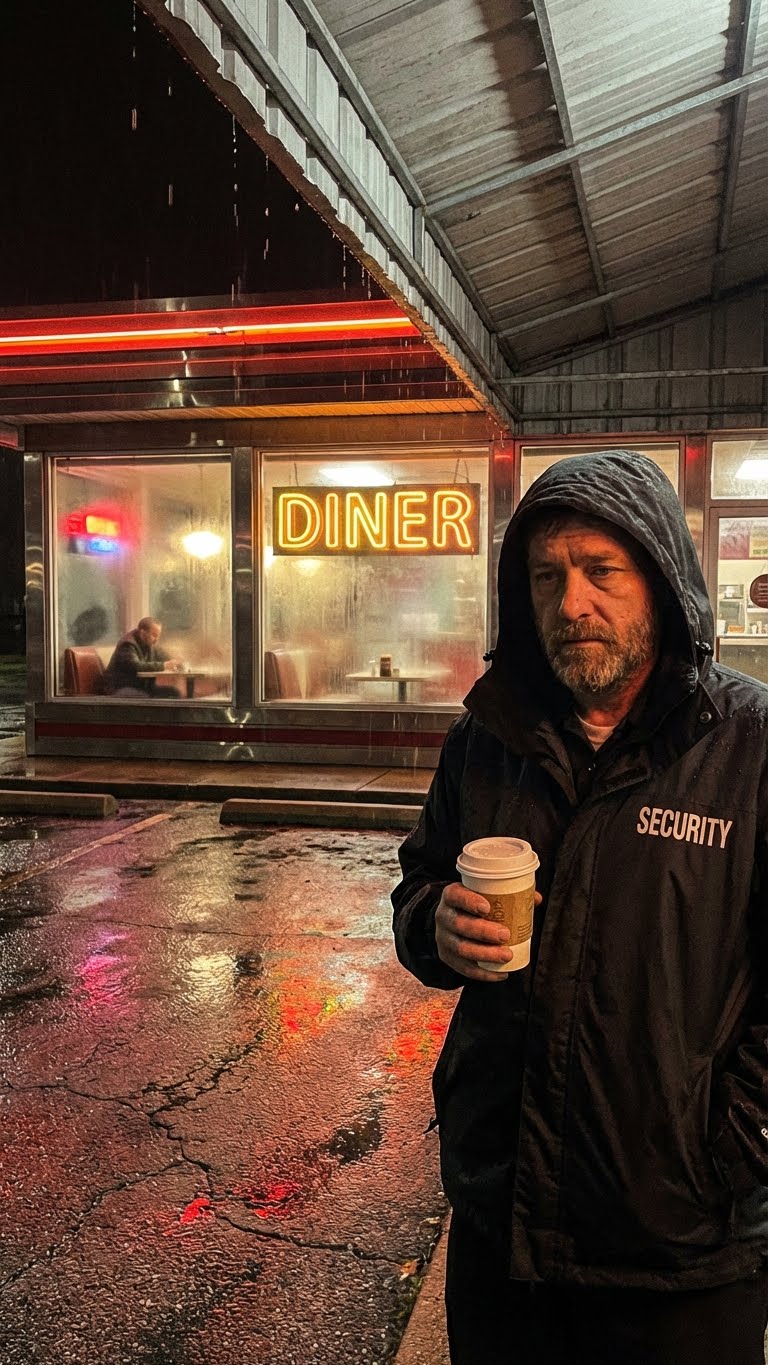

I used to wear my uniform with pride.
That probably sounds corny, but if you’ve ever worked a job where the clothes meant something—military, EMT, firefighter, even a diner waitress with a name badge you’ve earned after years on the floor—you’ll know exactly what I mean. It’s not just fabric. It’s identity.
These days, though, it feels like the world has moved on without people like me.
I served eight years in the Army. Two deployments overseas. Lost friends whose birthdays I still remember even though they never made it to thirty. When I finally came home for good, I thought the hardest part was behind me.
Turns out the hardest part was learning how invisible you can become when the uniform comes off.
The Fall Back to “Normal”
They tell you the transition will be rough.
They don’t tell you how lonely it gets when no one around you understands the version of you that only exists under pressure. The one who can sleep sitting up in a metal chair. The one who hears a car backfire and instinctively scans rooftops.
I tried college. Dropped out.
Tried warehouse work. Lasted three months before my back gave out and my patience snapped at a supervisor who’d never led anyone anywhere.
Eventually I landed a job as a night security guard for a strip mall just outside town. Not glamorous. Mostly locking doors, walking empty corridors, watching cameras that showed nothing but flickering fluorescent lights and closed stores.
It paid enough to keep my tiny apartment and my beat-up Ford running. Barely.
Every night around 2:30 a.m., I’d make my rounds and then head across the street to the only place still open: Marty’s Diner.
It was a greasy little place, neon sign buzzing like it had asthma. But the coffee was strong, the fries were hot, and for an hour or two, I could pretend I wasn’t just another guy killing time between shifts and sleep.
Marty’s Diner Regulars
You get to know people when you come in at the same dead hour every night.
There was Claire, the waitress who’d been there since before I shipped out the first time. She wore her hair in a loose bun and always called me “hon,” no matter how many times I told her my name was Jake.
There was Earl, a retired trucker who smelled faintly of diesel and told the same story about driving through a tornado in Oklahoma every single week.
There were two college kids who studied with headphones on, nursing milkshakes they couldn’t afford but needed to keep awake.
Nobody ever asked me about my service. Nobody ever cared.
And honestly? That was fine. I didn’t come in for attention. I came in because it was quiet, predictable, safe.
Until the night it wasn’t.
The Man in the Corner Booth
It was raining hard that night—the kind that makes the streetlights look like they’re melting.
I slid into my usual booth with my jacket still dripping, nodded at Claire, and wrapped my hands around the coffee she set down without even asking.
That’s when I noticed the guy in the corner.
He wasn’t one of the regulars.
Late fifties, maybe early sixties. Heavy coat even though it wasn’t that cold. Baseball cap pulled low. He hadn’t touched his food—just sat there staring at his plate like it had personally offended him.
Something about him set off that old radar in my head. Call it instinct. Call it paranoia. But I kept glancing his way without meaning to.
At one point, he caught me looking.
Instead of looking away, he raised his cup in a small nod.
I nodded back.
No words. Just two tired men acknowledging each other across a half-empty diner at three in the morning.
“You Served, Didn’t You?”
I was halfway through my fries when he slid out of his booth and walked over.
Up close, he looked worse. Dark circles under his eyes, hands that trembled just a little when he reached for the back of the chair across from me.
“Mind if I sit?” he asked.
I shrugged. “Go ahead.”
He sat. Didn’t speak for a few seconds. Just breathed like the words were stuck behind his teeth.
Then he said it.
“You served, didn’t you?”
I froze.
It’s funny how three words can knock the air out of your lungs.
“Why do you ask?” I said, trying to keep my voice neutral.
He tapped the side of his head. “You watch the door. You keep your back to the wall. And you don’t relax, even when you’re pretending to.”
That hit a little too close to home.
“Yeah,” I admitted. “Army.”
His shoulders dropped like he’d been carrying something heavy for years and could finally set it down.
“Thank God,” he said softly. “I was starting to think I was the last one.”
The Story He Didn’t Want to Tell
His name was Robert.
He’d been a Marine in the nineties. Desert Storm. Security details, convoy escort. The kind of work that doesn’t make movies but eats people alive all the same.
We talked quietly while the diner hummed around us.
He told me about his wife leaving because he “wasn’t the same man who left.” About losing his job after snapping at a customer. About living in his truck for the last two months because he couldn’t afford rent anymore.
“I tried the VA,” he said, staring into his coffee. “Appointments six months out. Paperwork that makes you feel like you’re begging. I just needed someone to say I still mattered.”
I didn’t know what to say.
I’d felt that exact same thing. That slow erosion of worth, one ignored application at a time.
“You do matter,” I said finally. It sounded weak, even to me.
He looked up sharply. “Do I?”
Before I could answer, the front door slammed open.
And everything changed.
The Shouting in the Rain
Two men stumbled inside, soaked and angry, yelling at each other about money. One of them knocked into a table hard enough to send a milkshake sliding off and exploding on the floor.
The whole diner went silent.
I watched their hands.
One of them reached into his jacket.
Robert tensed so hard I thought he’d snap in half.
Time slowed down in that strange way it only ever did for me in bad moments.
My heart didn’t race. It went calm. Clear.
The man pulled out… not a gun.
A wallet.
He hurled it at the other guy and started screaming about rent and betrayal and “you think I’m stupid?”
The tension drained out of the room like air from a punctured tire. Claire rushed over with napkins. The college kids pretended not to watch.
But Robert was still shaking.
I leaned closer. “You okay?”
He laughed once, sharp and ugly. “Thought it was about to end right there.”
“So did I,” I admitted.
He stared at me, eyes shining in a way I couldn’t read.
“You still got it,” he said. “Whatever ‘it’ is. You still have it.”
The Question That Broke Me
He reached into his coat and pulled out a small, battered photograph.
Him in uniform. Young. Strong. Smiling like the world made sense.
“My daughter took this,” he said. “Before I left the first time. She won’t answer my calls anymore.”
I swallowed.
“I came here tonight,” he continued, “because I needed to see if anyone remembered what men like us were for.”
I felt something crack inside my chest.
“I thought no one cared about my service anymore,” he whispered. “But you noticed me. You sat there like you were guarding the whole room.”
I wanted to tell him that I wasn’t guarding anything. That I was just surviving.
But the words wouldn’t come.
Because in that moment, for the first time in years, I realized something:
Maybe we weren’t invisible.
Maybe we were just all hiding in plain sight.
And that night at Marty’s Diner was only the beginning.