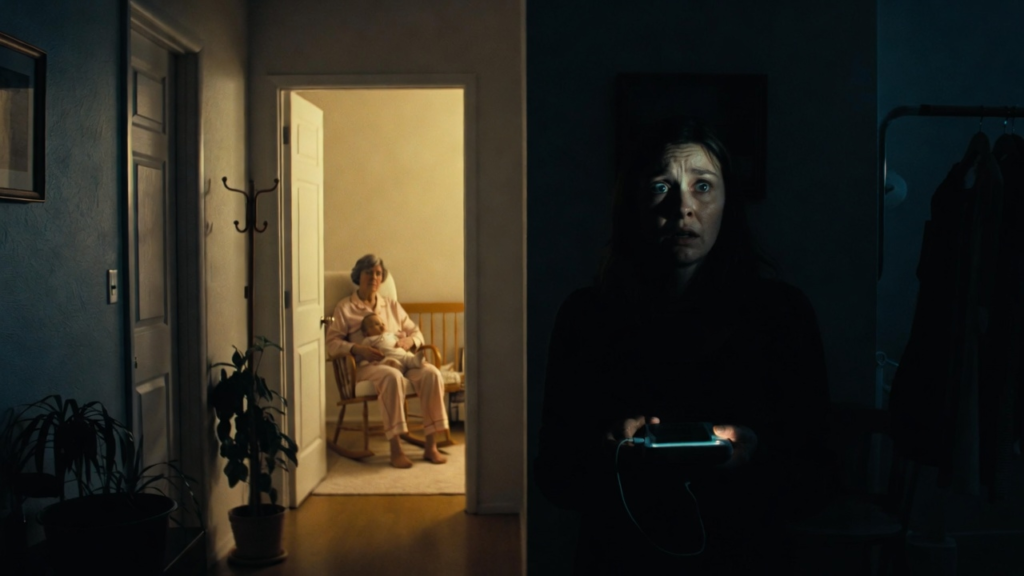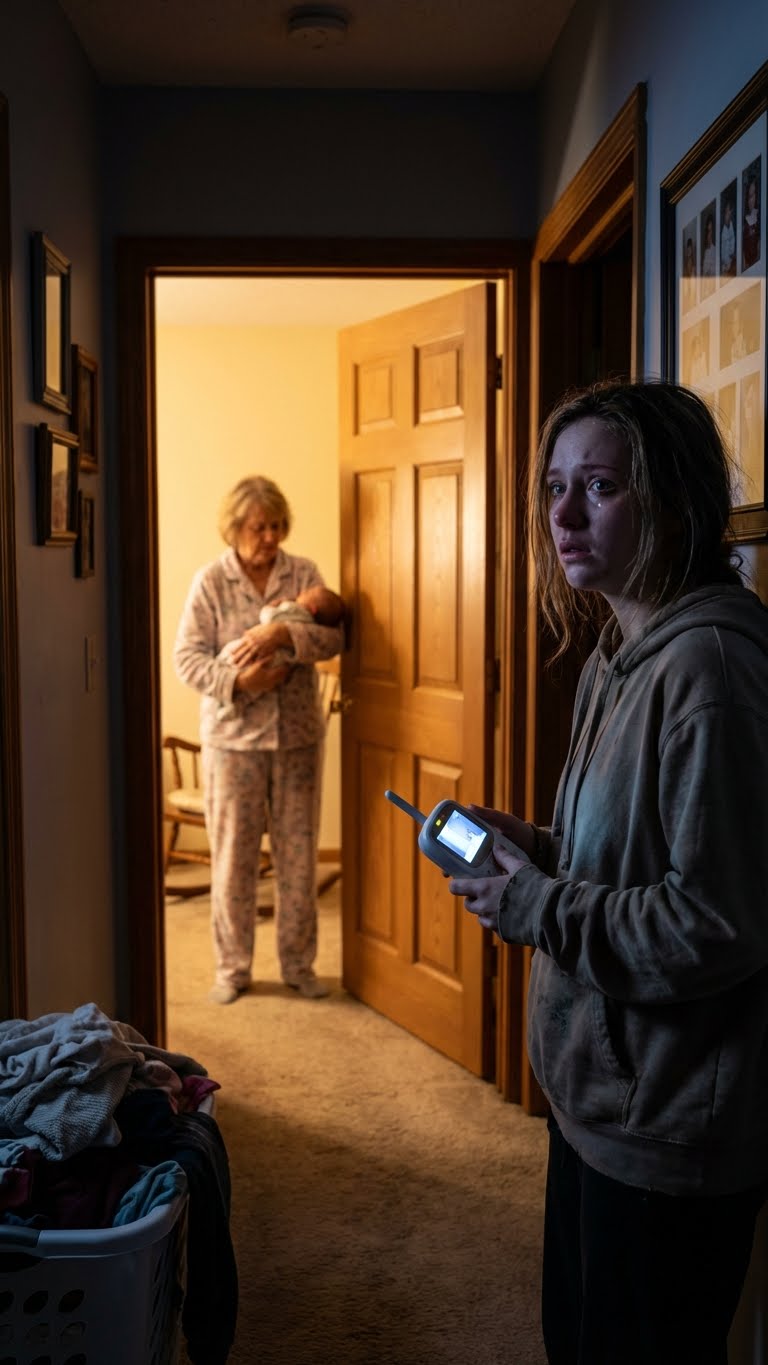
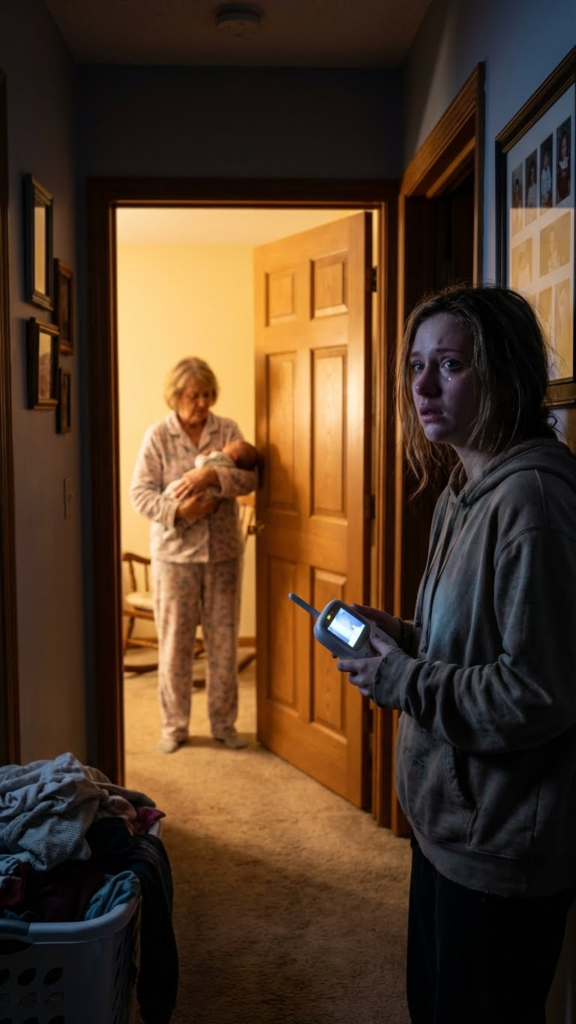
I used to think newborn cries were just white noise—background static in the blurry survival mode of early motherhood.
I was wrong.
By the time my son Oliver was six weeks old, his crying had become the soundtrack of my existence. Not the normal “feed me” or “change me” cries you read about in parenting books. These were screams that cut through walls, pierced bone, and lingered long after the sound stopped. They came in waves: every night from 11 p.m. to 3 a.m., like clockwork. Colic, the pediatrician said. Gas, the lactation consultant suggested. Growth spurt, the well-meaning moms in online forums chimed.
None of the explanations helped when I was pacing the living room at 2:17 a.m., holding a red-faced, shaking baby who looked like he was trying to escape his own skin.
I hadn’t slept more than ninety consecutive minutes in weeks. My husband Mark tried to help, but he worked long shifts at the plant and came home drained, defeated, and increasingly distant. We stopped talking about anything that wasn’t logistics.
“Did he eat?”
“Did you change him?”
“Can you grab the wipes?”
Our marriage began shrinking into a checklist.
Then Mark’s mother, Eleanor, offered to move in “just for a little while.”
She said it casually, over speakerphone, while Oliver was screaming in my arms.
“I raised three kids,” she said brightly. “You just need an experienced hand.”
I wanted to cry from relief and resentment at the same time. I didn’t know how I could survive another week like this, but I also hated the idea of admitting defeat. Still, when she arrived two days later with two suitcases and a casserole dish, I hugged her harder than I ever had before.
That first night, something impossible happened.
At 10:45 p.m., I braced myself for the usual storm. I fed Oliver, burped him, swaddled him, whispered prayers into his hair.
Eleanor hovered nearby, watching silently.
“He’s fine,” she finally said. “Give him to me.”
I hesitated, then passed him over.
She didn’t bounce him. Didn’t shush loudly or sway. She just held him against her chest and stood completely still.
Within seconds—seconds—his body softened. The scream cut off mid-breath. His eyelids fluttered like a computer powering down.
By the time I noticed I was holding my breath, he was already asleep.
I laughed. Actually laughed.
“Oh my God,” I whispered. “How did you do that?”
Eleanor smiled, but it didn’t reach her eyes.
“Some babies just need the right touch.”
From that night on, the crying stopped.
Not reduced. Not improved.
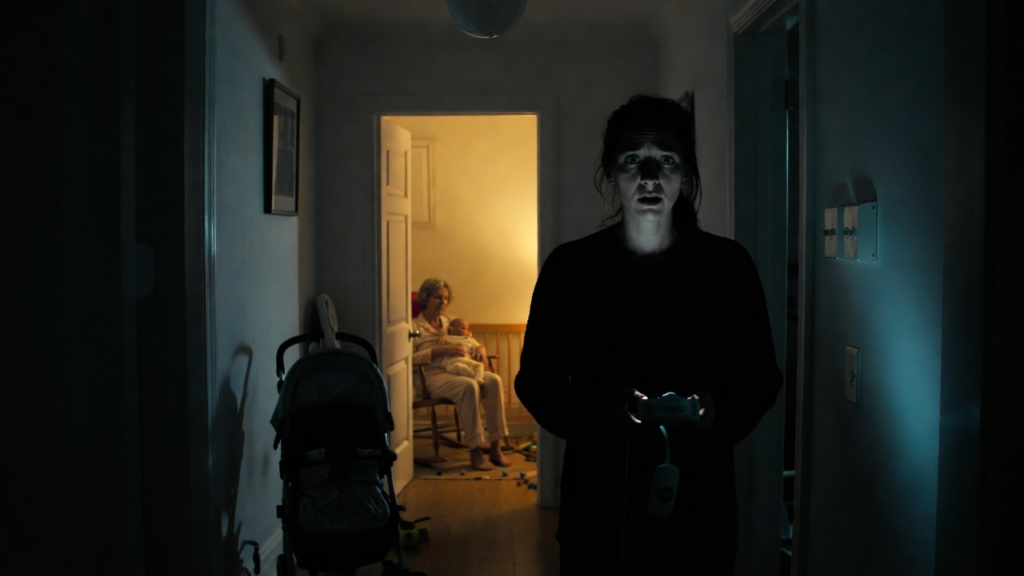
Stopped.
Oliver slept four hours straight. Then five. Then six. His face lost the constant scrunch of pain. His pediatrician called him “a model baby” at his two-month appointment.
People told me how lucky I was.
“You must be doing something right.”
“Enjoy it while it lasts.”
But I wasn’t doing anything differently.
Eleanor was.
She insisted on handling the nighttime routine.
“You’re exhausted,” she told me. “Let me take over. A rested mother is a good mother.”
She began spending long hours alone with Oliver in the guest room. I’d walk past the closed door and hear nothing—no crying, no cooing. Just silence.
It felt like a miracle.
It also felt like I was being slowly erased.
Oliver started reaching for Eleanor instead of me. When I held him, he was stiff. Quiet. Watchful. Not crying—but not comfortable either.
One afternoon I said, half-joking, “I think he likes you more than me.”
She paused too long before answering.
“He knows who keeps him calm,” she said.
I told myself I was being paranoid. I was sleep-deprived, hormonally unstable, probably dealing with some mild postpartum anxiety.
But small things began to bother me.
Like the way Eleanor flinched whenever Oliver made even the tiniest whimper, swooping in immediately to stop it—as if the sound physically hurt her.
Or how she discouraged me from responding to him.
“Let him learn self-soothing,” she’d say, placing a hand on my arm to stop me from standing. “Crying is a bad habit.”
I knew that wasn’t right. Every book I’d read said babies cry because they need something. But what could I argue with results? He was calm. He was quiet. He was… different.
Too different.
One night I woke suddenly at 3 a.m., heart pounding, the house unnaturally still. The baby monitor glowed on my nightstand.
The guest room camera was on.
Eleanor was sitting in the rocking chair, Oliver in her arms. His eyes were wide open.
He wasn’t crying.
He wasn’t blinking either.
She leaned down and whispered something into his ear.
The monitor didn’t pick up the words.
But I swear—on everything I am—I saw my son flinch.
I got out of bed, every instinct screaming that something was wrong.
But by the time I reached the hallway, the guest room door was open, the light off, Eleanor standing there smiling softly.
“He’s sleeping,” she said.
Oliver didn’t make a sound.
And I, like a coward, went back to bed.
I wish I hadn’t.