People imagine near-death moments as loud, violent things — fire, alarms, chaos.
Mine was silent.
The first sign wasn’t the sudden drop or the oxygen masks. It was the pilot’s voice, perfectly calm, saying, “We’re going to make a precautionary landing.”
Precautionary. As if we were pulling over for coffee.
I built my fortune on systems. Redundancy. Triple-checked processes. You don’t survive twenty years in private equity without learning that nothing truly fails on its own.
And yet everyone was desperate to tell me this was just bad luck.
The Landing That Didn’t Make Sense
We were cruising at 41,000 feet from Zurich to Los Angeles when the cabin shuddered — not violently, but like something had quietly given up.
The jet banked left. Not a stall. A decision.
I remember my CFO whispering my name. I remember thinking how expensive silence becomes when you’ve spent your life buying control.
We touched down in Barstow, California — a desert strip I’d never once approved as an emergency option.
Later I would learn that my flight plan had been modified mid-air.
But not by the cockpit.
Everyone Wants It to Be Over
For days afterward, people treated me like a survivor of a freak storm. My ex sent flowers. My mother-in-law called to say it was “God’s reminder to slow down.”
My brother — my younger brother, the one who’d recently been given power of attorney over several family aviation trusts — didn’t call at all.
I noticed things then that grief had masked before.
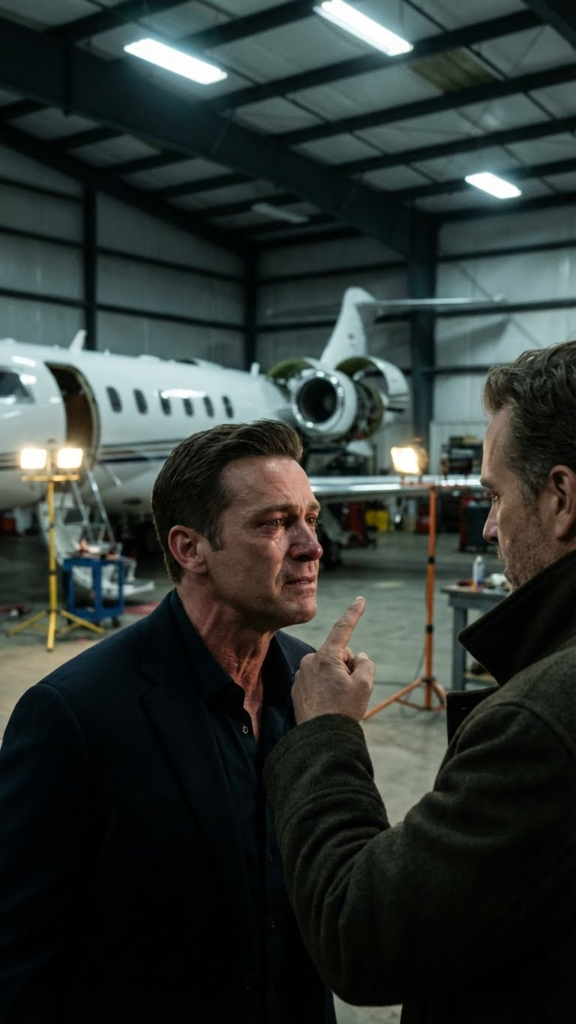
The hangar crew avoided eye contact.
The insurance firm delayed.
The maintenance company sent summaries instead of full logs.
When I demanded the raw data, I got a sanitized PDF with missing metadata and overwritten timestamps.
I didn’t confront anyone.
I hired a retired FAA auditor.
The Hidden Power
There is no greater weapon than a system no one knows you still control.
Three years earlier, during a quiet restructuring I’d pushed through after my father’s death, I embedded a private telemetry mirror into our aviation assets — an off-network data shadow that recorded engine overrides, signal pings, and manual input delays.
It wasn’t illegal.
It was invisible.
And it was still running.
When the auditor synced it with the jet’s black box backup, the picture became clear.
Someone had manually overridden the stabilization system at cruising altitude.
Not enough to crash us.
Just enough to force an emergency descent — at a location chosen in advance.
A location with press coverage.
A location where the aircraft would be immediately impounded by a firm tied to my ex-wife’s family office.
This wasn’t sabotage.
It was choreography.
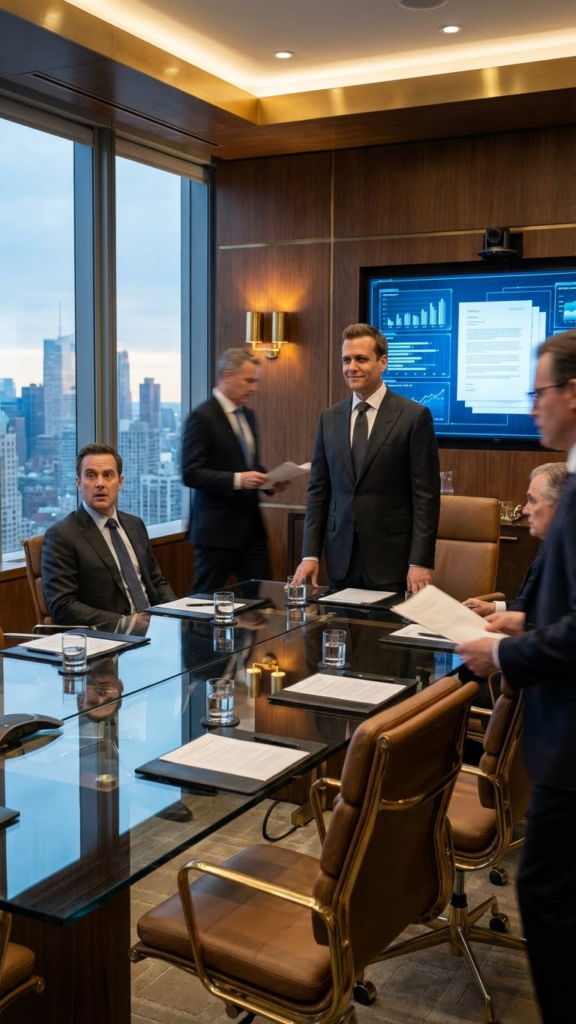
The Public Execution — Insurance Arbitration Hearing
The room was too small for what was about to happen.
Five arbitrators. Twelve attorneys. One glass table with my name etched into the agenda like a defendant’s label.
My brother sat three seats down from me.
He wouldn’t meet my eyes.
The lead counsel opened with sympathy. Near-fatal incident. Tragic malfunction. Mechanical unpredictability.
I waited.
They played the flight recording.
They blamed fatigue.
They suggested “temporary pilot disorientation.”
I felt the room turning toward me — toward my reputation as a reckless billionaire who pushed equipment too hard.
Then my attorney stood.
“May we present the auxiliary telemetry?”
Confusion rippled through the table.
My brother finally looked up.
The screen behind the arbitrators lit up.
Not graphs.
Commands.
Time-stamped override signals injected into the jet’s control layer — routed through a shell server registered to a holding company owned by a trust my brother controlled.
No voices.
Just data.
You could hear people breathing.
My mother-in-law’s lawyer dropped his pen.
The arbitrator asked, “Who authorized this pathway?”
My brother’s mouth opened.
Nothing came out.
We played the emergency ping transmitted after landing — a system that requires physical access to the avionics bay.
The camera feed followed: hangar footage from Barstow, showing my brother walking onto the tarmac while the fire crew still had the doors open.
He’d hugged me that day.
The room didn’t explode.
It collapsed inward.
The way worlds end quietly.
Standing Tall
I didn’t prosecute.
I let the trust boards do what trust boards do when confronted with betrayal that carries criminal liability.
My brother lost everything that afternoon.
Not publicly.
Systemically.
And I flew commercial for a while after that.
Just to feel gravity again.
People still ask about the emergency landing.
I tell them it saved my life.
They just don’t know how.