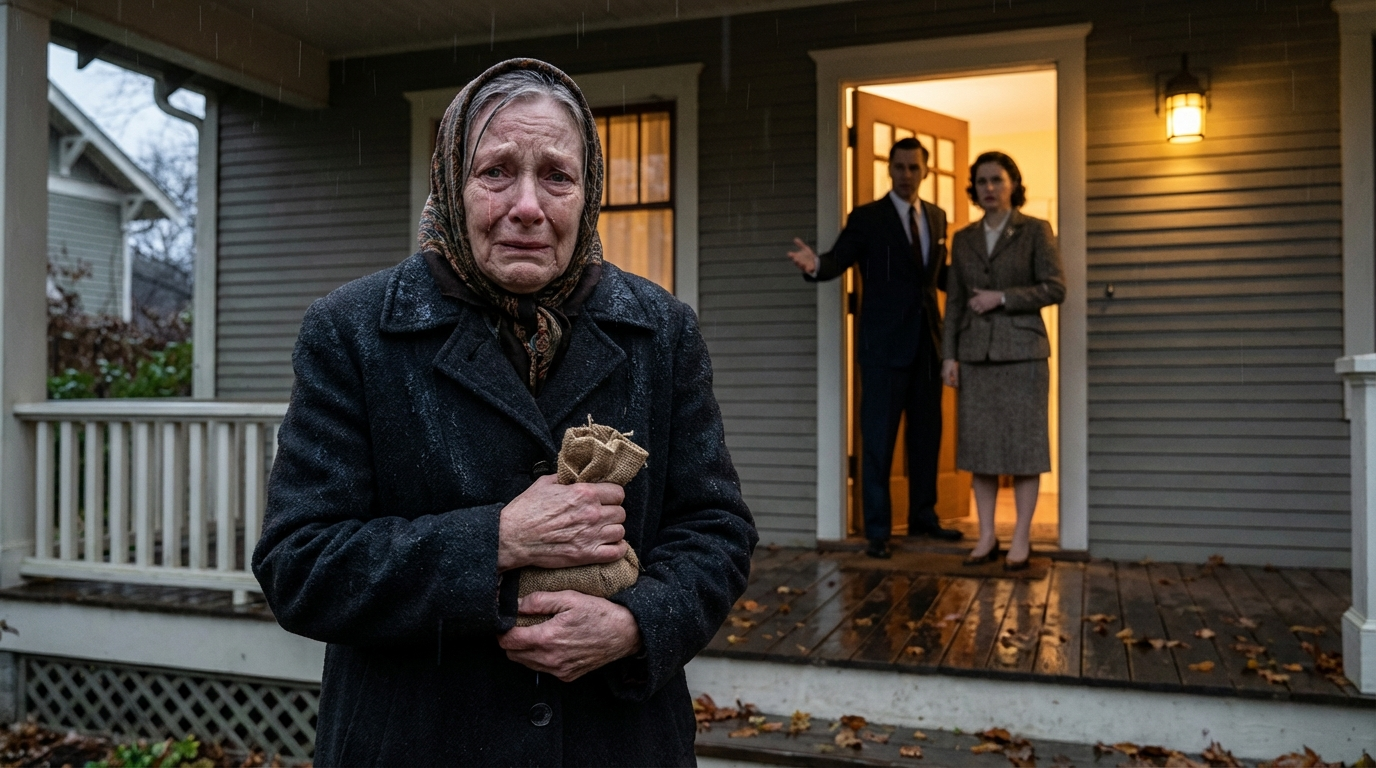
I still remember the sound of her knuckles on my door that October evening. Three soft knocks, barely audible over the rain.
When I opened it, there she stood—a tiny woman in her late 70s, soaked through, clutching a small burlap sack like it held her entire world. Her headscarf was dripping, her wool coat heavy with rain. She looked up at me with watery blue eyes.
“Please,” she whispered. “Just for tonight. I have nowhere else.”
My wife Sarah appeared behind me, her heels clicking on the hardwood. “Jason, who is it?”
“I’m Eleanor,” the old woman said quickly. “I used to live three streets over. My landlord—he changed the locks today. I just need—”
“We can’t,” Sarah cut her off, her voice sharp. “We have guests coming. This isn’t a shelter.”
Eleanor’s face crumpled. “I understand. Do you have a phone I could—”
“There’s a church two blocks down,” I said, already closing the door. “They might help.”
Sarah grabbed my arm. “You’re not seriously considering this.”
I looked at Eleanor’s shaking hands, the way she clutched that pathetic little sack. Something in me wanted to let her in. But Sarah’s grip tightened, and I thought about the dinner party we’d planned, the partners from my firm who were coming, the promotion I was chasing.
“I’m sorry,” I said, and shut the door.
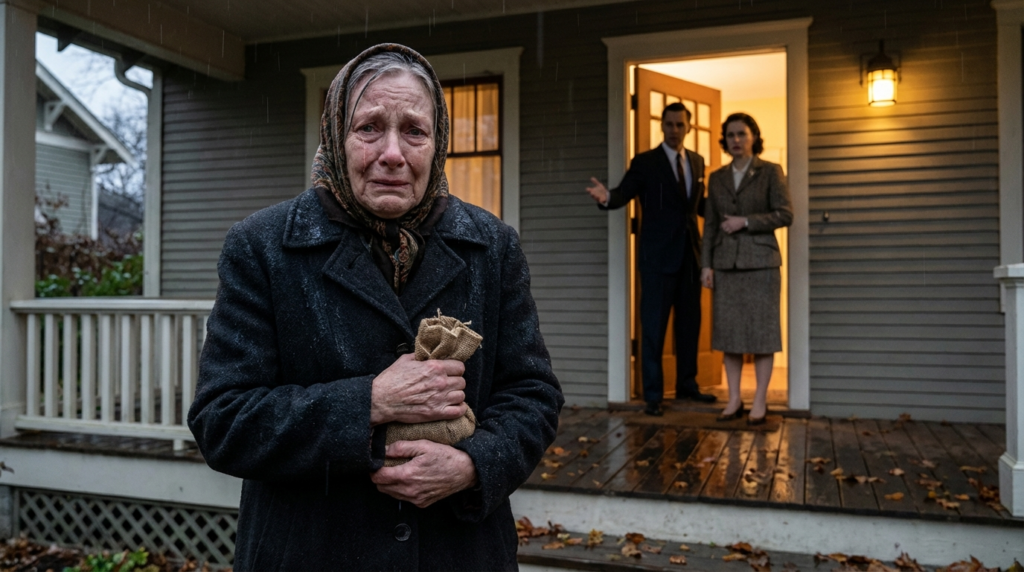
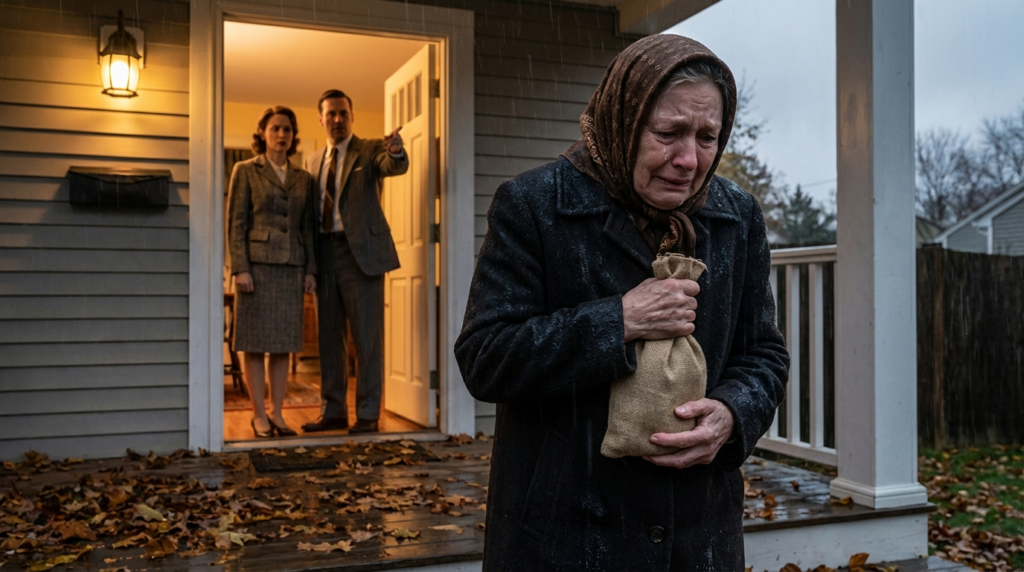
Through the glass, I watched Eleanor stand there for a moment, rain streaming down her face. Then she turned and walked down our porch steps, disappearing into the October darkness.
Sarah exhaled. “Thank God. Can you imagine if the Hendersons had shown up and found some homeless woman in our foyer?”
I said nothing. The image of Eleanor’s face stayed with me through dinner, through the forced laughter and wine, through Sarah’s stories about our “charming neighborhood.”
The next morning, our daughter Lily asked where the old lady had gone.
“What old lady?” Sarah asked sharply.
“The one on the porch. I saw her from my window. She was sitting under our oak tree all night. In the rain.”
My stomach dropped. I ran outside in my pajamas. She was gone, but she’d left something—a small note tucked under a rock, the paper damp and wrinkled.
“Thank you for your time. I don’t blame you. I know how I must have looked. – Eleanor Ashford”
Ashford. That name was familiar. I Googled it on my phone, and my blood ran cold.
Eleanor Ashford. Philanthropist. Founder of Ashford Children’s Foundation. Net worth: $47 million. Missing since last week after a financial dispute with her nephew, who’d taken control of her assets while she recovered from a fall.
She wasn’t homeless. She was hiding.
I found her three days later at the church I’d directed her to. She was volunteering in the soup kitchen, wearing the same brown coat, serving meals to people who had nothing.
When she saw me, she smiled—genuinely smiled.
“Jason, isn’t it? I remember. You have kind eyes, even when you’re scared.”
“Mrs. Ashford, I—” My voice broke. “I’m so sorry. I should have helped you.”
She set down her ladle and took my hand. Her skin was paper-thin and warm.
“You did help me. You told me where to find people who would. This church—they took me in without question. They gave me purpose again.” She paused. “Do you know what I learned that night on your porch?”
I shook my head.
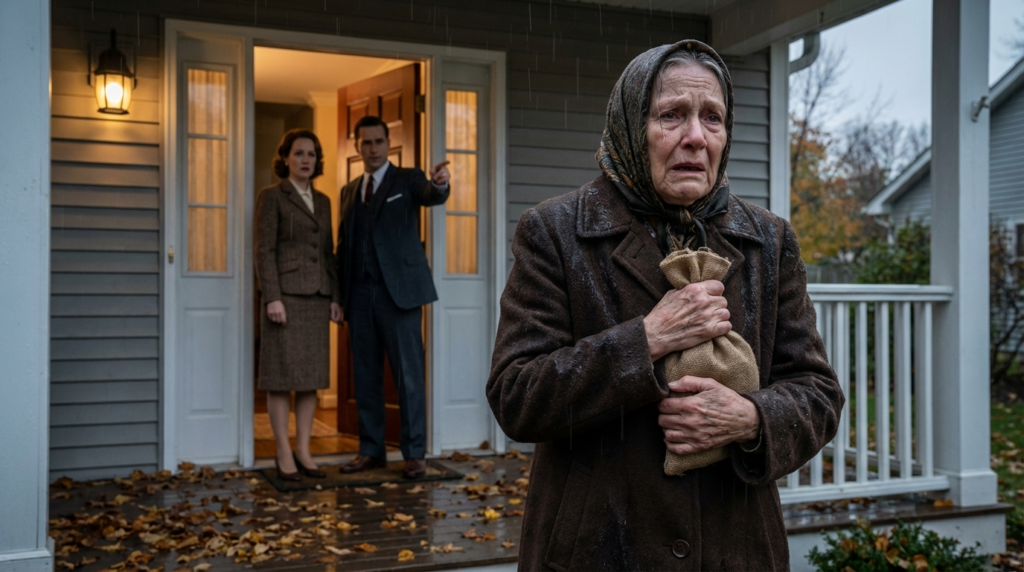
“I learned that I’d spent forty years writing checks for kindness, but I’d never actually needed it. I’d never been on the receiving end.” Her eyes shimmered. “Your rejection was a gift. It made me human again.”
“But we left you in the rain—”
“And I survived. And I found myself again.” She squeezed my hand. “Jason, your daughter opened her window that night. She called down to me, asked if I was okay. She tried to bring me a blanket, but your wife stopped her.”
My heart shattered.
“That little girl has something you’ve forgotten. Don’t let her lose it.”
Eleanor’s nephew was arrested two weeks later. She reclaimed her foundation and her assets. But she didn’t go back to her mansion.
She bought the church’s shelter and funded its expansion. She still volunteers there every Thursday, serving soup to people like the person she’d briefly become.
Last month, she showed up at my door again. This time, she wasn’t asking for shelter. She was offering something.
“I’m creating a new youth program,” she said. “Teaching kids about empathy and service. I want Lily to be part of it.”
Sarah started to protest, but I cut her off.
“She’d be honored.”
Eleanor smiled. “Good. Because kindness isn’t something you’re born with, Jason. It’s something you practice. And sometimes—” she glanced at Sarah, then back to me, “—sometimes you have to practice saying no to the wrong things so you can say yes to the right ones.”
She left an envelope on our porch. Inside was a check for $50,000 made out to a homeless youth charity—and a note: “In honor of the little girl who tried to give a stranger her blanket. May she never stop trying. – E”
I framed that note. It hangs in my office now, where I see it every day.
Sarah and I separated six months later. We weren’t the same people anymore—or rather, I wasn’t. I’d seen what mattered and what didn’t. I’d learned that kindness isn’t convenient, isn’t pretty, isn’t something you do when guests aren’t coming.
Lily lives with me now. Every Thursday, we volunteer at Eleanor’s shelter together. And sometimes, when it rains, I stand on my porch and remember the woman I turned away.
The woman who taught me that wealth isn’t measured in bank accounts.
It’s measured in blankets offered in the rain.