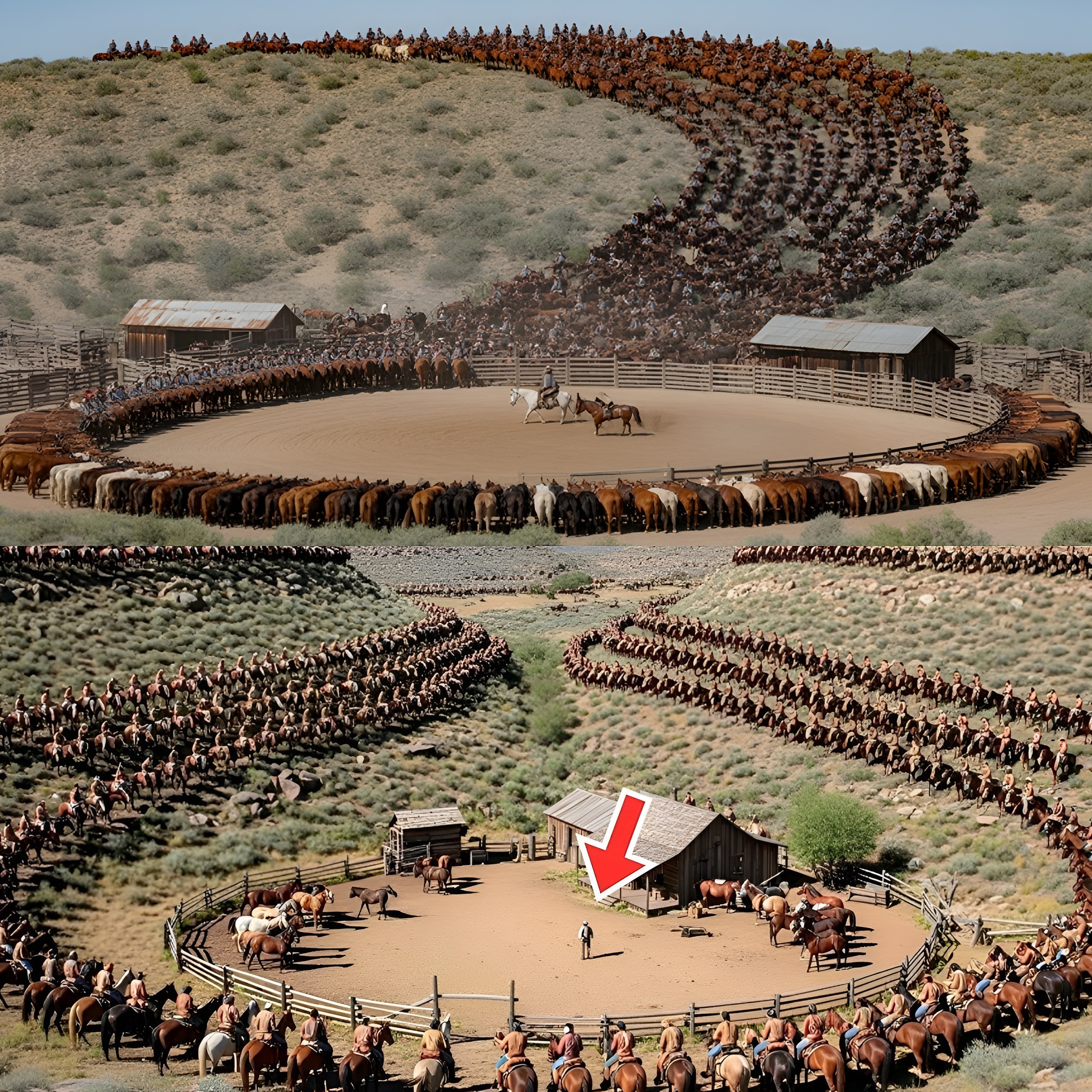
When Gaston offered water to a dying Apache woman, he never imagined he would unleash a storm. At dawn, 300 warriors surrounded his ranch, and amidst fire, love, and destiny, he would discover that compassion can defy empires. Between duty and soul, his gesture became legend, because in that land, a single sip of water forever changed the course of two worlds.
The sun set over the desert hills, painting the horizon red and copper. Gaston was returning to the ranch after an exhausting day. The wind carried the scent of drought, and the world seemed suspended in absolute silence. In the distance, something broke the stillness. A tall, motionless figure, hunched over the fence of his property.
Gaston frowned, thinking it was a shadow or a wounded animal, but when he approached, he saw it was a woman. Her skin was covered in dust and dried blood. Her bare feet showed deep cuts. She was taller than any woman he had ever seen. Her breathing was shallow, and her eyes, though tired, held a fierce gleam.
Gaston paused, unsure whether to approach. The woman watched him as if gauging his intentions. Then she took a staggering step back, struggling to maintain her balance. Her voice, hoarse with thirst, came out as a whisper. Water. Without hesitation, Gaston lowered the bucket into the well and filled a jug. He walked slowly, his hands outstretched. “I won’t hurt you,” he said calmly.
The woman stared at him, wary, but the sound of the water was stronger than her fear. She drank desperately, spilling some on her neck and chest. When she finished, she looked into his eyes. No words, only a gesture of ancient respect. Then she collapsed to her knees, exhausted, breathing as if her soul were weighed down.
Gaston caught her before she fell to the ground. “It’s alright,” he murmured. He carried her to the barn, laid her on a blanket, and lit a lamp. Through the dim light, he saw tribal markings painted on her skin. They were Apache symbols, ancient, almost sacred.
He understood then that this woman was no ordinary woman; she was a daughter of the desert, a warrior. “What’s your name?” he asked. She barely opened her lips. “Clara.” It was all she said before fainting. The night advanced slowly. Outside, coyotes howled in the distance. Gastón stayed by her side, listening to her ragged breathing.
In the silence, he felt something had changed in the air, as if the desert itself were holding its breath. At dawn, Clara opened her eyes. She tried to sit up, but the pain forced her to remain still. “Where am I?” she murmured. “At my ranch,” he replied. “I found you almost dead.” She nodded, showing neither gratitude nor fear, only dignity.
“You should have left me where I was,” she said in a grave voice. “I couldn’t,” Gastón answered. “You were a human being, not an enemy.” Clara stared at him, trying to decipher his truth. “Your people don’t think that way.” He barely smiled. “I’m not like my own people.” The wind blew hard, rattling the barn door. Gastón’s horse whinnied restlessly. Clara felt it too.
“There are spirits watching,” she said softly. “When the debt for water is paid with compassion, the balance is broken.” Gastón frowned. “What balance?” She looked away. “The one that separates our lands from yours. You’ve crossed a line, rancher.” He took a deep breath, not quite understanding. “Just give us water.”
She watched him with a shadow of sadness. “And that’s enough.” The day passed slowly. Gastón went out to work in the corrals, but his mind kept returning to the woman’s face. There was something about her that unsettled him, a mixture of strength and pain impossible to ignore. When he returned to the barn, Clara was already standing.
She had washed her face and mended her clothes with strips of cloth. Her bearing was imposing, her gaze unwavering. “I’ll leave at nightfall,” she said without hesitation. “I don’t want to bring misfortune.” “Misfortune?” he asked. “Yes,” she replied, “My people will see what you did as an offense. They’ll think you took me as plunder and they’ll come.” Gaston felt a chill run through his body. “Then stay until you’re healed.” Clara shook her head.
Danger doesn’t heal, it grows. The sun dipped behind the hills. Gaston prepared a simple dinner. Clara ate in silence, observing his every gesture, like someone studying the language of another world. “Aren’t you afraid?” she finally asked. “No,” he replied. “Fear dries you up more than the desert.” Clara smiled for the first time. “You speak like an old man.” “I am,” Gaston answered, barely chuckling.
She looked at him with a different kind of light. “You don’t speak like a man who has lost something.” He remained silent. He didn’t want to admit she was right. Night fell completely. In the sky, the moon looked like an open wound. Clara approached the well and knelt. She touched the water with her fingers, murmuring something in her own language. Gaston watched her from a distance, not daring to interrupt.
Suddenly, Clara looked up. “They already know.” Her voice was firm, resigned.
The desert had always been a place of silence — a vast, breathing emptiness that swallowed sound, memory, and sometimes entire lives. But on that particular evening, as the sun bled across the copper horizon, Gaston felt something different crawling across the air. A tension. A presence. A whisper from the land that something was about to break.
He was returning to the ranch after an exhausting day, dust covering his boots, shoulders heavy with fatigue. The wind carried the scent of drought; even the mesquite trees stood brittle and tired. There was no sound, no movement, no life — at least, that was what he thought.
Then he saw it.
A shape leaning against the boundary fence. Not an animal. Not a shadow. A person.
Gaston slowed his steps, squinting against the dying light. As he drew closer, details emerged: long limbs, dust-caked skin, bare feet torn open by the merciless ground. And eyes — fierce, tired, unyielding.
It was a woman. Tall, imposing even in her weakened state.
Her lips parted, cracked from thirst. She breathed a single word, a plea carried on a dying breath.
“Water.”

Without thinking, Gaston lowered the bucket into the well and filled a jug. He approached slowly, palms open, voice calm.
“I won’t hurt you.”
The woman hesitated, instinct warring with need. But thirst won. She drank greedily, some of the water spilling down her neck, mixing with dust and blood. When she finished, she lifted her gaze and met his — not with gratitude, but with something older, deeper, something born in the bones of survival.
Then her strength gave way. She collapsed forward.
Gaston caught her before she hit the ground.
THE APACHE WOMAN
He carried her to the barn and laid her gently on a blanket. The lamplight revealed markings on her skin — tribal paint, sacred symbols of the Apache people. Gaston felt his breath hitch.
She was not just a wanderer.
She was a warrior.
“What’s your name?” he asked softly.
Her lips barely moved.
“Clara.”
She fainted before he could say more.
That night stretched long and heavy. Coyotes sang in the distance. The desert felt awake, watchful. Gaston sat beside her, listening to her ragged breathing, feeling something shifting around him — as if the land itself was holding its breath.
At dawn, Clara’s eyes opened.
She looked at him not with fear, but with a harsh, dignified clarity.
“Where am I?”
“On my ranch,” he replied. “I found you almost dead.”
“You should have left me,” she murmured.
“I couldn’t,” Gaston said simply. “You’re a human being. Not an enemy.”
Clara’s gaze sharpened.
“Your people don’t think that way.”
“I’m not like my people,” he answered softly.
Outside, the wind suddenly surged, rattling the barn door. The horses grew restless. Clara felt it too — something shifting in the unseen.
“There are spirits watching,” she said. “When water is given without demand… the balance breaks.”
“What balance?” Gaston asked.
She turned her face away.
“The one that keeps our world from yours. And you crossed it.”
A WOMAN OF STRENGTH — AND WARNING
By afternoon, Clara was able to stand. She had washed her face, retied her clothes with strips of fabric, and regained some of her presence — tall, proud, her eyes burning like desert fire.
“I’ll leave at nightfall,” she declared. “I don’t want misfortune to fall on you.”
“Misfortune?” Gaston echoed.
“Yes,” she said gravely. “My people will see your act as an offense. They will think you took me as a trophy. They will come.”
A cold chill slid across Gaston’s spine.
“Then stay,” he insisted. “At least until you’re healed.”
Clara shook her head.
“Danger doesn’t heal. It grows.”
They shared dinner in silence. Clara watched every gesture he made, as though trying to read a language she had never been taught. Gaston felt strangely exposed under her gaze — not judged, but seen in a way he hadn’t felt in years.
“Aren’t you afraid?” she asked quietly.
“No,” Gaston said. “Fear dries you more than the desert.”
Clara smiled faintly — the first time her face softened since he met her.
“You speak like an old man.”
“I am,” he answered with a tired grin.
She studied him.
“You don’t speak like a man who’s lost something.”
He said nothing. Loss was a ghost he didn’t speak to anymore.
That night, under a moon shaped like an open wound, Clara walked to the well. She knelt, touched the water, and whispered words in her own language — ancient, rhythmic, almost mournful. Gaston watched from a distance, unable to look away.
She rose suddenly.
“They already know,” she said.
“Who?” he asked.
“My people,” she answered. “The ones who would die for me.”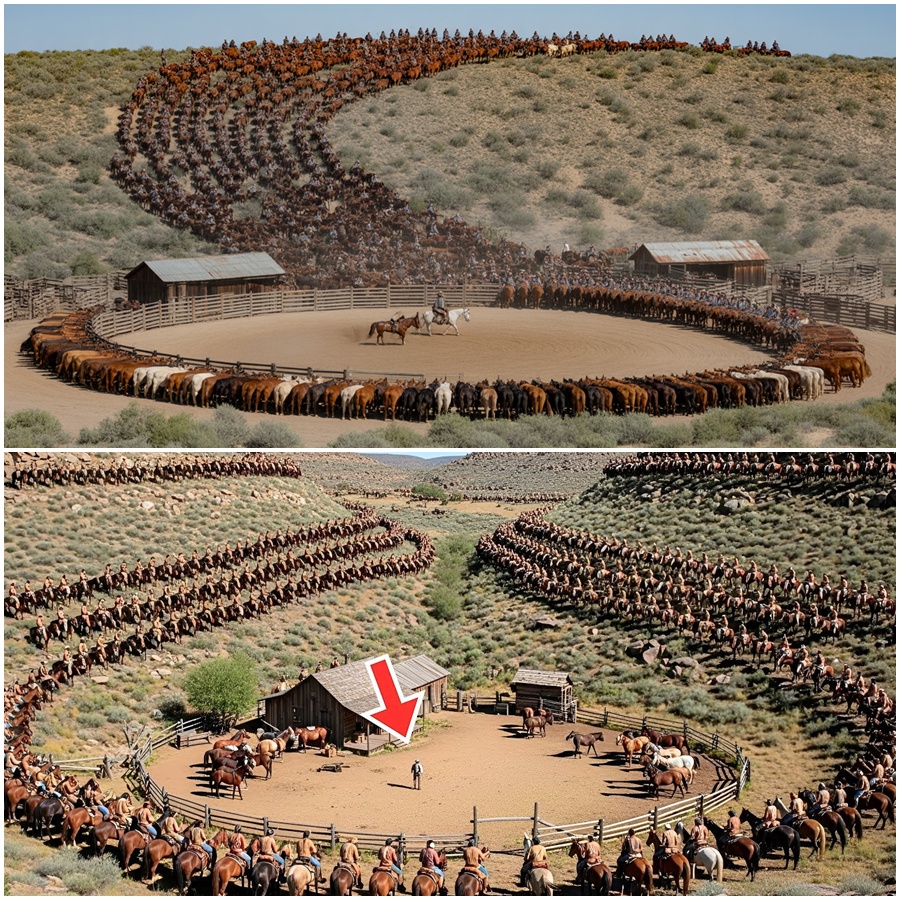
THE STORM BREAKS
At dawn, the desert seemed unchanged — still, quiet, deceptively peaceful.
But Clara was already awake, dressed, and standing at the edge of the ranch. Her posture was rigid, her jaw set.
“They’re close,” she murmured.
“How do you know?” Gaston asked.
“The earth tells me.”
He didn’t understand. But he didn’t argue.
Then he heard it — so faint at first he thought it was the wind. A low rumble, like distant thunder rolling across dry soil.
Hoofbeats.
Clara looked at him with something between regret and recognition.
“I told you. A debt of compassion is a dangerous thing.”
Gaston’s heart hammered.
“What do I do?”
“Stand,” she said. “With dignity. Or run — if your soul allows it.”
He looked at her.
“I won’t run.”
For a moment, something flickered in her eyes — respect, sorrow, or maybe something deeper.
The rumble grew louder. Dust rose in the distance, forming a moving wall. Dark silhouettes emerged. Horses. Spears. Feathers catching the morning light.
A war band.
Not twenty.
Not fifty.
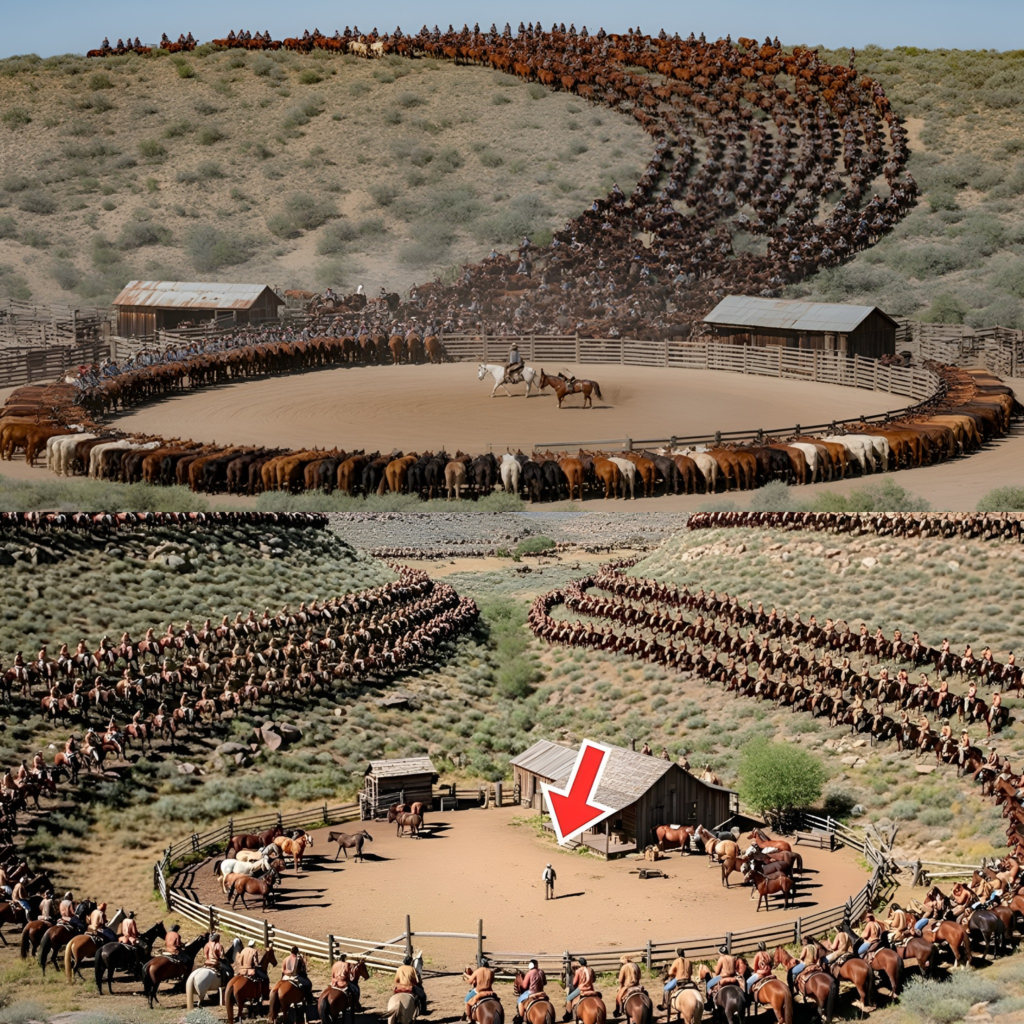
Three hundred Apache warriors, surrounding the ranch like a tightening noose.
Clara stepped forward.
“This is the price of water,” she whispered. “The price of crossing worlds.”
Flames were lit around the property — a ritual circle, not of destruction but of judgment.
Gaston’s breath caught.
“What happens now?” he asked.
Clara turned to him.
“What happens now depends on you… and on me.”
The warriors waited, silent as stone, watching the woman he had saved — the woman who, by drinking his water, had bound them in a destiny neither had sought.
Clara raised her hand.
The desert fell into absolute stillness.
A moment stretched between worlds.
And Gaston finally understood:
A simple act of compassion had shattered boundaries older than empires.
In that land, a single sip of water had changed everything — forever.