The Moment Everything Changed
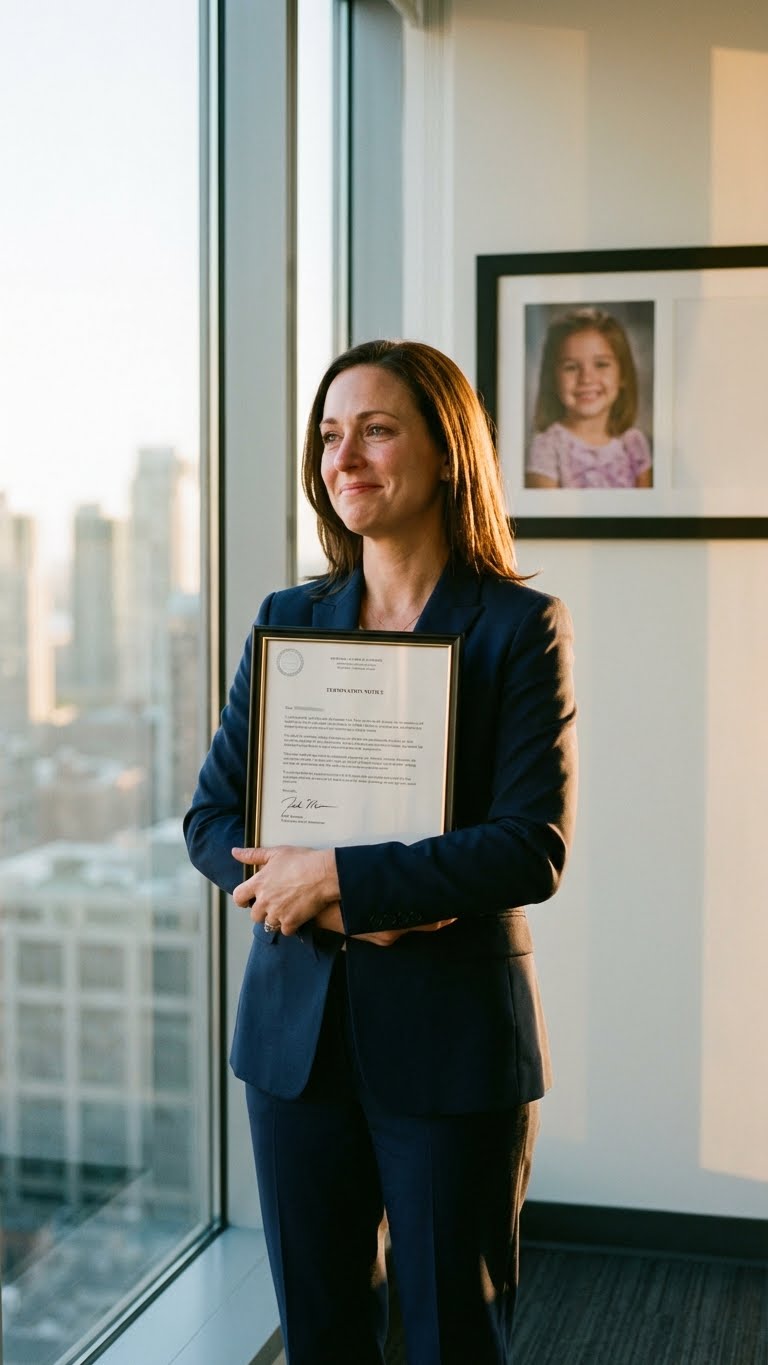
I’m standing in the boardroom of TechVance Industries, holding a framed termination letter with my name on it. The same letter that destroyed my career five years ago. The same letter that forced me to choose between my newborn daughter and my job. The same letter signed by Marcus Whitmore—the billionaire CEO who’s now sitting across from me, his face drained of all color.
“This can’t be legal,” Marcus stammers, his expensive suit suddenly looking too big for him. “There are bylaws, there are protections, there are—”
“There’s nothing,” I interrupt calmly, sliding the acquisition documents across the mahogany table. “I just bought your company for one dollar. TechVance Industries is mine now. And you? You’re fired.”
The silence in the room is deafening. The board members—most of them new, brought in after the scandal—are watching this unfold with barely concealed satisfaction. They never liked Marcus either. He’d treated them as obstacles rather than advisors, steamrolling over their concerns, lying to their faces about the company’s true financial position.
Marcus’s lawyer, Jonathan Chen, leans forward. “Ms. Rodriguez, while we acknowledge the acquisition is legal, we’d like to discuss the terms of Mr. Whitmore’s departure. Given his status as founder—”
“Given his status as a criminal under federal investigation for securities fraud, wire fraud, and obstruction of justice, I think we’ll stick with the terms I’ve outlined,” I say pleasantly. “Unless he’d prefer I terminate him for cause and offer nothing at all.”
Marcus’s face goes from pale to red. “You can’t prove any of that.”
“The SEC can. Your CFO already flipped. He gave them everything—the fake user accounts, the inflated engagement numbers, the shell companies you used to fabricate revenue. Did you really think Greg would take the fall alone?” I open my tablet and pull up a document. “This is his sworn testimony. He mentions you by name forty-seven times.”
The color drains from Marcus’s face again. He hadn’t known about Greg’s cooperation. None of them had.
“How did you—” he starts.
“How did I get access to sealed federal testimony? I didn’t. But Greg’s lawyer is an old friend. We went to law school together before I decided to pursue engineering instead. He gave me enough details to know that you’re finished, Marcus. The only question is whether you leave with a small severance and whatever dignity you have left, or whether I terminate you for cause and you leave with nothing but legal bills.”
He looks around the table, searching for allies. He finds none. These board members have already negotiated their own deals, their own immunity in exchange for cooperation. They’re not going to risk that for a man who lied to them for years.
The Beginning: Three Years of Excellence
Let me take you back to how this all started. Six years ago, I was recruited to TechVance Industries as Director of Innovation. I was thirty-two years old, I had a PhD in Computer Science from MIT, and I’d just sold my first startup for twenty million dollars. Marcus Whitmore personally courted me, promising autonomy, resources, and equity.
“You’re exactly what TechVance needs,” he’d said over drinks at an absurdly expensive restaurant in San Francisco. “Vision, technical brilliance, business acumen. I want you to build the future with me.”
I believed him. God, I was so naive.
For three years, I worked eighty-hour weeks. I built the recommendation algorithm that became TechVance’s secret weapon—a machine learning system that predicted user behavior with unprecedented accuracy. While competitors were still using basic collaborative filtering, we were using deep neural networks with attention mechanisms I’d designed specifically for our use case.
The algorithm increased user engagement by three hundred percent in the first year. Revenue quadrupled. TechVance went from a struggling social media platform to a tech darling. Investors threw money at us. Marcus appeared on magazine covers. He gave TED talks about innovation and disruption.
My algorithm was the foundation of it all. But when Marcus gave those talks, he never mentioned my name. When reporters asked about the technical breakthroughs, he’d say “my team” in a vague, dismissive way that suggested he’d been hands-on with the development. In reality, Marcus couldn’t code his way out of a paper bag.
I didn’t care about the credit initially. I was well-compensated, I had equity, and I was doing work I loved. But the culture Marcus fostered was toxic in subtle ways. He preferred young, single employees who could work endless hours. He made comments about “culture fit” that really meant “people like me.” He promoted based on who spent the most face time in the office rather than who produced the best work.
Still, I excelled. I kept my head down, delivered results, and accumulated stock options that would be worth millions when the company went public.
Then I got pregnant.
The Pregnancy That Changed Everything
I was thirty-five when I found out I was expecting. My partner, David, and I had been together for eight years, and we’d been trying for two years. When that pregnancy test came back positive, I cried tears of joy in the bathroom of our apartment.
I waited until the second trimester to tell Marcus, as is customary. I prepared my announcement carefully—I had a succession plan ready, I’d identified team members who could handle my projects during my leave, I’d outlined how we’d maintain communication so nothing fell through the cracks.
Marcus’s reaction was immediate and chilling.
“Twelve weeks?” he said, his voice flat. “You’re going to be gone for twelve weeks?”
“That’s the standard maternity leave. It’s protected under FMLA.”
“I know what the law says, Sarah. But this is a critical time for TechVance. We’re in the middle of the Series C raise. We’re launching the new features you designed. I need my directors present and committed.”
“I am committed. I’ll be working from home during my recovery, checking in regularly—”
“That’s not the same as being here.” He leaned back in his chair, studying me with cold eyes. “You know what happens to companies when key people become… distracted. Things fall apart. Competitors catch up. Investors lose confidence.”
“I’m having a baby, not quitting.”
“Are you sure about that?” He smiled, but it didn’t reach his eyes. “Because in my experience, new mothers always say they’ll come back full-time, but then reality sets in. The sleepless nights, the daycare struggles, the guilt. They start working part-time, then they quit entirely. I’ve seen it a dozen times.”
“That won’t be me.”
“We’ll see.” He stood up, signaling the meeting was over. “Congratulations on your pregnancy, Sarah. I’m sure you’ll do what’s best for your family.”
The threat was implicit but clear. Have this baby, and your career here is over.
I should have started looking for a lawyer right then. Instead, I convinced myself I was overreacting. Marcus was just stressed about the fundraise. He’d come around. My work spoke for itself.
I was wrong.
The Maternity Leave That Ended Everything
My daughter, Elena, was born on a rainy Tuesday in April. She was perfect—seven pounds, four ounces, with a full head of dark hair and her father’s eyes. Holding her for the first time, feeling her tiny hand wrap around my finger, I experienced a love so profound it redefined my understanding of the word.
I took my twelve weeks of FMLA leave. It was simultaneously the most exhausting and most beautiful time of my life. I was sleep-deprived, covered in spit-up, and learning to breastfeed, but I’d never been happier.
I stayed in touch with my team via email and occasional video calls. I provided guidance on ongoing projects. I reviewed code when I had time. I was still contributing, still engaged, still committed to TechVance’s success.
When Elena was eleven weeks old, I received an email from Marcus with the subject line: “Organizational Changes.”
My stomach dropped before I even opened it.
“As TechVance continues to scale, we’re restructuring several departments to improve efficiency and align with our strategic vision. Effective upon your return, the Director of Innovation role is being eliminated. Your responsibilities will be distributed among the existing team. Your final paycheck, including accrued vacation and twelve weeks of severance, will be processed on your scheduled return date. Thank you for your contributions to TechVance.”
That was it. Three years of excellence, an algorithm that made the company hundreds of millions of dollars, and I was dismissed in four impersonal sentences.
I called Marcus immediately. He didn’t answer. I called HR. They gave me the same corporate script: “This is a business decision based on organizational needs, not related to your leave status.”
But when I returned to the office to collect my belongings the next week—bringing Elena because I had no childcare arranged yet—I saw him. Brad Summers, a twenty-five-year-old with a bachelor’s degree from a state school and two years of experience. He was sitting in my office. My name plate had been replaced with his.
“Director of Product Innovation,” his new title read.
They’d eliminated my position and immediately created an almost identical one for someone else. Someone male. Someone without a baby.
The Fight I Couldn’t Win
I hired an employment lawyer. Rebecca Nguyen was sharp, experienced, and honest with me from the first consultation.
“You have a strong case,” she said, reviewing the timeline. “The proximity of your termination to your maternity leave, the replacement hire, Marcus’s documented comments about mothers—this is textbook pregnancy discrimination.”
“So we can win?”
Rebecca hesitated. “We can probably win. But Marcus Whitmore has unlimited resources. He’ll drag this out for years. He’ll file motion after motion, depose everyone you’ve ever worked with, make your life miserable. Even if you win, the legal fees will eat up most of the settlement. And you’ll be blacklisted in the industry. No tech company will touch you after you sue TechVance.”
“So I’m just supposed to let him get away with it?”
“I’m saying you need to understand what you’re signing up for. You have a newborn. You need income. The fight might not be worth what you’ll lose.”
I went home and cried in David’s arms while Elena slept in her bassinet. He wanted me to fight, but he also understood the practical reality. We had a mortgage. We had medical bills from the birth. We had a baby who needed food and diapers and a million other things.
I couldn’t afford to fight Marcus Whitmore. He knew it, and he’d counted on it.
So I accepted the severance and signed the non-disparagement agreement that prevented me from publicly discussing what had happened. It felt like swallowing poison, but I had no choice.
Marcus had won. Or so he thought.
Building My Empire From Nothing
I spent the first year after Elena’s birth in survival mode. I took freelance consulting gigs that I could do from home between feedings and diaper changes. I built websites for small businesses. I debugged code for startups that couldn’t afford full-time engineers. The work was unglamorous and poorly paid, but it kept us afloat.
David, who worked as a high school teacher, picked up summer school assignments and tutoring jobs. We burned through our savings. We stopped going out. We bought second-hand everything. We were exhausted and broke and terrified we’d lose our house.
But I refused to give up.
During Elena’s naps, I started building something new. I couldn’t compete with TechVance directly—I didn’t have the capital or the team. But I could offer something Marcus never understood: humanity.
I created a consulting firm called Nexus Solutions that specialized in helping companies improve their technology while maintaining healthy workplace cultures. My pitch was simple: innovation doesn’t require exploitation. You can build great products without burning out your people.
It was a hard sell in Silicon Valley’s hustle culture, but I found clients—mostly smaller companies run by founders who’d been chewed up and spit out by places like TechVance. They understood that the “work until you drop” mentality wasn’t sustainable. They wanted to succeed without destroying their employees’ lives in the process.
Nexus Solutions grew slowly but steadily. I hired other women who’d been forced out of tech for having families. I hired engineers with disabilities who’d been told they weren’t “culture fits.” I built a remote-first company that prioritized results over face time. And we were good—really good.
Within two years, Nexus had twenty employees and seven-figure annual revenue. Within three years, we’d attracted venture capital from firms that specialized in sustainable businesses. Within four years, we were advising Fortune 500 companies on how to retain talented women and avoid discrimination lawsuits.
I never forgot what Marcus did to me. Every client meeting, every successful project, every employee I hired who’d been cast aside by the industry—it all fueled my determination. I wasn’t just building a business. I was building proof that Marcus Whitmore was wrong about everything.
The Fall of Marcus Whitmore
In year five, everything changed. A reporter from a major tech publication reached out to me. She was investigating TechVance and had found evidence of systematic discrimination against pregnant women and mothers. She’d spoken to seven other women with stories similar to mine.
“Your non-disparagement agreement prevents you from speaking on the record,” she said. “But I wanted you to know that what happened to you wasn’t isolated. Marcus has a pattern.”
The article was published three months later. It was devastating. Eight women, all with documentation, all describing the same hostile environment for mothers. The story went viral. #TechVanceDiscrimination trended on Twitter. Several major advertisers pulled their contracts.
Marcus went into damage control mode, issuing apologies and promising to “do better.” But the damage was done. Investors started looking more closely at TechVance’s operations. That’s when they found the fraud.
Marcus had been inflating user numbers for years. The engagement metrics he’d touted were based on fake accounts and bot activity. Revenue from “enterprise clients” came from shell companies Marcus controlled. The algorithm that had made TechVance famous—my algorithm—was doing well, but not nearly well enough to justify the company’s three-billion-dollar valuation.
The SEC opened an investigation. The CFO, facing criminal charges, cooperated immediately. The board panicked. The stock price collapsed. Within six months, TechVance went from Silicon Valley darling to cautionary tale.
And I watched it all happen with grim satisfaction.
The Acquisition
When TechVance’s board reached out to me through an intermediary, I almost laughed. They were desperate. The company was hemorrhaging money, facing lawsuits from investors, and dealing with criminal investigations. They needed someone to take over who could stabilize operations and prevent total collapse.
“Why me?” I asked during the first meeting.
The board chair, Patricia Morrison, looked exhausted. “Because you understand the technology better than anyone—you built the only thing about this company that’s actually worth something. Because you have a reputation for ethical leadership, which we desperately need right now. And because, frankly, you’re the only person qualified who’d be willing to take this on.”
“What about Marcus?”
“Marcus is out. He lost control when the fraud came to light. He still owns shares, but he has no operational authority. The question is whether this company can be saved, and if so, by whom.”
I pretended to consider it. In reality, I’d been preparing for this moment for months. I’d been in contact with every major investor who felt burned by Marcus. I’d assembled a team of advisors. I’d secured commitments from venture capital firms who believed in my vision. I was ready.
“I’ll acquire the company,” I said. “For one dollar.”
Patricia blinked. “What?”
“The company is worthless. Maybe even negative value when you factor in the legal liabilities. But the underlying technology—my algorithm—is salvageable. I’ll acquire all assets for one dollar, assume all debts and legal obligations, and keep as many non-executive employees as possible. In exchange, the board gets liability protection, and Marcus gets nothing.”
“He’ll fight it.”
“He has no leverage. His shares are worthless. He’s facing criminal charges. And I have commitments from investors to fund the turnaround—but only if I’m in complete control. Take it or leave it.”
They took it.
The Confrontation
Which brings us back to this boardroom, this moment, Marcus Whitmore staring at his termination letter with shaking hands.
“There’s something else in that envelope,” I tell him calmly. “You might want to look.”
He pulls out a second document. His face goes white as he reads it.
“This is a full audit of your equity compensation,” I explain. “During the investigation, we discovered that you’d been awarding yourself stock options that weren’t properly authorized by the board. You essentially stole from the company and its shareholders. This document outlines every improper grant—about forty million dollars’ worth over five years.”
“I… the board approved all of my compensation,” he stammers.
“No, they approved certain grants. You awarded yourself additional options through a scheme with the CFO. It’s all documented. The question is whether you want to return those shares voluntarily, or whether you’d prefer I refer this matter to federal prosecutors who are already building a case against you.”
Marcus’s lawyer leans over, whispering urgently. Marcus’s face goes through a range of expressions—anger, fear, calculation, and finally, defeat.
“What do you want?” he asks quietly.
“I want you to sign the severance agreement, return the improperly granted shares, resign from the board, and disappear. Do that, and I’ll recommend leniency to the prosecutors regarding the equity theft. Fight me, and I’ll ensure every crime you’ve committed sees the inside of a courtroom.”
“You’re destroying me.”
“No, Marcus. You destroyed yourself. I’m just ensuring you face consequences for once in your privileged life.” I lean forward. “Do you remember what you told me when you fired me? You said I wasn’t committed enough. You said mothers were distracted. You said I’d become a liability.”
“That’s not—”
“You said those exact words, Marcus. I recorded the conversation on my phone. It’s one of several recordings I made after you started making threatening comments about my pregnancy. Perfectly legal in California—one-party consent. I have hours of you saying things that would make any jury sick.”
His lawyer whispers something else. Marcus closes his eyes, defeated.
“Fine,” he says. “I’ll sign.”
The paperwork takes twenty minutes. Marcus signs everything with a shaking hand, his billion-dollar empire officially transferred to the woman he’d dismissed as weak. When he’s done, he stands to leave without making eye contact.
“Marcus,” I call out. He turns reluctantly. “That daughter you said would ruin my career? She’s in kindergarten now. Honor roll. She wants to be a scientist. And every night, I read her stories about strong women who refused to give up. She’s going to grow up knowing that being a mother makes you stronger, not weaker. That’s your real legacy—inspiring the next generation to prove men like you wrong.”
He leaves without responding, his legal team trailing behind him like mourners at a funeral.
The New TechVance
Rebuilding TechVance was brutal work. Half the codebase was held together with duct tape and prayer. The company culture was toxic. Employee morale was nonexistent. And we were still dealing with lawsuits, investigations, and a shattered reputation.
But I’d built one successful company from nothing. I could rebuild this one from ruins.
First, I implemented the policies I’d pioneered at Nexus Solutions: generous parental leave for all genders, flexible remote work, promotion based on merit rather than face time, and zero tolerance for discrimination. Half the old executives quit within the first month. Good riddance.
I brought in new leadership—mostly women, many of them mothers, all of them brilliant. We restructured the company around sustainable growth rather than hypergrowth. We fixed the algorithm’s architecture and eliminated the fake accounts. We reached settlements with the women Marcus had discriminated against. We cooperated fully with all investigations and took responsibility for past wrongdoing.
The tech press was skeptical. “Can Sarah Rodriguez Save TechVance?” asked one headline. “TechVance’s New CEO Faces Impossible Task,” declared another.
I ignored them and focused on the work.
Within six months, we’d stabilized operations. Within a year, we’d returned to profitability—smaller, leaner, but sustainable. Within eighteen months, we’d launched new features that users actually wanted instead of addictive engagement traps. Our user numbers were lower than Marcus’s fraudulent peak, but they were real, and they were growing organically.
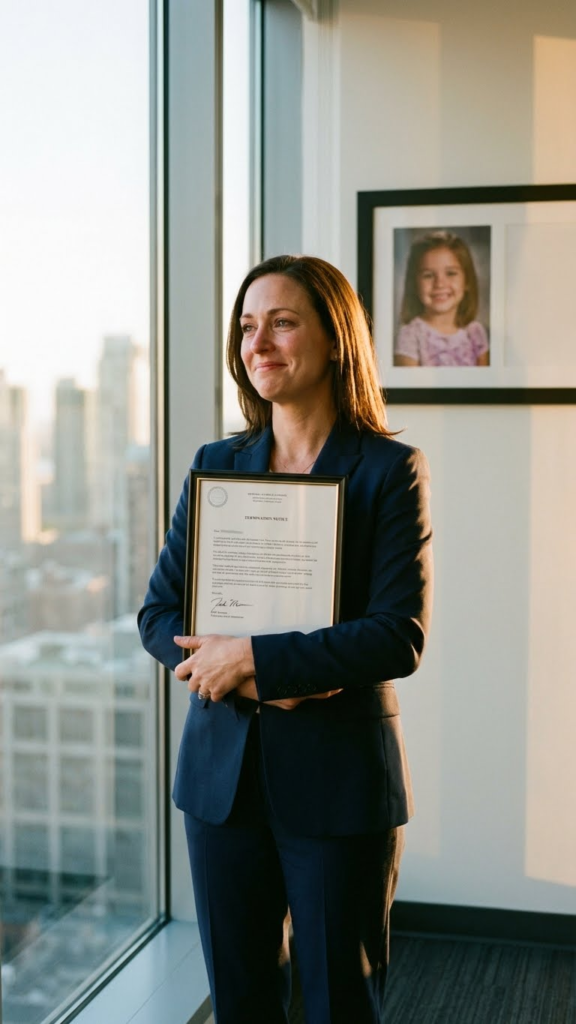
And yes, I framed that termination letter. It hangs in my office next to a photo of Elena on her first day of kindergarten. Visitors always ask about it.
“Motivation,” I tell them. “A reminder that being underestimated is an advantage if you’re patient enough.”
The Real Victory
Marcus Whitmore was sentenced to four years in federal prison for securities fraud. He served two and a half before being released on parole. His wealth, built on lies and exploitation, was largely seized to pay restitution to defrauded investors. Last I heard, he was working as a consultant for a small tech startup, making a fraction of what he once commanded.
I don’t take pleasure in his downfall—well, maybe a little. But the real victory isn’t his punishment. It’s what I built in his place.
TechVance is now certified as a Great Place to Work. Our parental leave policy is considered the gold standard in the industry. We have a fifty-fifty gender split in leadership. Our employee retention rate is ninety-four percent. And we’re profitable.
But more importantly, we proved that you don’t have to be ruthless to succeed in tech. You don’t have to sacrifice your humanity for innovation. You don’t have to choose between being a parent and being a professional.
Elena is seven now. She comes to the office sometimes after school, doing her homework in my conference room while I take meetings. My employees love her—she’s become our unofficial mascot, a living symbol of why we do things differently.
Last week, one of my senior engineers announced she was pregnant. She came to my office nervous, prepared for rejection or judgment.
“Congratulations,” I told her warmly. “That’s wonderful news. Let’s talk about how we can support you during your pregnancy and after the baby comes. Whatever you need—adjusted schedules, remote work options, extended leave—we’ll make it work.”
She cried with relief. “I was so scared to tell you.”
“You never have to be scared to tell me about your life,” I said. “Your baby isn’t a liability. Your family isn’t a weakness. They’re the reason we work this hard—to build something that serves life, not the other way around.”
That’s the real revenge. Not destroying Marcus Whitmore, though that was satisfying. The real revenge is building a company that proves everything he believed was wrong. The real revenge is creating a space where mothers thrive instead of being pushed out. The real revenge is showing the entire industry that humanity and excellence aren’t mutually exclusive.
I bought Marcus Whitmore’s company for one dollar. But what I really purchased was the chance to redefine what success looks like. To show that the most powerful force in business isn’t ruthless ambition—it’s determined resilience. The resilience of people who’ve been told they’re not enough, who’ve been pushed aside and written off, who refuse to accept that narrative.
Marcus underestimated me because I was pregnant. He thought motherhood would make me weak. Instead, it made me unstoppable. Because when you’re fighting not just for yourself but for your child’s future, for every woman who’s been told she has to choose, for every parent who’s been punished for their love—you don’t give up. You don’t quit. You get strategic, you get patient, and you get even.
That termination letter hangs in my office as a reminder: they can fire you, but they can’t break you. Not if you refuse to stay down.
And I never did.