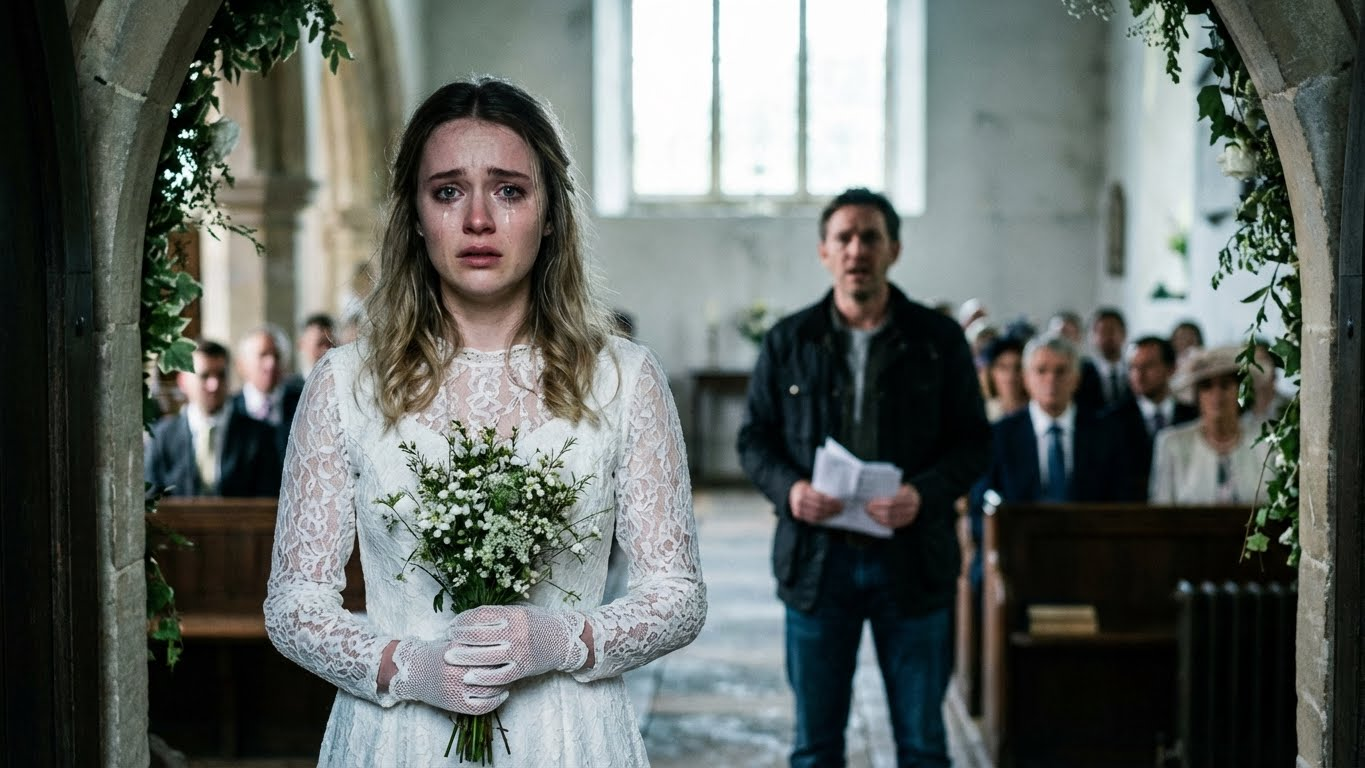
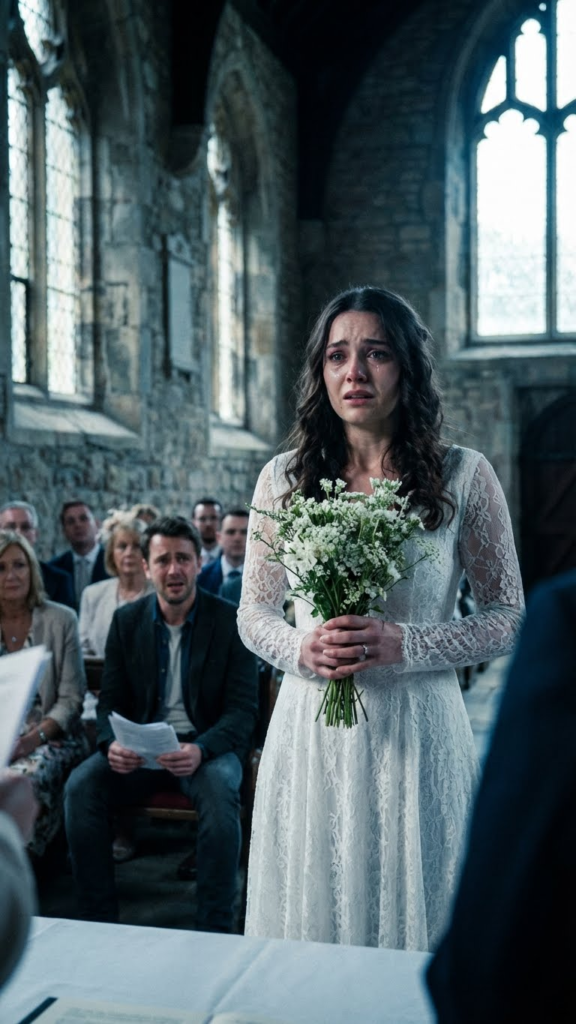
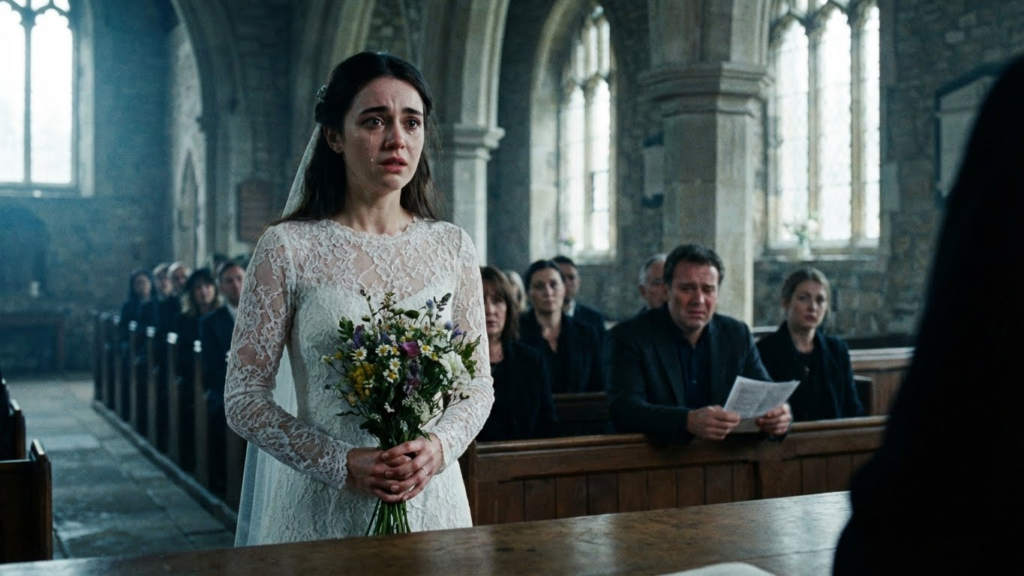
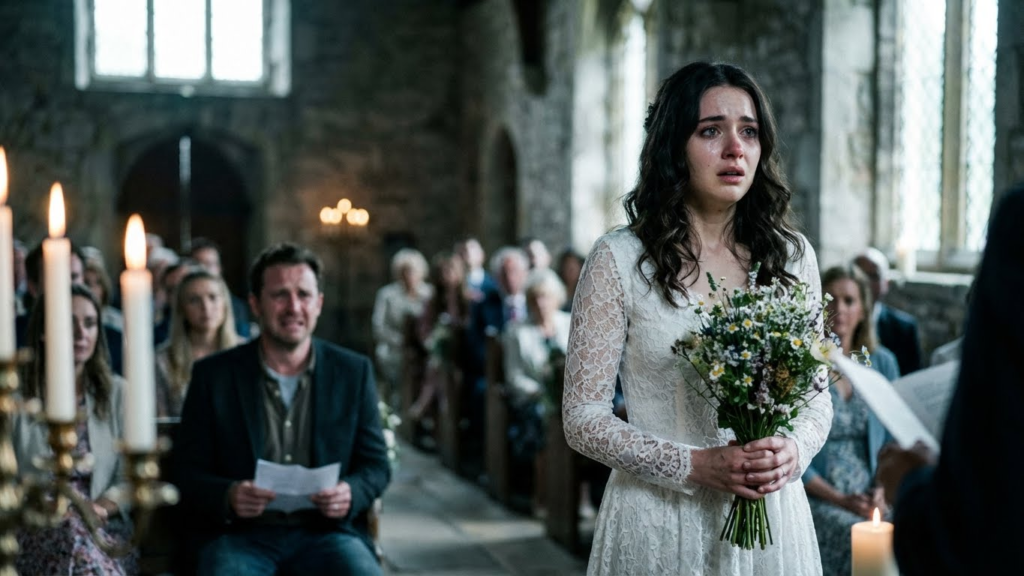
I stood at the altar in a wedding dress I never chose, staring at a man I barely knew, while the love of my life watched from the third row with tears streaming down his face.
My hands were shaking so badly I could barely hold the cheap bouquet my mother had shoved into them that morning. The officiant’s voice sounded like it was coming from underwater. Everything felt surreal—the faces of my extended family members who’d flown in from three states away, my father’s iron grip on my elbow during the walk down the aisle, my grandmother sobbing in the front row.
But it was Marcus’s face that kept pulling my attention. Marcus, my actual boyfriend of four years. Marcus, who I’d been secretly dating since college. Marcus, who my family had forbidden me from seeing because he was “beneath us”—a mechanic instead of a doctor, a state school graduate instead of Ivy League.
The man standing across from me—Richard Ashford III—smiled that cold, practiced smile his family was famous for. Our families had orchestrated this union for six months, ever since my father’s company faced bankruptcy and the Ashfords offered a lifeline with one condition: merge the families through marriage.
I’d said no a hundred times. I’d screamed, cried, threatened to run away. But my parents knew my weakness. My little sister’s medical treatments cost $40,000 a month. The Ashfords were covering it. “Just until she’s in remission,” my mother had whispered. “Then you can get divorced quietly. Think of Emma.”
So here I was, selling my soul for my sister’s life.
The officiant asked Richard to recite his vows. As he droned through words written by someone else, I caught Marcus’s eye again. He was standing now, his hands clenched at his sides. Everyone turned to look at him.
That’s when I saw what he was holding.
A folded piece of paper. Our plane tickets to Costa Rica. The ones we’d bought three months ago, before my family had trapped me in this nightmare.
His eyes met mine with a silent question: Are you coming with me?
I need to back up and tell you how I got here. How a 26-year-old marketing manager from Connecticut ended up as a pawn in what was essentially an arranged marriage in 2025.
My family—the Castellanos—had money once. Old money. The kind that came with a sprawling estate in Greenwich, memberships to country clubs we never used, and a last name that opened doors across the Northeast. My father, Vincent Castellano, ran a commercial real estate empire his grandfather had built.
But empires fall. And my father’s fell hard.
Bad investments, worse partnerships, and a lawsuit that dragged on for three years had bled the company dry. By early 2025, we were months away from losing everything—the house, the cars, the lifestyle my parents had built their entire identities around.
Then there was Emma. My baby sister, just nineteen years old, had been diagnosed with acute lymphoblastic leukemia two years prior. Her treatment was aggressive and experimental, not fully covered by insurance. The bills were astronomical.
I’d been living in Boston, working my corporate job, sending money home when I could. Marcus and I had just moved in together. We were happy. We were planning a future.
Then my mother called.
“Sophia, we need you home this weekend. It’s important.”
That weekend changed everything.
The Ashford family sat across from us in our dining room like they were conducting a business transaction. Because that’s exactly what it was.
Richard Ashford Jr., the patriarch, laid out the terms with the emotional warmth of a corporate merger. His son—Richard III—sat beside him, scrolling through his phone with the bored expression of someone accustomed to having his life planned for him.
“We’ll clear your father’s debts. We’ll cover Emma’s treatments indefinitely. And we’ll inject capital into Castellano Properties to make it profitable again,” Ashford Sr. said. “In exchange, our families unite through marriage.”
I laughed. Actually laughed. “This is insane. People don’t do arranged marriages anymore. This is America, not some historical drama.”
My father’s voice cut through the room like ice. “Sophia, watch your tone.”
“No.” I stood up. “I have a boyfriend. I have a life in Boston. I’m not marrying some stranger to save your company.”
That’s when my mother played her card. She pulled out her phone and showed me a video of Emma in the hospital, pale and weak, asking when she could come home.
“The treatments are working,” my mother said quietly. “But without the Ashfords’ support, we can’t afford to continue. You know what happens if we stop now.”
I felt sick. Emma was my best friend, the person who’d looked up to me since she could walk. The thought of her treatments stopping because I was selfish enough to choose my own happiness…
“I need time to think,” I whispered.
Ashford Sr. stood. “You have twenty-four hours.”
That night, I called Marcus from my childhood bedroom. I told him everything.
“Run away with me,” he said immediately. “Right now. We’ll figure it out. We’ll find a way to help Emma without you sacrificing yourself.”
“How? We can’t afford her treatments, Marcus. Even if we both worked three jobs—”
“Then we’ll set up a GoFundMe. We’ll get loans. We’ll sell everything we own. But you can’t marry him, Soph. You can’t.”
I cried until I couldn’t breathe. Because I knew Marcus was right, but I also knew the math. No crowdfunding campaign would raise millions. No bank would give us loans big enough to cover experimental cancer treatments.
For two weeks, I tried to find another way. I contacted every charity, every foundation, every financial advisor I could find. Nothing came close to what we needed.
Meanwhile, my parents turned up the pressure. Daily guilt trips. Photos of Emma’s progress sent to my phone with captions like “Thanks to the Ashfords, she’s improving.”
Finally, I broke.
“I’ll do it,” I told my parents. “But only until Emma’s in full remission. Then I want out.”
My mother hugged me like I’d done something heroic. My father nodded with relief.
I felt like I was drowning.
For six months, I lived two lives.
Publicly, I was Richard Ashford III’s fiancée. We attended charity galas together, posed for photos that appeared in society columns, and pretended to be a couple in love. Richard was surprisingly tolerable in private—he admitted he didn’t want this marriage either, but he was under similar pressure from his family to “settle down and produce heirs.”
“We can make this work,” he told me over coffee one morning. “Stay married for two years, keep up appearances, then divorce quietly. We’ll both get what we need.”
It sounded almost reasonable when he said it like that.
But secretly, I was still with Marcus. We met in hotels outside the city. I lied constantly about where I was, who I was with. Marcus was patient, understanding, but I could see the pain in his eyes every time I had to leave to attend another event with Richard.
“This is killing me,” Marcus admitted one night, three months before the wedding. “Watching you plan a wedding to another man.”
“It’s fake,” I insisted. “None of it means anything.”
“Then don’t do it. Please, Sophia. There has to be another way.”
But there wasn’t. Emma’s latest scan showed the tumors were shrinking. The treatments were working. I couldn’t stop now.
Marcus bought us plane tickets to Costa Rica for the week after the wedding. “We’ll go anyway,” he said. “You’ll do the ceremony, sign whatever papers they want, then we disappear for a week. Just us.”
It was a fantasy, but it gave me something to hold onto.
The week before the wedding, everything fell apart.
My mother found text messages between Marcus and me on my phone while I was in the shower. She confronted me that night, screaming about how I was “destroying the family’s one chance at survival” and “being selfish.”
“You want to know what’s selfish?” I screamed back. “Forcing your daughter to marry a stranger! Using your other daughter’s cancer as blackmail!”
“We’re doing this FOR Emma!”
“No, you’re doing this for yourselves! For your reputation! For your money!”
My father intervened, and that’s when he said the words that changed everything.
“If you don’t go through with this wedding, we’ll stop Emma’s treatments immediately.”
I stared at him in horror. “You wouldn’t.”
“Try me.”
That night, I called Marcus and told him not to come to the wedding. I couldn’t bear having him watch me marry someone else.
“I’m coming anyway,” he said. “You’re not doing this alone.”
Which brings us back to the altar.
Marcus standing in the third row, holding our Costa Rica tickets like a lifeline. Richard droning through his vows. My family watching with satisfied smiles, believing they’d won.
The officiant turned to me. “And do you, Sophia Marie Castellano, take Richard Ashford III to be your lawfully wedded husband?”
My mouth opened. No sound came out.
Everyone waited.
I looked at Marcus. Then at Emma, sitting in her wheelchair in the front row, still pale but alive, smiling at me with hope in her eyes.
Then I looked at my parents. My father’s warning expression. My mother’s desperate pleading eyes.
Finally, I looked at Richard, who was watching me with something unexpected in his expression. Understanding. Maybe even sympathy.
“I…” My voice cracked.
That’s when Emma spoke.
“Sophia, don’t.”
Everyone turned to stare at her.
My little sister, who’d barely had the strength to attend the ceremony, stood up from her wheelchair. Her nurse tried to stop her, but Emma pushed her hand away.
“Don’t marry him for me,” Emma said, her voice stronger than I’d heard it in months. “I heard what Dad said. About stopping my treatments if you didn’t go through with this.” Tears ran down her face. “I’ve been awake at night, terrified that you hate me for this. That you blame me.”
“Emma, no—”
“I’d rather die than watch you sacrifice your life for mine.”
The room erupted. My mother gasped. My father started toward Emma, but Marcus got there first, steadying my sister.
“You’re not going to die,” Marcus said firmly. “Tell her, Sophia.”
I looked at him, confused.
Marcus reached into his jacket and pulled out a folder. He handed it to me.
Inside were documents. Legal documents. A trust fund established in Emma’s name with enough money to cover her treatments for the next ten years.
“How…” I couldn’t process what I was seeing.
“I sold my grandfather’s garage,” Marcus said. “The property, the business, everything. And I called in every favor I had. My uncle’s a lawyer—he helped me set up the trust. The money can only be used for Emma’s medical care. Your parents can’t touch it.”
I was shaking, crying, unable to speak.
Marcus turned to my parents. “You don’t own her anymore. Emma’s treatments are covered. The deal’s off.”
My father’s face turned purple. “You have no right—”
“He has every right,” Richard said quietly.
Everyone stared at Richard—the groom I was supposed to be marrying.
Richard looked at his father, then at me. “I don’t want to marry someone who’s in love with someone else. This whole thing has been ridiculous from the start.” He turned to his father. “We can find another way to expand the business. We don’t need an arranged marriage.”
Ashford Sr. looked like he might explode, but Richard stood firm.
I dropped the bouquet. My hands found Marcus’s face, and I kissed him in front of everyone—my family, Richard’s family, the 150 guests who’d come to watch me sacrifice my happiness.
When we broke apart, I turned to my parents.
“I’m done,” I said simply. “Done being your pawn. Done caring what you think. Emma’s taken care of. You’ll have to save your company on your own.”
My mother started crying. My father looked like he’d aged ten years in ten minutes.
But Emma was smiling. Actually smiling.
“Go,” she whispered. “Live your life.”
Marcus and I left the ceremony hand in hand. We didn’t wait for the reception. We drove straight to the airport and caught our flight to Costa Rica with thirty minutes to spare.
We spent a week on the beach, processing everything that had happened. Marcus told me about selling his grandfather’s garage—the hardest decision he’d ever made, but one he’d make again in a heartbeat.
“That garage was just a building,” he said. “You’re my life.”
When we returned, we found out that my parents had issued a public statement claiming I’d had a “mental health crisis” and the wedding was postponed indefinitely. The Ashfords, surprisingly, backed out of their deal entirely. Richard Jr. was furious, but Richard III sided with me publicly, saying “forced marriages belong in history books, not modern society.”
He became an unexpected ally. Turns out we had more in common than I thought.
Emma’s treatments continued. The trust Marcus set up was ironclad. My parents couldn’t touch it, couldn’t manipulate it, couldn’t use it as leverage ever again.
I cut ties with my parents. It was painful but necessary. They’d proven they’d sacrifice my happiness for their social standing. Emma stayed in touch with me secretly, and once she turned eighteen, she moved in with Marcus and me.
As for my parents’ company? It went under six months later. My father declared bankruptcy. They lost the Greenwich house, the cars, everything.
I felt no satisfaction in their downfall, but I felt no guilt either.
It’s been eight months since the wedding that never was. Marcus and I got married last month in a small ceremony on a beach in Maine—just us, Emma, a handful of friends, and an officiant who asked if anyone objected with a knowing smile.
Emma’s in full remission now. She’s starting college in the fall, planning to study nursing. She says she wants to help people the way others helped her.
Marcus bought a smaller garage in Portland. He’s building it back up slowly, but he’s happy. We’re happy.
I got a text from my mother last week. Just two words: “I’m sorry.”
I haven’t responded yet. Maybe I will someday. Maybe I won’t.
But for the first time in my life, I’m living on my own terms. I chose love over obligation. I chose freedom over guilt.
And I’ve never looked back.
If you’re in a situation where family is pressuring you into choices that don’t serve you, hear this: You don’t owe anyone your happiness. Not your parents, not your siblings, not society’s expectations.
Your life is yours to live.
Choose yourself. Always choose yourself.