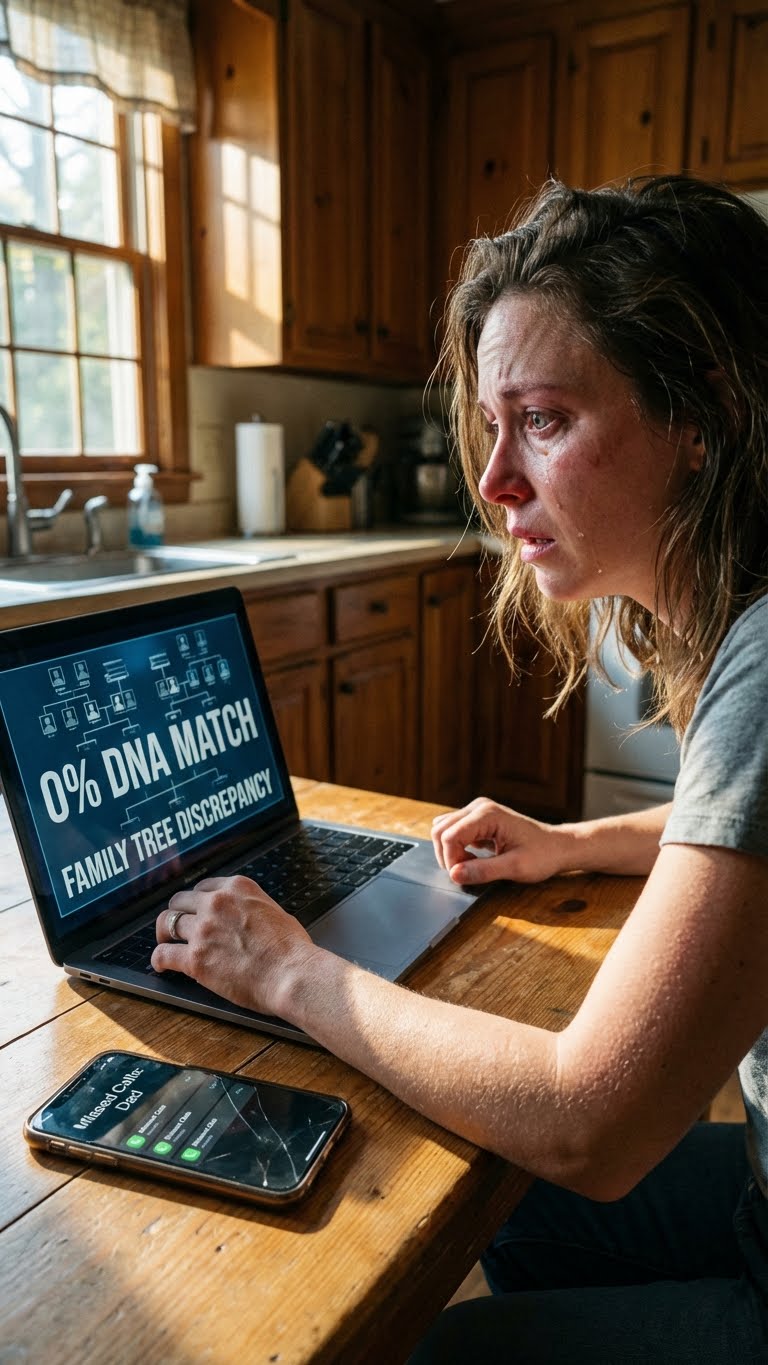
I was sitting at my kitchen table staring at my laptop screen, my hands shaking so badly I could barely control the mouse. The DNA test results had loaded three minutes ago, but I still couldn’t process what I was seeing.
“This has to be wrong,” I whispered to myself for the fifth time. “This can’t be real.”
But the numbers didn’t lie. According to the test, the man who raised me—the man who taught me to ride a bike, who walked me down the aisle at my wedding, who I called every Sunday without fail—shared exactly 0% of my DNA.
Zero.
I’d bought the DNA kit on a whim during a Black Friday sale six weeks ago. My best friend Rachel had been raving about finding distant cousins and learning she was 23% Scandinavian. It seemed fun. Harmless. A way to maybe connect with some long-lost relatives and learn more about my heritage.
I never imagined it would detonate a bomb in the middle of my family.
The Discovery
The test showed I had a half-sister. Her name was Jennifer, and according to the app, we shared 25% of our DNA, which meant we had one parent in common. She’d messaged me immediately: “Hey! I think we might be related. I never knew my father. Did you take this test to find family?”
My stomach had dropped when I read that message, but I’d pushed the thought away. Maybe it was a mistake. Maybe it was my mom’s side. Maybe there was a reasonable explanation.
Then I looked at the ethnicity breakdown. I was supposedly 15% Greek. My dad—the man I’d called Dad my entire life—was Greek. His parents immigrated from Athens in the 1950s. We had Greek Easter every year. I grew up eating his mother’s spanakopita and listening to his stories about the old country.
But if he wasn’t my biological father, where was that Greek DNA coming from?
That’s when I saw it. In the relative matches. A man named Nicholas Papadopoulos. Predicted relationship: Father.
I clicked on his profile with trembling fingers. There was no photo, barely any information. But there was a location. He lived two towns over. Twenty minutes from where I grew up. Twenty minutes from where my parents still lived in the house I grew up in.
My phone buzzed. A text from my dad: “Coming over for dinner tonight? Your mom’s making pastitsio.”
I stared at that text until the words blurred. Should I tell them? Should I confront them? Should I message this Nicholas person first?
Before I could decide, my laptop pinged with a new notification. A message from Nicholas Papadopoulos.
“Sophia, I’ve been waiting 32 years for this day. We need to talk. I know this must be confusing, but I can explain everything. Your mother and I—”
I slammed the laptop shut so hard I thought I might have cracked the screen. My heart was racing. My hands were shaking. The room was spinning.
That’s when I heard the key turn in my front door. My mom had a spare key for emergencies. She never used it without calling first.
But there she was, standing in my doorway, her face pale and her eyes red like she’d been crying.
“Sophia,” she said, her voice breaking. “Did you get the results?”
The Confession
I couldn’t speak. I just stared at her, this woman who’d raised me, who’d braided my hair every morning before school, who’d held me when I cried over my first breakup. This woman who I thought I knew everything about.
“How did you know?” I finally managed to choke out.
Mom closed the door behind her and leaned against it like her legs might give out. “The company sent me an email two weeks ago. They said there was unusual activity on your account—multiple DNA matches reaching out. They thought it might be spam or harassment, so they flagged it. When I saw Nicholas’s name…” She trailed off, fresh tears spilling down her cheeks.
“You’ve been lying to me for thirty-two years,” I said, my voice eerily calm despite the rage building inside me. “You’ve been lying to Dad. To everyone.”
“Please, let me explain—”
“Does he know?” I interrupted. “Does Dad know he’s not my biological father?”
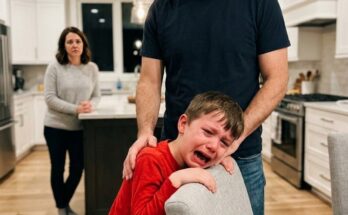
The silence that followed was deafening. Mom’s face crumpled, and she shook her head.
“Oh my God,” I breathed. “He has no idea. All these years, and he has no idea.”
The Backstory: A Love Triangle Decades in the Making
My mother sat down at my kitchen table and told me a story I never wanted to hear.
Thirty-three years ago, she was engaged to a man named Nicholas Papadopoulos. They’d met in college, fallen madly in love, and planned a future together. But Nicholas was ambitious—too ambitious, according to my mom. He wanted to move to New York City to pursue a career in finance. He wanted the big life, the fast pace, the corner office.
My mom wanted to stay in their small Connecticut town. She wanted to teach elementary school, raise a family, have Sunday dinners with extended family. They fought constantly about their future.
During one of their worst fights, Nicholas left for a weekend to “clear his head.” My mom, hurt and angry, went to a bar with her friends. That’s where she met Thomas—the man I’d always known as my dad.
Thomas was kind, steady, and completely smitten with her. They talked all night. He made her laugh. He told her he’d always wanted a simple life in a small town with someone to love.
One thing led to another. My mom and Thomas spent the night together. The next morning, she was consumed with guilt. She called Nicholas to apologize, to tell him she wanted to work things out.
But Nicholas had made his decision during his weekend away. He was taking the job in New York. He was leaving. And if she wouldn’t come with him, they were done.
My mom was heartbroken. She spent the next two weeks with Thomas, who was patient and caring and everything Nicholas hadn’t been in those final months. When Nicholas called one last time to ask if she’d changed her mind, she said no.
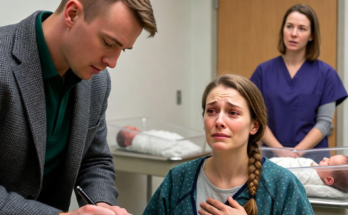
Three weeks later, she found out she was pregnant.
“I didn’t know which one of you was the father,” Mom said, her voice barely above a whisper. “The timing was too close. I panicked. Thomas had already told me he loved me. He wanted to marry me. Nicholas was gone, building his new life in New York. So I… I chose Thomas. I chose the life I wanted. And I never told either of them.”
“How could you?” I asked, my voice cracking. “How could you do that to Dad? To me?”
“I convinced myself it didn’t matter,” she said. “Thomas loved you from the moment you were born. He never questioned it. You have his mannerisms, his laugh—I thought maybe I’d been wrong about the timing. I thought maybe you really were his.”
“But you knew there was a chance I wasn’t.”
She nodded miserably. “Every day, I knew. Every time your dad looked at you with so much love and pride, I knew I was living a lie. But the longer I kept the secret, the harder it became to tell the truth. How do you tell your husband of three decades that his daughter might not be his? How do you tell your daughter that you don’t know who her father is?”
The Other Father
That night, after my mom left—after hours of crying and screaming and her begging me not to tell Dad yet—I messaged Nicholas Papadopoulos.
His response came within minutes. We agreed to meet at a coffee shop the next day.
I saw him before he saw me. He was sitting by the window, nervous hands wrapped around a coffee cup, checking his watch every few seconds. He looked like me. Same dark curly hair, same green eyes, same slightly crooked smile I saw in the mirror every day.
When I walked up to his table, he stood so fast he nearly knocked his coffee over.
“Sophia,” he said, and his eyes filled with tears. “You look just like my mother.”
We sat down, and he told me his side of the story. After he left Connecticut, he’d built a successful career in finance. He’d gotten married, had a daughter—Jennifer, the half-sister who’d messaged me. But his marriage fell apart after ten years. His ex-wife moved to California and took Jennifer with her. He’d tried to maintain a relationship with his daughter, but she’d pulled away as a teenager.
Two years ago, his daughter reached out to him. She’d taken a DNA test and discovered some surprising matches. That’s when Nicholas first suspected he might have another child.
“I tried to find your mother,” he said. “But she’d gotten married and changed her name. I didn’t know you existed until Jennifer told me she’d matched with someone who seemed to be her half-sister. When I saw your profile, saw your last name was Castellanos, I did some digging. Found your mother’s maiden name in some old college records. Put two and two together.”
“Why didn’t you message me sooner?” I asked.
“I wanted you to come to me,” he said quietly. “I didn’t want to destroy your life by showing up uninvited. I thought if you were looking for family, you deserved to find it on your own terms.”
He pulled out his phone and showed me pictures of Jennifer. My half-sister. She was twenty-eight, a graphic designer living in Portland, and she had the same curly hair we both shared. He showed me pictures of his parents—my biological grandparents—who’d passed away years ago. He showed me a whole life I never knew existed.
“I’m not trying to replace your dad,” Nicholas said carefully. “I know Thomas raised you. I know he’s your father in every way that matters. But I’d like to get to know you, if you’ll let me. And Jennifer really wants to meet you. She’s always wanted a sister.”
The Unraveling
I didn’t tell my dad right away. I couldn’t. How do you destroy someone’s entire world with a single sentence?
But secrets have a way of coming out, especially in small towns.
Two weeks after I met Nicholas, my dad called me. His voice was different—cold in a way I’d never heard before.
“Your Aunt Marie saw you having coffee with a man,” he said. “She said you two looked very… familiar. She said he called you by your mother’s maiden name. Want to tell me what’s going on?”
I should have lied. I should have said it was a work colleague or an old friend. But I was so tired of the lies, so tired of carrying this weight.
“Dad, I need to come over. We need to talk.”
When I arrived at my parents’ house, Dad was sitting in the living room, stone-faced. Mom was nowhere to be seen.
“She’s upstairs,” Dad said. “I told her to give us some privacy.”
I sat down across from him and told him everything. About the DNA test. About the results. About Nicholas. About Mom’s confession.
With every word, I watched my father break. The man who’d been my hero, my rock, my biggest supporter—he just shattered right in front of me.
“Thirty-two years,” he finally said. “Thirty-two years, and it was all a lie.”
“No,” I said firmly, tears streaming down my face. “It wasn’t a lie. You’re my dad. You raised me. You loved me. That’s real. The DNA doesn’t change that.”
But he was already shaking his head. “Every time I looked at you, I saw myself. I saw my father in your stubbornness, my mother in your kindness. I built my entire identity around being your father. And now you’re telling me none of it was real.”
“It was real, Dad. It is real. You’re still my father—”
“Don’t,” he said sharply. “Don’t call me that. I don’t know what I am anymore.”
He stood up and walked to the door. “I need some time. I can’t… I can’t be here right now.”
“Dad, please—”
“I said don’t call me that!” he shouted, and I flinched. He’d never raised his voice at me in my entire life. “I need space, Sophia. From you. From your mother. From all of this.”
He left. Just walked out the door and drove away.
Mom came downstairs twenty minutes later and found me sobbing on the couch. “He knows, doesn’t he?” she asked quietly.
I couldn’t even look at her.
The Fallout
The next three months were the worst of my life. Dad moved into a hotel, then into an apartment across town. He wouldn’t take my calls. He wouldn’t respond to my texts. I showed up at his apartment twice, and he wouldn’t answer the door even though I could hear the TV inside.
Mom was a mess. She’d lost twenty pounds. She wasn’t sleeping. She kept calling me crying, begging me to help her fix things, to convince Dad to come home. But how could I? I was the reason everything fell apart.
My marriage started suffering too. My husband Jake tried to be supportive, but he didn’t understand why I was so devastated. “He’s not even your real dad,” he said one night, and I nearly threw my coffee mug at him.
“He IS my real dad,” I shouted. “Biology doesn’t erase thirty-two years of love and sacrifice and showing up every single day. He’s more my father than some stranger who happened to contribute half my DNA.”
The irony was that I’d been meeting with Nicholas regularly. He was kind and interesting, and I could see where some of my personality traits came from. Jennifer and I had become friends—real friends. We texted daily, met for lunch, laughed at how similar our mannerisms were.
But none of it filled the hole where my dad used to be.
The Turning Point
Four months after Dad found out, I got a call from his sister, my Aunt Linda.
“Your father had a heart attack,” she said. “He’s at County General. He’s stable, but Sophia… you need to come. He’s been asking for you.”
I broke every speed limit getting to that hospital. When I burst into his room, he was sitting up in bed, looking small and tired and so much older than I remembered.
“Dad,” I choked out.
He held out his hand, and I took it, collapsing into the chair beside his bed.
“I’m sorry,” he said, his voice hoarse. “I’m so sorry, sweetheart. I’ve been an idiot.”
“No, I’m sorry. I should never have taken that stupid test. I should have just—”
“Stop,” he interrupted. “This isn’t your fault. None of this is your fault.” He squeezed my hand. “I spent four months feeling sorry for myself. Four months angry at your mother, angry at the world, angry at a situation nobody could control. And you know what I realized when I thought I might die?”
I shook my head, tears streaming down my face.
“I realized that the best thing that ever happened to me was raising you. DNA or no DNA, you’re my daughter. You’re my pride and joy. And I almost threw that away because I was too stubborn and hurt to see what really mattered.”
We both cried then, holding onto each other like we were drowning.
The Resolution
It took time, but slowly, carefully, we rebuilt our family. Dad moved back home. He and Mom went to marriage counseling. It wasn’t easy, and there were plenty of setbacks, but they were committed to working through it.
Dad and I had lunch every week, just the two of us. We didn’t talk about the DNA test or Nicholas or any of it. We just talked about life, about my work, about his retirement plans. We rebuilt our relationship one conversation at a time.
Eventually, I introduced Dad to Nicholas. It was awkward and uncomfortable and one of the hardest things I’ve ever done. But Dad was gracious. He shook Nicholas’s hand and thanked him for respecting boundaries and not trying to push into our lives.
“Sophia’s lucky to have another person who cares about her,” Dad said. “I spent a long time seeing you as the enemy, but you’re not. You’re just a man who missed out on knowing his daughter. That’s punishment enough.”
Nicholas had tears in his eyes when they said goodbye.
These days, I have two fathers. Thomas will always be my dad—the man who raised me, who shaped who I am. Nicholas is someone new, someone I’m getting to know, someone who fills in gaps I didn’t know I had. It’s complicated and messy and sometimes still painful.
Jennifer is my sister now, fully and completely. She came to visit last month, and Dad welcomed her with open arms. “Any sister of Sophia’s is family to me,” he said, and I nearly burst into tears on the spot.
Mom still carries guilt. I don’t think that will ever fully go away. But she and Dad are working on it, and they’re stronger now than they were before. Sometimes you have to break something completely apart to rebuild it better.
As for me? I learned that family isn’t about biology. It’s about who shows up. It’s about who loves you when you’re unlovable, who stands by you when everything falls apart, who chooses you every single day.
That stupid DNA test destroyed everything I thought I knew about my family. But in the rubble, we built something new. Something honest. Something real.
And yeah, sometimes I wish I’d never taken that test. Sometimes I wonder what would have happened if I’d just left well enough alone.
But mostly, I’m grateful. Because now I know exactly who my family is—and it’s bigger and more complicated and more beautiful than I ever imagined.
Dad still calls me every Sunday. And I still call him Dad. Some things, DNA can’t touch.