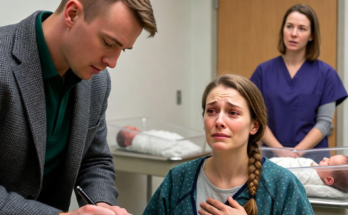
The Uninvited Guest
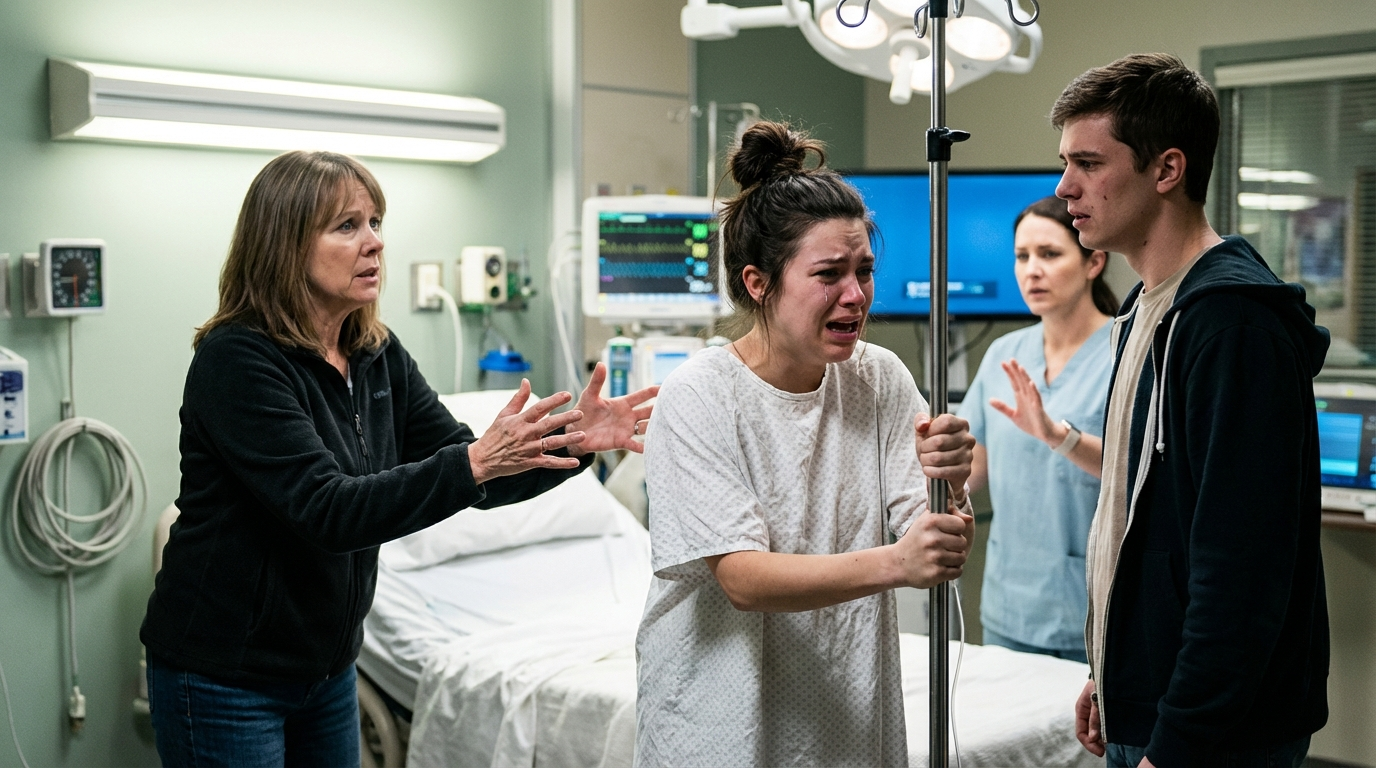
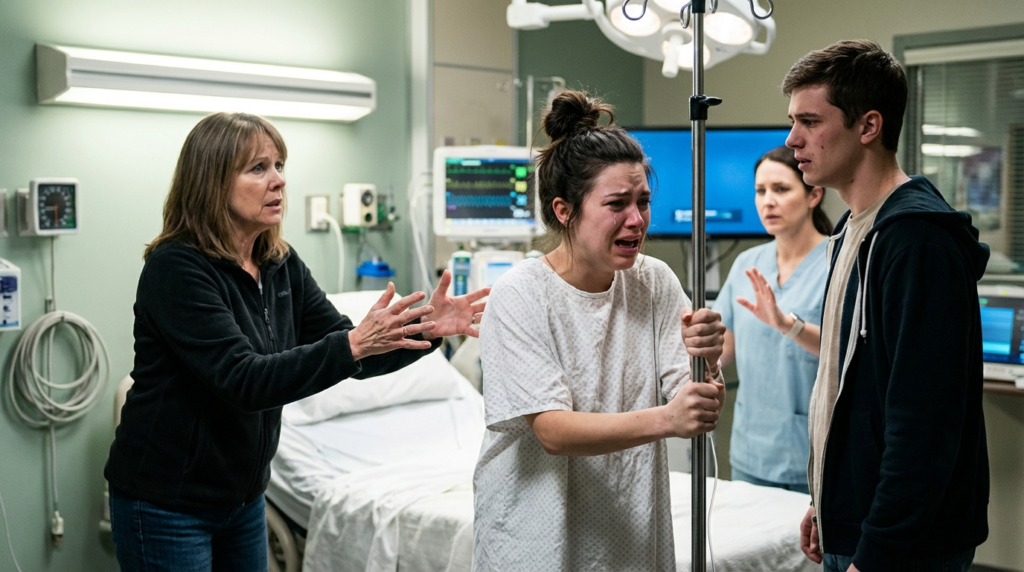
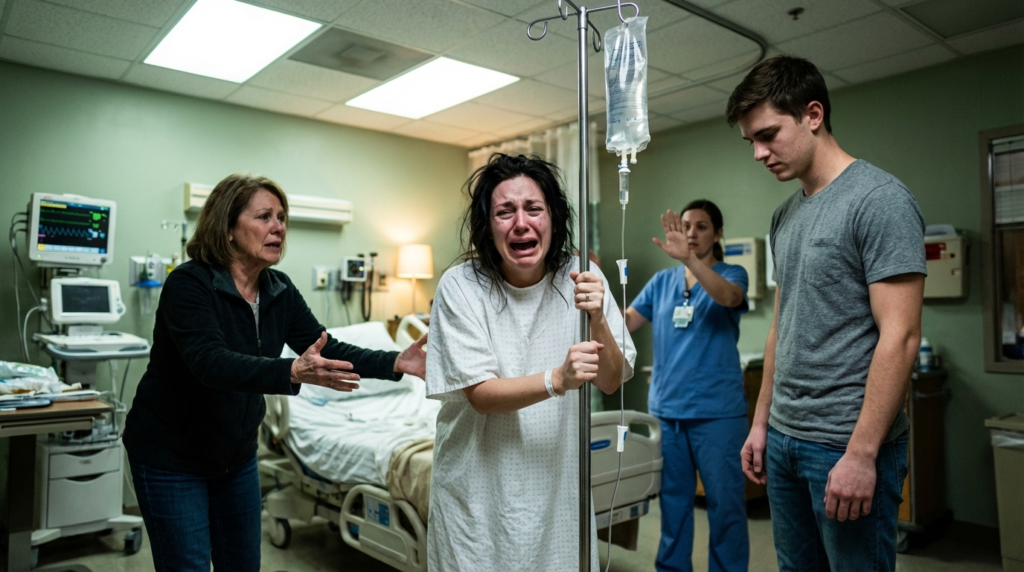
I was screaming at her to get out. Actually screaming. In front of the nurses, my husband, everyone. “You have no right to be here!” I sobbed, my contractions coming every two minutes. “Get out of my room!”
My mother-in-law, Patricia, stood in the doorway of my labor and delivery room, and she didn’t move. She just looked at me with those calm, sad eyes while I fell apart.
My name is Sophie Martinez, and I never thought I’d be having this conversation—especially not while in active labor at 3 AM in a hospital delivery room. But here we are.
Let me back up and explain why I was so angry. Why seeing Patricia walk through that door felt like a betrayal instead of support.
Patricia and I have never gotten along. From the moment Jake brought me home five years ago, she made it clear I wasn’t good enough for her son. I was 23, working two jobs to pay off student loans, living in a studio apartment with a roommate. Jake was 25, freshly graduated from business school, working at his father’s investment firm.
Patricia took one look at me—my thrift store dress, my nervous smile, my background as the daughter of immigrants who cleaned houses and worked construction—and decided I was a gold digger. Never mind that I’d refused to let Jake pay for anything. Never mind that I was working 60-hour weeks trying to build my own career. She saw what she wanted to see.
The comments started immediately. “Jake, are you sure about this?” loud enough for me to hear from the kitchen. “She seems… ambitious.” Like ambition was a character flaw. “Does she expect you to support her?” When I was literally paying my own rent.
It got worse when we got engaged. Patricia tried to talk Jake out of it. Privately at first, then publicly. She told his entire family at Thanksgiving that he was making a mistake. That I was going to ruin his life. That he should wait, see other people, not rush into anything with “someone like me.”
When we got married anyway—a small ceremony at City Hall because we couldn’t afford anything bigger and didn’t want to wait—Patricia didn’t come. She told Jake she was “sick,” but his sister told us the truth. She was boycotting. Making a statement.
For three years, we tried. I tried. God, I tried so hard. I invited her to dinners she declined. Sent her birthday cards she never acknowledged. Reached out after Jake’s father died last year, offering support she refused.
Then I got pregnant. We waited until the second trimester to tell Jake’s family, and Patricia’s response was silence. Complete silence. No congratulations. No questions about due dates or baby names. Nothing.
Jake called her multiple times. “Mom, this is your grandchild. Please.” But she held firm in her disapproval. Eight months of pregnancy, and she never once asked how I was doing.
So when she walked into my delivery room at 3 AM uninvited, unwelcome, completely unexpected—I lost it.
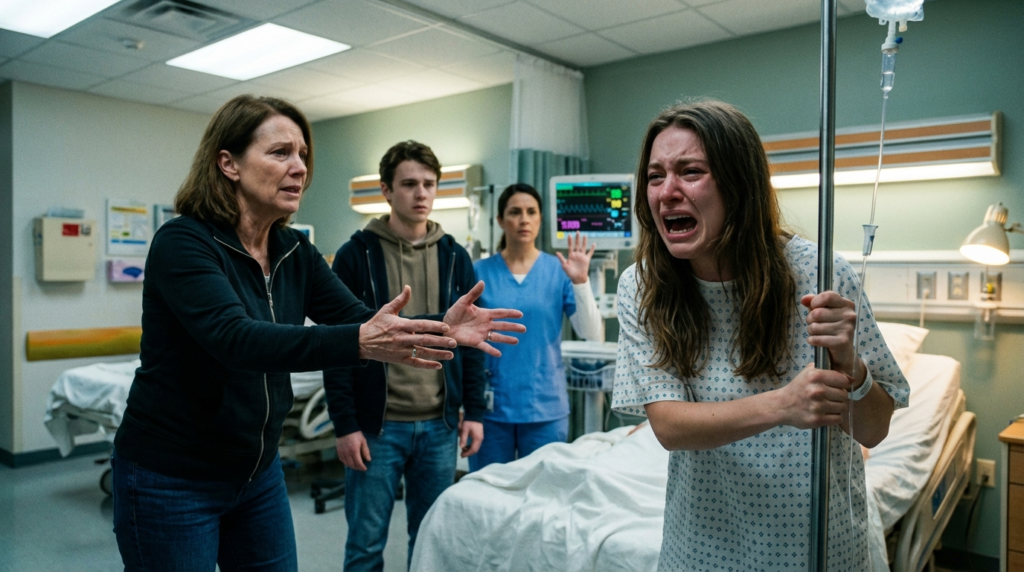
“Jake, get her out!” I screamed at my husband, who looked absolutely frozen between his mother and his wife. “I don’t want her here. I don’t want her anywhere near our baby!”
The nurse, a kind woman named Teresa, stepped forward. “Ma’am, if the patient doesn’t want you here, I’m going to have to ask you to leave.”
But Patricia didn’t move. She stood there in the doorway, wearing jeans and an old sweater, her hair messy like she’d been sleeping. Her eyes were red. Had she been crying?
“I know you hate me, Sophie,” she said quietly. “I know I don’t deserve to be here. I know I’ve been…” Her voice cracked. “I’ve been terrible to you. Unforgivable.”
“Then why are you here?” I gasped through another contraction. The pain was unbearable, and this confrontation was making everything worse.
“Because I can’t let you go through what I went through,” Patricia said. Her hands were shaking, and she was gripping a worn leather bag I’d never seen before. “Please. Just let me explain. Five minutes. If you still want me to leave after that, I’ll go and you’ll never see me again. I promise.”
Jake looked at me, his face torn. “Sophie, it’s your choice. Completely your choice.”
I was in so much pain I could barely think straight. My water had broken three hours ago. I was dilated to 8 centimeters. This baby was coming whether I wanted to deal with family drama or not.
“Two minutes,” I gasped. “Then you’re gone.”
Patricia stepped fully into the room and closed the door behind her. She set the leather bag on the chair beside my bed and opened it. When she pulled out what was inside, Jake went completely white.
“Oh my God,” he whispered. “Mom, is that—”
“Your baby book,” Patricia said softly. “From when you were born.”
Patricia sat down heavily in the chair, the old baby book open in her lap. Her hands were trembling as she turned the pages.
“I need to tell you something I’ve never told anyone,” she said. “Not your father, Jake. Not my parents. Not my sister. No one except the person who saved my life.”
Another contraction hit me, and I gripped Jake’s hand so hard I thought I might break it. Patricia waited until it passed, her eyes filled with tears.
“Thirty-two years ago, I was pregnant with Jake,” she began. “I was 22 years old. I’d been dating Robert—Jake’s father—for six months when I found out. We weren’t married. Weren’t even engaged. I was working as a secretary at his father’s company, and Robert was being groomed to take over the business.”
She looked at Jake with such sadness. “Robert’s parents—your grandparents—were furious when they found out. They told Robert I’d trapped him. That I was a gold digger trying to secure my future. They wanted him to leave me. To pay me off and make me disappear.”
I felt Jake’s hand tighten around mine.
“They called me every name you can imagine,” Patricia continued. “Trailer trash. Opportunist. Whore. They said I wasn’t good enough for their son. That I’d ruin his life and the family name.”
Oh God. The parallel was suddenly, painfully clear.
“Robert stood by me,” she said. “He proposed. We got married quickly, quietly. But his parents made our lives hell. They boycotted the wedding. Refused to acknowledge the pregnancy. Cut Robert off financially. He had to start over, prove himself without their help.”
Tears were streaming down Patricia’s face now. “I went into labor alone in this hospital—this exact hospital—because Robert was out of town for work and couldn’t get back in time. His parents refused to come. My own parents had disowned me for getting pregnant out of wedlock. I was 22 years old, terrified, and completely alone.”
“Mom,” Jake said, his voice breaking. “I never knew—”
“Because I never told you,” Patricia said. “Because I was ashamed. Because Robert and I worked so hard to build a life, to prove everyone wrong, and I wanted you to grow up thinking we’d always been respected. Always been successful.”
She turned a page in the baby book. There was a photo I’d never seen—Patricia, young and exhausted, holding newborn Jake. And beside her, an older woman with kind eyes.
“This is Margaret,” Patricia said. “Robert’s aunt. She was the only one who came when I went into labor. She’d driven three hours in the middle of the night because she’d heard I was alone. She stayed with me through 16 hours of labor. Held my hand. Told me I was strong enough. Helped me push when I wanted to give up.”
Patricia’s voice dropped to a whisper. “But there were complications. I started hemorrhaging after Jake was born. The doctors were panicking. I was losing so much blood, and they couldn’t stop it. I remember lying there thinking I was going to die. That Jake would never know his mother.”
She looked at me directly now, her eyes intense. “Margaret saved my life. Not just by being there, but because she knew my medical history. She’d asked me questions during labor—about my family, my health, medications I’d taken. And when the bleeding started, she told the doctors something crucial that I was too disoriented to remember: I’d had a severe reaction to a common clotting medication years before.”
Jake was crying now. I was too, though I didn’t fully understand why yet.
“If Margaret hadn’t been there, if she hadn’t known that detail, the doctors would have given me that medication and I would have died,” Patricia said. “She saved my life by showing up uninvited. By choosing love over pride. By being there even though I’d been nothing but cold to her because she’d taken Robert’s parents’ side initially.”
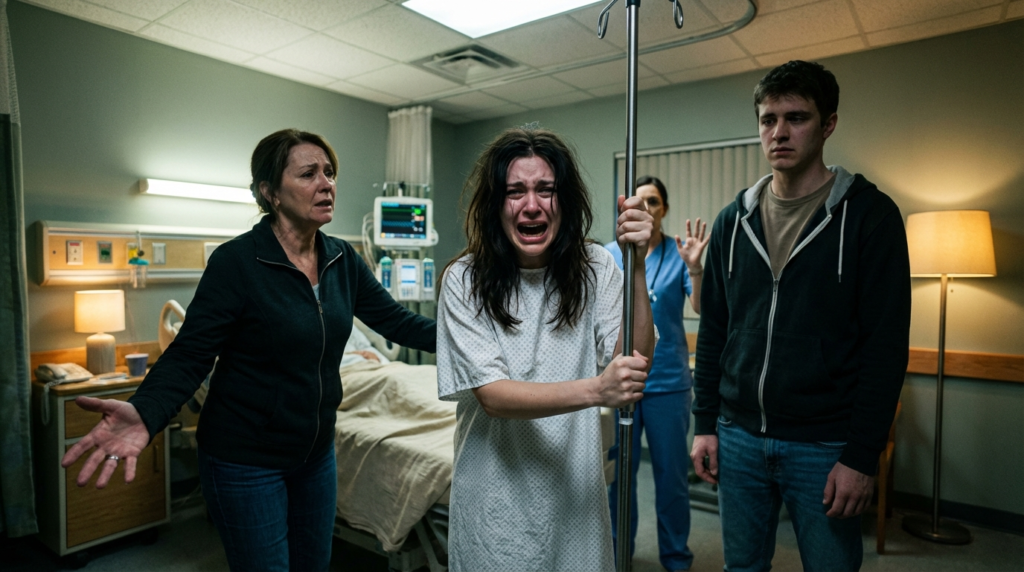
Patricia reached into the leather bag again and pulled out a medical file. Her hands were shaking as she handed it to Jake.
“Two weeks ago, Margaret died,” she said softly. “She was 89. At her funeral, her daughter gave me this. It’s Margaret’s medical records from a different hospital stay, along with a letter she’d written to be given to me after her death.”
Jake opened the file, and I watched his face change as he read.
“What does it say?” I asked, my voice barely a whisper.
Patricia answered. “Margaret had genetic factor V Leiden thrombophilia. It’s a blood clotting disorder that runs in families. And according to her letter, she’d suspected for years that I might have it too based on symptoms I’d mentioned to her. That’s why she asked those specific questions during my labor. Why she knew to warn the doctors.”
She pulled out another paper. “After her funeral, I got tested. She was right. I have it. And Sophie…” Her voice cracked completely. “It’s hereditary. If Jake has it, there’s a 50% chance your baby has it. And if you have complications during delivery and they give you the wrong medication—”
The room tilted. Jake’s face had gone completely white.
“You could die,” Patricia finished. “Just like I almost did. That’s why I had to be here. That’s why I came uninvited. Because I’ve spent eight months being cruel and proud and stupid, and I couldn’t let my pride kill you and my grandchild.”
Nurse Teresa had been standing quietly in the corner, but now she stepped forward. “Mrs. Martinez, we need to run some tests immediately. If there’s any chance of a clotting disorder, we need to know before you deliver.”
Everything happened fast after that. Blood draws. Tests. A different doctor rushing in. Patricia standing against the wall, crying silently, while Jake held my hand and whispered, “I’m so sorry. I didn’t know. I never knew any of this.”
Twenty minutes later—the longest twenty minutes of my life—the doctor came back.
“Mrs. Martinez, you don’t have the clotting disorder,” she said. “Your blood work is normal. But we’re flagging your file anyway based on the family history, and we’ll be monitoring you closely.”
The relief was overwhelming. But then the doctor turned to Patricia.
“Mrs. Reed, I need to thank you. If there had been complications and we hadn’t known about this family history, we would have administered standard anti-hemorrhaging protocols that could have been catastrophic. You may have just saved your daughter-in-law’s life.”
Patricia broke down completely. Just collapsed into the chair and sobbed.
And I realized something in that moment. She hadn’t come to insert herself into my labor. She hadn’t come to make demands or prove a point. She’d come because she was terrified of history repeating itself. Because she’d spent 32 years carrying the trauma of almost dying alone in a hospital room, and she couldn’t bear the thought of me going through the same thing.
“Patricia,” I said quietly. She looked up, her face streaked with tears. “Stay. Please stay.”
“Sophie, you don’t have to—”
“I want you to stay,” I said. And I meant it. “I want you to meet your grandchild.”
Jake Robert Martinez was born at 6:47 AM. Eight pounds, three ounces. Perfect in every way.
Patricia was there when he took his first breath. She was there when the nurses cleaned him and wrapped him in a blanket. She was there when they placed him in my arms, and I looked at my son’s face for the first time.
“He looks like Jake did,” Patricia whispered, standing beside my bed. “Exactly like him.”
“Do you want to hold him?” I asked.
She looked at me with such disbelief. “Are you sure?”
I nodded. And when I placed my son in Patricia’s arms, I watched her transform. All the hardness, all the coldness, all the pride—it just melted away. She looked at her grandson with such pure, overwhelming love that I started crying all over again.
“I’m so sorry, Sophie,” she whispered. “For everything. For being cruel and judgmental. For projecting my own trauma onto you. For not seeing how strong and good you are. For almost missing this.”
“I’m sorry too,” I said. “For not understanding what you’d been through. For not seeing your fear beneath the anger.”
Jake was crying now, watching his mother hold his son. “Mom, why didn’t you ever tell me? About what happened when I was born?”
“Because I was ashamed,” Patricia said honestly. “Because I spent so many years proving everyone wrong about me, and I didn’t want you to know that people had doubted me. That I’d been called the same things I called Sophie.”
She looked at me directly. “I saw you and saw myself. Young. Ambitious. From a different background. And instead of protecting you from what I’d experienced, I became the person who’d hurt me. I became Robert’s parents. I’m so, so sorry.”
I’m writing this while Jake sleeps in his crib and the late afternoon sun streams through the nursery window. Patricia is downstairs making dinner—she comes over twice a week now to help with the baby and to spend time with us.
The change in her has been remarkable. She’s open now, vulnerable in a way I never imagined. She talks about her past, about the trauma she carried, about how becoming a grandmother forced her to confront the person she’d become.
She and I have long conversations now about everything—motherhood, fear, family, forgiveness. She tells me stories about raising Jake, about the struggles she and Robert faced building their business from nothing after his parents cut them off. She tells me about Margaret, the aunt who saved her life and taught her about unconditional love.
Last week, Patricia brought over a box of things Margaret had left for Jake. Letters, photos, small mementos. “She always hoped she’d meet her great-grandnephew,” Patricia said. “She would have loved him so much.”
We’re planning to name our next child Margaret if it’s a girl. Patricia cried when we told her.
Jake and I talk a lot about forgiveness now. About how trauma makes people do terrible things. About how his mother’s cruelty came from a place of deep pain and fear. About how people can change when they’re willing to face their own wounds.
“She almost let pride kill you,” Jake said one night after Patricia had left. “She almost let history repeat itself because she was too proud to reach out.”
“But she didn’t,” I reminded him. “When it mattered most, she chose love over pride. She chose to show up. That took incredible courage.”
That night in the delivery room changed everything. Not just my relationship with Patricia, but my understanding of people, of pain, of the ways trauma makes us hurt the people we’re trying to protect.
Patricia spent years being cruel to me because she saw herself in me and couldn’t bear it. She saw a young woman who might face the same judgment, the same doubt, the same near-death experience she’d had. And instead of reaching out with compassion, she tried to push me away to protect herself from reliving that pain.
But in the end, love won. Fear almost destroyed our family, but love—fierce, protective, willing-to-show-up-at-3-AM love—saved it.
Margaret taught Patricia what it means to choose people over pride. And Patricia, in turn, taught me the same lesson. Sometimes the people who hurt us most are the ones carrying the deepest wounds. Sometimes cruelty is just fear wearing a mask.
That doesn’t excuse the behavior. Patricia knows that. We’ve had hard conversations about the damage she caused, about the pain her rejection created. But understanding the why behind the hurt has made forgiveness possible.
Last week, Patricia gave me a letter. She’d written it the night before coming to the hospital but hadn’t had the courage to give it to me until now.
In it, she wrote: “Dear Sophie, By the time you read this, you’ll know my story. You’ll know why I was so afraid of you. But what you might not know is that from the very beginning, I saw your strength. Your determination. Your refusal to let anyone—including me—make you feel less than. You reminded me of who I used to be before fear made me small. And that terrified me. Because if you were strong enough to love my son despite his family’s money, strong enough to work two jobs and still smile, strong enough to stand up to me—then you were strong enough to show me how much I’d lost myself. You were a mirror I didn’t want to look into. But I’m looking now. And I’m grateful. Because you’re exactly the woman my son deserves. Exactly the mother my grandson needs. And maybe, if you’ll let me, I can learn from you how to be brave again. With love and regret, Patricia.”
I keep that letter in Jake’s baby book, right next to the photo of Patricia holding him for the first time. It reminds me that people can change. That it’s never too late to choose love over fear.
People ask me all the time how I forgave Patricia. How I let her back into my life after everything she did.
The truth is: forgiveness isn’t about forgetting or excusing. It’s about understanding that hurt people hurt people. And that everyone deserves the chance to face their demons and choose differently.
Patricia spent 32 years letting trauma dictate her behavior. She pushed away the very people she should have protected because she was terrified of being hurt again. She became the villain in my story because she couldn’t bear to be the victim in her own anymore.
But when faced with the possibility of losing me—of her grandson losing his mother the way Jake almost lost her—she made a different choice. She chose courage over pride. Truth over self-protection. Love over fear.
That’s what real kindness looks like sometimes. Not just being nice, but being brave enough to show up even when you’re terrified. Even when you’ve burned bridges. Even when you don’t know if you’ll be forgiven.
Patricia showed up at 3 AM with her trauma and her medical history and her desperate need to prevent history from repeating itself. She risked my rejection to potentially save my life.
And that kind of courage deserves recognition. Deserves grace. Deserves forgiveness.
Jake is three months old now. He’ll never know a world where his grandmother wasn’t present. Where his mother and grandmother weren’t close. Where fear divided his family.
Because Patricia taught me that it’s never too late to choose differently. To face your past. To make amends. To show up with your whole broken heart and trust that love is stronger than pride.
I still think about that night sometimes. About how close we came to tragedy in so many ways. About how Patricia’s presence—uninvited, unexpected, unwanted—ended up saving more than just my life. It saved our family.
And every time Patricia holds Jake, every time she looks at him with such overwhelming love, I see Margaret’s legacy living on. The legacy of showing up. Of choosing love. Of refusing to let fear have the final word.
That’s the kind of grandmother I want for my son. And that’s the kind of woman Patricia has become.
Not perfect. Still carrying wounds. Still working through 32 years of trauma. But brave enough to try. Humble enough to apologize. Strong enough to change.
And that’s more than enough.