The first thing I remember is the sound.
Not his voice. Not the beeping of the monitor.
The sound of my own heart slamming so hard against my ribs that I was convinced something inside me was tearing open again.
When I opened my eyes, the ceiling lights were too bright, the room too white, and my head felt like it had been cracked open and glued back together by someone who didn’t care about symmetry.
Then I saw him.
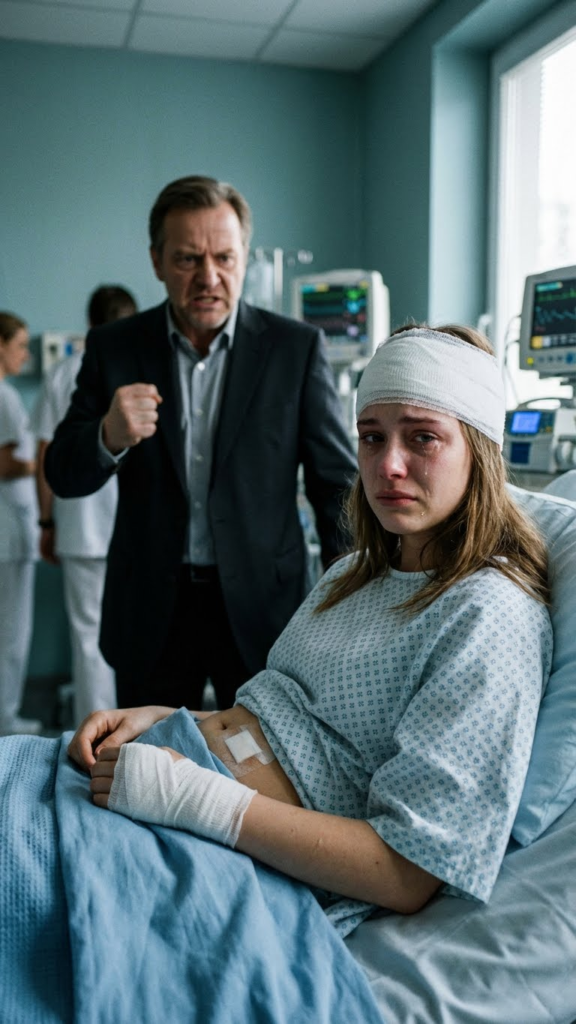
Standing at the foot of my hospital bed.
My husband.
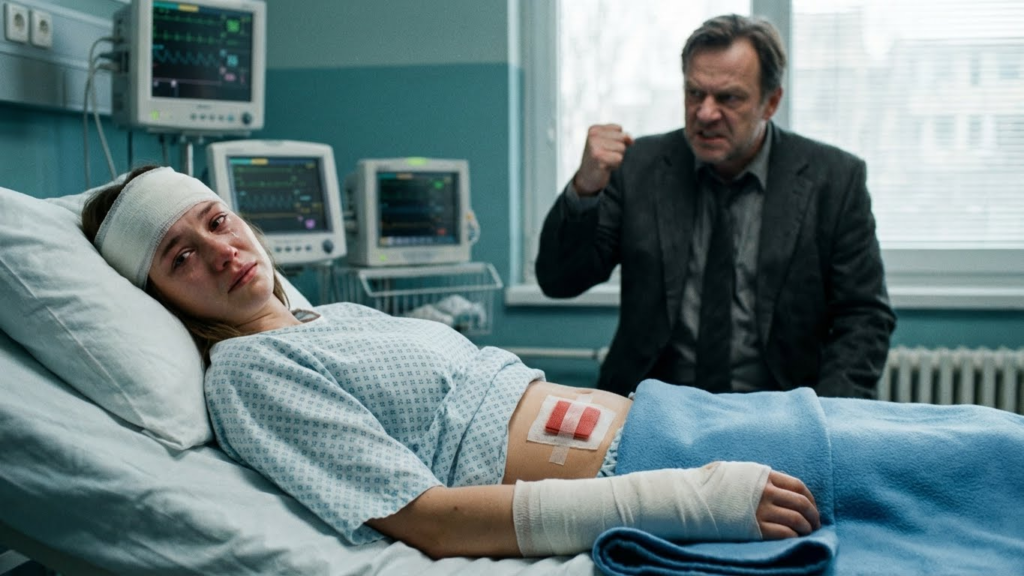
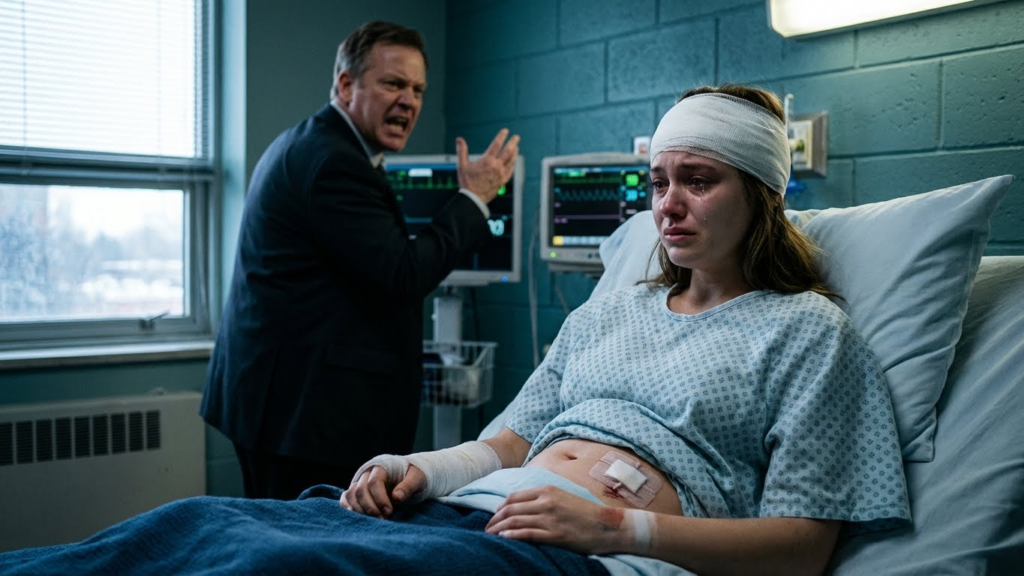
His jaw clenched so tight I could see the muscles jumping under his skin. One hand gripping the rail of the bed, the other clenched into a fist like he was trying not to use it.
I remember thinking, Why does he look angrier than I feel?
The crash everyone forgot about
The doctors told me I’d been brought in unconscious.
Hit-and-run. Wet road. No witnesses.
A stranger found me half on the shoulder, half in the ditch, blood soaking through my shirt, phone smashed beyond recognition a few feet away.
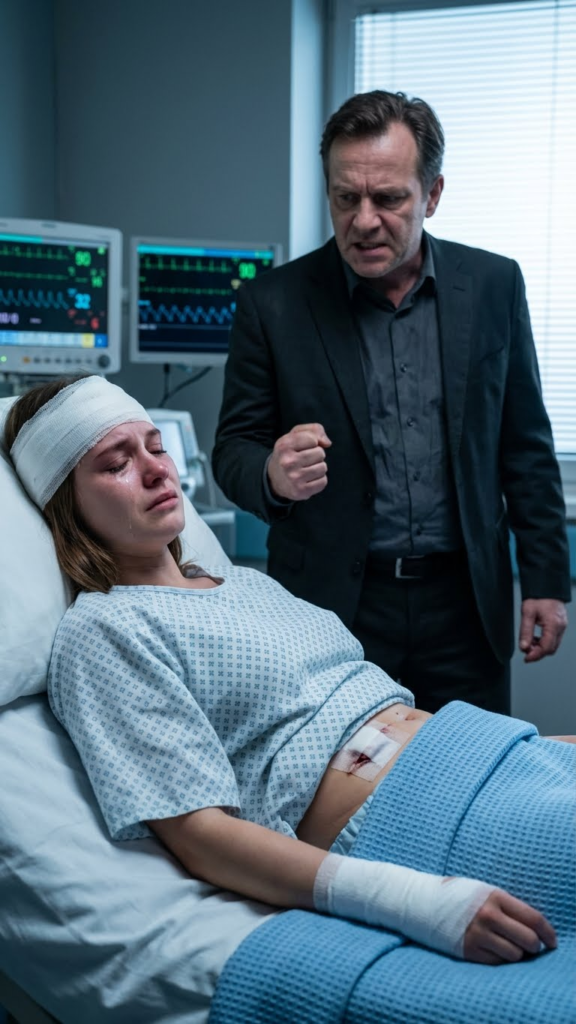
I had a concussion. Three stitches in my scalp. A fractured forearm. And a shallow cut across my stomach where something in the car had sliced me when the airbag went off.
It hurt.
But not the way I expected.
It was the kind of pain that made you quiet. The kind that hollowed you out until you didn’t have enough energy to scream.
That was the state I was in when my husband walked into the room.
And immediately made it about him.
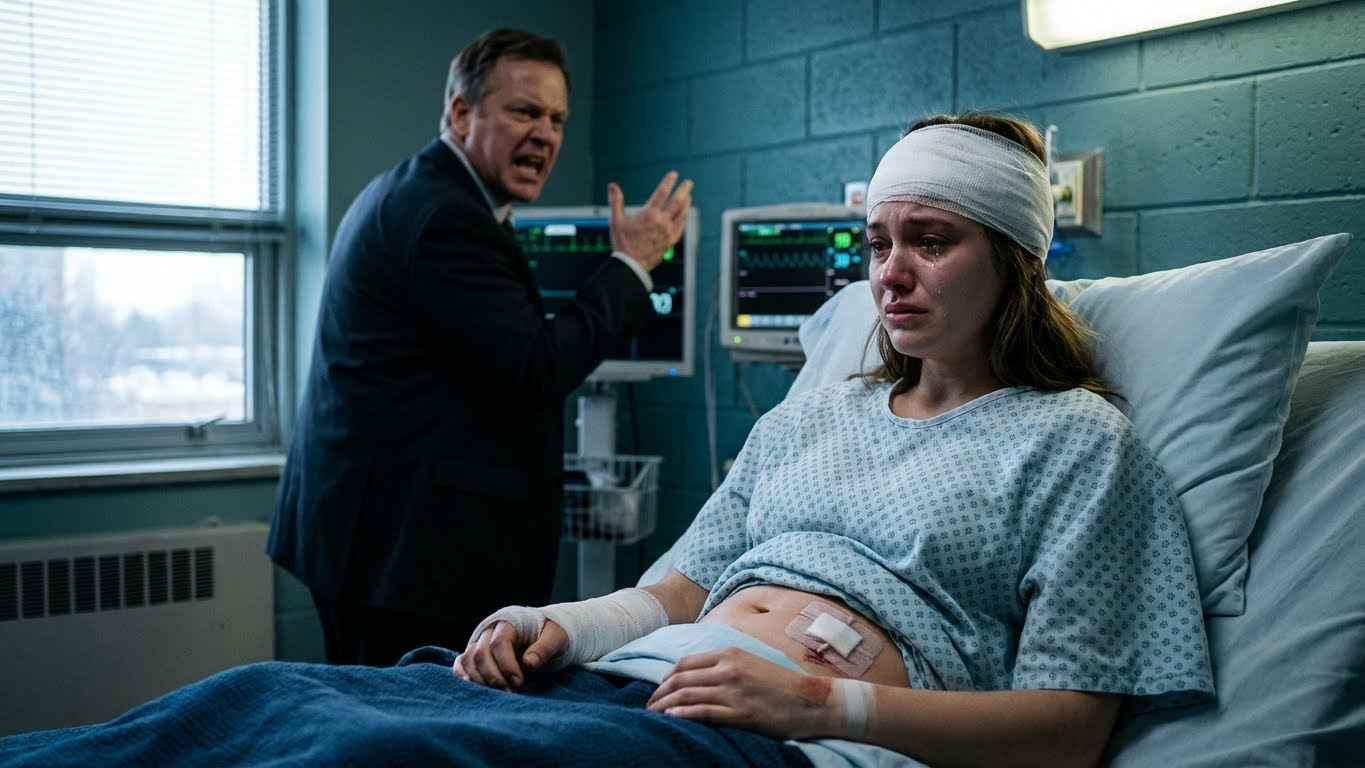
“Do you know what you’ve done to me?”
That’s what he said.
Not are you okay?
Not thank God you’re alive.
“Do you know what you’ve done to me?”
I tried to sit up. The nurse must have just stepped out, because suddenly it was just the two of us and the machines humming in the background like they were pretending not to listen.
“I was driving around for hours,” he said. “No one could tell me anything. Your phone was off. Do you have any idea how that looks?”
I stared at him, still foggy, still piecing together what had happened.
“I got hit by a car,” I whispered.
He laughed.
Actually laughed.
“You always have to make everything dramatic.”
The way stress gets weaponized
He didn’t hit me.
Not that night.
What he did was stand over me while I lay there in a gown that barely covered my thighs, bandages taped to my head and arm, and tell me everything I had done wrong.
I shouldn’t have been out that late.
I shouldn’t have walked instead of waiting for him.
I shouldn’t have forgotten to text him back earlier in the evening.
“You stress me out,” he said, like it was an explanation instead of a warning.
When he raised his voice, the monitor picked it up. My heart rate spiked, and I watched the numbers climb on the screen behind him.
He noticed too.
And somehow that made him angrier.
The nurses who pretended not to see
A nurse finally came back in.
She took one look at my face and then at his, and something flickered in her eyes — not fear, but recognition.
“How are we doing in here?” she asked, in that bright tone people use when they’re trying to diffuse a bomb without acknowledging that it exists.
“I’m fine,” he said. “She’s just upset.”
I opened my mouth.
Nothing came out.
I don’t know why I didn’t tell her to make him leave. I don’t know why my throat closed like that. I just remember the nurse checking my IV and then leaving again, and the door clicking shut with the same sound it made the night I watched my life crack open.
The story people preferred
After that, everything blurred together.
My mother arrived, eyes red from crying. His sister brought coffee and hugged him first. The doctor explained my injuries like he was reading from a grocery list.
And my husband stood at my side, arm draped protectively across my shoulders like he was the hero in the room.
Everyone kept saying the same thing.
“He’s just stressed.”
“Of course he’s upset — he almost lost you.”
“Give him a break. He’s been through a lot too.”
I wanted to scream.
Because I was the one who had woken up bleeding on the side of the road.
I was the one in the gown and bandages.
I was the one who felt like my body had betrayed me — and my marriage was finishing the job.
The part that replays in my head
Late that night, after visiting hours were technically over, he leaned down so only I could hear him.
“You’re not telling anyone about how you were acting before the accident,” he said. “You don’t want people getting the wrong idea.”
I nodded.
Because nodding was easier than remembering how to fight.
What I haven’t said yet
This isn’t the first time he’s been “just stressed.”
It’s just the first time the beeping machines were loud enough to hear what my instincts had been whispering for years.
I don’t know what happens next.
I only know that when I close my eyes, I don’t see the headlights that hit me.
I see his fist hovering above the hospital bed.
And I finally understand that survival doesn’t always end when the bleeding stops.