The President I Tried to Kill and the Second Chance That Changed Everything
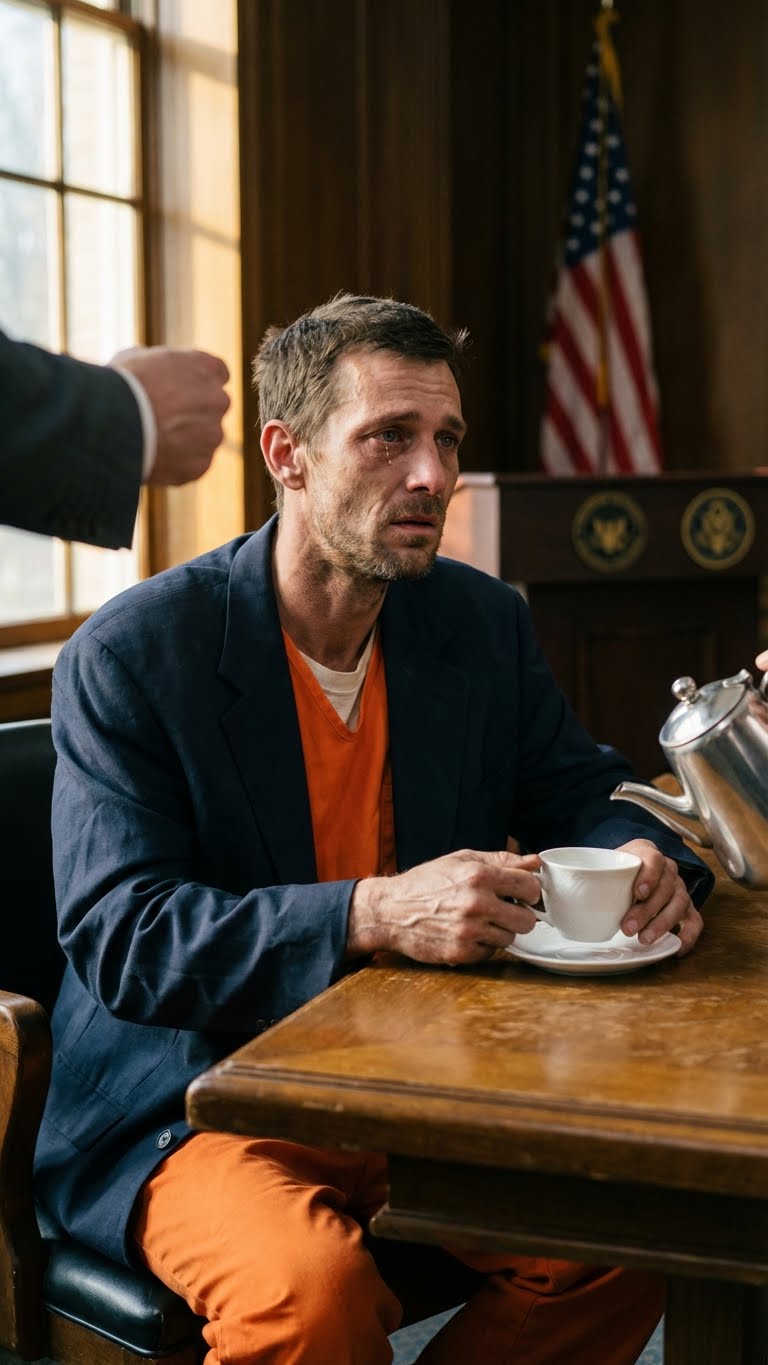
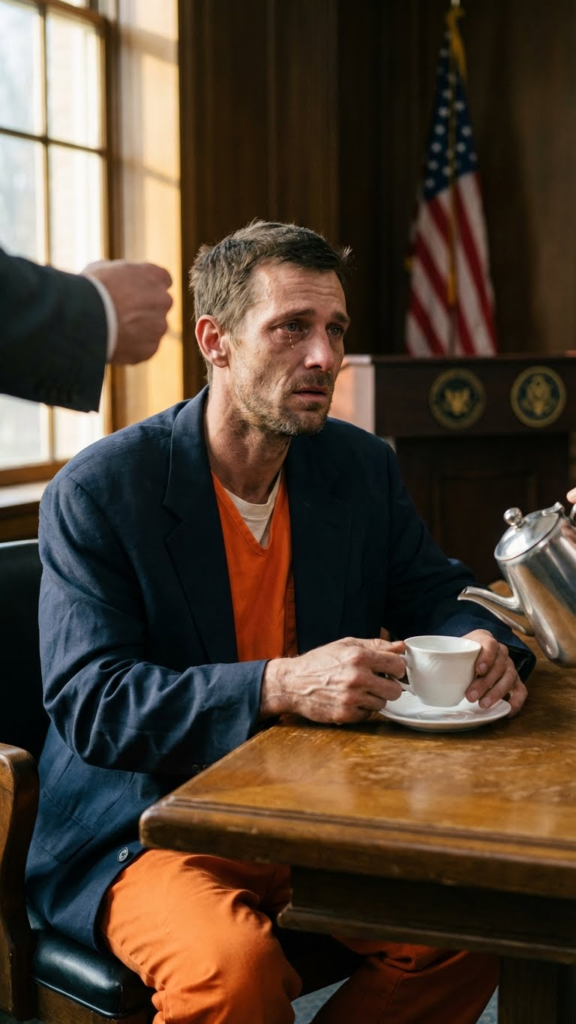
I was sitting across from the President of the United States in the Oval Office, my hands still shaking from the sedatives they’d given me after my arrest, and he was pouring me a cup of tea like we were old friends catching up.
“Sugar?” he asked, his voice calm and measured, as if I hadn’t tried to kill him three days ago.
I couldn’t speak. Couldn’t process what was happening. Seventy-two hours ago, I’d been on a rooftop with a rifle, my finger on the trigger, my entire world narrowed to a single point of hatred. Now I was sitting in the most powerful office in the world, wearing an orange jumpsuit under a borrowed blazer, while the man I’d tried to murder offered me Earl Grey.
The Impossible Conversation
“I know what you’re thinking,” President Harrison said, settling back in his chair. “Why am I here? Why aren’t I in a cell? Why is the man I tried to assassinate treating me like a guest?”
“All of those things,” I managed to croak out.
He smiled—actually smiled—and it made my stomach turn. How could he be so calm? I’d gotten within seconds of ending his life. The Secret Service had tackled me before I could pull the trigger, but I’d been close. So close.
“Because I read your file, Marcus,” he said, using my first name like we’d known each other for years. “Cover to cover. Every page. Every detail. And I understand exactly why you wanted to kill me.”
My throat tightened. The file. God, what was in that file? My military service record? My discharge papers? The medical reports about my daughter? The emails I’d sent to every government office begging for help that never came?
“You think you know me?” I asked, my voice hardening despite the fear coursing through my veins. “You think reading some papers makes you understand what I’ve lost? What your policies took from me?”
“No,” he said quietly, and something in his tone made me look up. His eyes weren’t cold or calculating. They were sad. “Reading your file doesn’t make me understand your pain. But it makes me understand my failure. And that’s why you’re here.”
He slid a folder across the desk toward me. My hands trembled as I opened it.
Inside was a presidential pardon. Signed. Official. My name typed at the top in bold letters.
“This is a joke,” I said, slamming it shut. “This is some kind of psychological torture before you throw me in a hole for the rest of my life.”
“It’s not a joke,” President Harrison said. “It’s an offer. I’m pardoning you for your attempted assassination. Complete immunity. No charges. No trial. No prison.”
“Why?” The word came out as barely a whisper.
“Because I want you to work for me.”
I laughed. Actually laughed, a harsh, bitter sound that echoed through the Oval Office. “You want me to work for you? The man who tried to blow your head off?”
“I want you to be my advisor,” he said, leaning forward. “Specifically, I want you to advise me on veteran affairs and healthcare reform. Because the system that failed your daughter—the system that drove you to that rooftop—is broken. And I need someone who understands exactly how broken it is. Someone who’s willing to fight like hell to fix it.”
My vision blurred. My daughter. My Sarah. Nine years old when the cancer diagnosis came. The VA benefits I’d earned through two tours in Afghanistan weren’t enough to cover her experimental treatment. Every door I knocked on slammed in my face. Every form I filled out got lost in bureaucracy. Every desperate plea for help fell on deaf ears.
I watched her die over six months. Watched her fade away while the politicians promised healthcare reform that never came. While President Harrison’s administration cut funding that could have saved her life.
And after she died, after my wife left because she couldn’t look at me without seeing our daughter, after I lost everything that mattered—I decided that if the system wouldn’t listen to my words, maybe it would listen to a bullet.
But now he was sitting here, offering me a pardon and a job, and I didn’t know if I was more furious or more confused.
“There’s a catch,” President Harrison continued. “There’s always a catch. You work for me directly. You have full security clearance. You attend policy meetings. You challenge me, you push back, you make me uncomfortable with the truth. And in return, you help me fix the system that killed your daughter. So that no other veteran has to make the choice you made.”
He stood up and extended his hand across the desk.
“So what do you say, Marcus? Do you want to keep hating me from a prison cell? Or do you want to help me make sure Sarah’s death means something?”
The Life That Led to That Rooftop
To understand how I ended up on that rooftop, you need to know who I was before everything fell apart.
I enlisted in the Army at nineteen, right out of high school. My dad was a veteran. My grandfather was a veteran. Military service was what men in my family did. It was how we served our country, how we proved ourselves.
I did two tours in Afghanistan. Infantry. Saw things I still can’t talk about. Lost friends whose names I whisper to myself when I can’t sleep. Came home with a Purple Heart, a medical discharge after an IED left me with chronic back pain, and a promise from my country that they’d take care of me.
I met Jennifer at a VA hospital support group. She was a nurse. She understood what it was like to serve, to sacrifice, to come home changed. We got married within a year. Sarah was born two years later.
She was perfect. Blonde curls, gap-toothed smile, obsessed with dinosaurs and space and drawing elaborate pictures of dragons. She wanted to be a paleontologist when she grew up. She had her whole life planned out.
Then came the diagnosis. Acute lymphoblastic leukemia. Aggressive. Treatable, but expensive. The standard treatment was covered by my VA benefits, but Sarah wasn’t responding well. Her oncologist recommended an experimental therapy that was showing promising results in clinical trials.
Cost: $300,000.
Not covered by insurance. Not covered by the VA. Not covered by anything except cold, hard cash that we didn’t have.
I tried everything. I took out loans. I started a GoFundMe that raised $40,000—nowhere near enough. I called my congressman, my senators, anyone who would listen. I filled out forms for financial assistance programs and got rejection letters in return.
President Harrison had campaigned on healthcare reform. On taking care of veterans. On making sure no family had to choose between bankruptcy and watching their child die.
But when his administration took office, the first thing they did was cut funding to experimental treatment programs. Budget constraints, they said. Necessary sacrifices, they said. Other priorities, they said.
My daughter wasn’t a priority. Her life wasn’t worth the cost.
Watching Her Fade Away
Sarah lasted six months after we ran out of options. Six months of watching her get weaker, thinner, paler. Six months of her asking me why the medicine wasn’t working anymore. Six months of lying to her that everything would be okay.
Jennifer couldn’t handle it. She blamed me for not making more money, for not serving longer, for not doing enough. She blamed herself for not being able to save our daughter. She blamed God, the government, the universe.
Our marriage crumbled as Sarah faded. We barely spoke. We just took turns sitting by her hospital bed, holding her hand, pretending we weren’t watching her die.
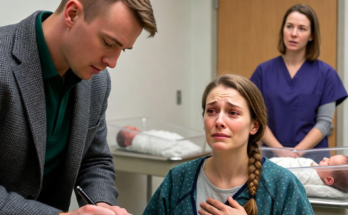
She passed on a Tuesday morning in March. I was holding her hand. She opened her eyes, looked at me, and said, “It’s okay, Daddy. I’m not scared anymore.”
Then she was gone.
Jennifer left me three weeks later. She couldn’t look at me without seeing Sarah. Couldn’t stay in our house where Sarah’s room still had her drawings on the walls and her stuffed T-Rex on the bed. She moved across the country to live with her sister. I signed the divorce papers without reading them.
I was alone in a house full of ghosts, drowning in grief, and the only thing I could think about was that Sarah’s death was preventable. She died because bureaucrats decided her life wasn’t worth the line item in a budget. She died because politicians made promises they had no intention of keeping.
She died because President Harrison valued fiscal responsibility over my daughter’s life.
The Decision on the Rooftop
I planned it for two months. Researched security protocols. Studied the President’s schedule. Found a rooftop with a clear line of sight to where he’d be giving a speech at a veterans’ memorial dedication.
The irony wasn’t lost on me. He was dedicating a memorial to fallen soldiers while I was about to make him pay for letting another veteran’s child die.
I wasn’t delusional. I knew I’d be caught or killed. I knew I’d never walk away from that rooftop. But I didn’t care. I had nothing left to lose and a point to make.
If they wouldn’t listen to veterans while we were alive, maybe they’d listen after one of us killed their president.
I set up my rifle. Waited for him to take the podium. Looked through the scope and saw his face—confident, composed, completely unaware that his life was about to end.
My finger was on the trigger. My breathing was steady. Everything I’d learned in the military came back in that moment. Center mass. Steady pressure. Exhale slowly.
And then I hesitated.
Just for a second. Just long enough to think about Sarah. About what she’d say if she knew what I was about to do. She’d always been so gentle, so kind. She wouldn’t have wanted this. She wouldn’t have wanted me to destroy my life for revenge.
That second of hesitation was all the Secret Service needed. They’d spotted me, and they came through the rooftop door like a tactical team, which they were. I was on the ground, zip-tied, surrounded, before I even fully processed what was happening.
I didn’t resist. Didn’t fight. Just laid there on the concrete and felt nothing but emptiness.
The Interrogation That Changed Everything
They took me to a facility I couldn’t identify. No windows, no outside contact, just endless interrogation rooms and agents asking the same questions over and over.
Why did you do it?
Who are you working with?
What organization put you up to this?
I told them the truth. No one put me up to anything. No terrorist organization recruited me. I was just a grieving father who’d lost everything and wanted the man responsible to pay.
They didn’t believe me at first. Lone wolves are always suspect. They kept digging, kept investigating, kept trying to find connections that didn’t exist.
Then, on the third day, everything changed.
A Secret Service agent came into my cell and said, “The President wants to see you.”
I thought it was a trick. Some kind of psychological manipulation tactic. But they took me—still in cuffs—to a waiting car, then to the White House, then to the Oval Office.
That’s when President Harrison offered me tea and a pardon and a job, and my entire worldview shattered.
The Advisor Who Understood
I took the job. Not because I forgave him. Not because I suddenly thought he was a good person. But because he was right about one thing—Sarah’s death needed to mean something.
The first six months were hell. I sat in meetings with people who’d voted against the funding that could have saved my daughter. I smiled politely at the bureaucrats who’d sent me rejection letters. I worked alongside the very system that had killed Sarah.
But I also started to see something I hadn’t seen before—the complexity. The impossible choices. The fact that for every Sarah who needed experimental treatment, there were ten thousand veterans who needed basic care. The reality that money wasn’t infinite and someone had to decide who got help and who didn’t.
I didn’t like it. I hated it, actually. But I understood it.
And I used that understanding to push for change. I testified before Congress about the gaps in veteran healthcare. I consulted on new legislation that expanded experimental treatment coverage. I built partnerships with pharmaceutical companies to create compassionate care programs.
President Harrison kept his word. He gave me access, authority, and most importantly, he listened. Even when I disagreed with him—especially when I disagreed with him.
Two years after I tried to kill him, we passed the Veterans Healthcare Expansion Act. It increased funding for experimental treatments by 400%. It created fast-track approval processes for compassionate care cases. It established oversight boards to prevent bureaucratic delays.
It was named Sarah’s Law.
The Day I Finally Forgave Him
Three years into my role as his advisor, President Harrison called me into his office for what I thought was a routine briefing. Instead, he handed me a photo.
It was a little girl. Maybe seven years old. Bright smile. Bald from chemotherapy. Holding a certificate.
“Her name is Emma,” President Harrison said quietly. “She has the same type of leukemia Sarah had. Her family couldn’t afford the experimental treatment. But because of Sarah’s Law, she got it. She’s in remission now. This was taken at her celebration party.”
I stared at that photo, and something inside me broke open. Emma was alive because Sarah died. Because I’d taken the job instead of giving up. Because I’d chosen to build something instead of destroying everything.
“There are forty-three kids like Emma this year alone,” President Harrison continued. “Forty-three children who are alive because you took a chance on the man you tried to kill. Because you turned your grief into something that saves lives.”
I couldn’t speak. Couldn’t breathe. Just held that photo and cried—really cried—for the first time since Sarah’s funeral.
“I’m sorry,” President Harrison said, and his voice was thick with emotion. “I’m sorry I failed your daughter. I’m sorry the system failed her. I’m sorry you had to lose everything before I understood what needed to change. And I’m grateful—more grateful than I can express—that you gave me the chance to make it right.”
“You can’t make it right,” I said through tears. “Sarah’s still gone. She’s still dead because of decisions you made.”
“I know,” he said simply. “I’ll carry that for the rest of my life. Just like you will. But we can make sure her death means other children live. We can make sure no other father has to stand on a rooftop weighing whether revenge is worth his life.”
That’s when I finally forgave him. Not because he deserved it, but because holding onto the hatred was destroying me. Because Sarah wouldn’t have wanted me to spend the rest of my life consumed by anger.
Because forty-three kids were alive, and that mattered more than my pain.
The Legacy We Built
I’ve been President Harrison’s advisor for five years now. He’s in his second term, and I’ve been with him through every major healthcare decision. Every budget meeting. Every impossible choice.
People ask me all the time how I can work for the man I tried to assassinate. How I can shake hands with politicians I once blamed for my daughter’s death. How I can smile in photos when I know the system is still broken, still failing people, still choosing who lives and who dies.
The answer is simple: because the alternative is giving up.
I could have gone to prison and spent my life bitter and angry. I could have taken the pardon and disappeared. I could have let Sarah’s death be meaningless.
Instead, I’m fighting. Every single day, I’m fighting to fix the system that failed her. And every time we pass new legislation, every time we expand access, every time I get a letter from a family thanking us for saving their child—I know Sarah’s life meant something.
President Harrison and I aren’t friends. We’ll never be friends. But we’re something more important—we’re partners in making sure her death saves others.
Last month, we dedicated a memorial garden at the VA hospital where Sarah spent her final days. It’s called Sarah’s Garden. There’s a plaque with her picture and a quote she said once when she was six: “Daddy, when I grow up, I want to help people who are sick feel better.”
She didn’t get to grow up. But her legacy is helping thousands of people feel better. Helping them survive. Helping them live.
President Harrison spoke at the dedication. He talked about failure and redemption. About how sometimes the people who challenge us most are the ones who help us become better. About how the hardest lessons come from the worst mistakes.
When he finished, he looked at me and said, “Thank you for not pulling that trigger, Marcus. Not because it saved my life, but because it saved yours.”
He was right.
I tried to assassinate the President. He pardoned me and gave me a job. Now I’m his most loyal advisor—not because I’ve forgotten what happened, but because I’ve learned that the best way to honor my daughter’s memory isn’t through revenge.
It’s through redemption. Through change. Through making sure that every child who comes after Sarah has a better chance than she did.
And that’s worth more than any bullet could ever accomplish.