I Was Supposed to Be Adopting My Grandson—Instead I Buried Him
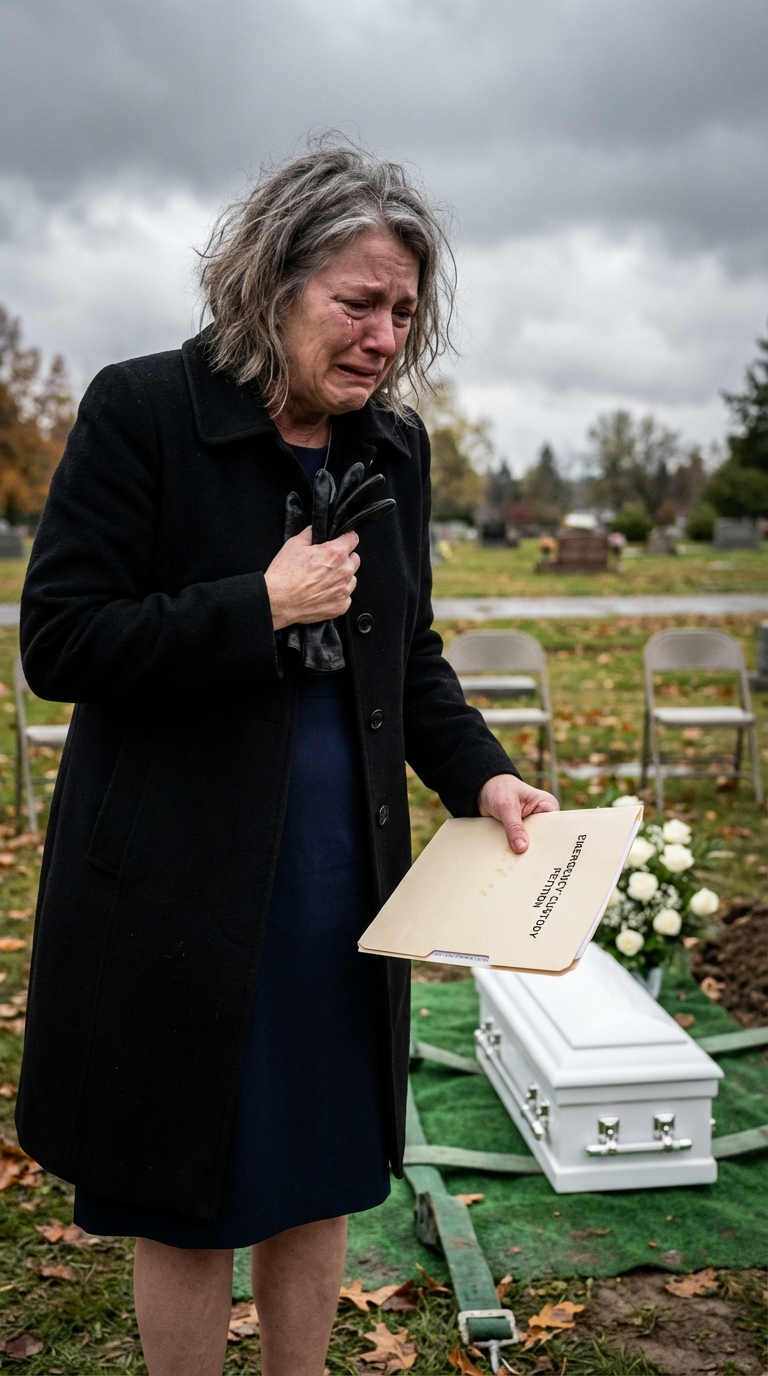
I was standing in a cemetery holding adoption papers I’d never get to file.
The funeral director kept asking me questions—what flowers did I want, what music, did I have a photo for the program. I couldn’t answer. I was staring at the tiny white casket, smaller than a suitcase, thinking about how three days ago I was filling out forms to become a legal guardian.
My grandson was supposed to turn two months old tomorrow. Instead, I was picking out a burial plot.
“Mrs. Patterson, we need to make these decisions today,” the funeral director said gently. His name tag read “Michael” and he had kind eyes that had probably seen too much grief.
I finally looked at him. “His mother won’t be attending.”
Michael’s expression didn’t change, but I saw the flicker of judgment. He’d probably heard every terrible story that existed. But he hadn’t heard mine yet.
“What about the father?” he asked.
I laughed. It came out harsh and broken, echoing in the small planning room surrounded by casket catalogs and flower arrangements. “The father is why we’re here.”
My phone buzzed. Another text from my daughter, Vanessa. I could see the preview without opening it: “Mom, please don’t do this. We can talk. I’m sorry. Please.”
Sorry. After everything, that was the word she chose.
The adoption papers were still in my purse, signed by me but never filed with the court. I’d been two days away from emergency custody when my son-in-law, Derek, called from the hospital. Not Vanessa. Derek.
“There’s been an accident,” he’d said, his voice flat, practiced. “You should come.”
An accident. That’s what they were calling it.
I pulled out my phone and opened my photos. The last picture I’d taken of baby Ethan was four days ago, during what was supposed to be a supervised visit. He’d been underweight, with bruises on his tiny arms that Vanessa explained away as “clumsy diaper changes.” I’d documented everything—the bruises, the weight loss, the hollow look in Vanessa’s eyes when I asked if she was coping.
I’d reported it to CPS twice. Both times, they’d done an investigation and found “insufficient evidence.” Both times, Derek had been charming, helpful, cooperative. Both times, Vanessa had backed up every lie he told.
The third time, I didn’t call CPS. I called a lawyer.
And now I was planning a funeral instead of a homecoming.
Michael cleared his throat. “Mrs. Patterson, I know this is difficult, but there are legal considerations. If you’re not the legal guardian, the parents need to—”
“I have something to show you,” I interrupted, pulling a USB drive from my purse. My hands were shaking. “Something that’s going to the police tomorrow morning. But I need you to see it first, because you need to understand why this funeral will be attended by exactly three people—me, my lawyer, and a detective.”
Michael hesitated, then gestured to his computer.
I plugged in the drive. The video file was timestamped three weeks ago. It was from the nanny cam I’d hidden in the stuffed elephant I’d given Ethan.
The Video That Changed Everything
The footage was grainy but clear enough. Derek’s apartment, mid-afternoon. Ethan was crying in his bassinet—that desperate, hungry cry that babies make when they’ve been ignored too long.
Derek walked into frame. He was on his phone, laughing about something, completely ignoring his son. The crying got louder. Derek’s expression changed from amusement to annoyance.
“Shut the fuck up,” he said to a two-month-old baby.
Ethan kept crying. Derek walked over, picked him up roughly—too roughly, Ethan’s tiny head snapping back—and shook him. Hard. Three times.
“I said shut up.”
Michael’s hand covered his mouth. I’d watched this footage a dozen times, and I still felt like vomiting.
But it got worse.
The video cut to another timestamp, five days later. Vanessa was home this time. Ethan was crying again. Derek was yelling at Vanessa about something—the apartment being messy, dinner not being ready. Vanessa was apologizing, crying, trying to calm Ethan while Derek berated her.
Then Derek snatched Ethan from Vanessa’s arms.
“I’ll make him stop,” he said.
He took Ethan into the bedroom and closed the door. The nanny cam couldn’t see into the bedroom, but the audio was clear. Ethan’s crying became muffled. Then stopped. Then there was silence.
When Derek came back out five minutes later, he was calm. Vanessa asked if Ethan was okay.
“He’s sleeping,” Derek said. “Finally.”
The timestamp on that video was three days before Ethan died.
Michael turned away from the screen. “Jesus Christ.”
“There are eight more videos,” I said quietly. “Eight more instances of abuse over six weeks. I have timestamps, medical records showing Ethan’s declining weight, text messages between me and Vanessa where I begged her to leave Derek. And I have the coroner’s preliminary report that says Ethan died of ‘traumatic brain injury consistent with shaken baby syndrome.'”
“You need to take this to the police now,” Michael said. “Not tomorrow. Right now.”
“I already have. They’re building a case. But Derek’s family has money and lawyers, and Vanessa is protecting him. My attorney says the trial could take months, and there’s a chance he walks on a manslaughter charge with a plea deal.”
I took a breath. “But Derek made a mistake. He thinks I’m a grieving grandmother who’ll quietly fade away. He doesn’t know what I’m capable of.”
The Backstory: How We Got Here
Vanessa wasn’t always like this. She was my bright, funny daughter who wanted to be a veterinarian and spent her teenage years rescuing injured birds. She had plans, dreams, and a full scholarship to UC Davis.
Then she met Derek at a college party during her freshman year.
Derek was handsome, charismatic, and came from a wealthy family in Silicon Valley. His father owned a tech company; his mother sat on charity boards. On paper, Derek was every mother’s dream for her daughter.
In reality, he was a predator who specialized in finding strong women and systematically destroying them.
It started subtly. Derek convinced Vanessa to skip family dinners because his family events were “important networking opportunities.” Then he convinced her that her scholarship was “limiting her potential” and she should switch schools to be closer to him. When Vanessa transferred to San Jose State, losing her scholarship in the process, Derek’s family offered to pay her tuition.
That’s when he had her trapped.
By her sophomore year, Vanessa had stopped calling me. When I visited, Derek was always there, always hovering, always answering questions she should have answered. She’d lost weight. She flinched when he touched her. She’d given up on veterinary school and switched to business—Derek’s major.
I tried to talk to her. She insisted everything was fine, that I was being “dramatic” and “didn’t understand their relationship.”
When they got engaged after graduation, I didn’t go to the wedding. It’s the biggest regret of my life. Maybe if I’d been there, maintained that connection, things would be different.
They married in a lavish ceremony paid for by Derek’s parents. Vanessa wore a designer dress and smiled in all the photos. But when I looked at those pictures later, I could see it—the emptiness in her eyes, the way she stood slightly away from Derek, the tension in her shoulders.
I tried to stay in contact. Vanessa would respond to texts occasionally, always brief, always vague. She stopped mentioning Derek entirely, which told me everything I needed to know.
Then, two years after the wedding, Vanessa called me at 2 AM.
“Mom, I’m pregnant.”
She wasn’t happy. She was terrified.
The Pregnancy That Revealed Everything
I drove to San Jose the next morning. Vanessa answered the door looking like a ghost—pale, thin, with bruises on her wrists she tried to hide with long sleeves.
“Are you okay?” I asked.
“I’m fine. Just clumsy.”
That’s when I knew. The same excuses, the same dismissiveness. I’d worked as a nurse for thirty years; I’d seen this pattern a thousand times.
“Does Derek hurt you?”
Vanessa’s face crumpled. For a moment, I thought she’d tell me the truth. Then she rebuilt the walls.
“No. Derek would never. I’m just tired from the pregnancy hormones. You know how it is.”
I didn’t know how it was, because when I was pregnant with Vanessa, my husband had worshipped me, not terrorized me.
I spent the day trying to talk to her, trying to break through the fog Derek had created around her mind. But she was defensive, protecting him, making excuses.
Before I left, I slipped her my new phone number (I’d changed it so she’d have a way to reach me that Derek wouldn’t recognize) and a prepaid credit card with $5,000 on it.
“If you ever need to leave,” I whispered, “you have resources. No questions asked.”
Vanessa never used the card.
The pregnancy was difficult. Vanessa was hospitalized twice for stress-related complications. Each time, Derek posted on social media about being a “devoted husband supporting his wife.” Each time, Vanessa called me from the hospital only when Derek was gone, her voice hollow, asking about medical details she should have been asking her doctors.
When Ethan was born eight weeks premature, I drove to the hospital immediately. Derek met me in the waiting room.
“She doesn’t want visitors,” he said coldly.
“I’m her mother.”
“And I’m her husband. She’s exhausted. Come back tomorrow.”
I should have fought harder. I should have demanded to see her. Instead, I left, and by the time I came back the next day, they’d already been discharged.
The Red Flags No One Believed
Ethan came home from the NICU after three weeks. I was allowed one supervised visit during that time—Derek was present the entire time, monitoring every word, every interaction.
The baby was tiny, fragile, with tubes and monitors. Vanessa was terrified of doing something wrong. Derek criticized everything she did—how she held him, how she fed him, how she changed him.
“You’re being too gentle. He’s not going to break.”
“You’re being too rough. Jesus, Vanessa, be careful.”
Nothing she did was right.
I watched my daughter shrink under his contempt while holding her newborn son, and I knew Ethan was in danger.
The day after they brought Ethan home, I called CPS.
I reported the bruises on Vanessa’s wrists, the weight loss, the controlling behavior, the fear I saw in her eyes. I reported that I was concerned for a premature infant in an environment with documented domestic violence indicators.
CPS sent someone within forty-eight hours. Derek was charming. Vanessa was scripted. The apartment was spotless. The CPS worker noted “marital stress typical of new parents” and “grandmother’s overprotective concerns.”
Case closed.
Two weeks later, I visited again. Ethan had lost weight. Babies aren’t supposed to lose weight after leaving the NICU—they’re supposed to gain. His tiny arms had bruises. Vanessa said she was struggling with feeding schedules, that she was clumsy during diaper changes.
Derek said I was “causing problems” and “stressing out Vanessa with constant criticism.”
I called CPS again.
Another visit. Same outcome. Derek showed them feeding logs, appointment records, a perfect paper trail. Vanessa backed up every word. The investigator told me that “false reports” could result in legal consequences for me.
I was being warned to stay away from my grandson.
That’s when I called Elizabeth Moreno, a family attorney who’d been featured in a local news story about grandparents’ rights. She listened to everything—the abuse, the warnings, the closed investigations.
“Here’s the truth,” Elizabeth said. “CPS is overworked and underfunded. They see real abuse every day, and your case looks like an overprotective grandmother versus a wealthy couple with good documentation. We need evidence. Real, undeniable evidence.”
“How do I get that?”
“You document everything. Photos, videos, medical records. And if you can, you record what’s happening in that home.”
That’s when I bought the nanny cam.
The Hidden Camera That Captured Horror
The stuffed elephant was Ethan’s two-month gift from me. It was soft, adorable, with a tiny camera hidden in one eye and a microphone in the ear. The resolution wasn’t perfect, but it was enough.
I gave it to Vanessa during a visit. Derek was at work. She actually smiled when she saw it.
“He’ll love it,” she said, placing it on the shelf above Ethan’s bassinet, exactly where I’d hoped it would go.
The camera had motion activation and uploaded footage to a cloud server. I set up alerts on my phone.
For the first three days, the footage was mostly Vanessa feeding Ethan, changing him, talking to him in that soft voice mothers use. She was trying. She was exhausted and terrified, but she was trying.
Then Derek came home early from work.
I was grocery shopping when the alert came through. I pulled into a parking lot and watched the livestream on my phone.
Derek was angry about something—dinner not being ready, the apartment being messy, something minor that he’d turned into evidence of Vanessa’s incompetence. He was yelling. Vanessa was apologizing while holding Ethan, trying to soothe him while being verbally destroyed.
Then Derek grabbed Ethan.
I watched him shake my grandson like a rag doll. Watched Ethan’s head snap back. Watched Derek put him back in the bassinet and walk away while Ethan screamed.
I called 911 from the parking lot.
“I have video evidence of child abuse happening right now.”
The dispatcher took my information. Police were sent to the apartment. By the time they arrived, Derek was calm, Ethan was quiet, and Vanessa was backing up Derek’s story that everything was fine.
The police filed a report. Nothing happened.
But I had the video.
Over the next four weeks, the camera captured eight more incidents. Derek shaking Ethan. Derek covering Ethan’s mouth to stop him from crying. Derek leaving Ethan unfed for hours while playing video games. Derek yelling at Vanessa that the baby was “ruining his life.”
And Vanessa, too afraid to protect her son, too broken to leave.
Elizabeth reviewed every video. “This is enough for emergency custody. We file tomorrow.”
We were scheduled to file on a Friday. I was going to pick up Ethan on Saturday.
Derek killed him on Thursday.
The Hospital Call
“There’s been an accident.”
Derek’s voice was flat when he called, practiced, like he’d rehearsed what to say. No panic. No grief. Just a monotone delivery of information.
“Ethan stopped breathing. We’re at Valley Medical. You should come.”
I drove ninety miles per hour to San Jose. I called Elizabeth from the car. She was already reaching out to her contacts in law enforcement.
When I got to the hospital, Derek was in the waiting room, on his phone. Not crying. Not pacing. Just sitting calmly, scrolling through Instagram.
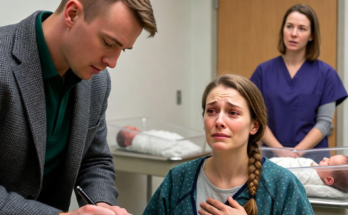
Vanessa was in the emergency room with Ethan. A nurse took me back.
My grandson was on a ventilator, his tiny body covered in tubes. Vanessa was next to him, holding his hand, sobbing.
“What happened?” I asked.
“He just stopped breathing,” Vanessa whispered. “We were sleeping, and I woke up, and he wasn’t breathing. Derek did CPR. The ambulance came. They said—” Her voice broke. “They said he has brain damage. They said he might not—”
A doctor approached. Her expression told me everything before she spoke.
“I’m Dr. Reyes. Are you Ethan’s grandmother?”
“Yes.”
“I need to inform you that Ethan has severe traumatic brain injury consistent with abusive head trauma. We’ve contacted the authorities as required by law. Detectives will be here shortly to interview the parents.”
Vanessa’s face went white. “No. No, it was an accident. He just stopped—”
“Mrs. Patterson,” Dr. Reyes said gently, addressing me, not Vanessa. “The injuries are not consistent with the story we’ve been told. The CT scan shows multiple brain bleeds in different stages of healing. This didn’t happen today. This has been happening for weeks.”
I pulled out my phone. “I have videos.”
The Police Investigation
Detective Sarah Gutierrez arrived within an hour. I showed her everything—eight videos of abuse, timestamps, medical records showing Ethan’s weight loss, text messages between me and Vanessa where I’d expressed concerns, the two closed CPS investigations.
“Why didn’t you bring this to us sooner?” Detective Gutierrez asked.
“I was filing for emergency custody tomorrow. I thought the legal route was safer. I thought—” My voice cracked. “I thought I had more time.”
Detective Gutierrez reviewed every video in silence. Then she stood up.
“Derek Patterson is being arrested. Vanessa Patterson will be interviewed regarding her knowledge and potential culpability. You should prepare yourself—Ethan’s injuries are not survivable. The medical team is keeping him on life support until family makes a decision.”
“His family is me,” I said. “His mother is complicit, and his father is a murderer. I’m making the decision.”
Ethan died at 11:47 PM that night. I was holding his hand. Vanessa was in an interview room being questioned about why she’d failed to protect her son. Derek was in jail being charged with murder.
The Funeral and the Reckoning
That’s how I ended up in the funeral home three days later, showing videos to a funeral director who’d just become a witness to evidence in a murder trial.
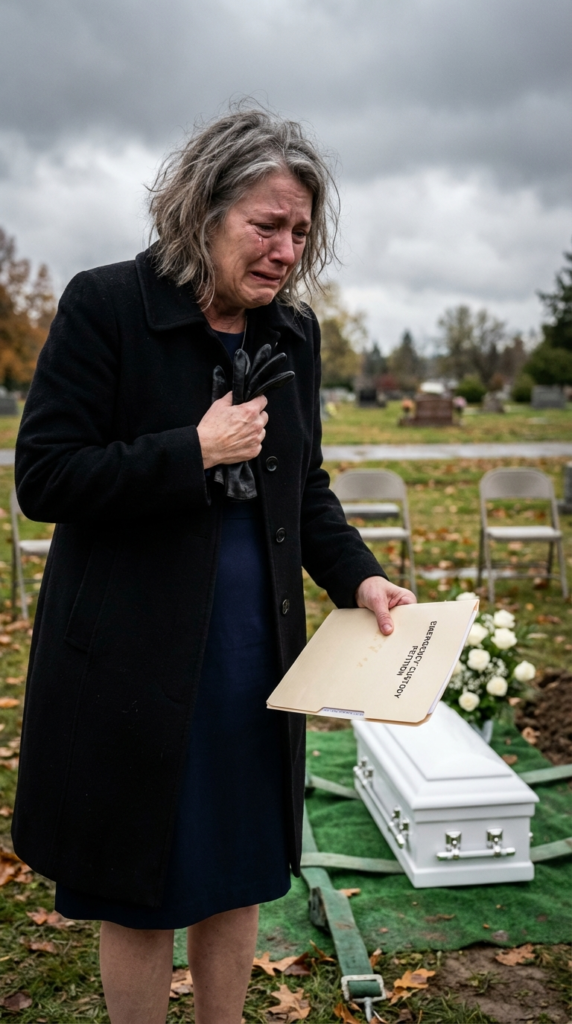
Michael the funeral director helped me plan a small, dignified service. White roses. A children’s choir from a local church who volunteered for infant funerals. A plot in a cemetery where Ethan would be surrounded by trees and sunlight.
The funeral was attended by me, Elizabeth my attorney, Detective Gutierrez, and three nurses from the NICU who’d cared for Ethan when he was born. People who’d loved him in his short life.
Vanessa sent flowers with a card: “I’m sorry.”
Derek sent nothing. He was in jail without bail, facing second-degree murder charges.
After the service, Detective Gutierrez approached me. “The district attorney reviewed your videos. Derek is being charged with second-degree murder and felony child abuse. Vanessa is being charged as an accessory for failure to protect. The DA believes Derek’s family will try to buy his way out, but with your evidence, he thinks we can get a conviction.”
“What about Vanessa?”
“That depends on her testimony. If she cooperates against Derek, she might get a reduced sentence. If she continues protecting him…” Detective Gutierrez shook her head. “She’ll go to prison too.”
The Trial
The trial took seven months. Derek’s family hired a team of expensive attorneys who argued that Ethan’s death was a tragic accident, that Derek was a stressed new father who made mistakes, that the videos were “taken out of context.”
Elizabeth and I sat through every day of testimony. We watched Derek’s lawyers try to paint me as a vindictive grandmother with a vendetta. We watched them try to discredit the medical evidence.
Then the prosecution played the videos.
The courtroom went silent as the jury watched Derek shake a two-month-old baby. Watched him cover Ethan’s mouth to stop him from crying. Watched him ignore his son’s screams while playing video games.
Derek’s mother left the courtroom crying. His father sat stone-faced, probably calculating the cost to his reputation.
Vanessa testified. She was thin, broken, a shell of the person she’d been. She told the jury about years of abuse, about being terrified of Derek, about not knowing how to leave.
“Did you know Derek was hurting Ethan?” the prosecutor asked.
Vanessa’s voice was barely audible. “Yes.”
“Did you try to stop him?”
“I was afraid he’d kill me too.”
The jury deliberated for six hours.
Guilty on all counts.
Derek was sentenced to twenty-five years to life. Vanessa was sentenced to eight years for accessory to child abuse and failure to protect, with parole eligibility after five.
Derek’s father stood up during the sentencing and pointed at me. “You destroyed this family. You put a camera in our home and spied on us. You’re the monster here.”
Judge Morrison, a grandmother herself, looked at Derek’s father with cold contempt. “Mr. Patterson, your son murdered an infant. The only monster in this courtroom is the one you raised. Mrs. Patterson saved evidence that will ensure justice for her grandson. She’s a hero, not a villain. Now sit down before I hold you in contempt.”
Epilogue: Living With the Aftermath
It’s been three years since Ethan died. I visit his grave every week, bring fresh flowers, tell him about my life like he’s still here to listen.
Vanessa writes to me from prison. Letters filled with apologies, explanations, pleas for forgiveness. I read them all. I don’t respond.
Maybe one day I will. Maybe when she’s served her time and rebuilt herself into someone who would have protected her son. But not today.
I started a foundation in Ethan’s name. We provide resources for grandparents seeking custody of at-risk grandchildren—legal assistance, documentation tools, support groups. We’ve helped forty-three families in three years. Forty-three children who are safe now because we taught their grandparents how to fight.
I also lobbied for “Ethan’s Law” in California—legislation that makes it easier for grandparents to obtain emergency custody when there’s documented evidence of abuse, and requires CPS to take third-party video evidence seriously. The law passed last year.
Derek will be eligible for parole in 2048. He’ll be seventy years old. I plan to attend every parole hearing for the rest of my life.
People ask me if I regret the hidden camera, if I wish I’d done things differently.
Yes. I wish I’d put that camera in place sooner. I wish I’d been more aggressive with CPS. I wish I’d physically removed Ethan from that apartment instead of trusting the legal system to move fast enough.
But I don’t regret getting justice for my grandson.
I was supposed to be adopting Ethan, supposed to be raising him in a home filled with love and safety, supposed to be teaching him to walk and talk and become the person he deserved to be.
Instead, I buried him.
But I made sure the person who killed him will never hurt another child. I made sure other grandparents have the tools to fight for their grandchildren. I made sure Ethan’s death meant something.
That’s not the ending I wanted. But it’s the ending I fought for.
And sometimes, when you can’t save the person you love, the only thing left to do is make sure their story saves someone else.