The Dinner That Changed Everything
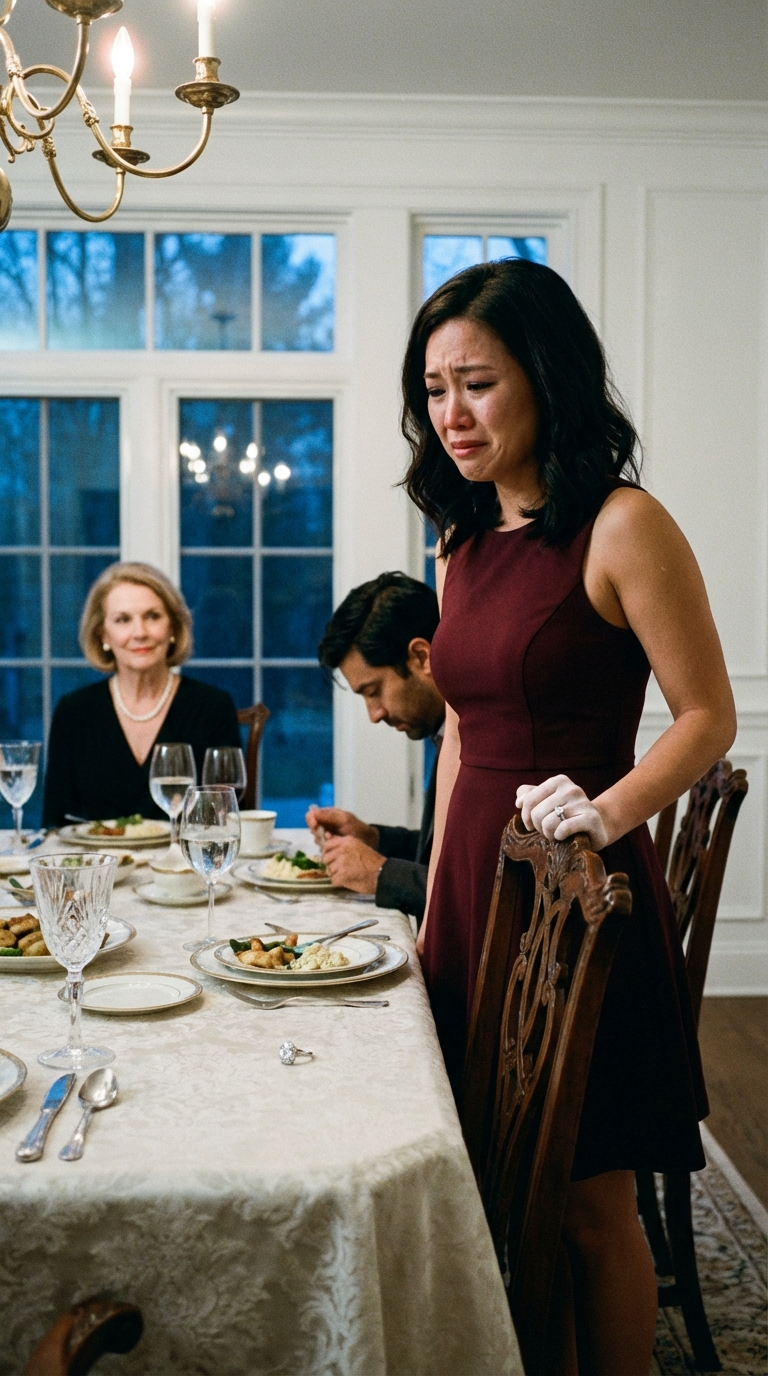
I was sitting across from my fiancé’s mother in her pristine white dining room when she said the words that would end my engagement: “Let’s be honest, dear. You’re just a womb. A vessel for my grandchildren. Once you give Nathan his heirs, your job is essentially done.”
She said it the way you’d comment on the weather. Casual. Matter-of-fact. Like she was explaining basic biology to a child.
My wine glass froze halfway to my lips. Around the table, Nathan’s father kept eating like he hadn’t heard anything. Nathan himself stared at his plate, jaw clenched, saying nothing. His silence was somehow worse than her words.
“Excuse me?” I finally managed, my voice barely above a whisper.
Patricia—never “Pat,” always Patricia—dabbed her mouth with a cloth napkin and smiled. That perfectly practiced country club smile that didn’t reach her cold blue eyes.
“Oh, don’t look so shocked, Melissa. I’m being practical. Nathan comes from a very important family. Old money. Real legacy. You’re… well, you’re pretty enough, and your hips look adequate for childbearing. That’s what matters. But let’s not pretend this is some grand love story.”
My hands started shaking. We were here for what I thought was a celebratory dinner—Nathan and I had just gotten engaged three weeks ago. I’d been nervous about impressing his parents, had bought a new dress, practiced conversation topics. I’d wanted so badly to be welcomed into this family.
Instead, I was being evaluated like livestock.
“Nathan,” I said, turning to the man I’d agreed to marry, the man who’d promised me forever just twenty-one days ago. “Are you hearing this? Say something.”
He finally looked up, and what I saw in his eyes made my blood run cold. Not shock. Not outrage. Just… discomfort. Like his mother had said something slightly embarrassing at a party, not reduced his future wife to a breeding animal.
“Mom has strong opinions,” he said weakly. “She doesn’t mean—”
“I mean exactly what I said,” Patricia interrupted. “Nathan, darling, stop coddling her. If she’s going to be part of this family, she needs to understand her role. I’ve already discussed the timeline with Dr. Morrison. First baby within a year of the wedding. Preferably a boy, of course. Then another within two years. After that, we can revisit whether a third is necessary.”
She’d discussed MY reproductive timeline with HER doctor. Without telling me. She’d planned out my entire uterus like it was a corporate quarterly report.
Nathan’s father finally spoke, his voice gruff. “Patricia, perhaps we should—”
“Don’t you start, Gerald. We agreed. The family needs heirs. Nathan’s already thirty-five. We can’t waste time on some prolonged courtship fantasy. This girl is suitable enough. She’ll produce adequate offspring. That’s the arrangement.”
That’s when I realized. This wasn’t a family dinner. This was a negotiation. And I was the commodity being purchased.
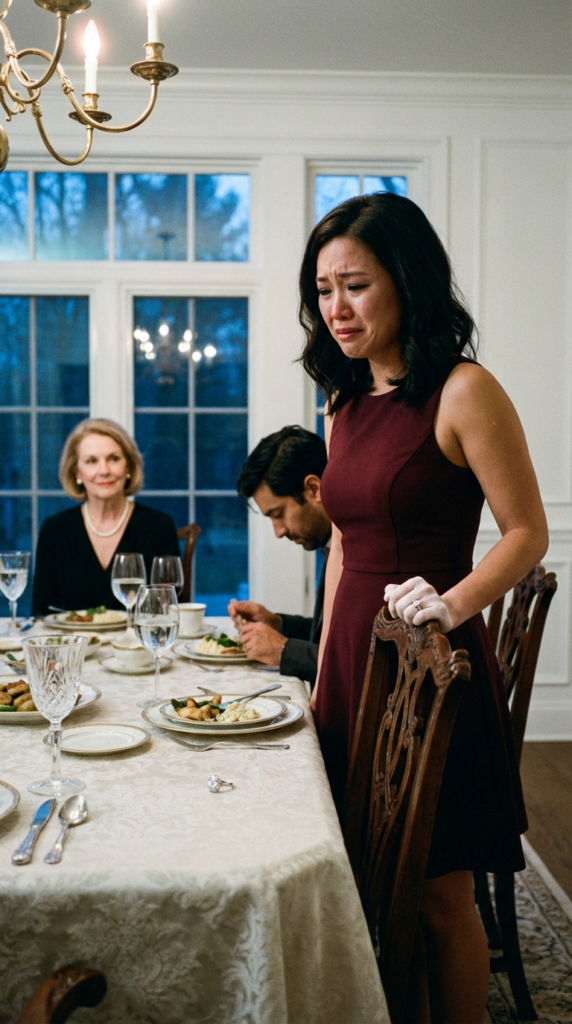
I stood up so fast my chair scraped against the hardwood floor. Nathan reached for my hand, but I yanked it away. My engagement ring—his grandmother’s ring, the one Patricia had presented to him like she was bestowing a royal honor—suddenly felt like a shackle.
How We Got Here
Let me back up six months to explain how a software engineer from Michigan ended up engaged to a trust fund baby whose mother collected daughters-in-law like designer handbags.
I met Nathan at a tech conference in Boston. He was charming, funny, self-deprecating about his privileged upbringing. “My parents are a bit much,” he’d warned me on our third date, “but they mean well. Just smile and nod.”
Red flag number one. I ignored it.
Our relationship moved quickly. He was attentive, romantic, everything I thought I wanted. He’d show up at my apartment with flowers. He’d remember small details I’d mentioned in passing. He made me feel seen in a way I hadn’t experienced before.
What I didn’t realize was that I was being auditioned.
The first time I met Patricia was at their summer house in the Hamptons. I should have known something was wrong when Nathan coached me for hours beforehand: what to wear, what topics to discuss, which fork to use. “Mom’s very particular,” he said. “Just be yourself. But, you know, the best version.”
Patricia had greeted me with air kisses and immediately began interrogating me about my family history. Where were my parents from? What did they do? Any genetic conditions in the family? I thought she was just being thorough, maybe a little nosy. Now I realize she was conducting due diligence on her son’s potential breeding partner.
The engagement happened at Christmas. Nathan proposed in front of his entire extended family at their annual holiday party. Seventy-five people watching as he got down on one knee. I was so overwhelmed, so caught up in the moment, that I didn’t notice Patricia watching from across the room with an expression of cool satisfaction. Like she’d just closed a successful business deal.
The Breaking Point
Standing in that dining room, holding my shaking hands at my sides, I felt something fundamental shift inside me. Clarity. Cold, sharp clarity.
“This girl,” I said slowly, my voice steady now, “has a name. Melissa Chen. I have a master’s degree in computer science. I designed the security infrastructure for a Fortune 500 company. I speak three languages. I’ve run two marathons. I have thoughts, ambitions, a career I’ve worked my ass off to build.”
Patricia waved her hand dismissively. “Yes, yes, very impressive. But let’s be realistic about priorities. Once you’re married, your focus will shift. Nathan needs a wife who understands that family comes first.”
“Family,” I repeated. “You keep using that word. But what you’re describing isn’t family. It’s a breeding program.”
Gerald choked on his wine. Nathan’s eyes went wide. But Patricia just smiled, unruffled.
“Call it what you want, dear. This is how it works in families like ours. Do you think I married Gerald for love? Please. I married him because he was suitable. Because our families aligned. Because we would produce strong heirs to continue the legacy. And we did. Nathan turned out wonderfully.”
She said it like she was discussing a successful thoroughbred horse breeding operation.
I turned to Nathan. “Say something. Anything. Tell her she’s wrong. Tell her that you love me for more than my childbearing potential. Tell her we’re partners, equals, that our marriage will be based on mutual respect.”
Nathan opened his mouth. Closed it. Looked at his mother, then back at me.
And said nothing.
That silence was my answer.
I twisted the engagement ring off my finger—that heirloom ring that suddenly felt like a collar—and placed it carefully on the table next to my untouched dinner.
“You know what, Patricia? You’re right about one thing. Let’s not pretend this is a grand love story. Because love requires seeing someone as human. As equal. As more than a function they can perform.”
I grabbed my purse from the back of the chair. Nathan finally found his voice.
“Melissa, wait. You’re overreacting. Mom’s just old-fashioned. She doesn’t understand how—”
“No,” I interrupted. “You don’t understand. Or maybe you do, and you just don’t care. Either way, I’m done.”
“You’re ending our engagement over one awkward dinner?” Nathan stood up, looking genuinely confused. Like I was being hysterical over nothing.
“I’m ending our engagement because your mother just told me I’m livestock, and you didn’t defend me. You didn’t even seem surprised. Which means you either agree with her, or you’re too weak to stand up to her. Either way, I’m not signing up for this life.”
Patricia laughed. Actually laughed. “Oh, darling. You think you can do better? You’re thirty-two. Your eggs aren’t getting any younger. Nathan is offering you security, status, a comfortable life. What do you think will happen if you walk out that door?”
I paused at the dining room entrance and looked back at her. “I’ll tell you exactly what will happen. I’ll go home to my apartment that I pay for with money I earned. I’ll wake up tomorrow and go to a job where people value my mind, not my uterus. I’ll live my life on my terms, not as an incubator for your dynasty. And I’ll thank whatever god is listening that I saw your true colors before I legally bound myself to this family.”
“You’ll regret this,” Patricia said coldly. “You’ll come crawling back when you realize what you’ve thrown away.”
“No,” I said. “I really won’t.”
The Aftermath
I walked out of that house and drove home in a blur of adrenaline and heartbreak. It wasn’t until I got back to my apartment and collapsed on the couch that the tears finally came. Not because I’d lost Nathan—I was already realizing I’d never really had him. But because I’d wasted six months, because I’d almost made the worst mistake of my life, because I’d been so desperate to be chosen that I’d ignored every warning sign.
Nathan called seventeen times that night. I didn’t answer. Patricia texted once: “When you’re ready to apologize and discuss this rationally, we’ll accept you back. But there will be conditions.”
I blocked her number.
The next day, Nathan showed up at my office. My coworkers watched with wide eyes as he tried to convince me in the lobby that I was throwing away our future over a “misunderstanding.”
“Your mother called me a womb,” I said flatly. “She outlined my reproductive timeline without my consent. She literally said my job would be ‘essentially done’ after I give you heirs. Which part did I misunderstand?”
“She’s from a different generation,” he pleaded. “She doesn’t know how to express herself. But underneath it, she just wants grandchildren. Is that so terrible?”
“Nathan, she didn’t say she wanted grandchildren. She said I was just a vessel to produce them. She reduced my entire existence to my reproductive capacity. And you sat there and let her.”
“I was in shock!”
“For six months? Because I’m realizing now—this isn’t new. This is who your family is. Who you are. You just hid it better.”
He tried a different tack. “You’re scared. Cold feet. Every bride gets them. Let me take you to dinner, we can talk this through—”
“I’m not scared,” I said. “I’m clear. Maybe for the first time. This is over, Nathan. For real. Forever.”
Security escorted him out when he wouldn’t leave. That night, I cried again. But it was different this time. Relief mixed with grief. Mourning not for what I’d lost, but for what I’d almost become.
The Reckoning
A week later, I got a certified letter from Patricia’s lawyer. She was threatening to sue me for “emotional damages” and the return of various gifts Nathan had given me during our relationship. The engagement ring I’d left on their table, but apparently the Cartier bracelet from my birthday and the Tiffany necklace from our six-month anniversary were now “family heirlooms” that needed to be returned.
I forwarded the letter to my own lawyer—my cousin Rachel, who practiced family law in New York. She called me back laughing.
“This is the most ridiculous thing I’ve ever seen,” Rachel said. “They can’t sue you for ending an engagement. And these ‘heirlooms’ were gifts. They’re yours. But Melissa… this is harassment. We could turn this around on them.”
“What do you mean?”
“I mean we document everything. Every text, every call, every threatening letter. Then we send them a cease and desist. If they continue, we file for a restraining order and countersue for harassment. Hit them where it hurts—their pristine reputation.”
I thought about it for exactly five seconds. “Do it.”
Rachel did more than that. She dug into the Whitmore family and found things that made Patricia’s “old money legacy” look less like aristocracy and more like organized fraud. Gerald’s company had been involved in multiple labor disputes. Patricia sat on the board of a children’s charity that had been investigated for misappropriation of funds. Nathan himself had a sealed record from college that Rachel’s investigator managed to uncover—a sexual harassment complaint from a classmate that Gerald had paid to disappear.
This was the family that thought I wasn’t good enough for them. This was the “legacy” I was supposed to desperately want to join.
Rachel sent the cease and desist with a very detailed attachment outlining what we’d discovered and what we’d be willing to share with the media and relevant authorities if the Whitmores continued their harassment.
The response was immediate. A formal apology letter from their lawyer. A withdrawal of all claims. A promise to leave me alone permanently.
Patricia couldn’t help herself, though. She sent one final text from a new number: “You’ll never find anyone better than Nathan. You’ll die alone and childless because you were too proud to accept your place.”
I responded with a screenshot of my block list with her name at the top, and one sentence: “Watch me thrive.”
Six Months Later
I’m writing this from my new apartment in Seattle. I took a promotion that required relocating—Director of Cybersecurity for a major tech company. Double my previous salary. Stock options. A team of twenty brilliant people who respect my expertise and never once asked about my childbearing plans.
I started dating again. Slowly, carefully. I met someone—Daniel, a public defender with three rescue dogs and zero interest in “legacy planning.” On our third date, I told him the whole story. About Patricia, about Nathan, about being called a womb.
He was quiet for a long moment. Then he said, “Jesus. I’m so sorry you went through that. But I’m glad you walked away. That took real courage.”
“Or survival instinct,” I said.
“Same thing, sometimes.”
We’re taking things slow. No talk of marriage or babies or timelines. Just two people getting to know each other, respecting each other, building something real instead of performing for an invisible audience of wealthy narcissists.
I heard through mutual friends that Nathan got engaged again four months after I left. To a twenty-five-year-old from another “good family.” The wedding is planned for June. Patricia is reportedly thrilled—apparently this girl is more “amenable to guidance.”
I hope she runs. I hope she sees what I saw before it’s too late. But if she doesn’t, that’s not my burden to carry.
As for me? I’m done being auditioned. Done trying to shrink myself to fit into someone else’s vision of what I should be. Done with men who need their mothers to approve their partners and women who reduce other women to their biological functions.
I’m thirty-three now. Patricia was right about one thing—my eggs aren’t getting any younger. But here’s what she didn’t understand: I’m so much more than my eggs. I’m intelligence, ambition, kindness, strength, humor, resilience. I’m a complete human being with value that has nothing to do with whether I ever produce children.
And if I do decide to have kids someday, it’ll be because I want to. With a partner who sees me as an equal. In a family built on respect, not hierarchy and transaction.
The Real Victory
People ask me if I regret how things went down. If I wish I’d handled it more diplomatically, kept the ring, stayed calm at that dinner.
The answer is no. Absolutely not.
Walking out of that house was the most powerful thing I’ve ever done. Not because it hurt them—though Patricia’s shocked expression when I left the ring on the table still brings me joy—but because I chose myself. I honored my own worth when the people around me refused to.
That’s the lesson I wish I could shout from rooftops: You don’t owe anyone access to your body, your future, or your fundamental human dignity. Not for love. Not for security. Not for acceptance into some “elite” family that measures worth in pedigree and bank accounts.
The day I walked out of the Whitmore mansion, I thought I was losing everything. A fiancé. A future. A chance at the life I thought I wanted.
Instead, I found myself. The version of me that refuses to be reduced, commodified, or controlled. The version that would rather be alone than compromised. The version that knows my value doesn’t come from who wants to marry me or what my body can produce.
Patricia was wrong about everything. I didn’t come crawling back. I didn’t regret my decision. I didn’t die alone and childless—though even if I did, that wouldn’t make her right.
I thrived. Exactly like I promised.
And Nathan? He’s probably sitting at another pristine white dining table right now, watching his mother evaluate his new fiancée’s childbearing potential while he stays silent. Some people never learn. Some people never want to.
But that’s not my story anymore.
My story is about the woman who stood up, walked out, and never looked back. The woman who chose freedom over security, dignity over comfort, herself over everyone who told her she wasn’t enough.
That woman is me. And I’ve never been prouder.
To anyone reading this who’s in a similar situation—whether it’s a controlling partner, a toxic future in-law, or any relationship that reduces you to a function instead of celebrating you as a person—please hear me: You can walk away. You should walk away. Your worth isn’t determined by someone else’s approval.
You’re not just a womb. You’re not just anything. You’re everything. And you deserve someone who sees that.