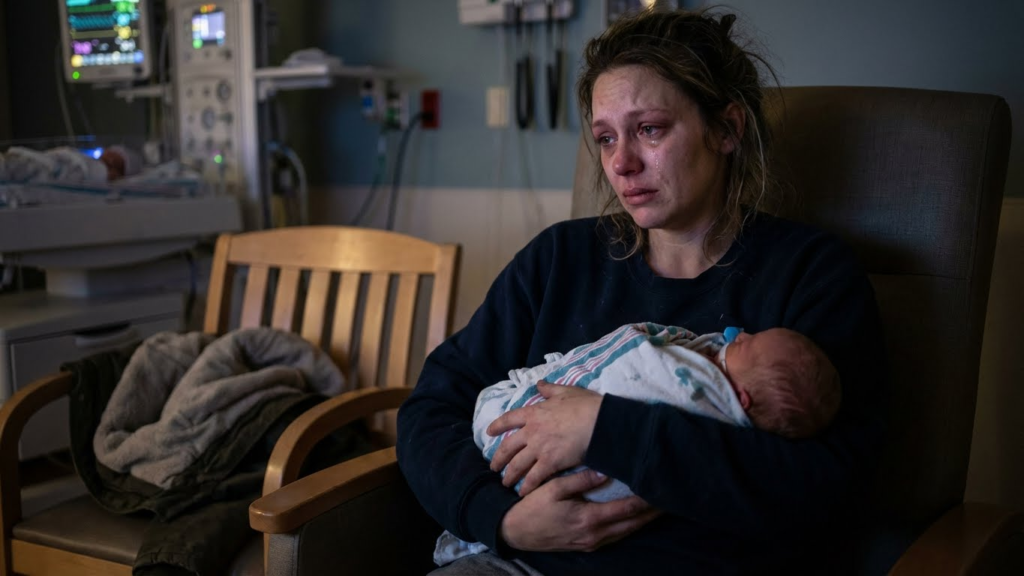
I always thought grief would be loud.
I imagined screaming, collapsing, some kind of cinematic breaking point that would mark the worst moment of my life. Instead, it was quiet. The machines hummed. The hallway lights buzzed. My baby’s chest rose and fell in tiny, uneven movements against my own.
And my husband was at home, asleep in our bed.
Our daughter, Lily, was born at 34 weeks after a pregnancy that had already been stitched together by hospital bracelets and whispered reassurances. They told us she was “small but strong.” That phrase should have been my warning. It sounds hopeful, but it’s what doctors say when they don’t actually know if the baby is going to make it.
She spent her first day in the NICU under blue lights, wires taped to her skin like she was being held together by technology instead of love. I learned the language of beeps and dips, learned to tell when the alarms were serious and when they were just sensitive. I slept in a chair with my arm threaded through the crib so she’d know I was there.
My husband, Mark, did the daytime shifts. He brought me food, kissed my forehead, promised we were doing everything right. At night he went home to shower and sleep, because “one of us needs to function.”
I told myself that was reasonable.
On Lily’s third night, a nurse came in with a face I had never seen before. Not calm. Not neutral. Prepared.
She said, “Her oxygen levels aren’t responding the way we hoped.”
I didn’t understand what that meant. I didn’t want to.
They adjusted the machines. They turned off the lights. Someone asked if I wanted Mark called.
I said, “Yes. Please.”
The nurse stepped into the hallway to make the call. She came back alone.
“He didn’t answer,” she said. “We left a message.”
I stared at my phone. No missed calls. No texts.
I typed with shaking hands:
They’re worried about Lily. Please come now.
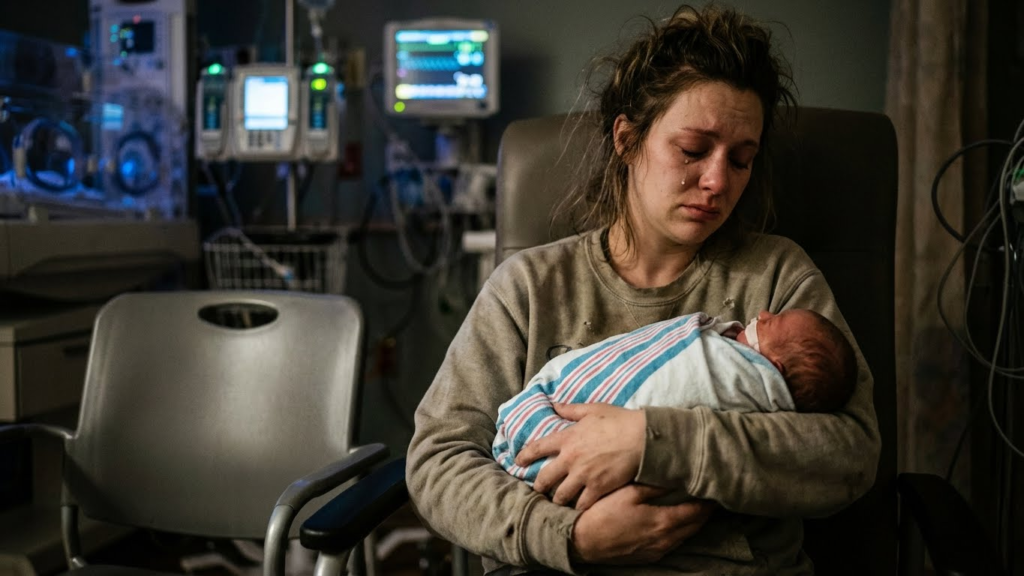
No response.
The doctor arrived. He spoke gently, slowly, like I was already broken glass.
He said words like “complications,” “immature lungs,” “no longer stabilizing.” He said they could intubate again but that it might only prolong things. He said sometimes love looks like letting go.
I nodded because nodding was easier than screaming.
They asked if I wanted to hold her.
I had been holding her for three days. I didn’t know that this was what they meant.
They unplugged things. Tubes were removed with practiced care. Someone wrapped her in a blanket with tiny yellow ducks on it.
I called Mark.
Voicemail.
Lily fit perfectly under my chin. She weighed less than my purse. Her skin was warm, still alive, still my daughter. Her breath hitched like she was trying to remember how to do it.
I whispered her name over and over, afraid if I stopped, she would stop too.
Lily. Mommy’s here. Mommy’s here.
I watched the clock because I needed proof that time was still moving even if my life had ended.
It was 1:42 a.m.
I texted Mark again.
Please come. She’s dying.
Nothing.
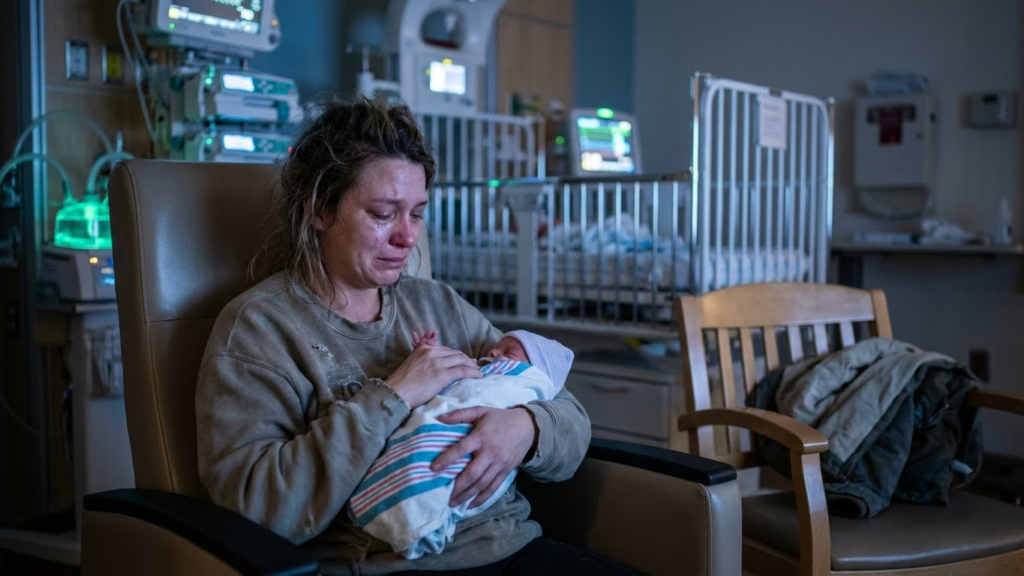
There is a specific kind of silence that settles when a baby is dying. Not the absence of noise, but the presence of too much meaning. Every sound becomes unbearable. The machines were quieter now, but my heart was louder than anything in the room.
Her breathing slowed.
I pressed my lips to her forehead. I told her I was sorry I couldn’t fix it. I told her about the room we had painted, the crib still in boxes, the tiny socks in my drawer waiting for feet that would never grow.
I said, “I love you,” so many times it stopped sounding like words.
At 2:11 a.m., Lily exhaled and didn’t inhale again.
No dramatic moment. No last cry.
Just… gone.
I don’t remember screaming, but I remember someone else screaming, and later I realized it was me.
The nurse stood in the corner, crying quietly into a tissue. The doctor rested a hand on my shoulder, then took it away like he was afraid of breaking me further.
I called Mark again.
This time he answered.
His voice was thick with sleep. “Hey, babe.”
I said, “She’s gone.”
There was a pause. Then, “What do you mean, gone?”
“She died. I was holding her. I was alone.”
Another pause. A longer one.
“I just fell asleep,” he said. “I didn’t hear my phone.”
I stared at our daughter’s still face and thought: I will never forgive this.
He arrived at the hospital an hour later. He looked devastated. He cried. He held Lily like he was trying to memorize her weight.
But the damage was already done.
Because I had lived the worst moment of my life without him. I had begged the dark for him and he hadn’t been there. And no amount of apologies could change the fact that when our daughter took her last breath, I was the only parent in the room.
People keep telling me grief makes you irrational. That I should be understanding. That he didn’t mean it.
But intent doesn’t erase absence.
And this is only the beginning of what that night destroyed between us.
Part 2 is where I finally say out loud what I’ve been too ashamed to admit.