I stood in the courthouse bathroom, staring at the USB drive in my trembling hands. Three years. Three years since that monster killed my husband and two daughters. Three years since the police told me the dashcam footage from the intersection was “corrupted” and “unrecoverable.”
But I knew better now.
The trial had ended two hours ago. Insufficient evidence, they said. The drunk driver walked out of that courtroom with a suspended sentence and a smirk on his face. My lawyer squeezed my shoulder and whispered something about “doing everything we could,” but I couldn’t hear him over the screaming in my head.
That’s when I saw her. The paralegal from the prosecutor’s office, standing by the water fountain, looking at me with eyes full of guilt. She glanced around nervously before slipping something into my coat pocket as she brushed past me.
“Third floor. Server room. Password is on the drive,” she whispered. “I’m sorry. I have kids too.”
Now here I was, the USB drive burning in my palm like evidence from hell itself. My reflection in the mirror looked like a stranger—hollow eyes, clenched jaw, hands shaking so badly I could barely grip the sink.
I knew what I’d find on this drive. I knew why the footage disappeared. I knew whose career it would destroy. And I knew that once I plugged this into my laptop and saw what they’d hidden from me, there would be no going back.
The bathroom door creaked. Footsteps echoed in the hallway outside.
I shoved the drive into my purse and left the courthouse before anyone could stop me.
The Night Everything Changed
September 14th, 2022. That was the night my world ended.
Mark was driving our daughters home from soccer practice. Emma was nine, Sophie was seven. They were singing in the backseat—Mark had texted me a video just minutes before, both girls belting out some Taylor Swift song, completely off-key and absolutely perfect.
That video was the last thing I had of them alive.
The intersection of Morrison and 5th. A red light. Mark stopped. He always stopped. He was the kind of dad who made the girls wear helmets even on their scooters in the driveway.
Then came the black SUV, running the red at sixty miles per hour. The driver, Brandon Hale, had a blood alcohol level of 0.19—more than twice the legal limit. He’d been at a business lunch that turned into happy hour that turned into shots at some downtown bar.
The impact killed Mark instantly. Emma died in the ambulance. Sophie held on for two days in the ICU before her little body gave up.
I wasn’t there. I was home, making dinner, expecting them back any minute.
Instead, I got a police officer at my door and a phone call that shattered my entire existence into a million pieces I’d never be able to put back together.
The Investigation That Went Nowhere
At first, I believed in the system. I believed justice would be served.
Brandon Hale was arrested at the scene. He failed every sobriety test. Witnesses saw him stumbling out of the bar. The bartender confirmed he’d had at least seven drinks. This should have been open and shut—vehicular manslaughter while intoxicated, maybe even second-degree murder.
But then things started going wrong.
The traffic camera at the intersection allegedly malfunctioned that night. The dashcam footage from a city bus that was right there, right at the light, was somehow “corrupted beyond recovery.” Two civilian witnesses who gave statements suddenly became unavailable. One moved out of state. The other developed sudden amnesia about what he’d seen.
Brandon Hale’s lawyer was expensive. Really expensive. The kind you see on billboards and late-night TV. And Brandon’s father, I learned, was a major donor to the district attorney’s reelection campaign.
Suddenly, the slam-dunk case started developing holes.
The prosecutor, a tired-looking man named Gerald Hutchins, started using phrases like “building the strongest case possible” and “procedural complications.” My lawyer tried to prepare me for disappointment, but I refused to hear it.
My family was dead. Someone had to pay.
The Trial
The trial was a nightmare. Brandon Hale showed up every day in expensive suits, looking remorseful and rehabilitated. His lawyer painted him as a good man who made one terrible mistake. They brought in character witnesses. His boss. His pastor. His college roommate.
They talked about his charitable work. His volunteer hours. The scholarship fund he’d supposedly started for underprivileged kids.
I sat in that courtroom every single day, staring at the man who killed my family, listening to people talk about what a great guy he was.
The prosecution did their best. They had the blood alcohol test. They had the bar receipts. They had his own admission that he’d been drinking.
But without the dashcam footage showing he ran the red light, without the traffic camera showing his speed, the defense created doubt. What if Mark had somehow been at fault? What if the light timing was off? What if, what if, what if.
The jury came back with a verdict that made me physically ill. Guilty of reckless driving. Not vehicular manslaughter. Not intoxication manslaughter. Reckless driving.
The sentence? Eighteen months, suspended. Three years probation. Community service. License suspension.
He wouldn’t spend a single day in jail for killing three people.
The USB Drive
I barely made it out of that courtroom. My sister had to hold me up. I was screaming—actually screaming—at the judge, at the jury, at Brandon Hale’s smirking face as he hugged his lawyer.
Security escorted me out. My lawyer followed, trying to calm me down, talking about appeals and civil suits, but his words sounded like they were coming from underwater.
That’s when the paralegal found me.
Her name was Rebecca. I’d seen her around the prosecutor’s office during the trial—young, maybe twenty-five, always looking uncomfortable whenever Hutchins was preparing his case.
She told me she had kids. Twin boys, age six. She told me she’d been the one who catalogued evidence in the case. And she told me something that made my blood run cold.
“The footage wasn’t lost,” she whispered, her eyes darting around the courthouse corridor. “I made a backup before I was told to delete it. I could lose everything for this. But I can’t—I can’t let him get away with it. Not when I saw what was on that video.”
She pressed the USB drive into my hand and disappeared into the crowd.
What I Found
I drove straight home. My sister tried to follow me, but I waved her off. I needed to be alone for this.
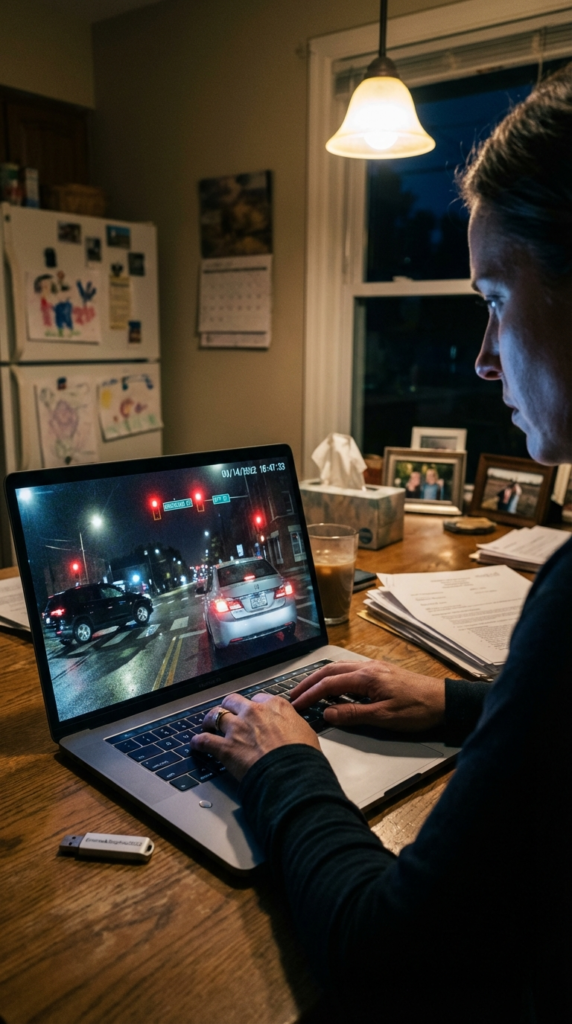
My laptop sat on the kitchen table where I’d left it that morning. The house was silent—it had been silent for three years now, ever since there were no more little feet running up the stairs, no more cartoon theme songs blasting from the TV, no more laughter echoing through the rooms.
I plugged in the drive. My hands were shaking so badly I could barely type the password Rebecca had written on a tiny slip of paper: Emma&Sophie2022.
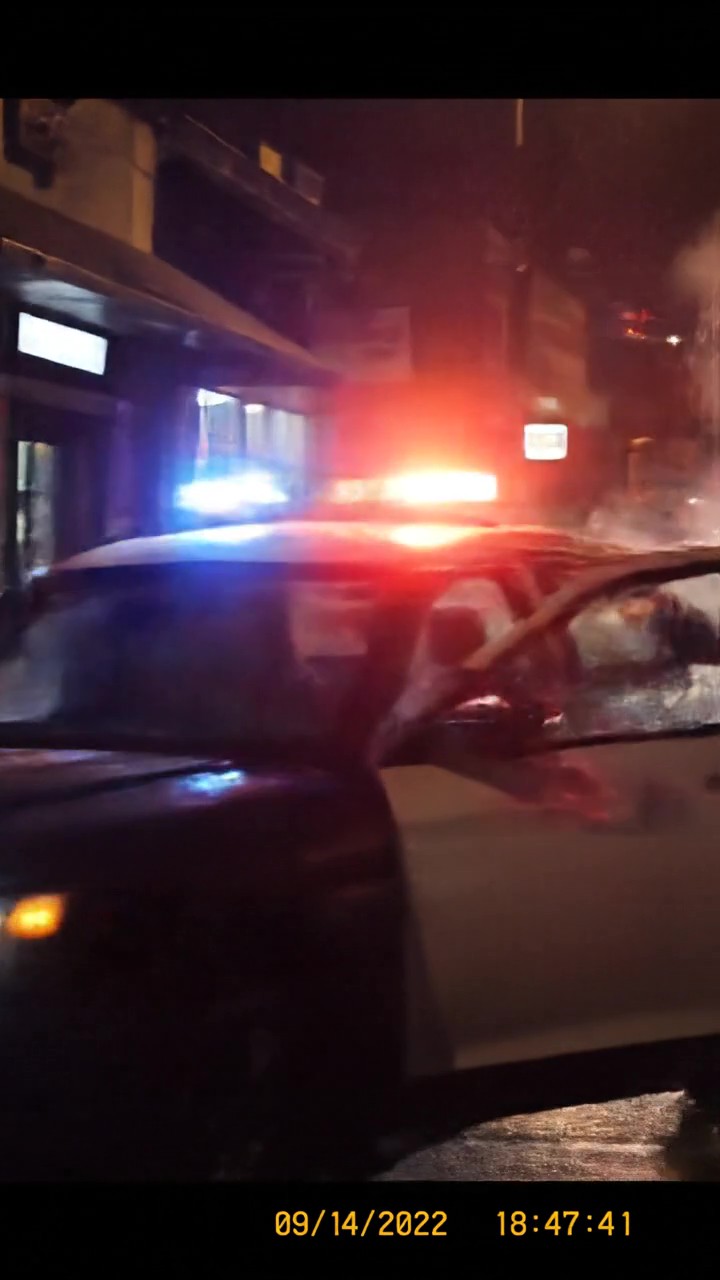
The file opened. High-definition video from the city bus dashcam, timestamp September 14th, 2022, 6:47 PM.
I watched my husband’s silver Honda sitting at the red light. I could see Emma and Sophie in the backseat through the window, still singing, still happy, still alive with their whole lives ahead of them.
Then came the black SUV.
But it wasn’t what I expected to see that made me gasp. It was what happened after.
The video showed everything. Brandon Hale climbing out of his demolished SUV, stumbling, clearly intoxicated. But then—and this is the part they’d hidden—a police car arrived within ninety seconds. The first responder.
Officer David Mitchell. I recognized him from the case file.
What happened next was captured in crystal-clear detail. Mitchell approached Brandon, talked to him for several minutes, then walked back to his patrol car. Brandon pulled out his phone. Four minutes later, another car arrived. A man in a suit got out, talked to Mitchell, then talked to Brandon.
Then I watched Mitchell take out his phone and make a call. Two minutes later, a different officer arrived and officially “took over” the scene. Mitchell left. The man in the suit left.
But before they left, I saw Mitchell reach into his patrol car and remove something. The video zoomed slightly—the bus driver must have been filming on purpose—and I could see it clearly.
A dashcam SD card.
Mitchell pocketed it and drove away.
The Connection
I paused the video, my heart hammering in my chest. I went back to my case files—the mountains of paperwork I’d kept from the trial. Witness statements. Evidence logs. Police reports.
Officer David Mitchell. First responder. Gave statement that traffic camera was already malfunctioned when he arrived. Testified that he checked for dashcam footage from nearby vehicles and found none.
He’d lied. He’d destroyed evidence. But why?
I kept digging. Social media. Public records. News articles.
And then I found it.
A photo from two years before the accident. A charity golf tournament. Brandon Hale and his father, Richard Hale, owner of Hale Construction. Standing with them, holding a oversized check for the Police Benevolent Association, was Officer David Mitchell.
Another photo from a year before that. Same tournament. Same people.
They knew each other. They were friends.
Building My Case
For the next two weeks, I became obsessed. I barely slept. I barely ate. I compiled everything.
I tracked down the man in the suit from the video. Facial recognition software and some help from a private investigator I hired gave me his name: Thomas Waverly. Brandon Hale’s attorney’s private investigator.
I found Rebecca’s backup copy of the server logs from the prosecutor’s office. Someone had ordered the dashcam footage deleted three days after the accident. The order came from high up—not Hutchins, but his boss, the DA himself.
I found campaign finance records. Richard Hale had donated the maximum allowed amount to DA Morrison’s campaign. Multiple times. Through different LLCs he controlled.
I found more traffic camera footage from other intersections that night, showing Brandon’s SUV running two other red lights on his way to the one where he killed my family.
And I found testimony from the bar where he’d been drinking. The bartender had originally given a statement saying Brandon was clearly intoxicated and that he’d tried to stop him from driving. That statement never made it into the trial evidence. A new statement appeared instead—one saying Brandon “seemed fine” and “only had a couple drinks.”
I found a deposit in that bartender’s account two weeks later. Fifteen thousand dollars.
This wasn’t just corruption. This was a conspiracy.
Going Public
I could have gone back to the police. But the police were part of the cover-up. I could have gone back to the DA. But he’d buried the case.
So I did something else.
I called every news station in the city. I sent the video to investigative journalists. I posted it on social media with a detailed thread explaining everything I’d found.
And I sent copies of everything to the FBI.
Then I waited.
The first news story broke within forty-eight hours. Local station, evening news. “New Evidence Emerges in Fatal DUI Case.” They showed clips of the dashcam video—blurred for sensitivity, but clear enough to see what happened.
The story went viral overnight.
National news picked it up. Cable news shows called me for interviews. My inbox exploded with messages from lawyers, victims’ rights advocates, journalists wanting to investigate further.
Officer David Mitchell was suspended pending investigation. Thomas Waverly lawyered up immediately. DA Morrison issued a statement about “taking allegations seriously” and “cooperating fully” with federal investigators.
And Brandon Hale’s smirk finally disappeared.
The Federal Investigation
The FBI doesn’t mess around when there’s evidence of corruption and obstruction of justice. They moved fast.
Within three weeks, they had Mitchell in custody. He’d been offered a deal—testify against everyone involved, get a reduced sentence. He took it. He confirmed everything. The phone call from Richard Hale. The payment into an offshore account. The destroyed evidence.
Waverly was next. He’d been coordinating the whole cover-up, communicating between Richard Hale and various people who needed to be paid off or intimidated. His phone records and emails were a roadmap of corruption.
DA Morrison tried to claim ignorance, but his campaign finance records and calendar told a different story. Meetings with Richard Hale. Dinners. Golf games. And most damning—a meeting three days after the accident where the decision was made to “handle” the Hale case quietly.
The bartender flipped too, once he understood he was facing charges himself. He admitted taking the money to change his statement.
And Richard Hale? He went down fighting, hiring the best legal team money could buy. But you can’t fight video evidence. You can’t fight server logs. You can’t fight a paper trail of bribes and payoffs.
Justice, Finally
Brandon Hale was retried with all the evidence I’d uncovered. This time, there was no doubt. The dashcam footage showed him running the red light at sixty-three miles per hour. The other camera footage showed his pattern of reckless driving that night. The bartender’s original testimony confirmed his intoxication level.
The jury came back in two hours. Guilty on all counts. Three counts of vehicular manslaughter while intoxicated. Obstruction of justice. Tampering with evidence.
The judge sentenced him to twenty-five years. No parole eligibility for fifteen.
Officer Mitchell got seven years for evidence tampering and obstruction. Thomas Waverly got twelve for his role coordinating the conspiracy. The bartender got probation and community service for cooperating.
DA Morrison was forced to resign and faced multiple felony charges. His trial is still ongoing.
Richard Hale, the man who orchestrated the entire cover-up to protect his son, got fifteen years for corruption, bribery, and obstruction of justice.
The Aftermath
People ask me if I feel better now. If getting justice brought me closure.
The truth is, nothing will bring back Mark, Emma, and Sophie. No prison sentence will give me back the life we were supposed to have. I’ll never watch my daughters grow up, go to prom, graduate college, get married. I’ll never grow old with my husband.
But what I did do was make sure that their deaths meant something. I exposed a system that was willing to let a killer walk free because his father had money and connections. I brought down corrupt officials who betrayed the public trust.
And I made sure that no other mother would have to sit in a courtroom and watch her family’s killer smirk as he walked away.
Rebecca, the paralegal who gave me the USB drive, lost her job. But she found a new one almost immediately—a victims’ rights organization hired her as an investigator. She told me she sleeps better now.
I started a foundation in my daughters’ names. We push for dashcam requirements on all city vehicles. We advocate for stronger DUI laws. We help other victims navigate the justice system when it fails them.
Sometimes I watch that video Mark sent me from the car. Emma and Sophie singing, so happy and alive. It hurts every single time. But I watch it anyway, because I need to remember what I was fighting for.
I was just a grieving mother who refused to let the system crush me. Who refused to let money and power determine what justice looked like.
The USB drive that Rebecca gave me is in a safety deposit box now, along with all the original evidence. Insurance, in case anyone ever tries to make this disappear again.
But mostly, I keep it as a reminder. A reminder that sometimes the truth is hidden, but it’s never gone. Sometimes you have to fight for justice yourself. And sometimes, a mother’s love for her children is powerful enough to bring down an empire of corruption.
My family deserved justice. And I made damn sure they got it.