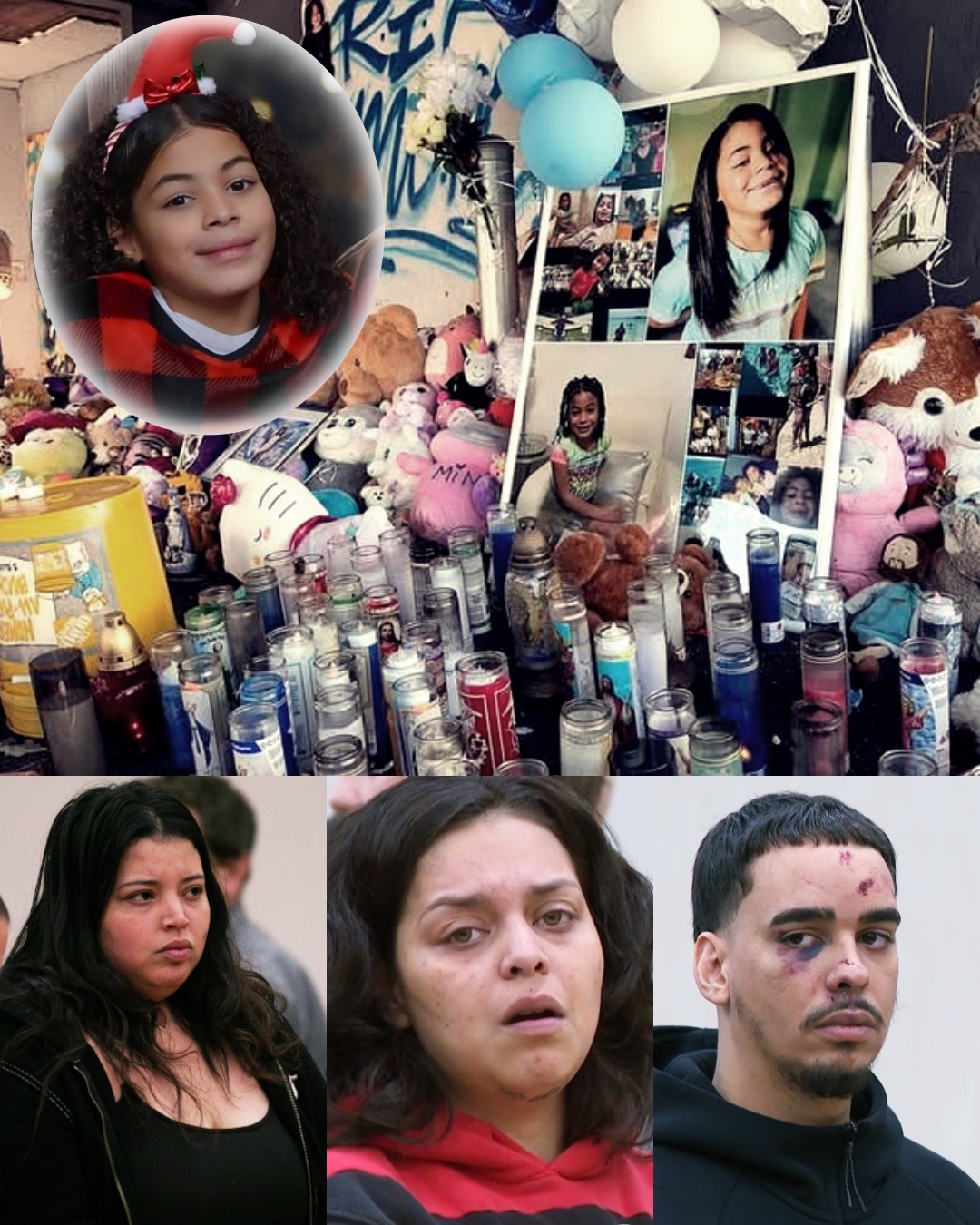
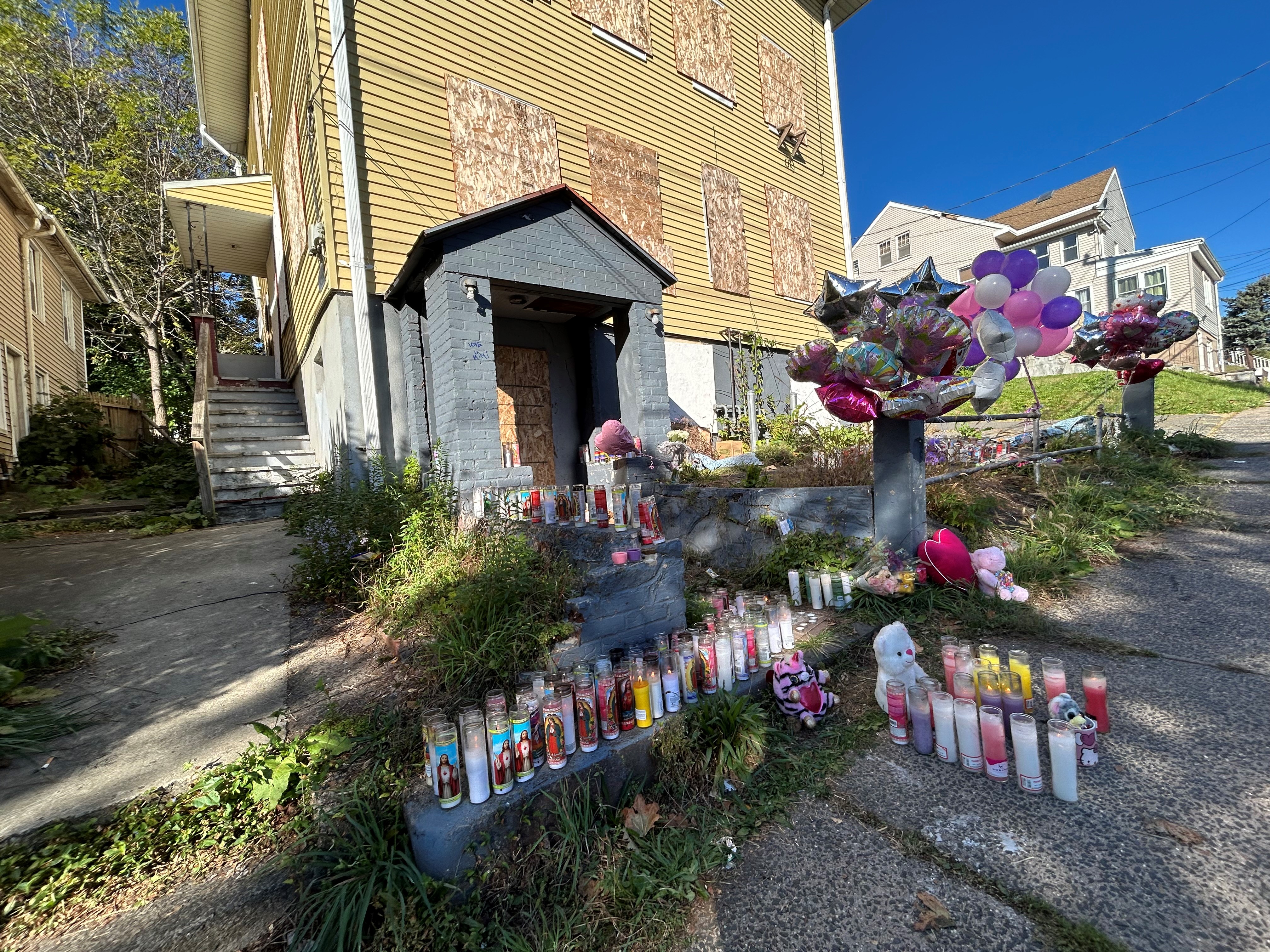
In the quiet streets of Connecticut, in a town that had long prided itself on safety and community, horror arrived quietly, almost imperceptibly. On October 8, 2024, a small plastic storage bin outside an abandoned house on Clark Street revealed a truth too painful to comprehend: the lifeless body of 11-year-old Jacqueline “Mimi” Torres-Garcia.
Mimi, once a bright-eyed, curious child, had been starved, restrained, and neglected by the people who should have loved and protected her. The discovery of her body sent shockwaves through the community, igniting grief, anger, and urgent calls for justice.

According to local law enforcement reports, the grisly scene was brought to light after authorities received an anonymous tip. The caller stated that Jonatan Nanita, the boyfriend of Mimi’s mother, had transported a tote containing the child’s body from a cemetery to the abandoned property on Clark Street. The tip set off a chain of investigations that would reveal the depth of cruelty Mimi endured in her final weeks.
Police quickly identified those responsible. Karla Garcia, Mimi’s mother, and her boyfriend, Jonatan Nanita, were charged with murder. Additionally, Jacqueline’s aunt, Jackelyn Garcia, was charged with child cruelty and unlawful restraint, based on her involvement in the abuse. Newly released warrants disclosed chilling admissions: Karla Garcia confessed to police that she had stopped feeding Mimi two weeks before her death and had restrained her with zip ties as punishment.

The official timeline of events paints a harrowing portrait of abuse. On September 19, 2024, Jacqueline Torres-Garcia died. Yet her body was not discovered until weeks later, hidden away in a storage container, transported across locations, and left outside a dilapidated, abandoned house. During that time, Mimi’s absence went unnoticed, or perhaps ignored, by those who should have safeguarded her.
Investigators describe the level of neglect and violence as unimaginable. An 11-year-old child, the size and innocence of a preteen, had been subjected to deliberate starvation, physical restraint, and psychological torment. Zip ties, an instrument not meant for human restraint, became tools of punishment in a household where love should have been constant. For Mimi, every day had been a battle for survival, fought against the very people entrusted to her care.

Karla Garcia and Jonatan Nanita are facing the full weight of the law. Police allege that their actions were not only negligent but deliberate, culminating in the young girl’s death. The addition of charges against Jackelyn Garcia highlights the disturbing reality that the abuse extended beyond immediate parental responsibility, implicating other adults within Mimi’s family network.
In the aftermath of the discovery, the town has struggled to process the layers of grief, fear, and disbelief. Neighbors, friends, and community members described Jacqueline as a quiet, cheerful child who loved school, play, and the simple joys of childhood. The tragedy forced residents to confront the uncomfortable truth that abuse and neglect often hide behind closed doors, invisible to the outside world.

Law enforcement officials have emphasized the meticulous nature of their investigation. Castle Hills Police and Connecticut authorities coordinated to document the crime scene, trace the movements of the perpetrators, and secure forensic evidence from the storage bin, the abandoned property, and transportation vehicles. Each piece of evidence is crucial to building a case that reflects both the severity and premeditated nature of the abuse.
The psychological and emotional toll on first responders and investigators has been profound. Officers who first arrived on Clark Street recall the shock of seeing a child’s body in such conditions, combined with the realization that those responsible were members of her own family. For law enforcement professionals trained to encounter difficult scenes, the case of Mimi Torres-Garcia stands out as particularly harrowing.

Community members have expressed outrage, calling for stricter child welfare enforcement and more stringent monitoring of at-risk children. Social workers and child protection agencies are also reviewing their procedures, examining whether warning signs were overlooked or insufficiently addressed before tragedy struck. The death of an 11-year-old under circumstances that could have been mitigated highlights systemic vulnerabilities, raising urgent questions about the efficacy of child protection mechanisms.
Karla Garcia’s confession to law enforcement revealed the full depth of cruelty Mimi endured. She admitted to deliberately withholding food for two weeks—a decision that directly led to the child’s death. Additionally, she restrained the girl with zip ties, an extreme measure that not only caused physical pain but also psychological trauma. The deliberate nature of these actions underscores the severity of the charges she now faces.

Jonatan Nanita, the boyfriend, is equally implicated. Investigators allege that he was complicit in the abuse and, at times, took part in the restraint and neglect of the child. His role in transporting Mimi’s body after her death further implicates him, demonstrating knowledge of the crime and a disturbing willingness to conceal evidence.
Jackelyn Garcia, the aunt, although not charged with murder, faces serious accusations. Authorities allege that she contributed to the abuse by either participating in or permitting the cruel treatment, as well as unlawfully restraining Mimi. Her involvement expands the circle of culpability, showing that the environment surrounding Mimi had become a network of danger rather than protection.
The impact on surviving family members is profound and multifaceted. Relatives have described feelings of shock, disbelief, and guilt that someone so young, so full of life, could meet such a violent and preventable end. Family dynamics, often complex and layered, now bear the weight of tragedy, compounded by the legal consequences faced by multiple members of the household.

In the broader community, schools, neighbors, and child advocacy organizations have mobilized to provide support to those affected by the case. Local counselors have offered assistance to children and families shaken by the news, recognizing that the trauma reverberates beyond the immediate household. For many, the story of Mimi Torres-Garcia serves as both a cautionary tale and a call to action.
Child welfare experts note that abuse often escalates in private spaces, hidden from view, and exacerbated by stress, financial hardship, or toxic family dynamics. The Torres-Garcia case exemplifies how quickly a vulnerable child’s environment can transform into one of danger. The importance of reporting, monitoring, and intervention is underscored by the tragic outcome.
Law enforcement officials have also stressed the role of anonymous tips and community vigilance. It was the tipster who led authorities to the abandoned property, initiating the chain of events that revealed the crime. This emphasizes that community awareness, even in small actions, can be crucial in preventing or uncovering abuse.

As the investigation continues, authorities are analyzing timelines, interviewing witnesses, and tracing the movement of evidence. The goal is not only to prosecute those responsible but to ensure that no detail is overlooked. Every statement, confession, and piece of physical evidence contributes to building a full picture of the abuse, neglect, and criminal behavior that led to Mimi’s death.
Beyond the legal ramifications, there is the enduring question of how such abuse could occur undetected for so long. Child protective services and related agencies are conducting internal reviews to understand whether warning signs were present and whether they were missed or insufficiently addressed. The case may lead to policy changes, training enhancements, or procedural revisions aimed at preventing future tragedies.
The human element of Mimi’s story is inescapable. Eleven years old—an age of innocence, growth, and discovery. A child should be playing, learning, laughing, and forming bonds with peers. Instead, Mimi endured deprivation, restraint, and ultimately, death at the hands of those charged with protecting her. Her story challenges communities to reflect on the vulnerability of children and the responsibilities of adults entrusted with their care.
Public reaction has been one of grief and outrage. News outlets across Connecticut and the nation have covered the case extensively, highlighting the severity of the abuse and the failings that allowed it to escalate. Social media, local forums, and community meetings have become platforms for discussion, remembrance, and advocacy, as citizens grapple with the tragic loss of a young life.

At the same time, there is a call for compassion for first responders, law enforcement personnel, and social workers who encounter such cases. Witnessing the consequences of abuse firsthand takes a psychological toll, often requiring long-term support and counseling. For the officers who first arrived at the abandoned property, the memory of Mimi’s body, the zip ties, and the evidence of starvation will remain a vivid reminder of the stakes involved in child protection.
As the legal process unfolds, prosecutors are preparing to present evidence demonstrating the deliberate nature of the abuse, the complicity of multiple adults, and the preventable circumstances that led to Jacqueline’s death. The court will examine confessions, witness testimonies, forensic analysis, and timelines, all of which will contribute to the pursuit of justice.
In examining the broader implications, child advocacy organizations are emphasizing the importance of education, awareness, and intervention. Signs of abuse, often subtle, can include withdrawal, malnourishment, fear of adults, or unexplained injuries. Reporting suspected abuse is critical. Communities must work together to protect children before tragedy strikes.
For Jacqueline “Mimi” Torres-Garcia, no interventions came in time. Her life, full of potential and promise, was cut short by deliberate cruelty. Her story is a stark reminder that the most vulnerable members of society—children—depend on both familial and societal structures for protection. When those systems fail, the consequences can be devastating.
Family, friends, and community members now grapple with grief that will not easily be soothed. Vigils, memorials, and tributes are organized to honor Mimi’s life, ensuring that she is remembered not solely as a victim but as a child who deserved love, care, and opportunity. Her memory becomes a catalyst for change, encouraging adults and institutions alike to prioritize child safety and accountability.
The role of the media in such cases is also significant. Responsible reporting ensures that the facts are conveyed accurately, that victims are honored, and that the public remains informed. Coverage of the Torres-Garcia case has brought national attention to the issues of child abuse, familial neglect, and the legal consequences of such actions, highlighting the need for vigilance at all levels of society.

Mimi’s aunt, Jackelyn Garcia, now facing charges herself, adds another layer of complexity to the tragedy. Her alleged involvement suggests that the environment in which Mimi lived was not isolated in terms of danger, but part of a broader pattern of neglect and abuse. Understanding these dynamics is critical for law enforcement, social services, and policymakers seeking to prevent similar outcomes in the future.
As the investigation proceeds, authorities emphasize that justice for Mimi is not only about criminal accountability. It is about learning from failure, strengthening child protection mechanisms, and ensuring that no other child is subjected to similar circumstances. Policies regarding monitoring, intervention, and reporting will likely be scrutinized and revised in the wake of this tragedy.
For the public, Mimi’s story is a sobering reminder that abuse can hide in plain sight, that children’s suffering is sometimes unseen until it is too late. Vigilance, reporting, and proactive community engagement are essential in preventing abuse from escalating to fatal consequences. Every neighbor, friend, teacher, and relative has a role in safeguarding vulnerable children.
The legal proceedings against Karla Garcia, Jonatan Nanita, and Jackelyn Garcia will be closely watched, both for the pursuit of justice and for their potential to influence policy and practice. Prosecutors are expected to highlight the deliberate nature of the abuse, the premeditated restraint, and the starvation that directly contributed to Jacqueline’s death. Defense arguments, procedural questions, and evidentiary disputes will shape the courtroom narrative, but the public’s focus remains on honoring the child whose life was stolen.
In reflecting on Mimi’s short life, it is impossible not to imagine the milestones she never reached: school graduations, birthdays, friendships, and first steps toward adulthood. Each lost moment underscores the cruel reality of abuse and the devastating consequences of neglect. The memory of her laughter, curiosity, and potential will forever remain etched in the hearts of those who mourn her.

Ultimately, the death of Jacqueline “Mimi” Torres-Garcia is a tragedy that resonates far beyond the streets of Clark Street. It serves as a clarion call for vigilance, intervention, and systemic accountability. It reminds communities that children depend on the adults around them for survival, care, and protection. When those responsibilities are abandoned, the cost is irreparable.
Mimi’s story will not be forgotten. Her name, her life, and the horrors she endured are now part of a national conversation about child protection, familial responsibility, and legal accountability. For every child who suffers in silence, her memory is a reminder that awareness, action, and compassion can—and must—make a difference.
While no legal outcome can restore her life, the pursuit of justice, the scrutiny of the systems that failed her, and the education of communities may prevent other children from enduring a similar fate. Jacqueline Torres-Garcia, in her brief existence, has already changed the conversation, leaving a legacy that demands action, empathy, and vigilance.