The Performance
I was sitting in the fourth row of Jefferson Elementary School’s packed auditorium on a Friday evening in October, surrounded by 300 parents, teachers, and students, watching my nine-year-old daughter Lily walk onto the stage for her talent show performance, when I felt my chest tighten with a mixture of pride and terror so intense I thought I might pass out.
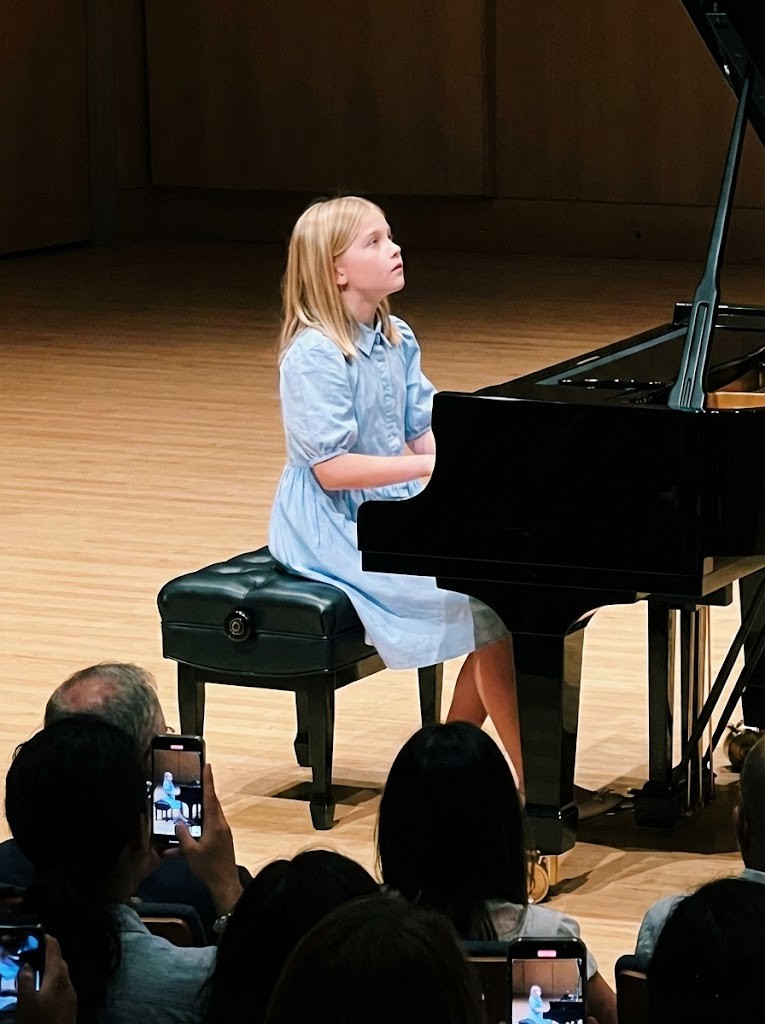
Lily looked impossibly small up there under the harsh stage lights, wearing the simple white dress we’d bought together specifically for this performance. Her dark hair was pulled back in a neat bun. Her hands were clasped in front of her, trembling visibly even from where I sat.
She was terrified. I knew because I knew my daughter—knew every expression, every gesture, every sign of the anxiety that had defined so much of her young life.
Lily had autism spectrum disorder and severe generalized anxiety disorder. Social situations were torture for her. Being the center of attention was her worst nightmare. For years, she’d barely been able to speak to anyone outside our immediate family without having a panic attack.
Music had been her escape. Her therapy. Her safe place where words didn’t matter and social rules didn’t apply. She could express everything she felt through singing—joy, pain, fear, hope—without having to explain it to anyone.
Her music therapist, Dr. Sarah Chen, had been working with her for eighteen months to build up the courage to perform in public. “She has a gift,” Sarah had told me six months ago. “A real, extraordinary gift. But she needs to share it. She needs to know that her voice matters.”
So we’d been building toward this moment. This talent show. This chance for Lily to step out of her shell and show the world what she could do.
She’d chosen “Ave Maria”—the classical Schubert version, a cappella. No backing track. No accompaniment. Just her voice, naked and vulnerable, in front of everyone she knew.
“That’s too ambitious,” her teacher Mrs. Patterson had said. “Maybe choose something simpler? More fun? The other kids are doing pop songs and magic tricks.”
But Lily had been adamant. “Ave Maria” was her favorite. The song that had gotten her through her darkest days. She’d practiced it every single morning for three months, waking at 6 AM to rehearse in our living room before school.
Now she stood at that microphone, looking like she might bolt off the stage at any second.
The auditorium quieted. Parents pulled out their phones to record. Kids stopped fidgeting.
Lily closed her eyes, took a deep breath, and began to sing.
“Ave Maria…”
Her voice started softly, almost tentatively. But within seconds, it transformed. Clear as crystal, pure as light, soaring through the auditorium with a power and beauty that seemed impossible from such a small body.
I watched the audience’s faces change. Confusion first—this wasn’t what they’d expected. Then surprise. Then something like awe.
Lily’s voice climbed higher, hitting notes with perfect pitch and controlled vibrato. Her eyes remained closed, her face serene, lost completely in the music. This was where she was safe. Where anxiety couldn’t touch her. Where she could be purely, perfectly herself.
The emotion in her voice was heartbreaking and beautiful. I knew where it came from—all the pain she’d endured, all the struggles, all the times she’d been different and excluded and misunderstood. It was all there in the music, transformed into something transcendent.
She held the final note—long, sustained, absolutely perfect—then let it fade into silence.
She opened her eyes, returned to herself, and took a small, nervous bow.
And then… nothing.
Complete, crushing silence.
No applause. No cheers. Just uncomfortable quiet and the sound of people shifting in their seats, clearing their throats, looking at each other with uncertainty.
I felt my heart drop into my stomach. Felt the exact moment my daughter’s face began to crumple. Saw her eyes scan the audience, looking for approval, for acknowledgment, for anything—and finding only awkward silence.
The whispers started. I heard them clearly even four rows back:
“That was… weird.”
“Too serious for a talent show.”
“She should have done something fun, like the other kids.”
“Poor thing, that was so awkward.”
“My daughter said she’s the weird girl who eats lunch alone.”
Lily’s face was red now, tears forming in her eyes. She was frozen on stage, waiting for the applause that signaled she could leave, but it wasn’t coming. The silence stretched on, excruciating, eternal.
The principal, Mr. Henderson, started to walk toward the microphone to move things along, to end my daughter’s humiliation and usher her off stage.
I was halfway out of my seat, ready to start clapping by myself, ready to do anything to end this nightmare—
When a voice from the back of the auditorium cut through the silence like a knife.
“Wait.”
Everyone turned. A woman in her sixties, elegantly dressed in a burgundy blazer and pearls, was standing in the back row. She had silver hair styled in a neat bob and an air of authority that commanded immediate attention.
“Before everyone leaves,” she said, her voice measured and clear, carrying easily through the silent auditorium, “I need to say something. My name is Dr. Helen Matsuda. I teach classical voice at the Juilliard School in New York City. I’ve been teaching for thirty-seven years. I’ve trained opera singers who’ve performed at the Met, Broadway stars, Grammy winners, and artists who’ve sung for presidents and royalty.”
The whispers stopped completely. Every single person in that auditorium was staring at her now, including my daughter, who stood frozen on stage.
“I came here tonight,” Dr. Matsuda continued, walking slowly down the center aisle toward the stage, “because my grandson Timothy is in the third-grade chorus. They performed earlier—very cute, very age-appropriate songs about animals and seasons. I expected to sit through an hour of adorable but unremarkable children’s performances, take photos of Timothy, and go home.”
She reached the front of the auditorium and stopped, looking up at Lily.
“And that’s exactly what I got—until this young lady stepped onto that stage.”
The silence was complete now. You could hear a pin drop.
“What is your name, sweetheart?” Dr. Matsuda asked gently.
“L-Lily,” my daughter whispered, her voice barely audible through the microphone.
“Lily, that was one of the most technically perfect performances of ‘Ave Maria’ I have heard from anyone under the age of twenty. Your pitch was absolutely flawless. Your vibrato was controlled, mature, and appropriate. Your breath support was exceptional—you held that final note for twelve seconds with zero wavering. Your dynamics were subtle and emotionally intelligent. And your tone—” She paused. “Your tone was pure and clear in a way that most singers can’t achieve even after years of professional training.”
Lily stared at her, mouth open, tears streaming down her face now.
Dr. Matsuda turned to face the audience, her expression somewhere between disappointment and disgust.
“I don’t know why none of you clapped for this child. Perhaps you expected something more ‘fun.’ Perhaps you thought a nine-year-old singing classical music a cappella was too serious, too pretentious, too different from the pop songs and dance routines that came before. Perhaps you simply don’t know enough about music to recognize what you just heard.”
Her voice grew sharper.
“But what I heard—what I, a professional voice instructor with nearly four decades of experience training some of the best singers in the world, just witnessed—was raw, extraordinary talent. The kind of natural ability that I see maybe once every five years in Juilliard auditions. The kind of gift that most singers would quite literally kill to possess.”
She looked back up at Lily. “You have something special, young lady. Something rare. And whether or not these people recognize it, I do. And I promise you, if you continue training and developing that voice, the whole world will recognize it too.”
My hand was over my mouth. I was sobbing openly now, not caring who saw.
Dr. Matsuda climbed the three steps onto the stage and stood beside my daughter. “Would your parents be willing to speak with me? I’d like to discuss your training, your goals, and your future. Because if you want it, Lily, you have the potential for a serious musical career. Not someday. Not maybe. You have it right now.”
I was already on my feet, rushing toward the stage. Behind me, the applause finally started—hesitant at first, then building rapidly to a roar. People were standing, clapping wildly, some crying, probably feeling guilty, probably trying to save face.
But I didn’t care about them anymore. I only cared about Lily, who was staring at Dr. Matsuda with an expression of wonder and disbelief, tears streaming down her face.
“Really?” Lily whispered. “You really think I’m good?”
“I think you’re exceptional,” Dr. Matsuda said firmly. “And I never lie about talent. I’ve told plenty of hopeful singers they don’t have what it takes. But you? You absolutely do.”
I reached the stage, pulling Lily into my arms while the applause thundered around us. She was shaking and crying and laughing all at once.
“Mom,” she sobbed into my shoulder. “She said I was good. The lady from Juilliard said I was good.”
“I know, baby. I know. I heard her. You were amazing.”
Dr. Matsuda smiled at us both, then looked at me with knowing, kind eyes. “You’re her mother?”
“Yes. I’m Diane Foster. This is Lily.”
“It’s lovely to meet you both. Your daughter is remarkably talented.” She paused, studying my face, then Lily’s. “Your daughter has been through something difficult, hasn’t she? I can hear it in her voice. That kind of emotional depth—that ability to convey pain and hope simultaneously—it doesn’t come from nowhere. She’s singing from experience.”
I nodded, fresh tears spilling over. “She has. We both have. It’s been… a hard few years.”
“I suspected as much. The best artists often are the wounded ones who learned to turn their pain into beauty.” She pulled a business card from her purse. “Please call me. Let’s discuss Lily’s training and potential. I come to Portland four times a year to visit Timothy and his parents. I’d be happy to work with Lily during those visits and recommend excellent local instructors for the interim.”
The principal was rushing over now, along with Mrs. Patterson and what seemed like half the audience. Everyone wanted to talk to the Juilliard professor. Everyone wanted to suddenly tell me how talented Lily was, how they’d always known she was special.
Convenient, since thirty seconds ago they’d sat in judgmental silence while my daughter’s heart broke.
But Dr. Matsuda held up a hand, stopping the approaching crowd. “I need a moment with this family, please. They’ve had quite an emotional evening.”
She led us to the side of the stage, away from the chaos, and spoke quietly.
“Lily, do you enjoy singing?”
Lily nodded vigorously. “It’s my favorite thing. When I sing, everything feels… quiet. Inside my head, I mean. Usually everything is too loud and scary. But when I’m singing, it all goes away.”
Dr. Matsuda nodded knowingly. “Music is your safe place. I understand. Many of my best students feel the same way.” She looked at me. “Has Lily been diagnosed with anything? Anxiety? Something on the autism spectrum?”
I hesitated, then nodded. “Both. High-functioning autism and severe anxiety. She also has sensory processing issues. She’s been in therapy for years.”
“And music therapy specifically?”
“Yes. With Dr. Sarah Chen. Music has been transformative for her.”
“I’m not surprised. Music therapy can be incredibly powerful, especially for neurodivergent children. And clearly, Lily has found her voice—literally and figuratively.” Dr. Matsuda smiled at Lily. “I want you to know something important, sweetheart. Having autism doesn’t limit your potential as a singer. Some of the most brilliant musicians I’ve known have been neurodivergent. In fact, the intense focus and pattern recognition that often comes with autism can be a tremendous advantage in music.”
Lily’s eyes were huge. “Really?”
“Really. Don’t let anyone tell you that being different means you can’t achieve great things. Often it means exactly the opposite.”
She handed me her card again. “Call me next week. We’ll talk about next steps. But tonight, just celebrate. Your daughter did something incredibly brave. She shared her gift with the world, even though it terrified her. That takes more courage than most adults possess.”
We thanked her repeatedly, and she finally returned to her seat. The rest of the talent show continued, but I didn’t pay attention to any of it. I just held Lily’s hand, watching her process what had just happened, watching the disbelief slowly transform into cautious joy.
When the show ended and we walked to the car, she said quietly, “Mom, I didn’t think anyone would like it. I thought I did it wrong because nobody clapped.”
“Baby, you did it perfectly. Those people didn’t clap because they didn’t understand what they were hearing. But Dr. Matsuda did. She knows talent when she hears it. And she said you’re exceptional.”
“Do you think I could really sing when I grow up? Like, as a job?”
“I think you can do anything you want, Lily. Anything at all.”
That night should have been perfect. Should have been the end of the story—talented girl gets discovered, future looks bright, happily ever after.
But it was only the beginning. Because what happened over the next three years taught me that sometimes, when you shine too brightly, people who’ve been sitting in the dark will do anything to dim your light.
The Backstory: Why Lily Needed Music
To understand why that moment at the talent show mattered so much, you need to understand where Lily and I had come from. Why music wasn’t just a hobby for her—it was survival.
My daughter wasn’t born anxious. She was born happy, curious, and bright. But at age three, everything changed when my husband—Lily’s father, Marcus Foster—revealed who he really was.
Marcus had always been controlling. Demanding. But I’d dismissed it as intensity, as ambition, as him just wanting the best for our family. I’d made excuses because I’d loved him and wanted to believe we were happy.
Then Lily started showing signs of autism. Delayed social development. Sensory sensitivities. Difficulty with transitions and changes. We got her evaluated, got the diagnosis, started therapy and interventions.
Marcus’s response? “This is your fault. You coddled her. You made her this way. A child of mine shouldn’t be defective.”
Defective. That was his word for our daughter.
It got worse from there. He refused to accept the diagnosis. Refused to accommodate Lily’s needs. Would force her into situations that triggered her anxiety—loud parties, chaotic environments, overwhelming sensory experiences—insisting she needed to “toughen up” and “act normal.”
When she’d have meltdowns, he’d punish her. When she’d struggle with social situations, he’d berate her. When she couldn’t do something the way he thought she should, he’d call her stupid, damaged, an embarrassment.
I tried to protect her. Tried to shield her from his cruelty. Tried to get him to go to therapy, to educate himself about autism, to just love our daughter as she was.
He refused. And he redirected his anger at me. If I defended Lily, I was “enabling her defectiveness.” If I tried to leave, he’d threaten to fight for custody and “fix” Lily himself, without my interference.
I was trapped. Terrified. Lily was suffering. I was suffering. But I didn’t see a way out that didn’t make things worse.
Then, when Lily was five, she discovered singing.
We were at home, and the radio was playing some classical piece. Lily started humming along—perfectly in tune, matching every note. I was stunned. I played other music. She matched it all, effortlessly.
“Lily, how are you doing that?”
She shrugged. “The music tells me what to sing.”
I got her into music classes. Then voice lessons. The transformation was immediate and magical. When Lily sang, her anxiety disappeared. Her struggles faded. She was confident, happy, free.
Music became her language. When she couldn’t find words to express her feelings, she’d sing. When she was overwhelmed, she’d hum quietly to self-regulate. It was her superpower.
But Marcus hated it. “Stop making those noises. You sound ridiculous. Nobody wants to hear you.”
He’d mock her singing. Criticize her choice of songs. Forbid her from practicing when he was home because it “gave him a headache.”
Lily started singing only when he wasn’t there. Started hiding her gift like it was something shameful.
That’s when I knew I had to leave. My daughter had found something that made her feel whole, and her father was trying to crush it. I couldn’t let that continue.
I filed for divorce when Lily was six. The ugliest year of my life followed. Marcus fought for custody, not because he wanted Lily—he’d made it clear he saw her as defective—but because he couldn’t stand losing. Couldn’t stand me “winning.”
The custody evaluations were brutal. Marcus painted me as overprotective, as enabling Lily’s issues instead of fixing them. His lawyer argued that Lily needed “structure and discipline,” not accommodation.
But Lily’s therapists testified. Her teachers testified. They described Marcus’s treatment of her, his refusal to accept her diagnosis, his harmful parenting.
The judge ruled in my favor. Full custody to me. Supervised visitation only for Marcus.
Marcus promptly moved to California and disappeared from our lives. Hasn’t seen Lily in three years. Sends the minimum required child support and nothing else.
Lily grieved. Blamed herself. Thought if she’d been “normal,” her dad would have stayed.
That’s when Dr. Sarah Chen entered our lives. Music therapist specializing in neurodivergent children. She helped Lily understand that none of it was her fault. That her autism wasn’t something to fix or hide. That her voice—literal and figurative—mattered.
“Music can heal what words cannot,” Sarah told me. “Lily is processing trauma through singing. Let her. It’s healthy and powerful.”
Over two years, Lily transformed. Music gave her confidence. Purpose. Joy. She made slow but steady progress with her social anxiety. Made a few friends. Started to believe in herself.
And then came the talent show. The chance to share her gift publicly. To prove to herself that being different didn’t mean being less.
She’d been so brave. So proud of herself. So hopeful.
And those people had sat in silence, judging her for being too serious, too different, too much.
If Dr. Matsuda hadn’t been there, if that one person hadn’t stood up and validated Lily’s gift, my daughter might have been crushed. Might have internalized that rejection and hidden her voice again.
But Dr. Matsuda had been there. Had seen Lily. Had saved her.
For that, I was eternally grateful.
What I didn’t know yet was that the fight wasn’t over. That Lily shining bright would threaten people who preferred she stay in the shadows.
The Three Years That Followed
After the talent show, everything changed for Lily—mostly for the better, but not entirely.
Dr. Matsuda became her mentor. She visited Portland quarterly and worked with Lily intensively during those visits. She also connected us with one of her former students, a professional opera singer named Maria Rodriguez who lived in Portland and agreed to give Lily weekly lessons.
Lily blossomed. Her technical skills improved rapidly. Her confidence grew. She started performing at local events—church services, community theater productions, nursing homes. People loved her.
She won local singing competitions. Then regional ones. At age eleven, she auditioned for Portland Youth Opera and was accepted despite being years younger than most participants.
The local news did a story about her: “Young Prodigy with Autism Finds Voice Through Classical Music.” It went viral. Suddenly everyone knew about Lily Foster, the autistic girl with the angelic voice.
Schools wanted her to perform. Organizations invited her to speak about autism and music therapy. Dr. Matsuda started talking about Lily auditioning for Juilliard’s pre-college program when she turned twelve.
My daughter was thriving. Living her dream. Proving that being different didn’t limit her—it empowered her.
But not everyone was happy about it.
Some parents at Jefferson Elementary started making comments. Jealous remarks disguised as concern.
“Isn’t this too much pressure for Lily? Given her… condition?”
“Do you really think she can handle a professional music career? With her anxiety?”
“My daughter also sings beautifully, but we don’t push her. We let her be a normal kid.”
The implication was clear: I was exploiting my disabled child. Pushing her too hard. Being a stage mom living vicariously through my daughter’s talent.
It hurt. But I ignored it. Lily was happy. That was all that mattered.
Then, in sixth grade, Lily auditioned for the middle school’s advanced choir. She was the only sixth-grader who tried out—usually it was reserved for seventh and eighth graders.
The choir director, Mrs. Eleanor Winters, was in her sixties and had taught at Jefferson for thirty years. She was beloved, respected, and absolutely convinced she knew everything about music education.
Auditions were held. Lily sang “O Mio Babbino Caro” and was flawless.
The next day, Mrs. Winters posted the advanced choir roster. Lily’s name wasn’t on it.
“There must be a mistake,” I said when Lily came home crying. “You said your audition went perfectly.”
“It did! Mrs. Winters said I had ‘nice tone’ but that advanced choir requires ‘maturity and social skills’ and she thinks I’d be more comfortable in the beginner group.”
I felt my blood pressure spike. “Did she say anything else?”
Lily hesitated. “She said that my ‘special needs’ might make it hard for me to keep up with the group’s rehearsal schedule and performances. And that she has a responsibility to all students, not just one.”
I was at the school first thing the next morning.
Mrs. Winters received me in her classroom, surrounded by music posters and inspirational quotes about teamwork.
“Mrs. Foster, I understand you’re upset, but I made the decision that’s best for all my students.”
“Lily is the most technically skilled singer who auditioned. You admitted she has nice tone—”
“Tone isn’t everything. Advanced choir requires discipline, focus, and the ability to work well in a group setting. Lily has… challenges in those areas.”
“Because she has autism? That’s what you’re saying?”
“I’m saying that accommodating one student’s special needs would be unfair to the others. Advanced choir rehearses four days a week after school and has mandatory performances, including evening concerts. Can Lily handle that schedule given her anxiety?”
“Have you asked her? Or me? Or looked at her track record of professional performances over the past two years?”
“I’m aware of Lily’s outside activities. But this is a school choir, not a solo showcase. I need students who can blend, follow directions, and function as part of a team. Lily’s… individual nature doesn’t lend itself to that.”
“Her individual nature? You mean her autism. Say it clearly.”
Mrs. Winters’s expression hardened. “I’ve been teaching choir for thirty years. I know what works. Lily would be better served in the beginner group where she can develop the social and collaborative skills necessary for ensemble singing.”
“She doesn’t need the beginner group. She needs to be challenged. She needs to be with singers at her level—”
“Her technical level may be advanced, but her social and emotional level is not. I’m making the decision I believe is best for everyone involved.”
I filed a formal complaint with the school district. Argued that this was disability discrimination. That Mrs. Winters had denied Lily appropriate accommodations and made assumptions about her capabilities based on her diagnosis.
The district sided with Mrs. Winters. They claimed that choir placement was an “artistic decision” within the director’s discretion and didn’t constitute discrimination.
Lily was devastated. Not because she needed the choir—she had plenty of other performance opportunities—but because she’d been excluded specifically because of her autism.
“Why does everyone think I can’t do things?” she asked me tearfully. “I can do everything the other kids can do. Sometimes I can do more. But they always see the autism first.”
“I know, baby. And it’s not fair. But you know what? You don’t need Mrs. Winters’s choir. You have Dr. Matsuda. You have Maria. You have performances lined up at real venues. You’re going places Mrs. Winters can’t even imagine.”
That helped. But the sting remained.
And then, in seventh grade, everything came to a head with the annual district-wide talent showcase.
The District Showcase Sabotage
The district talent showcase was a big deal. Students from all five middle schools competed. Winners got trophies, publicity, and scholarships from local businesses.
Lily had performed in it the previous year and placed second, losing only to an eighth-grade pianist who’d been playing since age three.
This year, she was the favorite to win. Everyone knew it. Her performances had only gotten better. Dr. Matsuda had coached her specifically for the showcase.
Lily chose to sing “Pie Jesu” from Fauré’s Requiem. Technically demanding, emotionally powerful, and absolutely within her capability.
She practiced obsessively. Was confident and ready.
The showcase was held at the district’s performing arts center. Two hundred people in the audience. Judges included local music teachers, professional musicians, and community leaders.
Lily drew position seven out of twelve performers. Not ideal—early enough that judges wouldn’t remember her clearly, but not late enough to leave a final impression—but workable.
She performed beautifully. Hit every note perfectly. The audience gave her a standing ovation. I was certain she’d won.
Then the results were announced.
Third place: Lily Foster.
First place: Madison Winters, an eighth-grader from Jefferson Middle School who’d sung a pop song competently but unremarkably.
Madison Winters. Mrs. Eleanor Winters’s granddaughter.
The same Mrs. Winters who sat on the judging panel.
I was furious. Went straight to the competition coordinator the next day.
“This is a clear conflict of interest. Mrs. Winters judged a competition her own granddaughter was in?”
“Judges recuse themselves from scoring their family members. Mrs. Winters didn’t score Madison.”
“But she influenced the other judges! Did you see her talking to them between performances?”
“I can’t control what judges discuss during breaks.”
“This was rigged. My daughter should have won and everyone knows it.”
“Your daughter placed third. That’s still quite an accomplishment. Perhaps you’re being overly protective because of her special needs—”
I walked out before I said something I’d regret.
Lily was heartbroken. Not about the placement—she didn’t care about trophies—but about what it represented. Another adult deciding she wasn’t good enough. Another authority figure putting her below a less-talented student.
“It’s because of the choir thing, isn’t it?” Lily said. “Mrs. Winters doesn’t like me. She thinks I’m not good enough. So she made sure I didn’t win.”
I wanted to tell her she was wrong. But I couldn’t lie.
“Some people feel threatened by your talent, Lily. Mrs. Winters is one of them. But here’s what matters: Dr. Matsuda knows you’re exceptional. Maria knows. Every professional who’s heard you knows. Mrs. Winters’s opinion is irrelevant.”
“But it doesn’t feel irrelevant. It feels like no matter how good I am, people will always see the autism first. They’ll always think I need to be held back or protected or put in special groups instead of treated like I’m actually talented.”
“Then we prove them wrong. We keep going. We keep performing. We let your voice speak for itself.”
Two weeks later, Dr. Matsuda called with news that would change everything.
“Diane, I’ve been talking to my colleagues at Juilliard. Lily is ready to audition for the pre-college program. It’s incredibly competitive—we accept less than ten percent of applicants. But I believe she has a real shot. Would you be willing to bring her to New York for the audition?”
“Of course! When?”
“Next month. I’ll coach her beforehand. If she gets in, it’s a Saturday program—intensive training with Juilliard faculty. She’d be learning alongside some of the most talented young musicians in the country.”
Lily was beside herself with excitement. Juilliard. The dream. The pinnacle.
She practiced constantly. Dr. Matsuda flew to Portland specifically to work with her. She was ready.
One week before we were supposed to fly to New York, I got a call from the school.
Mrs. Winters had filed a formal complaint alleging that I was neglecting Lily’s education in favor of her music career. That Lily was frequently absent from school for performances. That I was exploiting a disabled child. That Child Protective Services should investigate.
The accusation was absurd. Lily’s grades were excellent. She’d missed maybe six days all year for legitimate performances. There was zero evidence of neglect or exploitation.
But CPS was required to investigate. Which meant interviews, home visits, medical records reviews—a whole traumatic process that would take weeks or months.
“I can’t take Lily to New York while CPS is investigating us,” I told Dr. Matsuda, sobbing over the phone. “If I leave the state with her, it’ll look like I’m fleeing. We’ll have to postpone the audition.”
“Can you request an expedited investigation?”
“I’m trying. But the caseworker says these things take time. There’s a backlog.”
“Diane, the audition is only offered once a year. If Lily misses it, she’ll have to wait until next year. And by then, she’ll be thirteen. The program prioritizes younger students.”
I felt helpless. Trapped. Watching my daughter’s dream slip away because of a vindictive woman who couldn’t stand seeing an autistic girl succeed.
Then Dr. Matsuda did something extraordinary.
She flew to Portland. Unannounced. Walked into the CPS office and demanded to speak with the director.
“My name is Dr. Helen Matsuda. I’m a professor at Juilliard. I’ve been working with Lily Foster for two years. The allegation that her mother is exploiting or neglecting her is categorically false. I’m here to provide a statement and any documentation you need to close this investigation immediately.”
She brought letters from Maria Rodriguez, from Lily’s therapists, from every professional who’d ever worked with her. She brought videos of Lily’s performances showing a confident, healthy, happy child pursuing her passion.
She sat in that office for six hours until the CPS director agreed to fast-track the investigation.
“This is highly irregular,” the director said.
“So is targeting a disabled child and her single mother with false accusations to prevent them from pursuing opportunities. Close this investigation before you waste more taxpayer money on a baseless claim.”
The investigation was concluded in three days. Completely unfounded. Case closed.
Mrs. Winters never faced consequences for filing a false report.
But Lily got to go to New York.
The Juilliard Audition
We flew to New York City on a cold November morning. Lily was terrified and excited in equal measure.
Dr. Matsuda met us at the airport, took us to her apartment to rest, then walked us through the audition process.
“You’ll sing two pieces for a panel of five faculty members. They’ll ask you some questions. Then they’ll make their decision. It’s nerve-wracking, but you’re ready. I wouldn’t have brought you here if you weren’t.”
The auditions were held in a beautiful recital hall at Lincoln Center. Twenty kids were auditioning. All talented. All polished. All looking confident and poised.
Lily looked small and anxious by comparison. She was stimming—rocking slightly, rubbing her fingers together. Classic signs of her anxiety.
“Do you need a minute?” I asked.
“I’m okay. Just nervous. There are so many kids and they all look so professional and I don’t know if I’m good enough—”
“Stop. You are good enough. Dr. Matsuda says so. And she doesn’t lie.”
“But what if—”
“No what-ifs. Just sing. That’s all you have to do.”
They called her name. She walked into the audition room alone.
I waited outside with Dr. Matsuda, pacing, chewing my nails, imagining every possible disaster.
Thirty minutes later, Lily emerged. Crying.
My heart sank. “Oh, baby—”
“They said yes,” she sobbed. “They said yes. They said I’m accepted. They said I’m one of the most naturally gifted singers they’ve heard in years. They said yes.”
I pulled her into my arms while Dr. Matsuda beamed.
“I told you,” Dr. Matsuda said. “I told you that you were exceptional. Now the world knows it too.”
Lily started at Juilliard Pre-College that January. We flew to New York every Saturday. It was expensive and exhausting, but watching Lily thrive made every sacrifice worth it.
She was learning from the best. Performing at Lincoln Center. Making friends with other talented young musicians who understood her passion.
For the first time, she was surrounded by people who saw her talent first and her autism second. Who judged her by her abilities, not her diagnosis.
She was happy. Finally, completely happy.
And then, three months in, Dr. Matsuda got sick.
The Diagnosis
Dr. Matsuda collapsed during a faculty meeting at Juilliard. Brain aneurysm. Emergency surgery. Recovery uncertain.
She survived, but the doctors were clear: no more teaching. Her career was over.
I visited her in the hospital in New York. She looked fragile in a way I’d never seen before.
“I’m so sorry, Diane. I won’t be able to continue working with Lily.”
“Please don’t apologize. You’ve given her everything. You changed her life.”
“She changed mine too. Teaching Lily reminded me why I became a music teacher in the first place—not for the fame or the prestige, but for moments like the one at that elementary school talent show. Seeing a gifted child and being able to say: you matter. Your voice matters.”
“You’ll always matter to us. To Lily. You saved her.”
“She saved herself. I just gave her permission to be extraordinary.” Dr. Matsuda squeezed my hand. “Promise me something. Don’t let anyone diminish her. Not teachers, not judges, not anyone. Her voice is a gift. Protect it.”
“I promise.”
Dr. Matsuda retired. But she’d set everything in motion. Lily continued at Juilliard Pre-College with other instructors. Continued improving. Continued performing.
At age thirteen, she gave a solo recital at Carnegie Hall as part of a young artists showcase. Sang five arias. Received three standing ovations.
Critics called her “a once-in-a-generation talent.”
My daughter—my autistic, anxious, formerly silenced daughter—was becoming a star.
And through it all, I thought about that moment at the elementary school talent show. The moment when nobody clapped. When my daughter stood alone on that stage, thinking she’d failed.
If Dr. Matsuda hadn’t been there. If that one person hadn’t stood up and said “I see you, you matter, you’re extraordinary”—where would Lily be now?
Still hiding her voice. Still thinking being different meant being less. Still silenced by people who couldn’t recognize greatness when they heard it.
One person. One moment. Changed everything.
Today: Full Circle
Lily is seventeen now. A senior in high school. She’s been accepted to Juilliard’s undergraduate vocal performance program with a full scholarship. She’s performed with major symphonies, sung for presidents, recorded an album of classical arias that debuted in the top ten on classical music charts.
She still has autism and anxiety. Still stimms when she’s nervous. Still needs accommodations and support.
But she also has confidence. Purpose. A voice that matters.
Last month, we were invited back to Jefferson Elementary for their twentieth anniversary talent show. They wanted Lily to perform and speak to the students.
I was hesitant—too many bad memories. But Lily wanted to go.
“I want to tell the kids that being different is okay. That having autism doesn’t limit you. That if you have something you love, you should do it even if people think it’s weird.”
We went. The auditorium was packed. Lily performed “Ave Maria”—the same song from that night eight years ago.
This time, when she finished, the applause was immediate and thunderous.
Afterward, she spoke to the students.
“When I was in fourth grade, I performed in this talent show. I sang classical music when everyone else did pop songs and magic tricks. When I finished, nobody clapped. There was just silence. I thought I’d failed. I thought I was wrong for being different.”
The kids were silent, listening.
“But there was one person in the audience—a teacher from Juilliard—who stood up and said I was talented. Who told me that being different wasn’t bad, it was special. Who changed my whole life with one moment of kindness.”
Lily looked at the audience.
“If you’re different—if you have autism like me, or anxiety, or anything that makes you feel like you don’t fit in—I want you to know something: your differences can be your superpowers. The things that make you weird can make you extraordinary. Don’t hide who you are because other people don’t understand. Find the people who do understand. And be brave enough to show the world what you can do.”
The applause was deafening. Kids and parents crying.
After the event, a mother approached me with her nine-year-old son.
“My son has autism. He loves music but he’s too scared to perform. He was devastated when he heard Lily’s story about nobody clapping. Can she talk to him?”
Lily knelt down to the boy’s level. “What’s your name?”
“Jacob.”
“Hi Jacob. Do you like singing?”
He nodded shyly.
“Are you scared people won’t like it?”
He nodded again, eyes filling with tears.
“I was scared too. I’m still scared sometimes. But here’s what I learned: your voice matters whether people clap or not. You don’t sing for them. You sing for you. Because it makes you happy. Because it helps you feel calm. Because it’s yours. And nobody can take that away.”
Jacob whispered, “What if I’m not good?”
“Then you practice and get better. But Jacob? I bet you’re already good. I bet you’re more talented than you think. And if you ever want to share your voice with people, do it. Even if you’re scared. Especially if you’re scared. Because that’s what brave is.”
I watched my daughter—who’d once stood on that same stage in crushing silence—become someone else’s Dr. Matsuda. Become the person who stands up and says “I see you, you matter.”
That’s her gift now. Not just her voice, but her willingness to use it to lift others up.
We drove home that night, both of us quiet, processing.
“Mom,” Lily finally said. “I’m glad nobody clapped that night.”
“What?”
“If everyone had clapped right away, Dr. Matsuda wouldn’t have stood up. Wouldn’t have said what she said. Wouldn’t have changed my life. Sometimes the bad moments are necessary to get to the good ones.”
She was right. If that night had been easy, if the applause had come immediately, we would never have known about Dr. Matsuda. Lily would never have been mentored by one of the greatest voice teachers in the world.
The silence was necessary. The rejection was necessary. Because it led to recognition by someone who truly understood.
“I love you so much,” I told her.
“I love you too, Mom. Thank you for never letting me give up. Even when it was hard.”
“Thank you for being brave enough to sing.”
Today, Lily’s heading to Juilliard in the fall. Building the career Dr. Matsuda always said she could have.
And every time she performs, every time she steps onto a stage, I think about that night at the elementary school talent show.
The night nobody clapped.
The night one person stood up and changed everything.
The night my daughter learned that sometimes, you only need one person to believe in you.
And sometimes, that’s enough to change the world.