The Daughter They Called Cursed and the Empire We Built Together
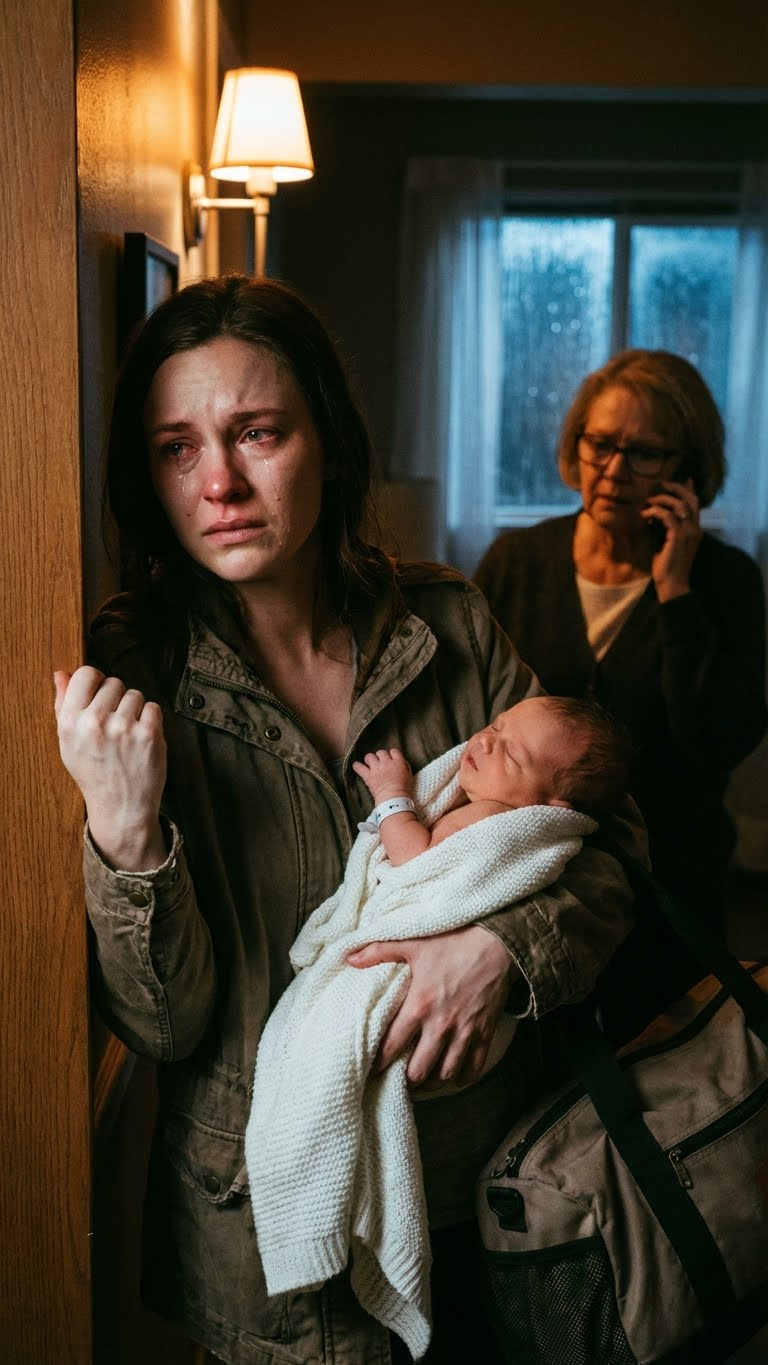
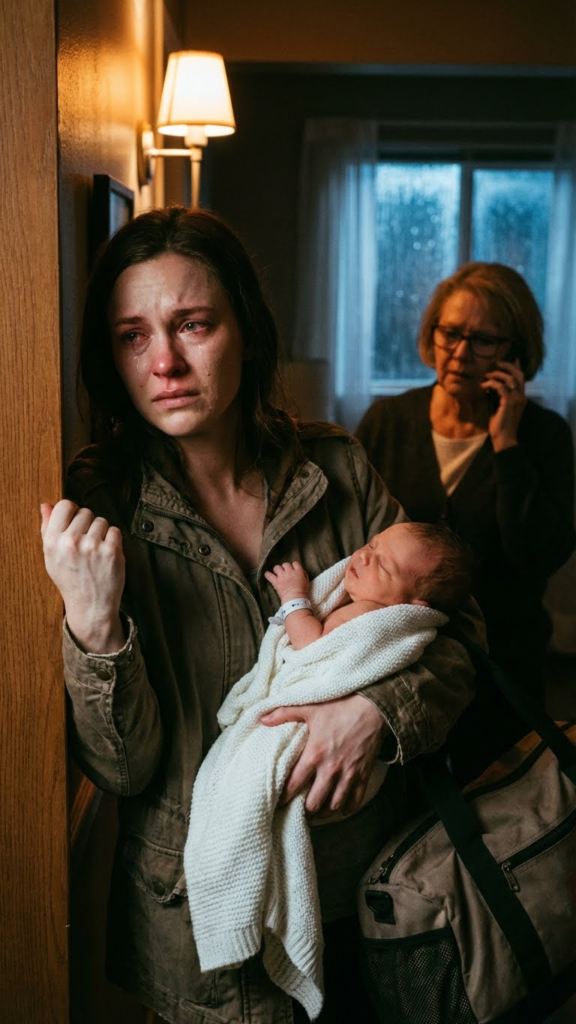
I stood in the doorway of my mother-in-law’s living room, my three-month-old daughter sleeping peacefully in my arms, and listened to the worst words I’d ever heard in my life.
“That thing isn’t natural,” Margaret hissed, her face twisted with disgust. “It’s a curse on this family. God is punishing us for something, and I won’t have it under my roof.”
My husband James sat on the couch, his head in his hands, saying nothing. Doing nothing. Just like he’d done nothing for the past three months while his family treated our daughter like she was something evil.
“Her name is Luna,” I said, my voice shaking with barely controlled rage. “And she’s your granddaughter.”
“Don’t you dare call that creature my grandchild,” Margaret spat. “Look at her. She’s not normal. She’ll never be normal. The neighbors are already talking. Do you know what they’re saying? They’re saying we’ve been cursed. That we did something to deserve this.”
The Breaking Point
Luna stirred in my arms, her tiny face scrunching up. She was beautiful. Perfect. Even with her legs fused together from the condition called sirenomelia—mermaid syndrome—she was the most beautiful thing I’d ever seen. The doctors said she had a chance. Multiple surgeries, yes, but a chance at a normal life.
But my husband’s family didn’t care about chances. They cared about appearances. About what people would think. About their precious reputation in their small-minded community.
“James,” I said, turning to my husband. “Say something. Defend your daughter.”
He finally looked up at me, and what I saw in his eyes broke something fundamental inside me. It wasn’t love. It wasn’t even pity. It was shame.
“Maybe Mom has a point,” he said quietly. “Maybe it would be better if we… if we considered other options. There are facilities—”
“Facilities?” I repeated, my voice rising. “You want to put our daughter in a facility? She’s three months old!”
“She needs specialized care,” James said, still not meeting my eyes. “We can’t handle this. I can’t handle this. Every time I look at her, I see—”
“What?” I demanded. “What do you see? A monster? Is that what your family has convinced you she is?”
Margaret stood up, her face red with anger. “How dare you speak to my son that way! We’ve been nothing but patient with you and your defective baby. But enough is enough. This family has a reputation to uphold. We have standing in this community. And we will not be destroyed by your refusal to accept reality.”
Something in me snapped. A switch flipped. The fear and doubt I’d been carrying for three months evaporated, replaced by a clarity so sharp it cut through everything else.
I looked at James one more time, giving him one final chance to be the man I’d married. The man who’d promised to love me and our children, no matter what.
“Stand up,” I said. “Stand up and defend your daughter, or I walk out that door and you never see either of us again.”
He stayed sitting. His mother smiled triumphantly.
And that’s when I made the decision that would change everything.
The Escape
I walked to the guest room where I’d been staying, packed everything I owned into two suitcases with one hand while holding Luna with the other. My hands were shaking. My vision was blurred with tears. But I knew exactly what I had to do.
When I came back downstairs, Margaret was on the phone. I heard her say, “Yes, social services. I’d like to report a mother who’s unfit to care for her disabled child.”
I walked straight past her and out the front door. She was still talking to the operator when I buckled Luna into her car seat and drove away from that house for the last time.
I didn’t have a plan. I had $3,000 in my personal checking account, a beat-up Honda Civic, and a baby who would need millions of dollars in medical care over her lifetime. But I had something more important than money or a plan.
I had determination. And I had love. And I had absolutely nothing left to lose.
The Pregnancy That Changed Everything
To understand how I got here, you need to know what my marriage to James was really like before Luna was born.
James and I met in college. He was studying business, planning to take over his family’s real estate company. I was getting my degree in graphic design. We fell in love fast, got married young, and moved to his hometown—a small, wealthy community where everyone knew everyone and appearances were everything.
I should have seen the red flags. The way his mother controlled every aspect of our wedding. The way James always deferred to his father’s opinions. The way the family expected me to quit my freelance design work once we started “trying for a family.”
But I was young and in love, and I thought we could build our own life together.
When I got pregnant, everyone was thrilled. Margaret started planning the nursery before I even had my first ultrasound. James’s father talked about his grandson joining the family business someday. Everything was perfect.
Until it wasn’t.
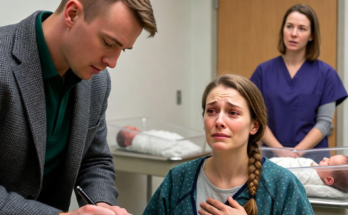
At the 20-week anatomy scan, the ultrasound technician got very quiet. Then she called in the doctor. Then they asked James and me to come into a consultation room.
“Your baby has a rare condition called sirenomelia,” the doctor explained gently. “It’s also known as mermaid syndrome. Her legs are fused together, and there are some internal complications we’ll need to monitor closely.”
The room started spinning. James grabbed my hand, but his grip was weak, trembling.
“What does that mean?” I asked. “Can it be fixed?”
“It’s complicated,” the doctor said. “Most babies with sirenomelia don’t survive. The condition often comes with kidney and bladder problems, gastrointestinal issues. But your daughter—and yes, it’s a girl—she’s showing some positive signs. Her organs are developing better than we typically see. With multiple surgeries after birth, she could have a chance.”
“A chance?” James repeated. “What kind of chance?”
“I can’t give you exact percentages,” the doctor admitted. “But she’s a fighter. And medical advances have come a long way. If you’re willing to fight for her, we’ll fight with you.”
I knew my answer immediately. “We’re willing.”
But James didn’t say anything at all.
The Family Intervention
When we told James’s family, the reaction was immediate and brutal.
“You need to terminate,” Margaret said without hesitation. “This is God’s way of telling you this pregnancy isn’t meant to be.”
“She’s twenty-three weeks,” I said, my voice barely above a whisper. “I’m not terminating my baby.”
“It’s not a baby,” James’s father interjected. “It’s a medical anomaly. You’re both young. You can try again. Have a healthy child.”
“She is healthy,” I insisted, though I was crying so hard I could barely speak. “She has a condition, but she’s alive. She’s growing. She’s my daughter.”
James still hadn’t said a word. He just sat there, staring at his hands while his family dismantled our child’s worth as a human being.
The next five months were hell. James became distant. His family stopped inviting us to events. When Luna was born—miraculously alive, breathing on her own, beautiful despite her fused legs—James wouldn’t hold her for the first week.
“I don’t know how,” he said when I tried to hand her to him.
“You learn,” I said. “That’s what parents do. We learn.”
But he never did learn. He never tried. And his family made it clear that Luna would never be accepted, never be loved, never be anything but a shameful secret they wanted hidden away.
Starting Over With Nothing
I drove to the only place I could think of—my best friend Rachel’s apartment in Chicago, three hours away. Rachel had been my college roommate, the maid of honor at my wedding, and the only person who’d called me every single day since Luna was born.
When she opened her door and saw me standing there with a baby and two suitcases, she didn’t ask questions. She just pulled me inside and held me while I cried.
“You can stay as long as you need,” she said. “Forever, if that’s what it takes.”
That night, while Luna slept in a makeshift bassinet Rachel had created from a laundry basket and blankets, I made a list. Luna would need her first surgery in six months. The cost: $250,000. Even with insurance, my out-of-pocket expenses would be devastating.
I had no job. No home. No support system except one friend with a one-bedroom apartment.
But I had skills. I’d been a graphic designer before James’s family convinced me to give it up. I was good at it—really good. I’d won awards in college. I’d had clients who loved my work.
So at 2 AM, sitting on Rachel’s couch with my laptop, I created a website. “Luna Designs—Graphic Design for Good Causes.” I offered discounted rates for nonprofits and small businesses. I set up social media accounts. I posted Luna’s story—not for pity, but to explain why I was doing what I was doing.
“My daughter was born with sirenomelia,” I wrote. “She’s perfect, she’s strong, and she’s going to need extensive medical care. I’m building a business to support her, and I’m offering my design skills to organizations that make a difference. Because if my daughter is going to grow up in this world, I want it to be a world worth living in.”
I hit publish and went to bed, not expecting anything.
The Viral Moment That Changed Everything
I woke up to 1,000 emails.
My post had been shared by a disability rights advocate with a large following. Then a prominent nonprofit. Then a celebrity who’d lost a child to a rare disease. By noon, Luna Designs had been featured on three major news websites.
“Mother Turns Family Tragedy Into Business Empire to Save Daughter’s Life”
The headlines made me cringe—Luna wasn’t a tragedy, she was a triumph—but the attention brought clients. Lots of clients. Nonprofits working in disability advocacy. Children’s hospitals. Rare disease research foundations. Organizations that understood that Luna represented hope, not shame.
Within two months, I had more work than I could handle alone. I hired two other designers—both parents of children with disabilities who needed flexible work. Within six months, I had a team of ten.
The business grew exponentially. Not just because of Luna’s story, but because we were good. We understood our clients’ missions because we lived them. We created logos and campaigns that resonated because they came from real experience, real pain, real hope.
By Luna’s first birthday, Luna Designs had revenue of $2 million. By her second birthday, $8 million. We’d expanded from just graphic design to full marketing services. We had offices in three cities. We’d won industry awards.
And Luna? She’d had her first surgery. Then her second. Then her third. Each one successful. Each one bringing her closer to independence.
The Confrontation I’d Been Waiting For
Luna was four years old when James showed up at my office unannounced.
I almost didn’t recognize him. He looked older, thinner, tired. The confident man I’d married had been replaced by someone who looked defeated.
“Can we talk?” he asked quietly.
I should have said no. Should have had security escort him out. But curiosity got the better of me.
“Five minutes,” I said.
We sat in my office—the corner office with floor-to-ceiling windows overlooking the Chicago skyline. The office I’d earned. The empire I’d built from nothing.
“I made a mistake,” James started. “The biggest mistake of my life. I should have stood up for you. For Luna. I should have told my family to go to hell and chosen my daughter.”
“Yes,” I agreed. “You should have.”
“I want to make it right,” he continued. “I want to be part of Luna’s life. I want to be her father.”
I laughed. Actually laughed. “You want to be her father? Now? After four years? After calling her a burden and suggesting we put her in a facility?”
“I was scared,” he said. “I didn’t know how to handle it. My family was in my ear constantly, telling me I was ruining my life, that you were being selfish—”
“Stop,” I interrupted. “I don’t care about your excuses. You had one moment—one single moment—to choose your daughter over your mother’s approval. And you chose wrong. You don’t get a second chance.”
“Please,” he said, and he was crying now. “I know I don’t deserve it. But Luna deserves to have a father. She deserves—”
“Luna has everything she deserves,” I said firmly. “She has a mother who would die for her. She has a team of doctors who believe in her. She has a community of people who see her for the miracle she is. She doesn’t need a father who’s ashamed of her.”
“I’m not ashamed anymore,” James insisted. “I’ve been following your company. I’ve seen what you’ve built. I’ve seen videos of Luna walking after her surgeries. She’s incredible. You’re incredible. And I want to be part of that.”
I stood up. “Our five minutes are up. You can leave now, or I can have security remove you. Your choice.”
“What about my rights?” he asked, a hint of his old entitlement creeping back. “I’m her father. I have legal rights—”
“You signed away your rights,” I said calmly. “Two years ago, when I filed for divorce and you didn’t contest custody. You were so eager to be free of the ‘burden’ that you didn’t even read the paperwork. You have no rights. You have no claim. You have nothing.”
The look on his face—shock mixed with realization—was almost satisfying. Almost.
“Now get out of my office,” I said. “And don’t come back. If you want to send child support, my lawyer will provide you with the details. Otherwise, stay out of our lives.”
He left without another word.
The Mother-in-Law’s Reckoning
Six months after James’s visit, Margaret showed up at one of Luna’s physical therapy sessions.
I saw her through the observation window, standing in the hallway, watching Luna work with her therapist. Luna was walking now—with braces and assistance, but walking. She was laughing, making jokes, being the incredible kid she’d always been.
I walked out to confront Margaret before she could come inside.
“What are you doing here?” I demanded.
She looked older too. The harsh angles of her face had softened into something that almost looked like regret.
“I wanted to see her,” Margaret said quietly. “My granddaughter. I wanted to see who she became.”
“She became exactly who she always was,” I said coldly. “Strong, brave, and perfect. No thanks to you.”
“I was wrong,” Margaret said, and I nearly fell over from shock. “I was cruel and closed-minded and I destroyed my son’s marriage because I cared more about what people thought than about what was right.”
“You called her cursed,” I said, my voice shaking with old anger. “You called her a thing. You tried to have social services take her from me.”
“I know,” Margaret whispered, tears streaming down her face. “And I have to live with that every day. James won’t speak to me. His father and I are divorcing because I realized he’s just as toxic as I was. I’ve lost everything that mattered because I was too proud and too scared to accept something different.”
I wanted to feel satisfaction. Vindication. But all I felt was tired.
“It’s too late,” I said simply. “You don’t get to be in Luna’s life. You don’t get to play the reformed grandmother and pretend the last four years didn’t happen. You made your choice. Now live with it.”
“Can I at least tell you something?” Margaret asked. “Not an excuse. Just a truth.”
I nodded, more out of exhaustion than curiosity.
“When you left that day,” she said, “you were holding Luna with one arm and dragging suitcases with the other. And you looked so determined. So fierce. And I remember thinking, ‘That girl is going to fail. She has no idea what she’s in for. She’ll come crawling back within a month.'”
She paused, wiping her eyes.
“But you didn’t fail. You built something extraordinary. You proved that love and determination are stronger than money or family name or any of the things I thought mattered. And I was wrong about everything. Especially about your daughter. She’s not cursed. She’s blessed. And so are you.”
I stood there for a long moment, watching through the window as Luna successfully completed a walking exercise and raised her arms in triumph.
“Thank you for saying that,” I said finally. “But it doesn’t change anything. Goodbye, Margaret.”
I walked back inside and closed the door. I never saw her again.
The Empire We Built
Today, Luna is seven years old. She’s in second grade. She walks with custom braces that our company’s foundation helped design. She swims in adaptive swim classes. She has friends who love her exactly as she is.
Luna Designs has grown into a $50 million company. We employ over 200 people, most of them parents of children with disabilities or people with disabilities themselves. We’ve created a foundation that helps other families afford medical care for rare conditions. We’ve funded research into sirenomelia and other rare diseases. We’ve changed lives.
But more than any of that, we’ve changed the narrative.
Luna isn’t a tragedy. She isn’t cursed. She isn’t something to be hidden away or pitied. She’s a vibrant, funny, brilliant kid who happens to have a rare condition. And because I refused to accept my in-laws’ definition of what she could be, she’s growing up in a world that celebrates difference instead of fearing it.
I still think about that moment sometimes—standing in Margaret’s living room, hearing my husband choose his mother over his daughter. It was the worst moment of my life. It was also the moment that set me free.
Because when you lose everything, you discover what you’re really made of. And when someone tells you your child is worthless, you have two choices: believe them, or prove them so spectacularly wrong that they never doubt anyone again.
I chose the second option. And it made all the difference.
My daughter was born with sirenomelia, and my husband’s family called her cursed. So I left with her and built an empire—not to prove them wrong, but to show her that she was always right. Right to exist. Right to thrive. Right to be loved exactly as she is.
And every morning when Luna wakes up, sees the company logo that bears her name, and asks, “Mommy, did you build all this for me?”
I smile and tell her the truth: “No, sweetheart. We built it together.”