THE GREY ROUTE HOME
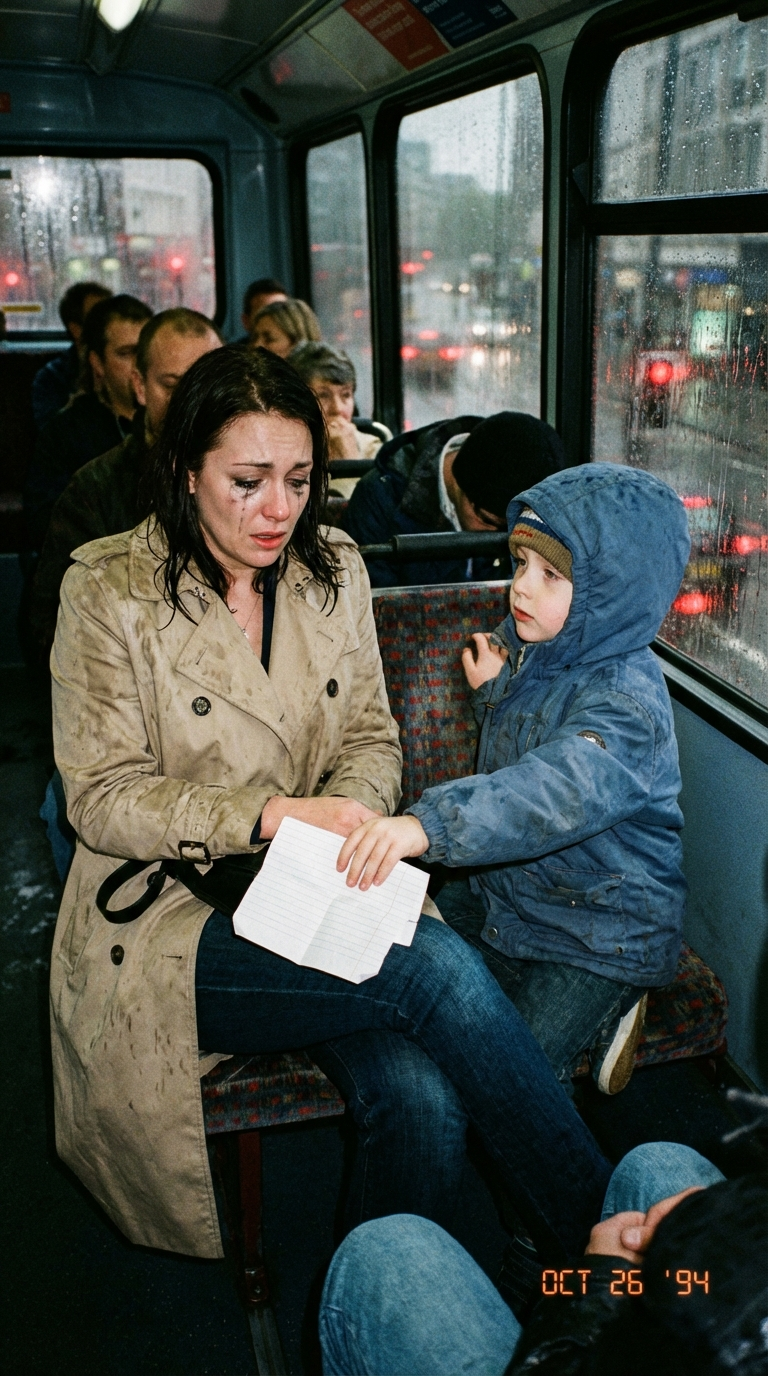
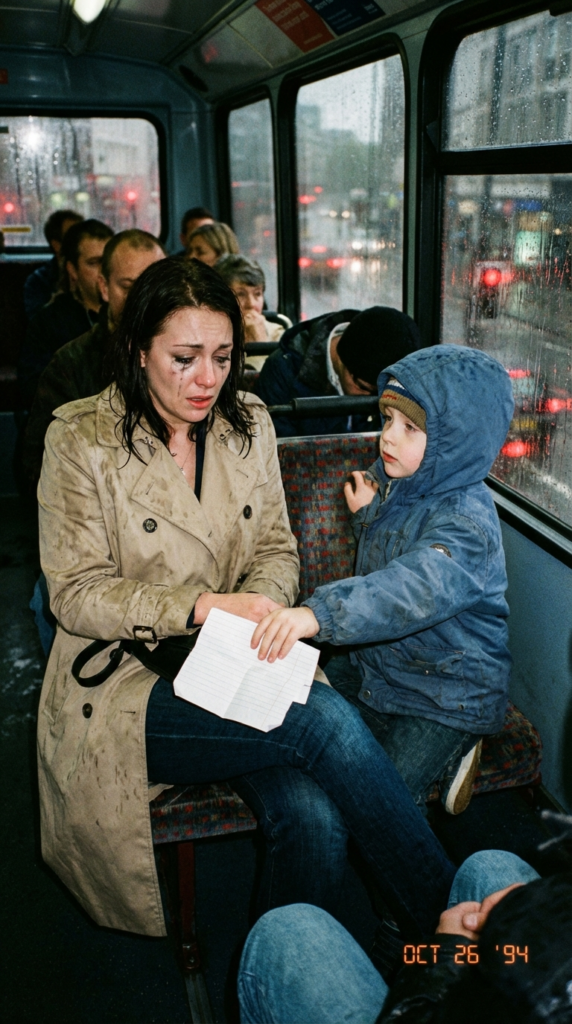
The rain against the window of the N42 bus perfectly matched the storm inside my chest. It was that relentless, miserable London drizzle that seeps into your bones, reflecting the exact shade of grey my life had become. I was vibrating with a toxic mix of too much caffeine, sheer exhaustion, and a fury that had been simmering for six months.
My phone buzzed in my damp trench coat pocket, a physical jolt against my thigh. I knew who it was before I looked. David.
“Working late again. Don’t wait up. Love you.”
I stared at the glowing screen until the words blurred. I wanted to throw the phone across the aisle, smash it against the partition. “Working late.” It had become the universal code, the lazy shorthand for “I’m with her.” I knew it with the certainty of gravity. I felt it in the nauseating pit of my stomach every time he came home showering immediately, every time he angled his phone screen away from me.
Three years of marriage. It wasn’t a lifetime, but it felt like one lately. It was slowly dissolving into missed dinners, cold shoulders, and the lingering, sickly-sweet scent of perfume that definitely wasn’t my brand on his collar. I was done being the clueless, waiting wife. I was done being the accessory to his mid-life crisis. Tonight was the night I was going to confront him. I was ready to blow up our comfortable, perfectly curated suburban life and demand the truth, no matter how much the shrapnel destroyed me.
I was so lost in rehearsing my screaming match, visualizing the accusation and his inevitable, pathetic denials, that I didn’t notice the boy sit down next to me until his damp sleeve brushed mine.
I flinched. The bus was half-empty; personal space was usually respected on the commuter run. He couldn’t have been more than seven years old. He was too thin for his oversized blue anorak, which looked like a hand-me-down from three older brothers. He had pale, translucent skin and dark eyes that looked far too old, too weary, for his child’s face. He stared straight ahead at the grimy seat back in front of us, rigid as a statue, his small sneakers barely touching the floor.
I shifted away, instinctively annoyed at the intrusion in my moment of high crisis. I didn’t have the emotional bandwidth to deal with a lost child right now. But then, without turning his head, moved by a silent internal cue, he slid his hand across the worn fabric of the seat between us.
In his small, grubby palm rested a single piece of folded, college-ruled notebook paper. It was creased heavily, as if it had been carried around in a sweaty pocket all day.
I stared at it. My heart hammered against my ribs—a different kind of panic now. A primal warning. He nudged it closer to my thigh, his movements jerky and terrified, like he was handling an unexploded ordinance.
“For me?” I whispered, my voice cracking awkwardly in the quiet bus.
He just gave a nearly imperceptible nod, still refusing to look at me. The bus air brakes hissed violently as we screeched to a halt at 4th Street—a stop in a rougher part of town, miles from my leafy suburb. Before I could even reach for the paper, the boy shot up. He darted down the aisle and disappeared into the rainy London evening before the doors fully opened.
I was left alone with the note. The bus lurched forward. My hands were shaking uncontrollably as I reached for it. The paper felt damp. I didn’t know whether to scream at the bizarre encounter or laugh at the absurdity of it all.
But what I read when I unfolded that crumpled paper didn’t just shock me. It stopped my world from turning.
THE ARCHITECTURE OF A LIE
I didn’t open it on the bus. I couldn’t. The air felt too thin, and the eyes of the few remaining commuters felt too heavy. I clutched the paper in my fist like a lifeline until my knuckles turned white, enduring the remaining forty minutes of the commute in a catatonic state.
When I finally unlocked the front door of our Victorian terrace house in Chiswick, the silence greeted me like a physical blow. It was a beautiful house. We had spent two years renovating it, agonizing over Farrow & Ball paint swatches and reclaimed oak flooring. It was meant to be the backdrop for dinner parties, Christmas mornings with future children, and growing old together. Now, it just felt like a very expensive mausoleum for a dead relationship.
I dropped my bag in the hallway, kicking off my wet shoes. The house smelled of lemon verbena reed diffusers and emptiness. David wasn’t there, of course. He was “working late.”
I walked into the kitchen, the heart of the home, illuminated only by the under-cabinet LEDs. I poured myself a large glass of red wine, my hand trembling so badly a few drops splashed onto the pristine quartz countertop like blood.
I sat at the island where we used to eat breakfast together, back when we actually spoke in the mornings. I placed the damp, crumpled note in the center of the counter. It looked alien against the polished stone.
I thought about the last three years. The whirlwind romance—David, the charming architect, sweeping me, the cynical graphic designer, off my feet. The lavish wedding in Tuscany. The honeymoon phase that felt like it would last forever. And then, the slow erosion.
It started subtly. He became protective of his phone. He bought new clothes—younger styles that didn’t suit him. Then came the late nights at the firm. The “emergency client meetings.” The distinct lack of intimacy. When I asked him about it six weeks ago, he told me I was paranoid. He called me “hysterical,” a word that felt like a slap in the face coming from the man who promised to cherish me.
I was convinced it was a woman named Sarah, a new junior partner at his firm. She was twenty-four, bubbly, and looked at David like he had invented the very concept of buildings. I had stalked her Instagram; I had tortured myself with images of her perfect life.
Tonight was supposed to be the confrontation. I had planned to demand to see his phone. To demand the truth about Sarah.
I took a large gulp of wine for courage, set the glass down with a sharp clink, and picked up the note. The edges were fraying.
I unfolded it.
It wasn’t a love letter to another woman. It wasn’t a confession written in David’s architectural scrawl.
It was written in Crayola crayon—a dark, waxy purple. The handwriting was rushed, childish, digging deep into the paper.
There were only five words, followed by a drawing.
HE IS HURTING MY MOM.
Below the words was a crude, terrifying stick-figure drawing. A large, angry figure labeled “DAVID” in jagged letters towered over a smaller, cowering figure with long hair. The “DAVID” figure had something in its hand. A bottle.
My stomach plummeted through the floor. The wine turned to acid in my throat.
This wasn’t infidelity. This was something infinitely darker.
THE MONSTER IN THE GUEST ROOM
I stared at the drawing until the crayon lines seemed to vibrate. He is hurting my mom.
My mind raced, trying to reject the information. It was a prank. A sick joke from a disturbed child. How would this random boy on a bus across town know my husband?
But then the details started clicking into place, like tumblers in a lock I hadn’t realized was there.
The missing money. I handled our household accounts. Over the last eight months, there had been substantial cash withdrawals. Two hundred here, five hundred there. David had explained them away as “site incidentals” or “lunches for the crew.” I had chosen to believe him because the alternative—that my successful husband was hemorrhaging cash—was too stressful to contemplate.
And the change in his demeanor. It wasn’t just distance; it was irritability. Snapshots of rage over small things—a misplaced remote, a slightly overcooked steak. He had never been violent with me, never even raised his voice until recently. But the atmosphere in the house had changed from loving to walking on eggshells.
Then I remembered the “client” he mentioned a few months ago. A pro-bono case, he’d said. A single mother in council housing having trouble with a slumlord landlord. He said he was helping her with building code violations. He seemed passionate about it, almost obsessed. I had admired him for it.
Was the boy on the bus her son?
I ran to David’s home office. I never went in there; it was his sanctuary. I turned on the light and started tearing through his desk drawers, fueled by adrenaline and terror.
Bank statements. Old project files. Nothing.
Then I saw his encrypted external hard drive, tucked behind a row of architectural history books. I knew the password—it was our wedding anniversary. 091220.
I plugged it into his laptop. The folder structure was neat, professional. Except for one folder labeled “MISC_REF.”
I opened it. It wasn’t architectural references.
It was hundreds of photos. Screenshots of text messages. Scanned documents.
I opened the first image. It was a photo of David, his arm around a woman. She looked exhausted, worn down, with the same large, sad eyes as the boy on the bus. They weren’t romantic photos. In one, they were sitting at a Formica table in a dingy kitchen, stacks of paper between them. David looked intense, almost manic.
I opened a text log.
David: I need another £500 by Friday. Don’t make me come over there. Woman: Please, David. I can’t. The rent is due. Danny needs shoes. David: Not my problem. You know the agreement. I’m helping you, you help me. Get it done.
I felt sick. I scrolled further. It wasn’t an affair. It was worse.
David wasn’t sleeping with this woman. He was blackmailing her.
I found a scanned PDF. It was a fake building inspection report for a council estate block—the one where the woman presumably lived. David had forged signatures, declaring the building structurally unsound when it wasn’t.
Why?
I found the answer in a subfolder containing emails between David and a property developer known for predatory buyouts. David was feeding the developer inside information, devaluing the property with fake reports so the developer could buy the block for pennies, evict the tenants, and build luxury flats.
The woman—Danny’s mother—had found out. She worked in the council housing office as a temp. She had seen the real reports. David was paying her off to stay silent, and when the money ran out, he was threatening her. Threatening to have her fired, to have her son taken away.
He is hurting my mom.
The drawing wasn’t physical abuse. It was financial and emotional strangulation. David, my charming, successful husband, was a monster terrorizing a vulnerable family to cover up corporate fraud.
The front door slammed downstairs.
“Honey? I’m home. Jesus, the traffic was murder.”
His voice, once the sound of safety, now sounded like a threat.
THE EXPLOSION
I sat in the office chair, bathed in the blue light of the monitor showing his crimes. The note with the crayon drawing lay on the desk next to the laptop.
I heard his heavy footsteps coming up the stairs. He paused at the bedroom door.
“Claire? You up?”
He saw the light from the office. He walked in, loosening his tie, a tired smile plastered on his face. The smile that used to make my knees weak.
“Hey. What are you doing in here? I thought we agreed this was a no-fly zone.” He chuckled, but his eyes darted to the laptop screen.
I stood up slowly. I held up the crayon note.
“Who is Danny?” I asked. My voice was dead calm, a terrifying contrast to the hurricane inside me.
David froze. The color drained from his face so fast it was like watching a light switch flip. “What? Who?”
“The boy on the N42 bus. The boy whose mother you are terrorizing. Who is he?”
He lunged forward, his eyes wild. “Where did you get that? Give that to me, Claire. It’s nonsense.”
I slammed my hand down on the desk, right next to the laptop displaying the forged inspection report. “Don’t lie to me, David. Not anymore. I know everything. The fraud with Kensal Rise estate. The developer kickbacks. And the woman you’re blackmailing to keep it quiet.”
He stopped. He looked at the laptop screen, saw the damning evidence, and realized it was over. The suave architect facade crumbled. His shoulders slumped, and his face twisted into a grotesque mask of self-pity and anger.
“You don’t understand,” he hissed, pacing the small room. “We were drowning, Claire! The renovations went over budget. The firm is cutting bonuses. We have this mortgage, the cars, the lifestyle… I had to do something!”
“So you decided to destroy poor families’ homes? You decided to threaten a single mother and her child?” I was screaming now. The tears finally broke free, hot and blinding. “I thought you were cheating on me! God, I wish you were just cheating on me. At least that’s human. This… this is evil, David.”
“It was for us!” he shouted back, slamming his fist against the wall, leaving a dent in the perfect Farrow & Ball paint. “Everything I do is for this life we built!”
“This isn’t a life!” I gestured around the beautiful, empty room. “This is a lie funded by other people’s misery. And that little boy… David, he was terrifying. He was so scared he couldn’t even speak. He risked everything to bring me this note to save his mother from you.”
David sank into the chair I had vacated, putting his head in his hands. “I’m in too deep, Claire. They’ll kill me if I back out now. The developers… they aren’t good people.”
I looked at the man I married. A coward. A criminal.
The note hadn’t saved my marriage in the way I expected. It hadn’t brought us back together. It had given me the truth. And the truth was a demolition ball.
“Get out,” I said. The calm was back.
He looked up, eyes red. “Claire, baby, please. We can fix this. I’ll stop. We can—”
“Get. Out. Now. Before I call the police.”
He didn’t argue. He saw the look in my eyes. He grabbed his car keys and left the house without another word. The slam of the front door echoed like a gunshot, signalling the end of my life as Mrs. David Sterling.
REBUILDING FROM ASHES
The next morning, I didn’t go to work. Instead, I took the N42 bus back to 4th Street.
I had the laptop in my bag. I found the council estate easily enough; it was a looming concrete eyesore that looked nothing like the luxury flats David’s partners had planned.
I asked around, showing the photo of the woman from David’s hard drive. A suspicious neighbor eventually pointed me to a peeling blue door on the third floor.
I knocked. The woman opened it a crack, the security chain still on. Her eyes widened when she recognized me—or perhaps, recognized the expensive trench coat that reeked of her tormentor’s world.
“I’m David’s wife,” I said quickly, before she could slam the door. “Please. I want to help. Danny gave me a note.”
The chain rattled as she undid it. She opened the door fully. Danny was sitting at the kitchen table, coloring. He looked up at me, his eyes wide with recognition and fear.
I walked over to him and knelt down. I pulled the crumpled crayon note from my pocket.
“You’re brave, Danny,” I said softly. “Braver than any grown-up I know. You saved your mom.”
I spent the next three hours at that kitchen table. I showed Danny’s mother—her name was Maria—everything on the hard drive. The evidence of David’s extortion, the fake reports, the developer emails.
We cried together. Two women from different worlds, bound by the wreckage caused by the same man.
That afternoon, Maria and I walked into the local police station together. I handed over the laptop. I gave a statement detailing everything I had found, implicating my own husband in massive corporate fraud and extortion.
David was arrested two days later at a cheap hotel near Heathrow. The story blew up in the tabloids. “ARCHITECT OF GREED,” the headlines screamed.
My perfect suburban life was incinerated in the public eye. I lost friends. I had to sell the Chiswick house to pay legal fees and debts I didn’t know we had. I moved into a small rental flat in a less fashionable postcode.
It was hell. It was the hardest year of my life.
But I was free.
A year later, I sat on a different bus, heading to a new job at a non-profit design firm. I was poorer, tired, but strangely lighter.
My phone buzzed. It was a photo message from Maria. It was her and Danny, standing in front of a modest but tidy terraced house outside of London. They were smiling—real smiles that reached their eyes. The caption read: New keys. New start. Thank you, Claire.
I smiled back at the screen, tears prickling my eyes.
That little boy on the N42 bus didn’t save my marriage to David. That marriage was a rotting corpse long before he sat next to me.
He saved me from living a lie. He saved his mother from a predator. He saved my soul from being complicit in the destruction of others.
Sometimes, saving something means burning it to the ground so something better can grow in the ashes. And as the bus rattled through the rain-slicked streets of London, for the first time in a very long time, I looked out the window and saw the sun trying to break through the clouds.