The Moment Everything Changed
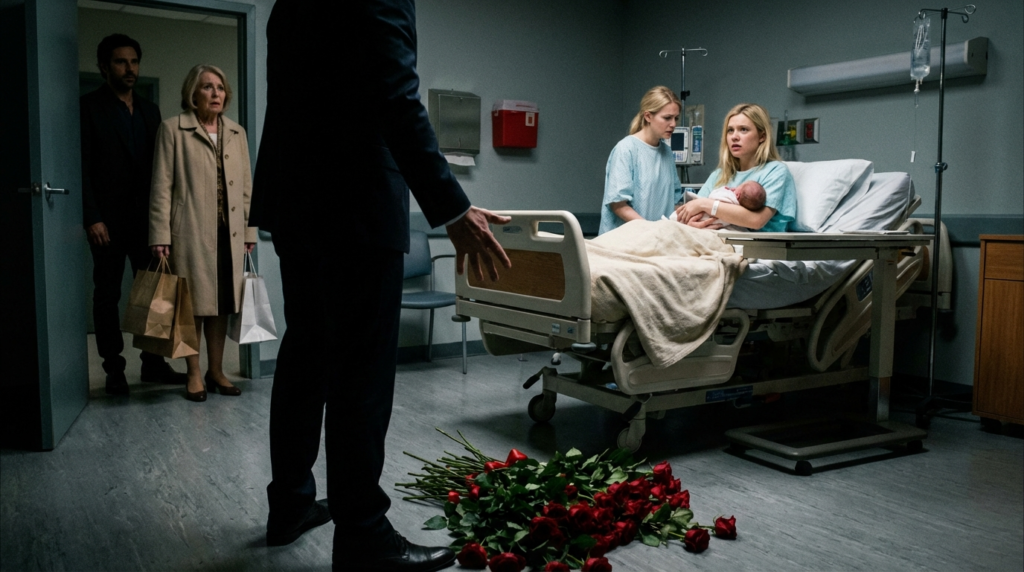
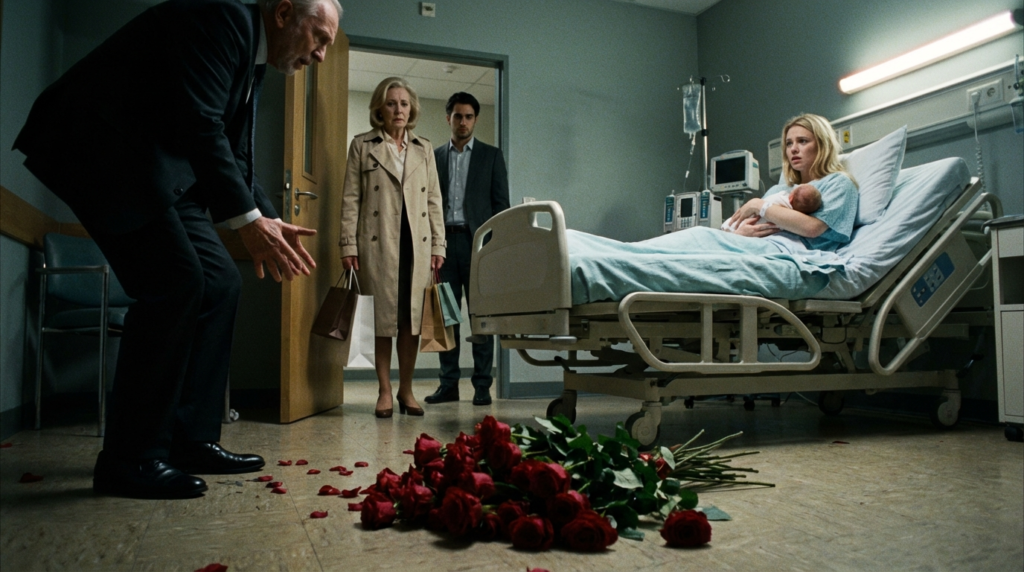
My father-in-law dropped the bouquet of roses the moment he saw my baby’s face.
I was lying in the hospital bed, exhausted from eighteen hours of labor, cradling my newborn daughter Emma. My husband David was beside me, beaming with pride. We’d been waiting for his parents to arrive—they’d flown in from Boston to meet their first grandchild.
But when they walked through that door, everything changed.
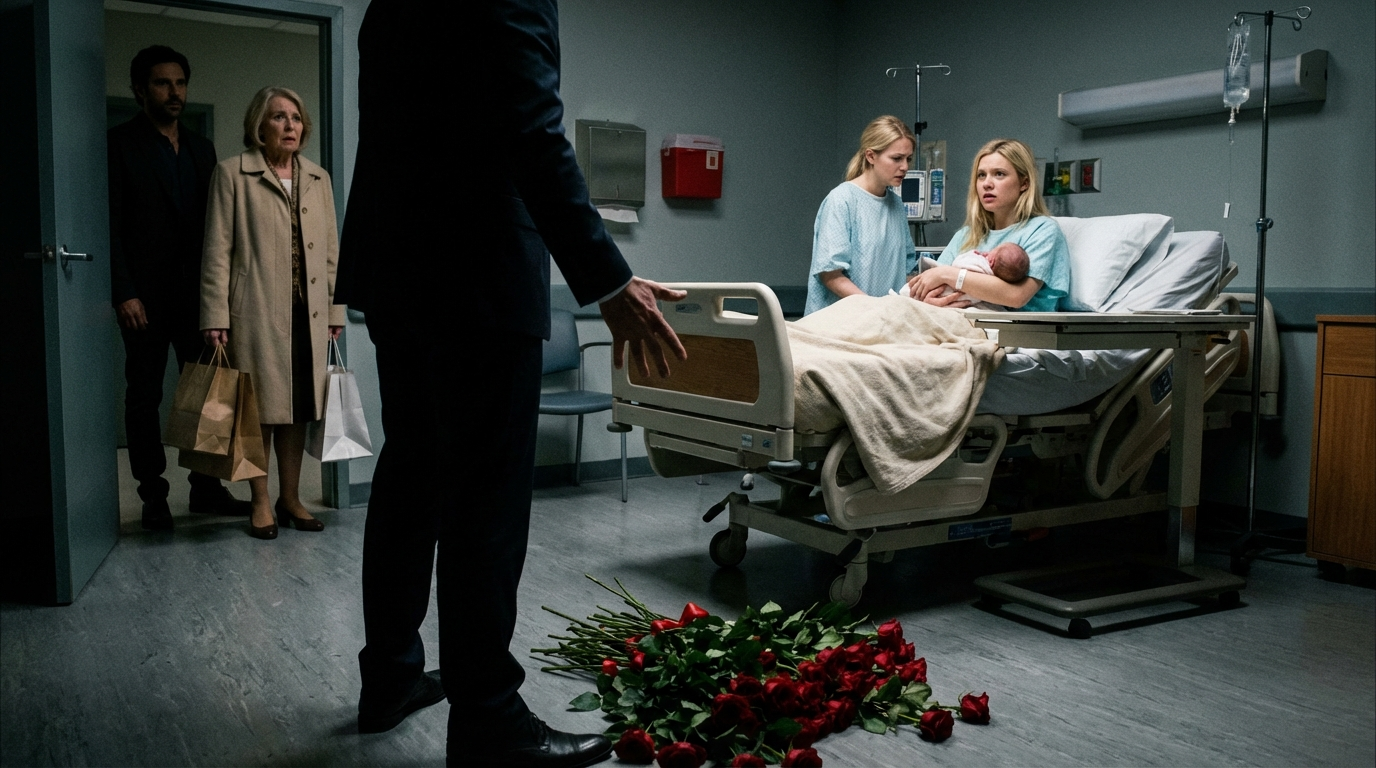
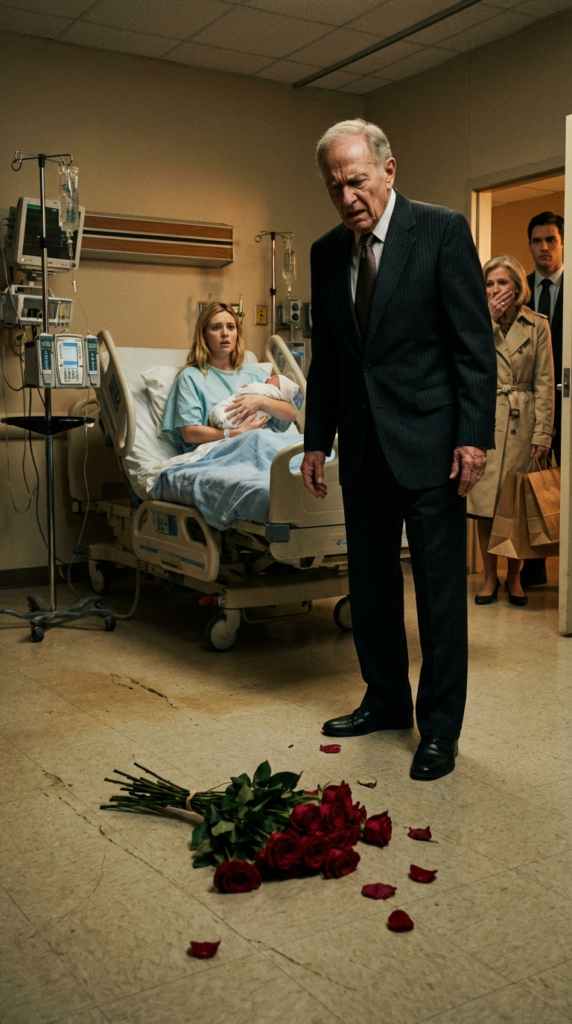
David’s mother, Patricia, froze in the doorway. The shopping bags filled with carefully chosen baby gifts slipped from her hands and hit the floor with a dull thud. Her face went completely white, like all the blood had drained away. She looked at Emma, then at me, then at her husband Richard.
And that’s when Richard—my normally stoic, composed father-in-law who I’d never seen show more than polite warmth—let the expensive bouquet of roses fall from his hands. Red and pink petals scattered across the hospital room floor.
“That’s impossible,” he whispered.
“Dad?” David stood up quickly, confusion written all over his face. “What’s wrong? Are you okay?”
Patricia started crying. Not happy tears. Not the joyful grandmother tears I’d been expecting. These were devastated, gut-wrenching sobs that shook her whole body.
“Richard,” she said, her voice breaking completely. “She has your mother’s eyes.”
I didn’t understand. David clearly didn’t understand. But Richard looked like he’d seen a ghost. His hands were shaking, and he couldn’t take his eyes off Emma’s tiny face.
“What color are her eyes?” he asked, his voice barely audible.
“They’re… unusual,” I said slowly, looking down at my daughter. “The nurses said they’d probably change in a few months, but right now they’re this really unique gray-green color. Almost violet in certain light. I’ve never seen anything like it.”
Richard sank into the visitor’s chair like his legs had given out. His face had gone from shocked to completely broken.
“Elizabeth Violet Richardson,” he said quietly. “That was my mother’s name. She died when I was twelve. She had eyes that exact color. It’s a genetic condition—extremely rare. Alexandria’s genesis variant. Only runs in my family line. My mother had it. My grandmother had it. And apparently…” He looked at Emma with tears streaming down his face. “My granddaughter has it.”
“Dad, Emma’s eyes are probably just a coincidence—” David started.
“No.” Patricia cut him off, still crying. She walked slowly into the room and sat on the edge of my bed. “David, there’s something we never told you. Something we’ve kept secret for thirty years.”
The room went silent except for the beeping of medical equipment.
Patricia looked at me with an expression I’ll never forget—part apology, part devastation, part something I couldn’t name.
“Your husband has a sister. A daughter Richard had before we got married. A daughter he gave up for adoption when he was nineteen years old.”
The Secret That Broke Open
David’s face went blank. “What?”
Richard was crying now too. “I was nineteen. In college. I got a girl pregnant—someone I’d dated for a few months. She didn’t want to keep the baby. Her parents forced her to give it up for adoption. I… I agreed. I was a kid myself. Scared. Stupid.”
“You have a daughter?” David’s voice cracked. “You have another child and you never told me?”
“We tried to find her,” Patricia said quickly. “After David was born, Richard couldn’t stop thinking about that little girl. We hired investigators. We searched adoption records. We did everything we could for fifteen years. But it was a closed adoption. The records were sealed. We couldn’t find her.”
“So you just… gave up?” David was getting angry now. I could see it in his face.
“We never gave up,” Richard said firmly. “Every year on her birthday—March 15th—we donated to adoption reunion charities. We registered with every database. We hoped that one day she might look for us.”
He stood up and walked closer to my bed, looking at Emma with such longing it made my heart hurt.
“My mother’s eyes. That’s how I knew. That’s the only way I would have known.” He looked at me. “Your daughter has a one-in-several-million genetic trait that only exists in my bloodline.”
“What are you saying?” I whispered, but I already knew. My stomach was in knots.
Patricia pulled out her phone with shaking hands. “What’s your birthday?” she asked me.
“March 15th,” I said quietly.
She let out a sound that was half sob, half gasp. “What year?”
“1995.”
Richard sat down hard, like someone had pushed him. “The baby girl I gave up was born March 15th, 1995.”
The room started spinning. I looked at David, who was staring at me with an expression of pure horror.
“No,” he said. “No, this can’t be—we’re married. We have a baby. This can’t be happening.”
“Were you adopted?” Patricia asked me gently.
I nodded, unable to speak. My adoption had always been a sensitive topic. I’d never known my birth parents. Never wanted to know. I’d had a good life with my adoptive parents, and I’d never felt the need to dig into my past.
Until now.
The Test That Confirmed Everything
The hospital room felt too small. Too bright. Too real.
“We need a DNA test,” Richard said, his voice shaking. “I need to know for sure.”
“I’ll request one right now,” I managed. “But Richard… if I’m your daughter…”
“Then David is your half-brother,” Patricia finished, her voice barely a whisper. “And Emma is…”
Nobody could finish that sentence.
David stood up abruptly. “I need air. I can’t—I need to leave.”
He walked out without looking at me. Without looking at Emma. Just walked out.
Patricia followed him, trying to comfort him, and suddenly it was just me, Richard, and my newborn daughter in that hospital room.
Richard moved the chair closer to my bed. He didn’t try to touch Emma. Didn’t ask to hold her. He just looked at her with tears streaming down his weathered face.
“I’m sorry,” he whispered. “For all of this. For giving you up. For not trying harder to find you. For—” His voice broke completely. “For the fact that finding you means destroying your marriage.”
I was crying too now. “This isn’t your fault.”
“Isn’t it?” He looked at me finally. Really looked at me. “I was nineteen. Terrified. My parents told me to walk away, to forget it happened. So I did. And then I spent thirty years living with that guilt. Wondering if you were okay. If you were loved. If you ever thought about me.”
“Were you and my birth mother… were you in love?” I asked.
He shook his head. “We dated for a few months. She was nice. Smart. But we were kids. When she got pregnant, her parents took over. They arranged everything—the adoption, the paperwork, all of it. They told me to stay away. So I did.”
“What was her name?”
“Katherine Brennan. Last I heard, she moved to California. Got married. Had other kids.” He wiped his eyes. “I always hoped she found happiness.”
We sat in silence for a long moment. Then Richard said something that broke me: “May I… may I hold her? Just once?”
I looked at Emma, sleeping peacefully in my arms, unaware that her entire world had just imploded. Then I looked at Richard—this man who might be my biological father, who was definitely my father-in-law, whose son I’d just realized I couldn’t stay married to.
“Yes,” I whispered.
I handed Emma to him, and Richard cradled her like she was made of glass. He looked at her face, at those unusual violet-gray eyes that matched his mother’s, and he sobbed.
“I’m so sorry,” he kept saying. “I’m so, so sorry.”
The Results That Changed Everything
The DNA test took three days. Three days of hell.
David stayed at his brother’s house. He couldn’t look at me. Couldn’t talk to me. Patricia called twice a day to check on Emma, but the conversations were stilted and painful.
Richard came to the hospital every day. He didn’t ask to hold Emma again. He just sat in the corner of my room and talked to me.
He told me about his mother, Elizabeth Violet Richardson, who’d been a painter and a teacher. Who’d died of cancer when Richard was twelve. Who’d had eyes that people stopped her on the street to comment on.
He told me about the guilt he’d carried for thirty years. About the daughter he’d never stopped thinking about. About the hole in his heart that never healed.
And I told him about my life. About my adoptive parents—loving, wonderful people who’d given me everything. About my childhood. About meeting David in college. About falling in love with a kind, gentle man who made me laugh.
About the marriage that was now impossible to continue.
When the results came back, a hospital genetic counselor delivered them. She looked uncomfortable, like she’d never had to deliver news quite this devastating before.
“The test confirms paternity,” she said quietly. “Mr. Richardson, you are Sarah’s biological father. Which means David and Sarah are half-siblings.”
Richard closed his eyes. I stared at the wall.
“What does this mean for Emma?” I asked, my voice hollow.
The counselor hesitated. “Emma is… the genetic overlap is higher than typical because both her parents share a father. We’ll need to monitor her health closely, but many children in similar situations are perfectly healthy. The risk of genetic issues increases, but it’s not guaranteed.”
“What about the marriage?” Richard asked.
“In most states, marriages between half-siblings are legally voidable if neither party knew about the relationship,” the counselor said gently. “You would likely need to annul rather than divorce.”
Annul. Like our four years of marriage, our love, our child—none of it had ever existed.
The Kindness I Didn’t Expect
That night, I was alone in my hospital room with Emma when there was a soft knock on the door.
David walked in. He looked like he hadn’t slept in days. His eyes were red, his clothes rumpled.
“I needed to see her,” he said quietly. “And you.”
“David—”
“Let me talk,” he interrupted gently. “Please.”
He sat in the chair his father had occupied for three days.
“I’ve been going through every possible emotion,” he said. “Anger. Disgust. Horror. Betrayal. Like the universe played the cruelest joke possible.” He looked at Emma. “But then I realized something. None of this is her fault. None of this is your fault. Hell, it’s not even my dad’s fault. It’s just… a tragedy.”
“I know,” I whispered.
“But here’s what else I realized,” David continued. “That little girl is still my daughter. Maybe genetically she’s more my half-niece or something, but I was there when she was born. I cut her umbilical cord. I’ve loved her since the moment I saw her.”
He stood up and walked to my bed. “And I still love you, Sarah. Not as a husband anymore—I can’t do that. I understand that. But as the woman who’s been my best friend for six years. As the mother of my child. As someone who matters to me.”
Tears streamed down my face. “I don’t know how to do this. How to go from being married to being… what? Siblings who share a daughter?”
“I don’t either,” David admitted. “But we’ll figure it out. For Emma. She deserves parents who can be in the same room without it being horrible.”
“Your mother hates me,” I said. “I saw it in her eyes.”
“My mother is devastated,” David corrected. “But she doesn’t hate you. She’s been talking to my dad. They want to help. They want to be part of Emma’s life. Part of your life.”
He reached out and touched Emma’s tiny hand. “We’re going to have to create something completely new. A family structure that doesn’t have a name. But we’re going to do it with kindness and grace, because that’s what Emma deserves.”
One Year Later
I’m writing this from my apartment—not the house David and I shared. We sold it six months ago and bought separate places three blocks apart.
Our annulment was finalized eight months ago. It was painful but necessary.
But here’s what most people don’t understand about our story: we didn’t end. We transformed.
David and I co-parent Emma with a level of cooperation most divorced couples would envy. We have dinner together twice a week. We celebrate holidays together. We’re planning her first birthday party together.
And we do it all with Richard and Patricia’s full involvement.
Richard—my father, my daughter’s grandfather, my ex-father-in-law—has become one of the most important people in my life. He’s teaching me about the family I never knew. He’s shown me pictures of his mother, my grandmother, and she’s beautiful. She has Emma’s eyes.
Patricia struggled at first. The situation was too painful, too complicated. But three months ago, she came to my apartment with tears in her eyes and said, “I lost thirty years with you. I don’t want to lose any more time.”
Now she babysits Emma every Wednesday while I work. She’s teaching me to cook her family recipes. She calls herself Emma’s grandmother—and my mother-in-law-turned-stepmother, which makes us both laugh.
David started dating someone six months ago. A woman named Claire who’s kind and understanding and remarkably accepting of our bizarre family situation. She had dinner with us last week, and Emma loved her.
I’m not dating anyone. I’m focusing on being Emma’s mom. On building a relationship with the father I never knew I had. On creating this strange, beautiful, complicated family we’ve all become.
People ask me all the time: “Aren’t you angry? Aren’t you devastated?”
And the truth is, I was. For months, I was furious at the universe for this cosmic cruelty.
But then Emma smiled at me for the first time, and I realized something: she exists because of an impossible series of events. David and I meeting in college. Falling in love. Getting married. Having a child. None of that was wrong or dirty or shameful—it just was.
And the fact that we discovered the truth when we did, before years more passed, before Emma was older—that was a kind of mercy.
The Family We Chose to Be
Last week was Emma’s first birthday. We had a party at a park with both sides of our fractured family tree.
My adoptive parents flew in from Oregon. David’s extended family came. Richard and Patricia were there, of course. Even David’s girlfriend Claire came.
And as I watched everyone sing “Happy Birthday” to Emma, I realized something profound:
This family exists because four people chose kindness over anger.
Richard chose to be honest instead of running away when he saw Emma’s eyes.
Patricia chose to embrace me instead of blaming me for an impossible situation.
David chose to co-parent with grace instead of letting trauma destroy our ability to raise our daughter.
And I chose forgiveness—of Richard for giving me up, of the universe for this situation, of myself for not somehow knowing.
Someone at the party asked me, “Do you ever wish you’d never found out? That you could have just lived in ignorance?”
I looked at Richard, who was holding Emma and pointing at ducks in the pond. I looked at Patricia, who was laughing with my adoptive mom. I looked at David, who was happy with someone new.
“No,” I said. “Because the truth, no matter how painful, gave us the chance to become something better. Something real.”
We’re not a normal family. We never will be.
But we’re a family built on truth, forgiveness, and the radical choice to love each other through an impossible situation.
Richard tells me often: “I gave you up once because I was scared. I will never let you go again.”
And he hasn’t. None of them have.
This family might be unconventional, complicated, and confusing to outsiders. But it’s ours. And it’s built on something stronger than blood or marriage certificates:
It’s built on the daily choice to be kind, even when it’s easier to be angry. To forgive, even when it seems impossible. To love, even when the circumstances are heartbreaking.
Emma will grow up knowing she’s the center of a family that chose to stay together despite every reason to fall apart.
And maybe that’s the greatest gift we could give her: proof that kindness, forgiveness, and love can transform even the most devastating circumstances into something beautiful.