When the blue lights started flashing through my living room windows, my first thought was that they were at the wrong house.
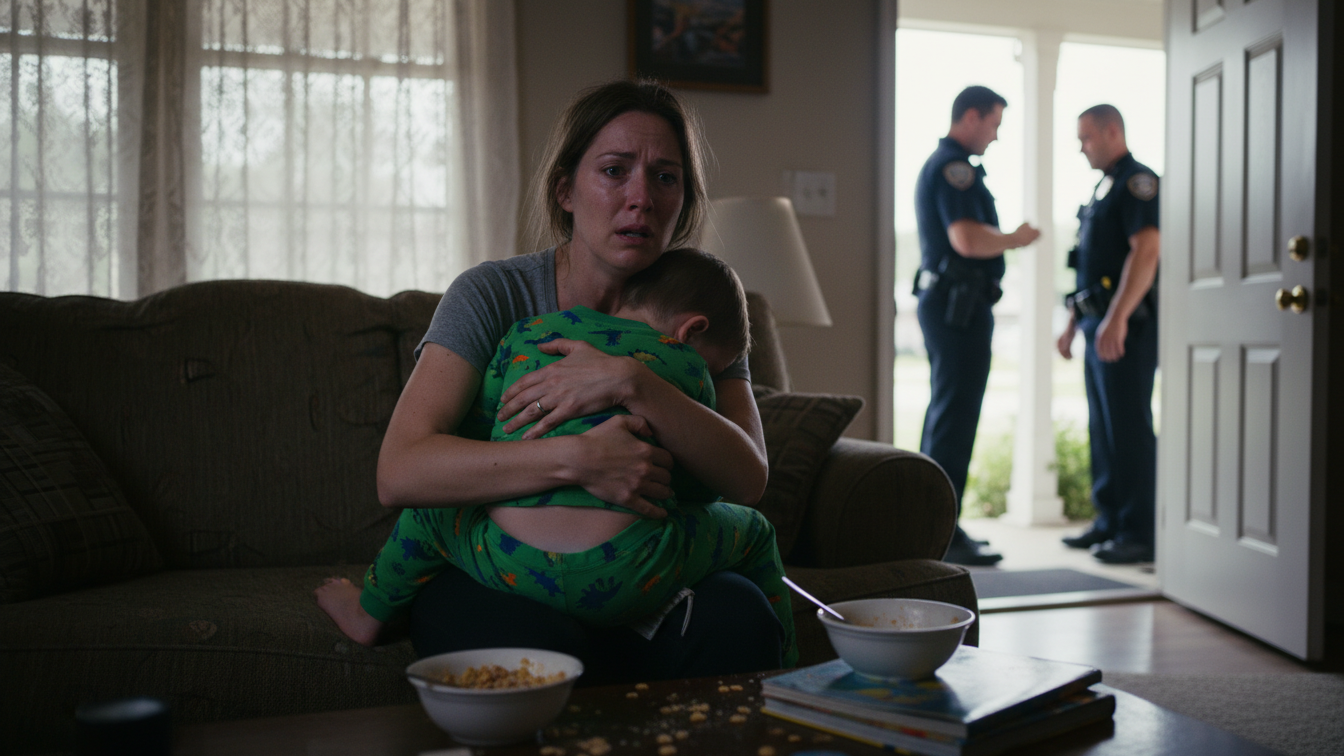
We were having one of those mornings that feel aggressively ordinary. Cereal bowls on the coffee table. The TV murmuring some cartoon my son had already half outgrown. My husband’s coffee cooling untouched on the counter because he was running late for work.
My son, Noah, was still in his dinosaur pajamas, legs tucked under him on the couch, humming to himself while he lined up his toy cars in perfect rows.
I remember thinking I should tell him to get dressed.
I never got the chance.
The knock came hard. Three sharp raps that didn’t belong to neighbors or delivery drivers. The sound cut straight through my chest.
When I opened the door, two police officers stood on the porch, hands resting near their belts, eyes already scanning past me into the house.
“Ma’am,” the taller one said gently, “we need to speak with you about your son.”
I laughed. Actually laughed. It slipped out before I could stop it.
“My son?” I repeated. “He’s six.”
That’s when I saw the social worker’s car behind the cruiser.
That’s when I knew my life was about to split into a before and an after.
I used to think bad things only happened to families who were already broken.
We weren’t.
We were tired. Overworked. A little disconnected. But broken? No.
I was a project manager at a marketing firm. My husband, Daniel, worked construction. Long hours, different schedules, lots of “we’ll talk later” conversations that never happened. Still, we loved each other. We loved our son.
At least, I thought we did.
Looking back, I can trace the cracks to a year earlier — when Noah started waking up screaming.
At first it was normal kid stuff. Monsters in the closet. Bad dreams about wolves and falling. I would scoop him up, rock him, promise him he was safe.
Then the dreams changed.
“I don’t like the room,” he told me one night, clutching my shirt so hard my collar stretched. “It feels mean.”
“What feels mean, baby?” I asked.
“The dark.”
Kids say weird things. That’s what I told myself.

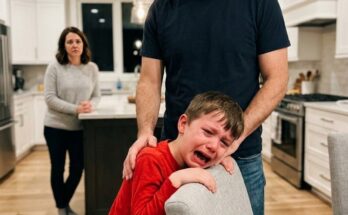
When he stopped wanting to sleep in his own bed, I blamed a phase. When he started wetting himself after being potty trained for almost two years, I blamed stress. When his teacher called to say he’d hit another child at school, I blamed the transition to first grade.
I was always finding the most comfortable explanation.
The officers asked me to step outside.
Noah peeked around the corner of the hallway, eyes wide, hair sticking up in every direction. He clutched his stuffed triceratops like it was a life raft.
“Mommy?” he whispered.
“I’ll be right here,” I said, forcing a smile. “Just talk to the nice people, okay?”
The lie tasted bitter in my mouth.
On the porch, the shorter officer cleared his throat. “We received a report from your son’s school counselor.”
My stomach dropped. “About what?”
The words came out slowly, carefully. “Possible signs of abuse.”
I actually staggered back a step, like he’d pushed me.
“That’s impossible,” I said immediately. “We don’t hit him. Ever. We barely even raise our voices.”
He nodded, like he’d heard that a thousand times before. “May we come in?”
They didn’t handcuff anyone. They didn’t shout. They didn’t make a scene.
That somehow made it worse.
The social worker knelt in front of Noah and spoke in a soft voice, asking about school, about his favorite games, about his room.
And then she asked the question that changed everything.
“Is there anything that happens at home that makes you feel scared?”
Noah looked at me.
I nodded encouragingly, because that’s what a good mother does. She teaches her child to trust adults. To be honest.
I had no idea what I was about to hear.
“He gets mad,” Noah said quietly.
“Who gets mad, sweetheart?” the social worker asked.
“Daddy.”
Daniel was still upstairs, tying his boots, completely unaware that the foundation of our life was crumbling.
The social worker continued, “What happens when Daddy gets mad?”
Noah’s lip trembled. “I’m not supposed to tell.”
My heart started pounding so hard I could feel it in my throat. “Who told you that?” I asked.
He whispered, “Daddy did.”
I had known.
That’s the part I have to live with.
I had seen the way Daniel’s jaw tightened when Noah spilled milk. The way his voice went cold when Noah talked back. The way he would take him into the bedroom and close the door.
“He just needs firm discipline,” Daniel would say afterward, emerging calm and composed while Noah avoided my eyes.
I never asked what happened behind that door.
Because asking would mean knowing.
When Daniel finally came downstairs, he froze at the sight of the uniforms.
“What’s going on?” he asked.
The officers introduced themselves. Explained the report. Asked him to sit.
He looked at me like I’d betrayed him.
“I thought we agreed not to air our family’s business,” he said quietly.
I couldn’t speak.
They asked him questions. About discipline. About how he handled anger. About whether he’d ever left marks.
He laughed. Actually laughed. “This is ridiculous.”
Then they asked Noah to lift his pajama shirt.
I wanted to scream.
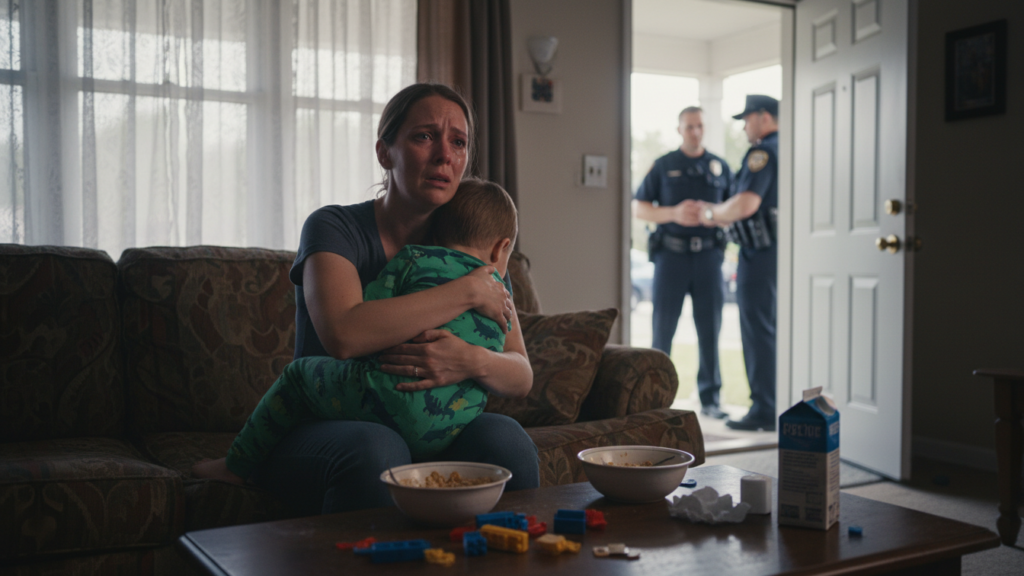
Instead, I watched as my little boy hesitated — and then obeyed.
The bruises were old, yellowing around the edges. Finger-shaped. Too small to belong to anyone but an adult.
I don’t remember sitting down, but suddenly I was on the floor, my back against the couch, unable to breathe.
I had seen those marks before.
I had told myself they were from falling off his bike.
They took Daniel outside.
The door closed behind them, and with it the illusion that my life was intact.
The social worker sat beside me. “You’re not in trouble,” she said gently. “But your son needs to be safe.”
Safe.
From his own father.
From the man I married.
From the truth I refused to see.
Later, when the house was quiet and Noah was wrapped in a blanket on the couch, he finally looked at me and said the words I will hear for the rest of my life.
“Mommy… I tried to be good.”
I held him so tight he squeaked.
I had been so busy trying to keep my family together that I had missed the only thing that really mattered.
And that was how my son, still in his pajamas, watched the police take his father away.