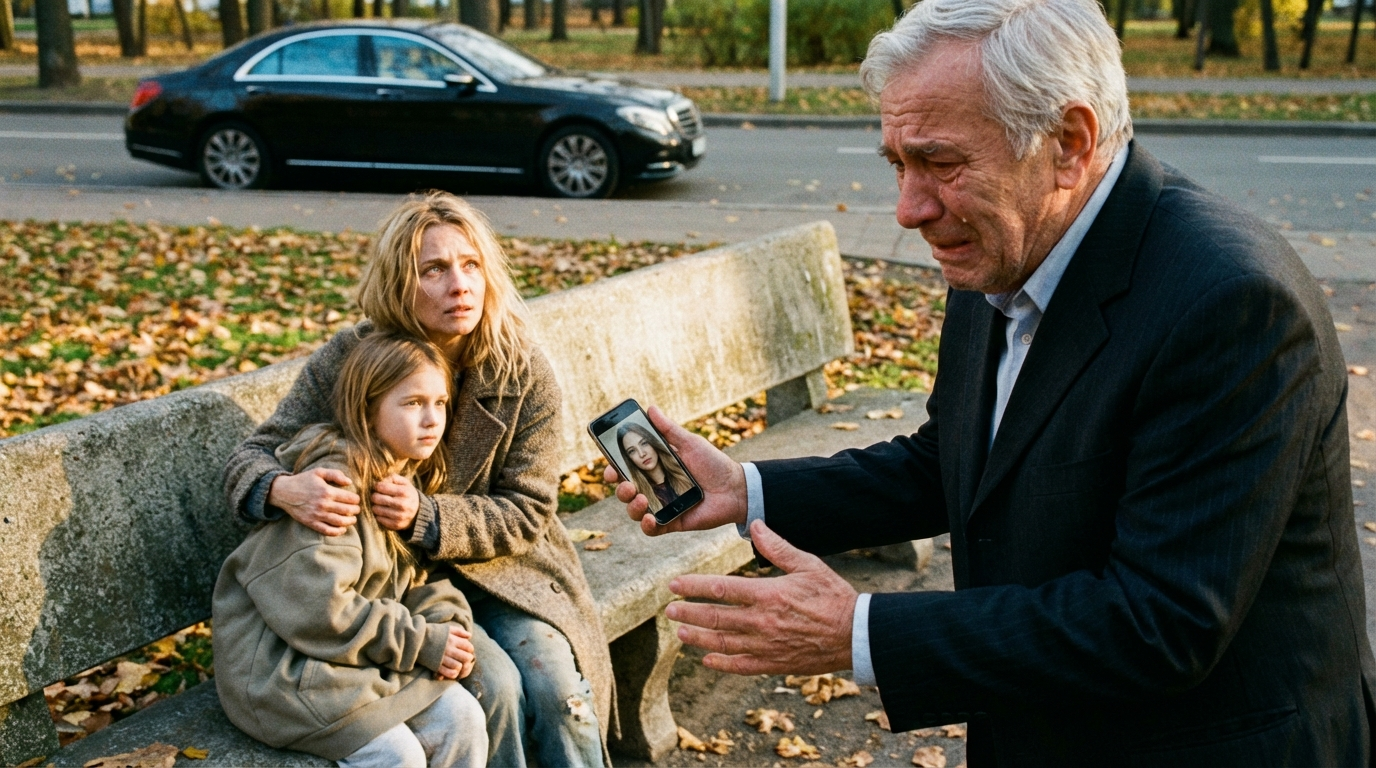
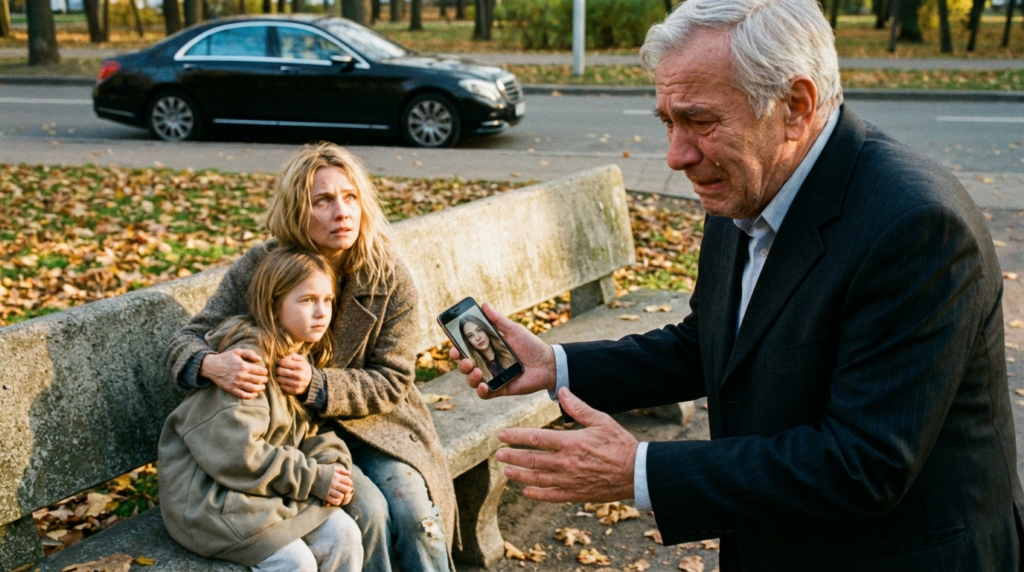
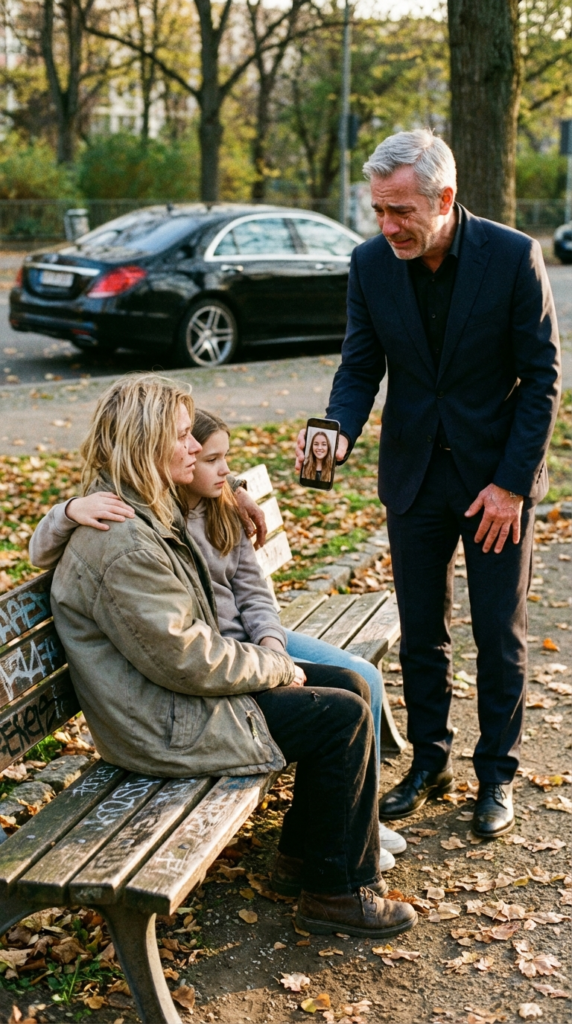
The black limousine pulled up to the curb where I was sitting with Maya, and I knew we needed to run. Rich people in expensive cars never meant anything good for street kids like us.
But I couldn’t move. Because the man stepping out of that car was staring at me like he’d seen a ghost.
He was in his sixties, wearing a suit that probably cost more than most people make in a year. Silver hair, sharp eyes, the kind of presence that made people step aside. He walked straight toward me, ignoring his driver’s protests, ignoring the bodyguard reaching for his arm.
“It’s not possible,” he whispered, stopping three feet away. His hands were shaking. “You’re… you’re dead. They told me you were dead.”
I pulled Maya closer, my ten-year-old body positioning itself between her and this stranger. Three years on the streets had taught me that when powerful men look at you like they know you, you run.
But then he said something that made my blood turn to ice.
“Isabelle?” His voice cracked. “Is that really you, Isabelle?”
Isabelle was my mother’s name. My dead mother’s name.
“Who are you?” I managed to whisper, my voice hoarse from fear and confusion.
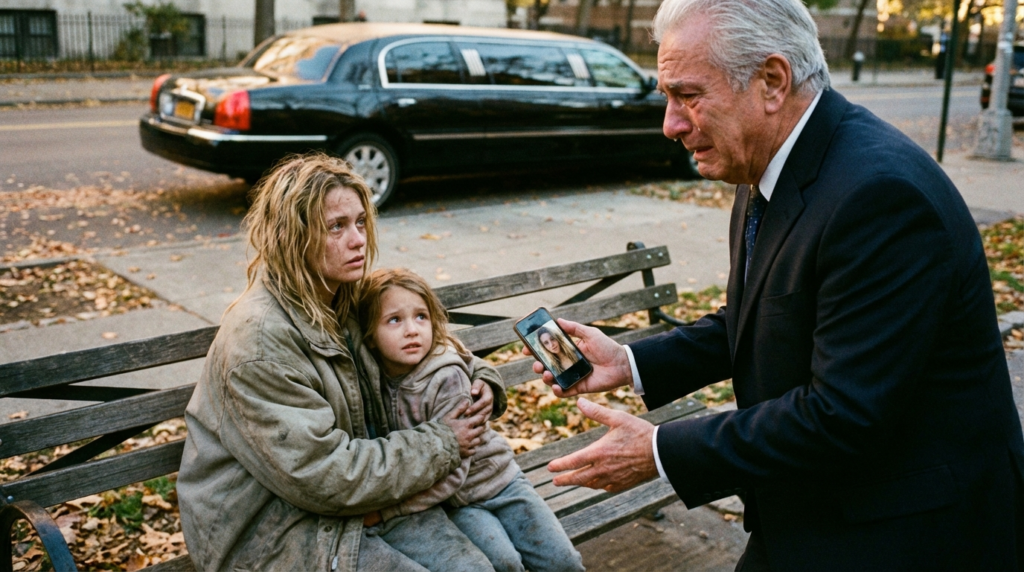
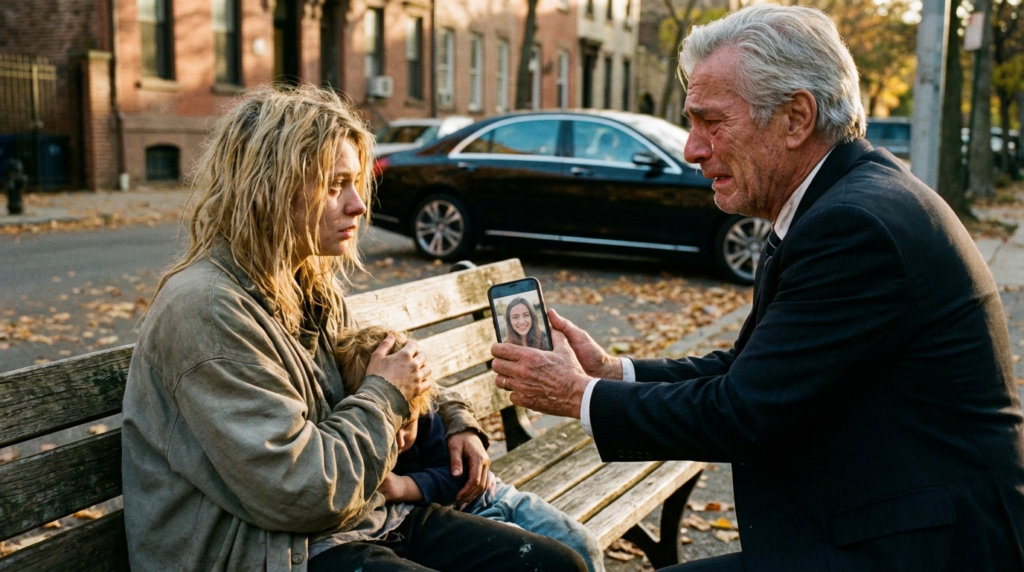
He pulled out his phone with trembling fingers, swiped through photos, then held it out to me. The screen showed a young woman in her twenties, laughing at the camera. She had my eyes. My nose. My smile.
“I’m your grandfather,” he said, tears streaming down his face. “And I’ve been searching for you for three years. Ever since your mother—” His voice broke. “Ever since they told me the car accident killed both of you.”
The world tilted. Car accident. Three years ago. The night everything changed.
“We didn’t die,” I heard myself say. “But Mom did. And her boyfriend told us if we went to the police, he’d make sure Maya disappeared into the system and I’d never see her again. So we ran.”
The billionaire—my grandfather—staggered backward like I’d punched him. “Her boyfriend? Jonathan?”
I nodded. “He said we weren’t his problem. He said you would never want us because—” I stopped, the words he’d burned into my brain too painful to repeat.
My grandfather’s face went from grief to rage in a heartbeat. “Because why? Tell me what he said.”
“He said you disowned Mom when she got pregnant with me,” I whispered. “He said you told her we were a disgrace to the family. That you never wanted to see her again. That’s why she never talked about you. That’s why we had nothing when she died.”
My grandfather made a sound like someone had ripped his heart out. He sank onto the bench next to me, his expensive suit getting dirty on the grimy wood, and he started crying. Really crying. The kind of crying that comes from somewhere deep and broken.
“That’s a lie,” he said between sobs. “That’s a goddamn lie. I never—I would never—” He looked at me with such raw pain that I felt my own eyes burning. “Your mother and I had our problems, yes. I was too controlling, too obsessed with business, too worried about what people thought. But when she told me she was pregnant with you, I was overjoyed. I set up a trust fund. I bought a house for her. I begged her to let me be part of your life.”
“Then why did she tell me you didn’t want us?” Maya asked in her small voice. She’d been silent this whole time, hiding behind me, but now she was peeking out.
“Because I made a terrible mistake,” he said, looking at her with wonder—seeing his granddaughter for the first time. “When your mother started dating Jonathan three years ago, I had him investigated. I found out he had debts, a criminal record for fraud, connections to dangerous people. I told her she had to leave him or I couldn’t support her financially anymore. I thought I was protecting her.”
He closed his eyes. “She chose him. Told me to stay out of her life. I was so stubborn, so sure I was right, that I let her walk away. I thought she’d come back when she realized I was right about him. But then—”
“The accident,” I finished.
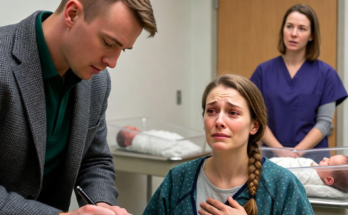
“The accident,” he confirmed. “Jonathan called me from the hospital. Said Isabelle was dead. Said you and Maya had died in the crash too. Said there was nothing left but ashes and grief. I believed him. God help me, I believed him.”
“Why didn’t you check?” I asked. “Why didn’t you make sure?”
“I did,” he said bitterly. “I had my lawyers investigate. Jonathan showed them death certificates, cremation papers, police reports. Everything looked legitimate. Everything was a lie, but it looked real.”
“Death certificates?” My mind was racing. “But we were there. Maya was in the car with Mom. I was home with a babysitter. How could he fake—”
“Insurance,” my grandfather said darkly. “Jonathan was the beneficiary on a life insurance policy your mother had. Two million dollars if you all died in the accident. Only half a million if it was just her.”
The pieces clicked into place. The way Jonathan had looked at us after the funeral—not with grief, but calculation. The way he’d taken me aside and told me about the system, about foster care, about how they’d separate Maya and me. The way he’d handed me a backpack with some clothes and three hundred dollars and said, “You’re smart. Figure it out. Or go to the police and lose each other forever.”
I’d been seven years old. Maya was four. I was terrified of losing the only family I had left.
So we disappeared.
“He collected the insurance money,” I said numbly. “For our deaths.”
“Two million dollars,” my grandfather confirmed. “And I never questioned it because I was drowning in grief. Because I believed I’d lost my daughter and granddaughters in one horrible night. Because I was too broken to see the truth.”
Maya tugged on my sleeve. “Cami, I’m hungry.”
It was reflex by now. I reached into my pocket and pulled out the granola bar I’d been saving for dinner. Split it in half, gave her the bigger piece.
My grandfather watched this exchange with something like awe and horror on his face.
“How long?” he asked quietly. “How long have you been living like this?”
“Three years,” I said. “We stayed in shelters at first, but Maya kept getting sick and I was scared they’d take her. So we left. We’ve been moving around. I steal sometimes. I’m not proud of it, but—”
“Stop,” he said. “You’re ten years old. You’ve kept yourself and your sister alive for three years with no help from anyone. That’s not something to apologize for. That’s—” His voice cracked again. “That’s the most extraordinary thing I’ve ever heard.”
He pulled out his phone again, made a call. “Michael, I need you to prepare the house. Two children. My granddaughters. They’re alive. Yes, alive. I’ll explain later. And I need you to call David Chen, have him meet me at the house in two hours. Tell him I’m about to hand him the biggest fraud case of his career.”
He hung up and looked at us. “I know you don’t know me. I know you have every reason not to trust anyone, especially not a stranger in an expensive car. But I’m asking you—begging you—to give me a chance. Come home with me. Let me make this right.”
“What about Jonathan?” I asked. “What if he finds us?”
My grandfather’s expression turned cold. “Jonathan is going to learn what happens when you steal from the wrong family. But that’s not your concern. Your concern is being children again. Is that something you’d like?”
Maya looked up at me with hope in her eyes. Real hope. The kind I hadn’t seen since before Mom died.
“Okay,” I whispered. “But if anything feels wrong, if you try to separate us—”
“I won’t,” he promised. “You’ll never be separated again. You have my word.”
The house—no, the mansion—was like something from a movie. Stone walls, sprawling gardens, a driveway that seemed to go on forever. Maya pressed her face against the limousine window, her eyes wide.
“This is where you live?” she breathed.
“This is where we live,” my grandfather corrected gently. “This is your home now. Your mother grew up here. She played in that garden, learned to swim in that pool, had her sixteenth birthday party in the ballroom.”
Inside, a staff of people stood waiting. A housekeeper with kind eyes. A chef. A property manager. They all looked shocked when they saw us—two dirty, skinny children in clothes held together with safety pins and hope.
“Mrs. Chen,” my grandfather said to the housekeeper. “These are my granddaughters, Camden and Maya. They’ll need everything. Clothes, shoes, school supplies, toys—everything two little girls should have. Spare no expense.”
“Of course, Mr. Sterling,” she said, her voice thick with emotion. “Welcome home, girls.”
The next few hours were a blur. Baths in tubs big enough to swim in. Soft pajamas that smelled like lavender. A dinner with more food than I’d seen in a month. A bedroom—two bedrooms, connected by a door so we’d never be apart—with actual beds and clean sheets and stuffed animals.
Maya fell asleep almost immediately, her small body finally able to relax after three years of constant vigilance. I sat next to her bed, watching her breathe, making sure this was real.
My grandfather knocked softly on the doorframe. “May I come in?”
I nodded.
He sat in the chair across from me. “I know you’re scared. I know you’re waiting for the other shoe to drop. But I need you to understand something. I failed your mother. I was too proud, too stubborn, and it cost me everything. I won’t fail you. Whatever it takes, however long it takes, I’m going to prove to you that you’re safe here. That you’re loved here. That you’re home.”
“Why did you drive down that street today?” I asked. “Of all the streets in the city, why that one?”
He smiled sadly. “Because I drive down every street in this city, every day, looking for you. I hired investigators. I offered rewards. I never gave up hope that somehow, someway, you were alive. And today, I saw a little girl who looked exactly like my daughter did at that age, and I knew. I just knew.”
The next morning, lawyers filled the study. My grandfather asked if I wanted to be there for the meeting, and I said yes. I needed to understand what happened. I needed to see Jonathan face consequences.
“The death certificates were forged,” the lawyer explained. “Jonathan bribed a clerk at the county office. The cremation papers were falsified—there were no bodies. The police report was real, but he lied about who was in the car. Only Isabelle died that night. The insurance company paid out two million dollars based on fraudulent documentation.”
“Can we prove it?” my grandfather asked.
“We can prove it,” the lawyer said. “But we need the girls’ testimony. We need them to confirm they’ve been alive this whole time.”
My grandfather looked at me. “Camden, this is your choice. If you don’t want to testify, if it’s too hard, we’ll find another way.”
I thought about Mom. About the way she used to sing me to sleep. About the way she’d fight with Jonathan but stay with him anyway because she thought she loved him. About the way she’d died alone in that car while he lied to everyone.
“I’ll do it,” I said. “For Mom.”
The authorities arrested Jonathan three days later. My grandfather made sure I was far away when it happened, but he told me about it later.
Jonathan had been living in Mom’s house—the one my grandfather had bought for her—spending the insurance money on gambling and expensive cars. When the police showed up with fraud charges, he tried to run.
“He claimed he had no idea you were alive,” my grandfather told me. “Said you must have run away after he tried to get you help. But we had the babysitter from the night of the accident. She testified that Jonathan came to the house, told her to leave, and threatened you. We had security footage from a gas station showing him giving you the backpack and money.”
“What happens to him now?”
“Insurance fraud, child endangerment, falsifying legal documents—he’s looking at fifteen to twenty years. And the insurance company is suing him for the full amount plus damages.”
It should have felt like victory. But all I felt was tired.
“She loved him,” I said quietly. “Even at the end, even when he was awful, Mom loved him. I don’t understand why.”
My grandfather sat down next to me. “Sometimes people love the wrong people. It doesn’t make them stupid or weak. It just makes them human. Your mother had a good heart—too good, maybe. She wanted to see the best in everyone. It’s one of the things I loved most about her. And it’s something I see in you too.”
The first year was hard. I didn’t know how to be a kid anymore. I hoarded food in my room until my grandfather sat me down and showed me the fully stocked pantry, the refrigerator, the promise that there would always be enough.
I woke up screaming from nightmares where they took Maya away. My grandfather would come in, sit on the floor next to my bed, and tell me stories about Mom until I calmed down.
I couldn’t focus in school at first. I was so far behind, and the other kids made fun of my clothes (even though they were new), my accent (I’d picked up different speech patterns from the streets), my hypervigilance (I always sat with my back to the wall, always knew where the exits were).
But slowly, slowly, things got better.
Maya blossomed. She was young enough that the streets hadn’t scarred her as deeply. She made friends easily, loved her ballet classes, started calling our grandfather “Grandpa Jim” within six months.
I took longer. But my grandfather was patient. He showed up to every school event, every therapy session, every nightmare. He never pushed, never demanded, just offered steady, unconditional love.
On the one-year anniversary of the day he found us, he gave me a letter. It was from Mom, written years ago when I was a baby.
“To my beautiful Camden,
If you’re reading this, something has happened to me. I hope it never comes to that, but I need you to know some things just in case.
My father—your grandfather—loves you more than you’ll ever know. We fight sometimes because we’re both stubborn, but he’s a good man. If I’m gone and you need help, go to him. He’ll protect you. He’ll love you. He’ll give you the life I always wanted for you.
And Camden, if I’ve made mistakes—if I’ve chosen the wrong person or made the wrong decisions—please forgive me. I’m trying my best, but I’m not perfect. Just remember that everything I do, I do because I love you and Maya more than life itself.
Be strong. Be kind. And know that you are so, so loved.
Mom”
I cried for hours after reading that letter. For the mom I lost. For the years we’d spent suffering when she’d left us a roadmap home. For the fact that Jonathan had kept us from her final wishes.
But I also cried with gratitude. Because somehow, despite everything, we’d found our way back. We’d found our grandfather. We’d found home.
I’m fifteen now. Maya is twelve. We still live with Grandpa Jim in the mansion, though it feels less like a mansion and more like home now.
I’m on the honor roll. Captain of the debate team. Volunteer at the homeless shelter every weekend, because I remember what it’s like and I want to help others the way I wish someone had helped us.
Maya is exactly like Mom—bright, optimistic, seeing the best in everyone. She doesn’t remember the streets much anymore, which is a blessing. But she knows the stories. She knows what we survived.
Jonathan got eighteen years. He’ll be eligible for parole in twelve. Grandpa Jim says when that time comes, we’ll face it together. We’ll make sure he never hurts anyone again.
The insurance money was returned, and Grandpa Jim donated all of it to organizations that help homeless children. “Blood money,” he called it. “Let it do some good.”
Last week, Grandpa Jim asked me to come to his study. He handed me a stack of papers—legal documents that I didn’t fully understand until he explained.
“When I die,” he said, “everything goes to you and Maya. The company, the house, the money—all of it. But I’m not telling you this to pressure you or scare you. I’m telling you because I want you to understand something. This wealth, this privilege—it’s not just yours. It’s a responsibility. Your mother understood that. She used to volunteer at soup kitchens, donate to shelters, fight for people who couldn’t fight for themselves.”
He pulled out a photo—Mom, young and beautiful, serving food at a community center.
“She would be so proud of you,” he said. “Not because you survived. But because you survived and still chose kindness. Because you kept Maya safe and still found room in your heart to help others. Because you’re exactly who she hoped you’d be.”
We started a foundation last year—The Isabelle Sterling Foundation for Homeless Youth. It provides emergency resources, long-term housing, education support, and family reunification services for kids living on the streets.
I’m the junior director. Maya helps design the care packages. Grandpa Jim funds it and serves on the board.
We’ve helped three hundred kids so far. Three hundred kids who might have spent years suffering like we did. Three hundred kids who now have a chance.
Sometimes I think about that day in the limousine. How easily I could have run. How close we came to missing each other completely.
But I also think about fate. About how Mom’s letter led us to this moment. About how Grandpa Jim never gave up searching. About how love, real love, finds a way.
The streets taught me to survive. But my grandfather taught me to live.
And Mom, watching from wherever she is, taught me that the most powerful thing you can do with pain is transform it into purpose.
I was seven years old when Jonathan’s lie stole our family. I was ten when the truth brought us home.
And now, at fifteen, I’m learning that the best revenge isn’t anger or bitterness.
It’s choosing kindness anyway. It’s helping others even when the world wasn’t kind to you. It’s building something beautiful from the ashes of something broken.
That’s Mom’s legacy. That’s what she would have wanted.
And every kid we help, every family we reunite, every life we change—that’s how we honor her.
One act of kindness at a time.